Two Sides of Yearning: Adventures and Koselig in Norway

The sweetest thing in all my life has been the longing — to reach the Mountain, to find the place where all the beauty came from — 

C.S. Lewis, Till We Have Faces

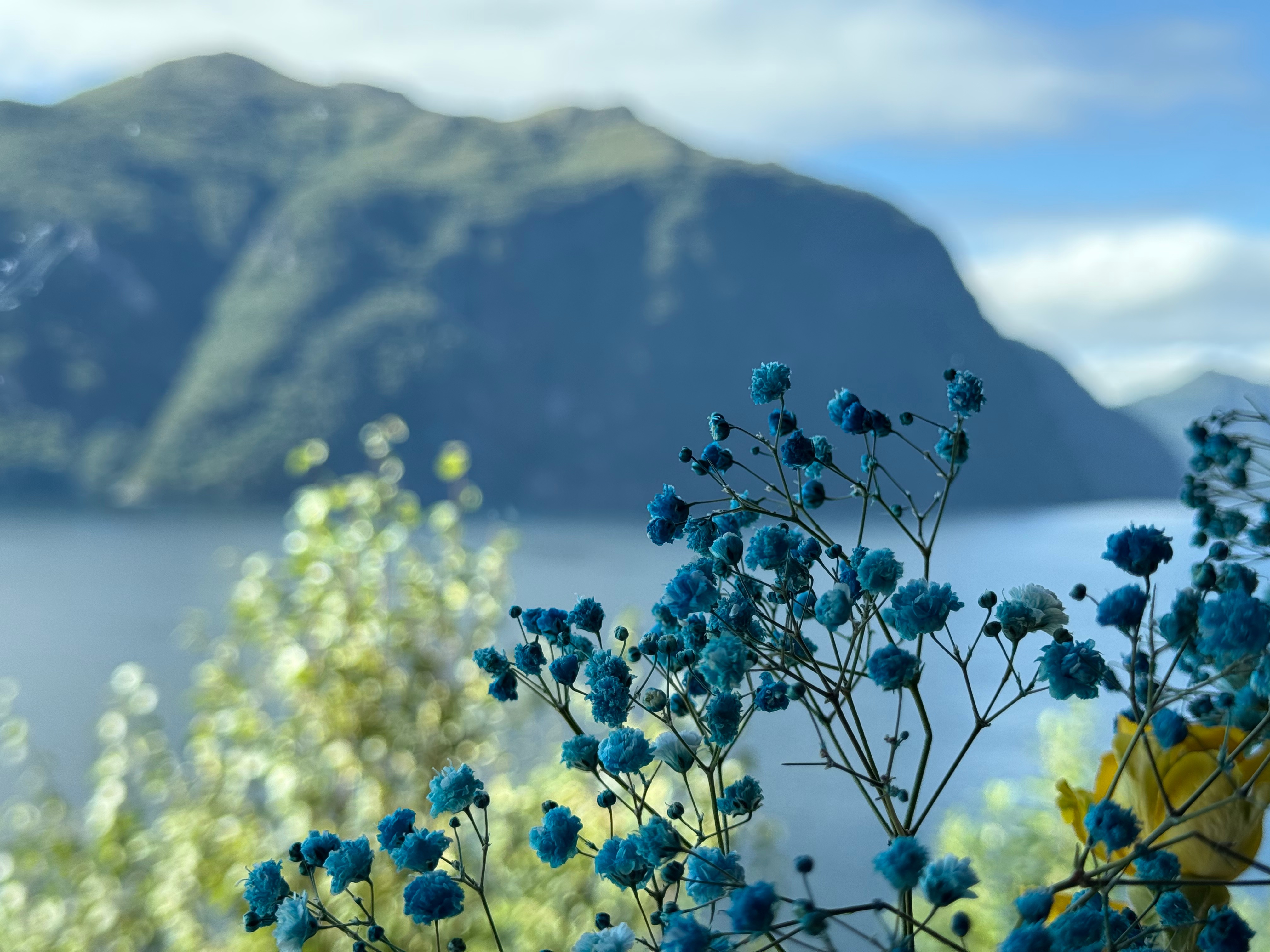
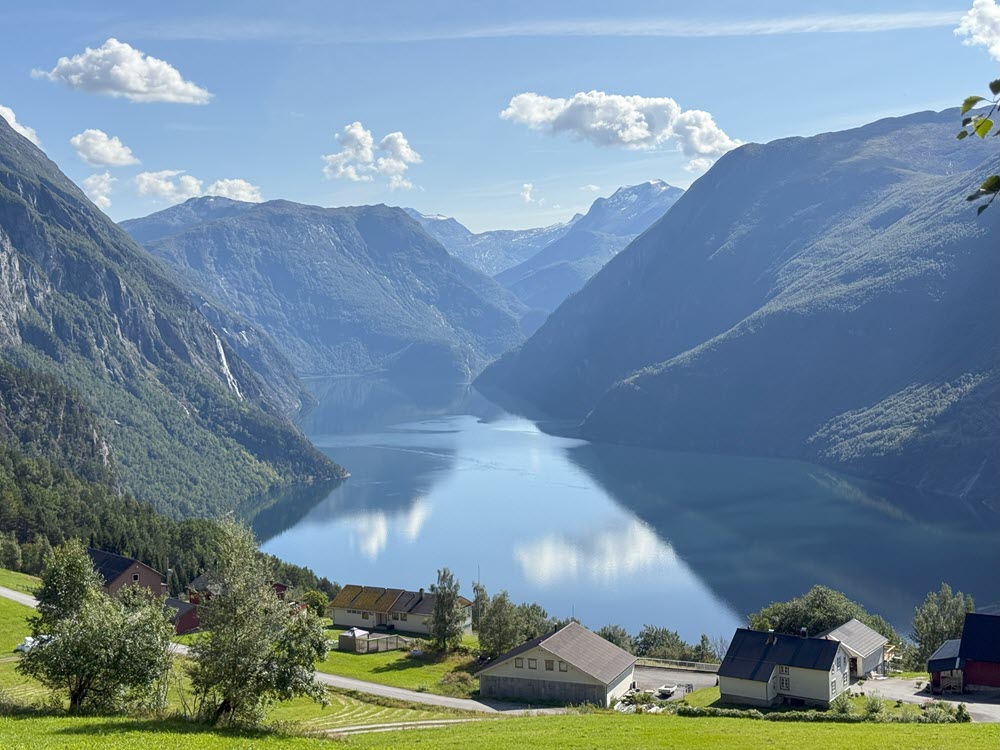
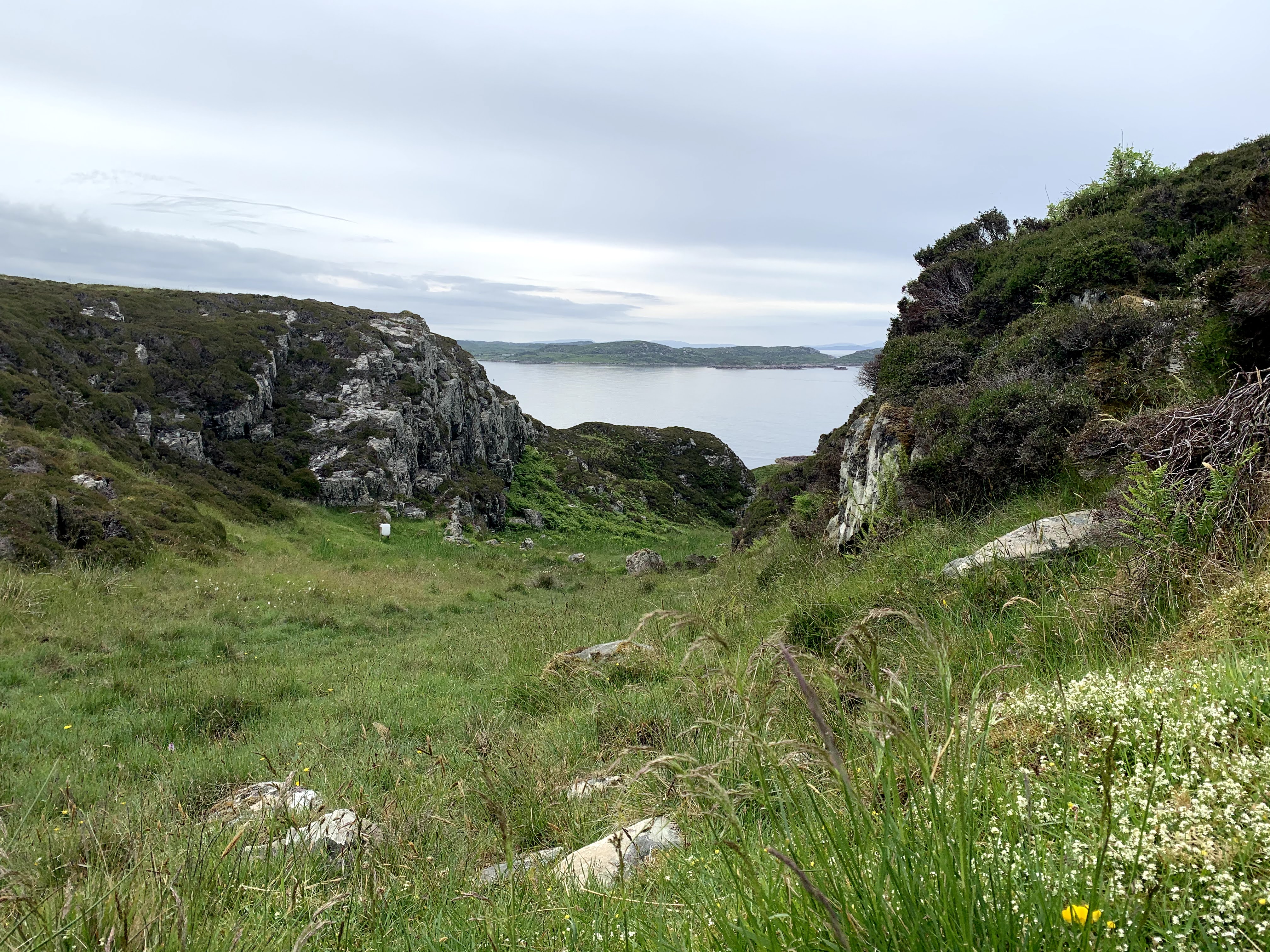
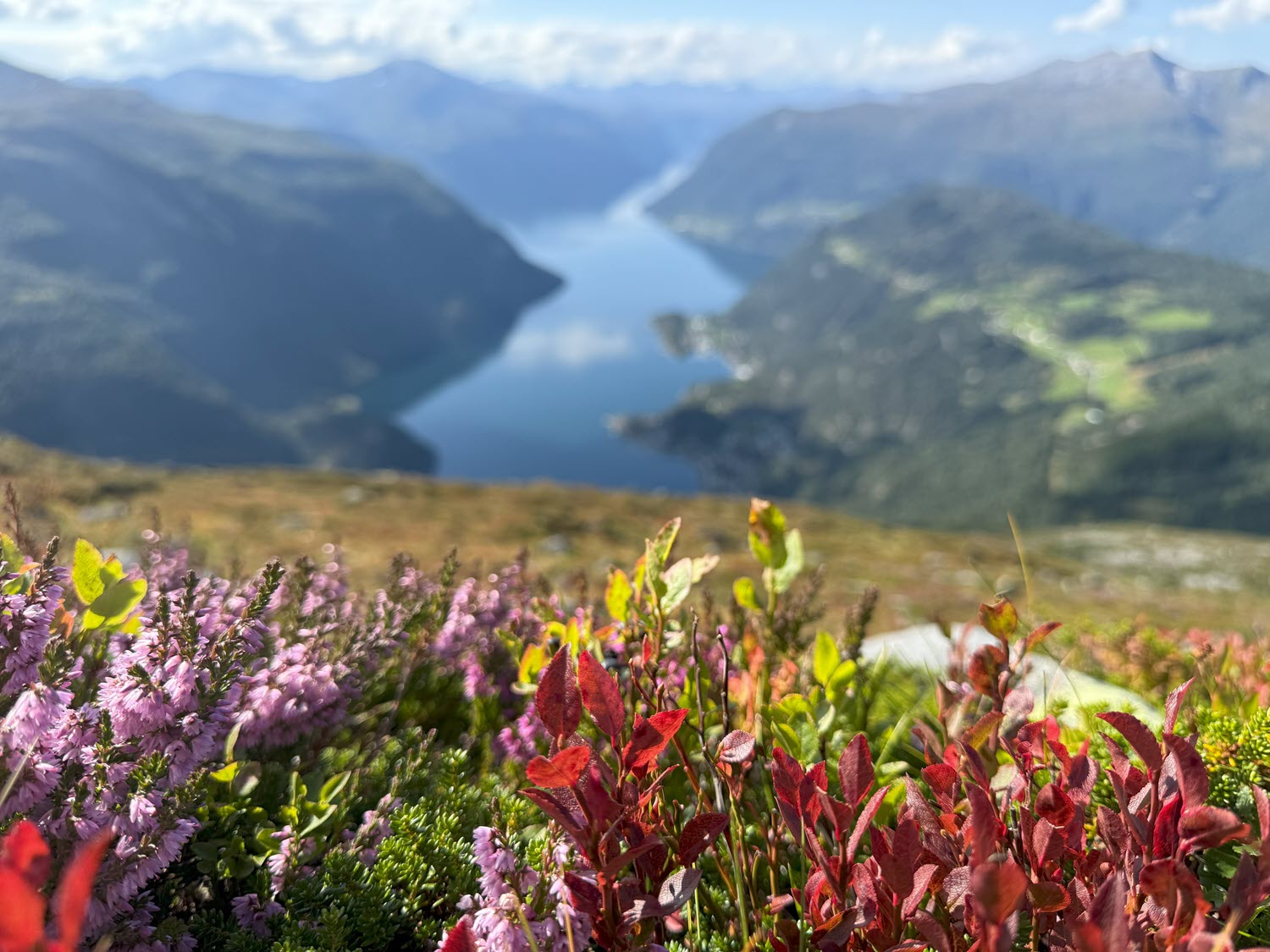
It was exactly the kind of place my childhood self dreamed about: gigantic mountains thick and green with pines, firs, and birches; waterfalls tracing the steep slopes like silver ribbons; glimmering fjords that reflected the bright blue sky and dark blue mountains; white-tailed eagles wheeling through the clouds; cottages and farmhouses clustered in emerald valleys; wandering sheep with bells around their necks; purple heather with leaves burned crimson with autumn. 

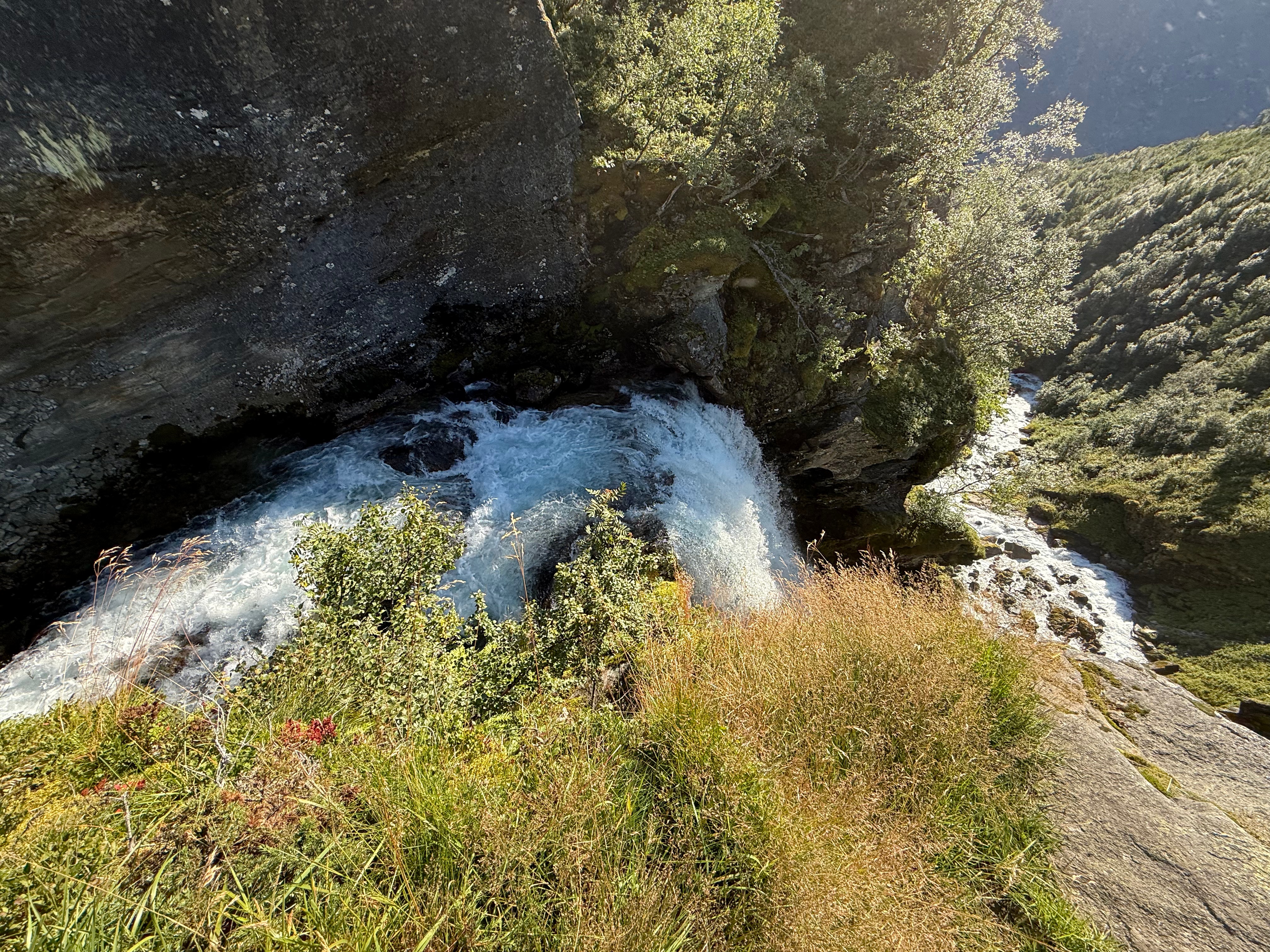
Norway embodied many of my old fantasies. There were cottages tucked high in the hills, lonely and quiet, that my introverted self would have loved to hide in. (My older, more practical self stops to consider things like steep, icy roads in winter, the difficulty of running errands, and the risk of loneliness). We hiked down a path that led behind a roaring waterfall — no treasure-caves hidden behind there, sadly, but it still felt magical.

There were sailboats like a flock of white birds on the shimmering fjord at dusk; green islands connected by long bridges and long tunnels; a lighthouse stained blazing red-gold with sunset. The souvenir shops are designed for tourists who love adventure and at least the vague concept of Norse mythology: they all had Viking-themed magnets and mugs, Fair Isle sweaters, and stuffed reindeer, moose, and wolves. On sunny summer days, with the wildflowers in full bloom and winter a thousand miles away, it felt like the perfect place for adventures, quiet, and dreaming. 

But Norway is cozy as well as grand. The untranslatable word “koselig” captures the cozy, safe, familiar, warm, intimate, homey feeling of home gatherings during the long Arctic winters. From the sound of it, koselig means fleece blankets, crackling hearthfires, storytelling, hot drinks, and deep talks that go long past midnight on nights that last longer than days. 

World War II and the Torches in the Night

In Oslo, we visited Norway’s Resistance Museum, which chronicles the dark years of occupation by the Nazis in World War II. While much of the material was in Norwegian, italicized English told the stories of the desperate, doomed struggle in the spring of 1940 to stop the German invasion; the betrayal of Vidkun Quisling, the head of the Norwegian fascist political party who collaborated with the Nazis and received the lasting hatred of his own people; arrests, imprisonment, suppression of free speech, rations, fear, and the horrific seizure of Norway’s small Jewish population; the courage of many who smuggled people to Sweden, hid fugitives in their cellars, printed illegal newspapers to spread truth and hope, and planned dangerous acts of sabotage; and finally, the joy of deliverance. 

So many plans failed. A few succeeded, most famously the sabotage at the heavy water plant that delayed the Nazis’ development of the atomic bomb and changed the course of the war, but many brave, ordinary people were caught. Some were executed. 

The hope of Great Britain stood out like a flame in the night. After so many countries capitulated to fascism, were conquered by overwhelming force, or went neutral, Winston Churchill’s “we will never surrender!” held back the tide for a year and a half alone, until the U.S. joined the war after Pearl Harbor. It was a refuge and training ground for the resistance. Many Norwegians fled to the UK, received training, and returned to try to free their country. 

World War II still feels so close, though not too long from now, it will be a hundred years past. The candle flames that people held up against that great dark, and the mighty faith of people like Corrie ten Boom and Dietrich Bonhoeffer, are startling in their beauty. 

A Yearning for Adventure vs. Koselig

When I started writing on this blog, I named it “stories of yearning” because the word “yearning” best captured that wild, mysterious, wonderful feeling that good books gave me. It’s akin to the feeling that C.S. Lewis called sehnsucht or Joy in his book Surprised by Joy: “an inconsolable longing” that he eventually identified as a sign of our longing for heaven. It’s also similar to the experience that L.M. Montgomery called “the Flash” in her Emily of New Moon series: 

It had always seemed to Emily, ever since she could remember, that she was very, very near to a world of wonderful beauty. Between it and herself hung only a thin curtain; she could never draw the curtain aside—but sometimes, just for a moment, a wind fluttered it and then it was as if she caught a glimpse of the enchanting realm beyond—only a glimpse—and heard a note of unearthly music. — L.M. Montgomery, Emily of New Moon

My sense of yearning isn’t exactly sehnsucht. The sweetness stirred up in me by books like The Castle of Llyr and A Wind in the Door was less painful than what Lewis describes, more excitement than grief. I loved it. It fed my desire to travel and see the world: the castles and cottages of Scotland, the emerald hills of Ireland, and the rainbow of tulips in Amsterdam. 

In the past few years, my yearning for adventure has waned. The turmoil of the pandemic, a few moves, a lot of change, and the practical drudgeries of travel like red-eye flights threatened to swallow up that longing. I tried to summon it back, but as Lewis found when he tried to manufacture sehnsucht, you can’t recall feelings at will.

Now, I’m wondering if that sense of yearning has just become inverted. Part of me still longs for faraway, glamorous places, but now I dream even more about near, safe, cozy, and sheltered spaces: hearthfires, deep friendships, and the stability you only get when you live in a good place for a long time. Instead of adventures like those in Treasure Island or The Silver Chair that take me to wild moors or deserted islands, I’m yearning for koselig. 

Yearning can be an idol, if I let it; something that keeps me discontented and restless. At its best, it’s a hope for the joys beyond this world and the God who made all good things. 

The wondrous thing is that the fulfillment of all longings, to be with the Lord in heaven forever, completes both sides of yearning, the splendid and the snug: 

Psalm 36:5-9 (ESV)
Your steadfast love, O Lord, extends to the heavens,
your faithfulness to the clouds.
6  Your righteousness is like the mountains of God;
your judgments are like the great deep;
man and beast you save, O Lord.
7  How precious is your steadfast love, O God!
The children of mankind take refuge in the shadow of your wings.
8  They feast on the abundance of your house,
and you give them drink from the river of your delights.
9  For with you is the fountain of life;
in your light do we see light.

I love how this psalm captures it all: the vastness of God’s goodness, higher than mountains and deeper than the sea; the sweetness of His hospitality, inviting us into His home, becoming our true home; the closeness we can have with him, feasting from His abundance, drinking from the river of delights, and seeing light in His light. 

Adventure; quiet; glory; rest; faraway; home; mighty mountains; safe harbors; spectacular sunsets; fragile wildflowers; the Lord God, Father and Maker, fulfills all these desires more beautifully than we can imagine. 

Summer: Adventures in Faerie, Restoration in the Book of Joel, and Some Reflections on AI

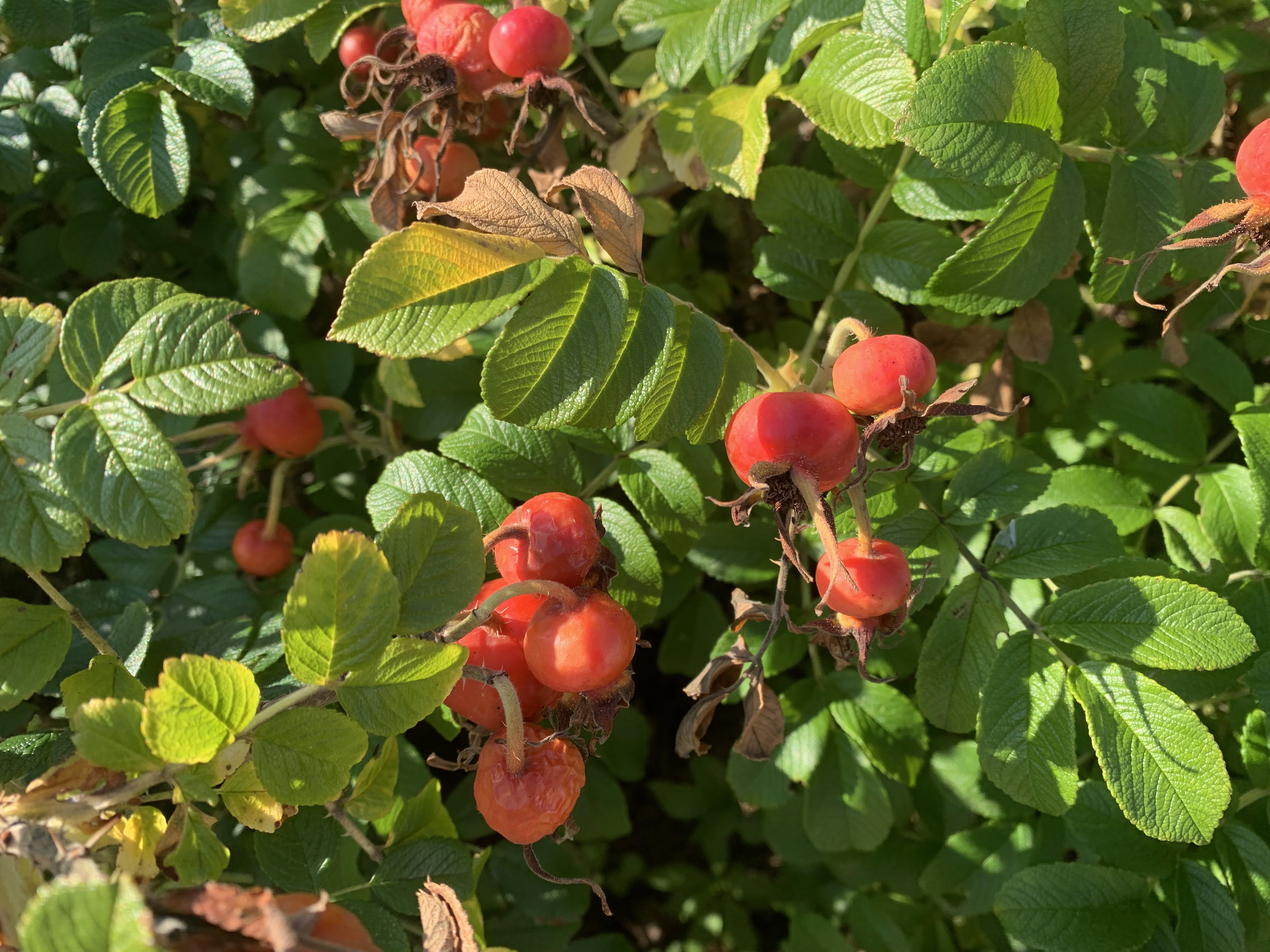
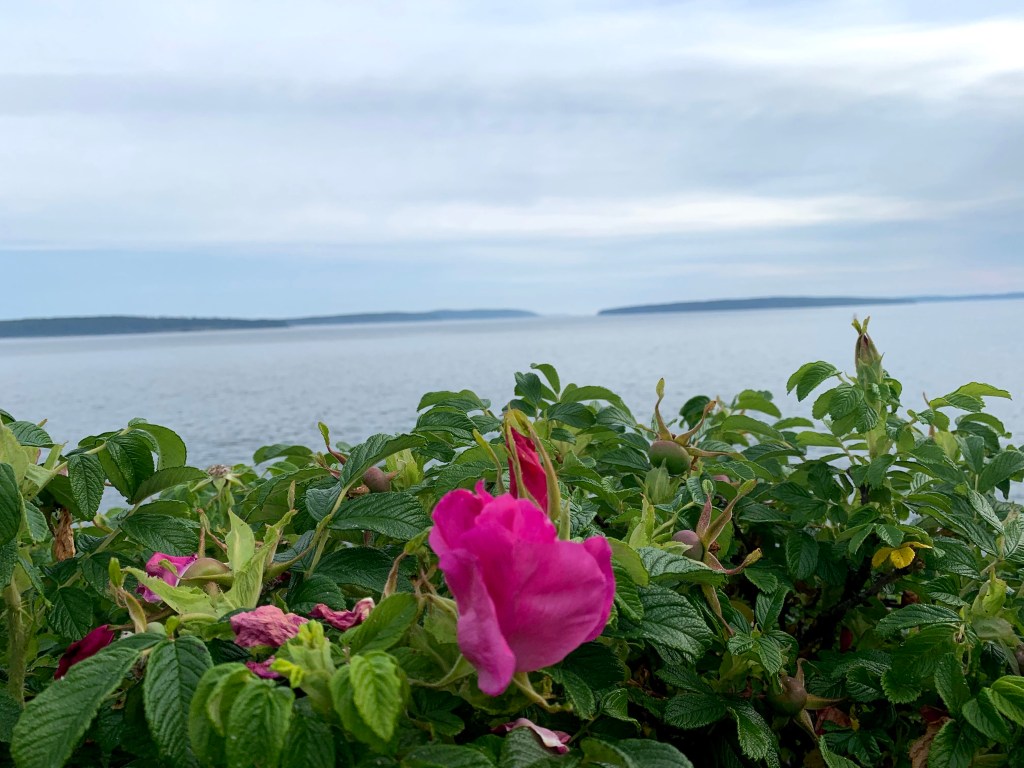
Roses in a field


Where is the summer, the eternal, zero summer? 
“Little Gidding,” Four Quartets, T.S. Eliot

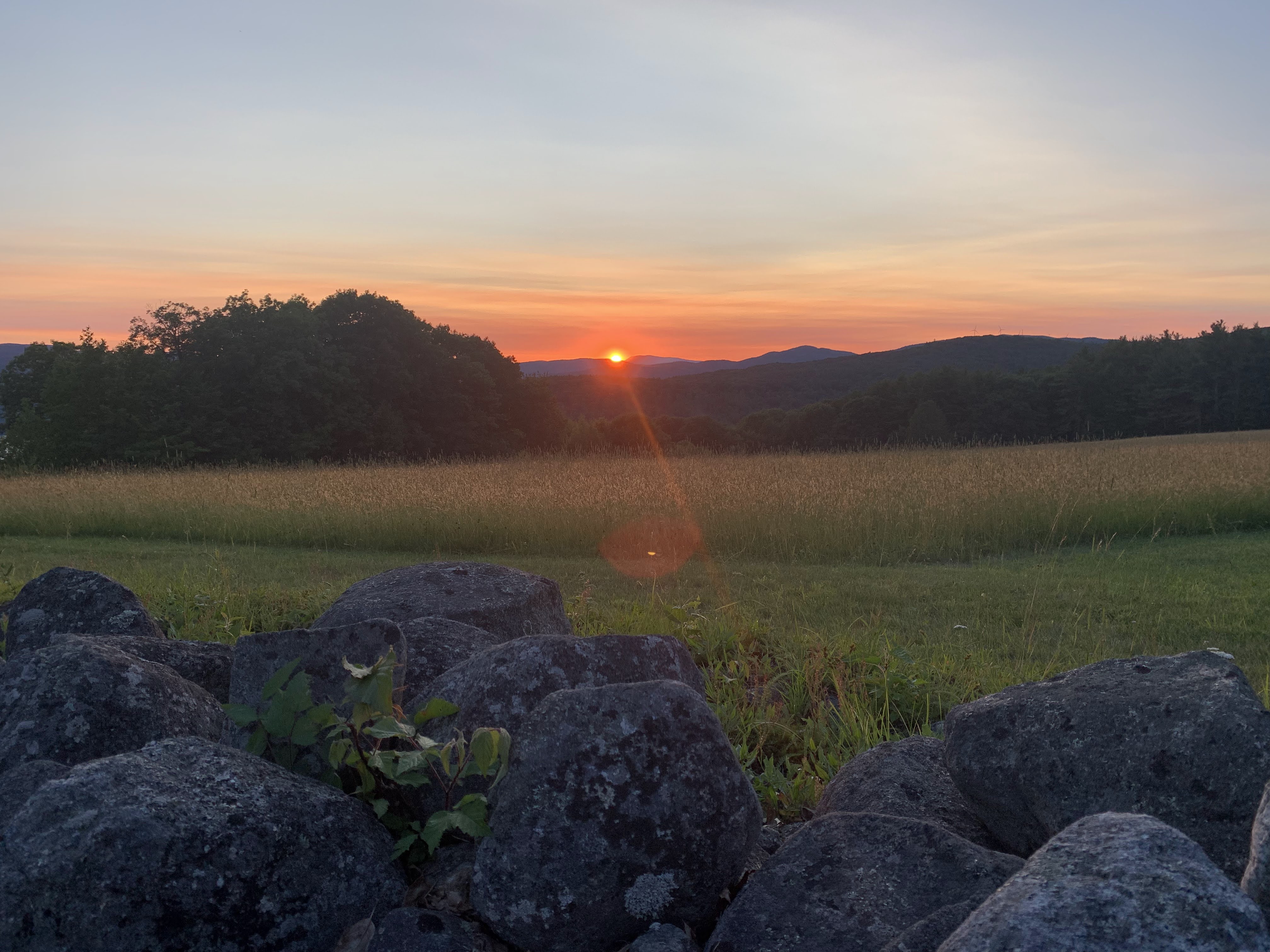
One morning a few weeks ago, the eastern light cast leaf-shadows on the floor of my room, sharp and clear as a shadow puppet play. The wind was so strong that day that it churned up the leaves and their shadows into a wild dance, graceful and mesmerizing. When I went outside, the rushing wind rustling the leaves sounded like a roaring river: silvery, whispering, rushing, trembling. 

This is my favorite time of year, in close competition with the twinkling merriment of Christmas. Soft green leaves, blossoming peonies, golden buttercups, pert bluets, serene roses, and fiercely purple salvia fill the air with sweetness; picnics, beach days, water sports, and barbecues feel like a proclamation of the goodness of life; humming crickets and cicadas, along with cooing mourning doves in the mourning, make everything feel hazy and lazy, sweet and mysterious. It always feels like a happy ending, or a suspenseful beginning. It’s a time for feasting, playing, resting, adventure, and quiet. 

I’m trying to use these dreamy days to rest, resisting the urge to fill up my days with more and more and more – more books, more writing projects, more research investigations, more activities. But I have enjoyed a few projects lately: 

The Faerie Queene: Allegory and Adventure

This summer, Dr. Junius Johnson is offering online courses on “Forgotten Epics”: great, influential works that no one reads any more. I took his May-June offering on Edmund Spenser’s The Faerie Queene (1590). Before this course, I’d felt guilty for a long time for not reading this book, after hearing about how it influenced C.S. Lewis, J.R.R. Tolkien, George MacDonald, and countless other writers. 

After reading all 30,000 lines of poetry, I don’t feel guilty about how long I waited. It is a hefty tome, and very difficult. Spenser, a contemporary of Shakespeare, wrote this in the 1590s and intentionally used archaic language and inconsistent spellings. He swaps his u’s and v’s, uses forgotten words like “eftsoones” (“soon after or immediately”), occasionally switches speakers without using quotation marks or he said/she said tags, and will deviate from the main storyline to a subplot for a while before returning.

I struggled through the text with help from the footnotes, but for all that, The Faerie Queene is a fascinating, wondrous, wild, fantastic adventure. Books 1-3 and the unfinished fragment of Book 7 were my favorites, full of questing knights, dragons, giants, perilous woods, and mysterious castles and mansions with inhabitants who could be grand and good or wicked and deceptive. Some reflections along the way: 

  • Allusions — A big part of the fun of the Faerie Queene is spotting characters, settings, and symbols that later authors borrowed. C.S. Lewis drew heavily on this work in The Chronicles of Narnia: for example, Spenser’s Redcross Knight grabs a snake/woman monster by the throat in a fight in Book 1, just as Prince Rilian grabs the serpent in The Silver Chair to slay it. John Bunyan’s Pilgrim’s Progress, George MacDonald’s Princess books and Phantastes, and J.K. Rowling’s Harry Potter series all draw on Spenser’s symbolism and action in their worlds.
  • Allegory — As Junius Johnson discussed in class, people assume they can read any story allegorically, but “pure” allegory — a story in which every character, setting, or object directly represents an abstract idea — is actually very hard to write. Spenser does better with places and monsters than people; his people are just a little too well-developed to represent just one idea. For example, Britomart, the female knight who represents Chastity, is both fierce and tender, an unmatched warrior, and sometimes reckless. She has too many layers to represent just one virtue. 
  • Mythical houses — As I told some friends along the way, I’m finding that my favorite literary setting are houses full of mythical, fantastic creatures and objects. Some of my favorites in this book were the House of Pride, where the Seven Deadly Sins gather under a sinister queen named Lucifera; the House of Temperance, where three sages of past, present, and future dwell in a tower; the House of Proteus, the shape-shifter of the sea, where all the personified rivers of the world gather for a feast; and the silver palace of Cynthia, in the sphere of the moon. I think these exotic settings satisfy my desire to escape the ordinary details of life that can feel so mundane, like getting gas or paying bills, and remind me that the real world is full of wonders. 
  • Pageants — Apparently, pageants were very popular in Renaissance/medieval times. There are plenty of pageants in the FQ: a pageant of the Seven Deadly Sins in the House of Pride in Book 1, and a pageant of the consequences of unchaste love in Book 3. The color, splendor, and symbolism of these scenes caught my imagination.

The Faerie Queene is a book best tackled one piece at a time, with a group — I don’t think I would have had the persistence to finish it alone! It deserves an even deeper study than I gave it this time, but this was a good introduction to the foundations of fantasy. 

The Book of Joel: Repentance Brings Restoration

This summer, I’m doing a study of the Biblical book of Joel. I chose it because I’ve never studied it before, I like how shorter books of Scripture allow you to see the author’s structure more easily, and I want to keep practicing Bible teaching. I knew about the Pentecost prophecy in chapter 2 (“I will pour out my Spirit on all people,” fulfilled in Acts 2) and Bible Study Fellowship touched on it briefly in their overview of the Old Testament, but other than that, I knew very little about it.

If Dante had not already used the title for his masterwork, Joel could be called “a divine comedy” – it feels like a short play that goes from dread and doom, to hope, to a happy ending. In some ways, the book is a microcosm of the whole Old Testament and the Bible — a disaster invited by disobedience, warnings of dread and doom and darkness, a call to repentance, a vision of judgment, and a beautiful promise of restoration. It’s full of rich images like a plague of locusts, the vine and the fig tree in the Promised Land, the day of the LORD, a resurrection of land and hearts, and Mount Zion, the city of God. Like Isaiah and Jeremiah, it includes fearsome warnings and compassionate invitation, images of destruction and recreation.

The heart of the book, structurally and interpretively, is Return to me: return to the LORD in repentance to receive restoration, revival, and resurrection. Reading it reminds me that the LORD desires my heart, and not just my habits and actions. Also, He calls for obedience so that He can bless us. 

Artificial Intelligence: Reckoning with the Next Tech Revolution

While my free time is full of adventure stories and prophecy, I’ve also been contemplating a third topic from my work life: AI. Generative AI and agentic AI are nothing new; not for decades, and not since the release of ChatGPT in 2022. But they didn’t become real to me until about a month ago, when I began encountering them more frequently. 

As a believer, English major, storyteller, and wordsmith, GenAI and agentic AI have me worried. Like many people, I fear for my job – machines that can create messaging and content could replace me. But they also make me fear for our culture.

Here are some reasons why I want to be cautious with AI: 

1. Critical thinking is a gift

Critical thinking tasks like writing are good for you, just as much as running, swimming, and dancing are good for your mind and body. Staring at a blank page, trying to frame a sentence, spark an idea, structure an article, or select the right word is a mental labor that we shouldn’t try to skip. I listened to Nicholas Carr’s The Glass Cage recently (a book on automation published in 2015, so not about GenAI, but definitely applicable). Carr discusses how automation encourages the human supervisor to “tune out,” disengage, and lose their ability to react quickly when needed. He calls it “automation complacency.” Removing effort and concentration from a task take the pleasure away from the human operator — and can introduce new risks if something goes wrong that automation is not programmed to handle. I recommend Carr’s book as a great resource for thinking about a human-centered approach to technology.

Advocates of GenAI keep repeating the benefits: it will save time and energy, so that you can do more and work faster. But if using GenAI costs you mental agility, energy, and the sheer pleasure of good work, is that exchange worthwhile? How can you make sure it doesn’t leave you sluggish, permanently tuned-out, unable to focus, and powerless to decide on your own? 

I know and work with some brilliant people who are using GenAI as a tool, not as a replacement for thought. These people use sophisticated prompt engineering to train their chosen AI platforms to write more clearly, avoid repetition, research thoughtfully, and use trusted sources. They review the AI output and have the expertise to measure its accuracy; they hone and refine word choice and analogy to remove the robotic tone and make it their own. What worries me are people who seem to think that AI removes their need to think at all. I’ve received clumsy, inaccurate GenAI outputs from people who didn’t read what they sent before they sent it. Agentic AI can prioritize your tasks, write your emails, gather your research, answer your questions, and even look at a photo of your fridge and tell you what to make for dinner (someone actually told me that’s how they use it). But how can you be sure the decisions an AI agent made for you are good ones, especially if you’re not keeping your own decision-making skills sharp through practice? 

2. Words are relational

    GenAI can multiply your content output exponentially. It could allow you to produce dozens, hundreds, or thousands more articles, essays, books, and other content than you could with pen and paper. I could have produced hundreds of blog posts in the time it’s taken to write this one on my own. But more is not necessarily better, especially when it comes to content. 

    Content is relational. In business, content conveys a company’s brand voice to its customers, prospects, and partners. You’re persuading, communicating, teaching, and asking. Assigning that relational work to a machine means that you have less control over voice and tone – or, on the other side, less ability to be original, since AI can create anything new. Choosing the right word for the audience, situation, and task at hand is taxing work, but worth the time and energy it takes. Saying that something is “ancient” vs. “old,” “innovative” vs. “creative,” “disastrous” vs. “troubling” is a choice that requires the author to understand the cultural meanings, historical layers, nuanced definitions, metaphors, and assumptions at play between herself and her reader. 

    3. Research is a gift

    Research is another area I worry about. In business, research is utilitarian; you only look up as many sources as you have to before using it to create content or make a decision. But in general, research is “inefficient” because it’s shaping the heart and mind of the researcher as well as getting them to their stated goal. 

    In academia, the long, hard slog of research is what makes a PhD student into a well-rounded scholar in their subject area. Their dissertation is only one facet of that degree; the real work is reading books that you may not even use, listening to all the voices of the past and present, and responding to them with your unique perspective. When I wrote a paper on L.M. Montgomery, I read many journal articles, books, and dissertations I never cited — but they gave me a wealth of knowledge about topics like Scottish Presbyterianism, life-writing, William Wordsworth, Percy Bysshe Shelley, the imagination, and Prince Edward Island. 

    Using GenAI to shortcut the journey of the research process robs you of the person you could become if you read books, articles, essays, or studies in full and stored up that knowledge, making your mind into a living library that can grow new insights and connections. (I recommend another book by Nicholas Carr, The Shallows, on this topic – he examines how organic memory is superior to digital memory because knowledge grows in your mind instead of staying static.)

    4. Words shape reality

    When I was in grad school, we had a seminar series on “Metaphysics and Poetics” with the Cambridge Dean Society. Most of it was sky-high over my head, starting with the title, which can be translated as “The Relationship Between Language and Reality.” How do the words we use shape our perception? When we name or describe something, are we recognizing its qualities or defining them? 

    Words reflect and shape reality because reality came from words: the Word, Jesus Christ, the Son of God. In my book of John class in undergrad, we spent a whole week on the glorious opening to the book: “In the beginning was the Word, and the Word was with God, and the Word was God. He was in the beginning with God. All things were made through him, and without him was not any thing made that was made.” (John 1:1-3)

    I don’t have the time here to explore all the Scripture passages about words: the book of Proverbs has some clear guidance (Proverbs 10:20, 12:19, and 15:4, for instance); James warnings about the power of the tongue (James 2); names, stories, laws, blessings, curses, lies, wisdom, folly, and direct revelation are constructed with language. Words shape perception and opinion; they can give life or cause death. Using GenAI to generate text gives it authority to shape our thoughts, and thus our behavior and decisions. Is this worth it? How can we make sure that our GenAI models, or the people who built them, are not subtly manipulating our thoughts? And do you want to put your name on words that a machine generated?

    Final Thoughts

    I can’t change how other people use AI, and I do need to explore ways to use it ethically, creatively, and thoughtfully. That means investigating which problems AI can solve, training myself to build AI agents, and learning which models are good for which types of work. But I don’t want to become numb to the ways it can shape my thoughts and decisions. I also think there will be a backlash at some point: culturally, legally, or even logistically (AI violates the spirit of copyright laws, if not the letter, and it takes a lot of compute power).

    In a digital world, it’s easy to fall into the trap of faster-faster-faster, more-more-more. Human beings were not meant to live and consume at an increasingly accelerated rate. I’m recognizing my need to slow down, rest, and savor one good thing at a time instead of multi-tasking. I guess that’s part of the feast of summer: enjoying things with an abundance mindset, trusting the Lord that there will be enough. 
    Lazy Late Summer

    Summer days were just a magazine, a magazine, a magazine . . . 
    Cutting grass for gasoline
    For gasoline, so I can see ya soon . . .
    “Dandelion Wine” by Gregory Alan Isakov

    Gregory Alan Isakov is one of the best living poets I know of. His metaphors are rich, sweet delights that summon moods and moments, dreams and memories like spells. In “Dandelion Wine,” he captures the lazy, wistful, sultry days of late summer in that lovely image of dandelion wine – the golden flower-weeds that dot the green grass, the sleepy pleasure of drinking in the sun and the quiet of long days. 

    It’s getting towards late summer now. Air that was heavy with humidity is now soft with cool breezes; the oaks bear little clusters of acorns turning from green to brown; dainty Queen Anne’s lace and radiant goldenrod are flowering in the ditches; the whir of cicadas and cooing of mourning doves sounds dreamy and content. After a tumultuous year, I’ve found that returning to things I love like Isakov’s music, T.S. Eliot’s Four Quartets, Lewis’s Chronicles of Narnia, and the Nancy Drew books is deeply comforting. It has been harder lately to feel that “yearning” that I made the theme of this blog — that deep, sweet longing for the presence of God — but good old stories, songs, and poems stir up the memory of it. Best of all are Psalms like Psalm 34 in its tenderness and Psalm 36 in its joyful wonder; I find the thirsty roots of my soul stretching into those passages.

    Psalm 36:7-9 — 
    7  How precious is your steadfast love, O God!
    The children of mankind take refuge in the shadow of your wings.
    8  They feast on the abundance of your house,
    and you give them drink from the river of your delights.
    9  For with you is the fountain of life;
    in your light do we see light.

    After spending last summer pouring over fairy tales for the Leaf by Lantern podcast, I decided to mix things up this summer and try to write a historical fiction/mystery set in New England in the 1950s. It’s definitely challenged my research skills. I want to summon the music of the past in minute detail: the use of suntan lotion vs. sunscreen, for example, the swish of circle skirts, the necessity of starching and ironing everything, the shadow of the Korean War, and the use of telegrams/radio/letters for communicating and spreading news. Great historical fiction authors like Eloise Jarvis McGraw and Rosemary Sutcliff managed to capture the smells, tastes, sounds, and textures of long ago in gorgeous detail, and I want to imitate them, but it takes a lot of digging to get there.

    Wanderings in Faerie

    But I still want some fantasy in my life. I finished Junius Johnson’s “Summer of Fairies” course with a rereading of George MacDonald’s Phantastes – a weird, wonderful song of Romanticism and fairy tale beautified with a Scriptural vision of redemption. We’ve explored the nature and characteristics of Faerie, Fairy Land, Elfland, or whatever others call the fairy world and what makes it fascinating and dangerous. 

    One thing that’s surprised me in this course is realizing that the land of Faerie is perilous for the reader as well as the character. In a world where normal rules don’t apply and new, terrifying ones spring up, like “don’t tell anyone your true name” or “don’t eat any of the food or you’ll get stuck here,” you want a loving, wise guide like Tolkien, MacDonald, or Lewis with you. Tolkien, MacDonald, Lewis, and storytellers like them witness to the Lord who is Good Shepherd. He sees every lonely wanderer, every lost soul who gets caught in a trap of their own making, and offers a safe haven of forgiveness. I read the ebook version of Tolkien’s short story “Smith of Wooten Major” with Pauline Baynes’s bewitching illustrations, and that sense of sovereign mercy even in a perilous realm is so beautiful:

    But he [the main character, Smith] had business of its own kind in Faery, and he was welcome there; for the star shone bright on his brow, and he was as safe as a mortal can be in that perilous country. The Lesser Evils avoided the star, and from the Greater Evils he was guarded.

    “Smith of Wooten Major” by J.R.R. Tolkien

    Authors who don’t have that Scriptural view of reality and shepherdly love for their readers can lead you down some dark roads. Faerie is, by nature, inexplicable and unmappable, but heaven’s love and justice are just as sovereign there as everywhere else.  

    Saturnine Stories in the Light of Scripture

    I’ve thought more about stories that lead their audiences down dark roads from a recent conversation with my dad. He asked me if the newish Marvel show, “Secret Invasion,” featuring an older Nick Fury battling a new threat, was any good. I had tried it out a few months before and didn’t like it. 

    “It’s kind of sad,” I explained. “Nick Fury is older and keeps making mistakes, and everyone keeps reminding him that he’s not as strong and smart as when he was young, and some really lovable characters die, and it just feels like all the good times are gone and there’s nothing left. I don’t like those kinds of stories.” 

    My dad thought for a moment. “Was it saturnine?” he asked. 

    I gaped at him. We’d both read Michael Ward’s Planet Narnia years before; my dad was referencing Ward’s argument that the seven books of Lewis’s series are written in the spirit of the seven medieval planets. Each Narnia book has the tone, atmosphere, and resonance of each planet. It’s too long a thesis to describe here, but Ward argues that The Last Battle is written in the spirit of the planet Saturn: a spirit of decay, loss, old age, and death, good times past. Google “saturnine” and you’ll find various definitions of a person or mood that is cold, gloomy, forbidding, bitter, and sardonic. Ward explains how Lewis’s Christian vision reveals good, redemptive aspects of Saturn (read the book to find out more about that) but a saturnine story without that Scriptural hope is unreasonably depressing. My dad was dead center: “Secret Invasion,” or at least, the first few episodes, is saturnine.1

    Remembering Michael Ward’s book reminded me of how much hidden meaning lies in stories. Stories are visions of the world; every word and sound, character portrait, image and plot point has a spiritual dimension. Many of the classics I read in school like John Steinbeck’s Of Mice and Men, Kamala Markandaya’s Nectar in Sieve, Aldous Huxley’s Brave New World, or John Knowles’s A Separate Peace are exquisitely crafted, but they leave the reader with a tiny fragment of hope at the very most.2 As I reflect on that part of my education, I feel more and more how wrong it was to give students a picture of victimhood without justice and suffering without hope. It would be easy to go to the opposite extreme and celebrate happy stories that have no darkness at all — but that wouldn’t be true to reality, either. The best stories look forward through pain to the God who will right every wrong and “wipe every tear from our eyes” in the New Creation. 

    This will be my struggle as a writer: crafting stories that reckon with darkness while witnessing the victory of light, that reflect the redemptive shape of the gospel without “skipping over” the sad parts (as I wish I could skip over the sad parts of life). Scripture will help me in that, reminding me that Jeremiah’s lament is just as real as Nehemiah’s rebuilding of Jerusalem; that David’s sorrow over Absalom was as much a part of his life as his victory over Goliath; that Good Friday was necessary for Easter Sunday; that the New Jerusalem promises healing. In this “magazine” of golden late summer days and earthly peace, I look forward to the peace of the final victory, of drinking from the river of God’s delights forever.


    Notes
    1  “Secret Invasion” is a Marvel show, and Marvel stories usually work out to a happy ending, so I’m guessing that there is a turning point where things get better. I just didn’t want to sit through all the sad parts.
    2 These books are classics for a reason, and I know I’m oversimplifying them by talking about them so briefly. They are extremely well-written and testify to important truths about the world. But all four of these books culminate in a significant death, and I don’t think they echo the gospel’s forgiveness and promise of resurrection. To be fair, my high school also assigned us Ray Bradbury’s Fahrenheit 451, Mark Twain’s The Adventures of Huckleberry Finn, and even Shakespeare’s tragic “Romeo and Juliet,” which do have redemptive hope.

    The Second Summer

    My second summer in Tennessee really has felt like paradise: golden hour tickling the dark green, feathery leaves of the honey locust trees; a writer’s retreat centered on the theme of music; dewdrops twinkling in the grass; triumphal teaching on the book of Acts; fireflies gleaming in the sweet, cool air after a thunderstorm; an online course on dragons that is filling my mind with insights and my heart with wonder. 

    It is also sweet to be fulfilling the dream of several years, starting a podcast. It is harder than I thought it would be to record my voice and send it out into the world. Hearing my own attempts to balance vocal projection, enthusiasm, calm, and proper enunciation feels like studying my face in a mirror for an uncomfortably long time. It is fun, though, to present my own writing in a new medium, a form that is more embodied and more vulnerable than text on a page. 

    The brand-new project is still flittering its frail wings and trying to comprehend gravity, but just launching it has taught me a few things: to not try to edit to perfection (it’s a good way to drive yourself mad); to do things the messy way at first, like Googling “how to put your podcast on Spotify” and cushioning my microphone with pillows; to enjoy the way that a podcast opens fascinating discussions with close family and friends.

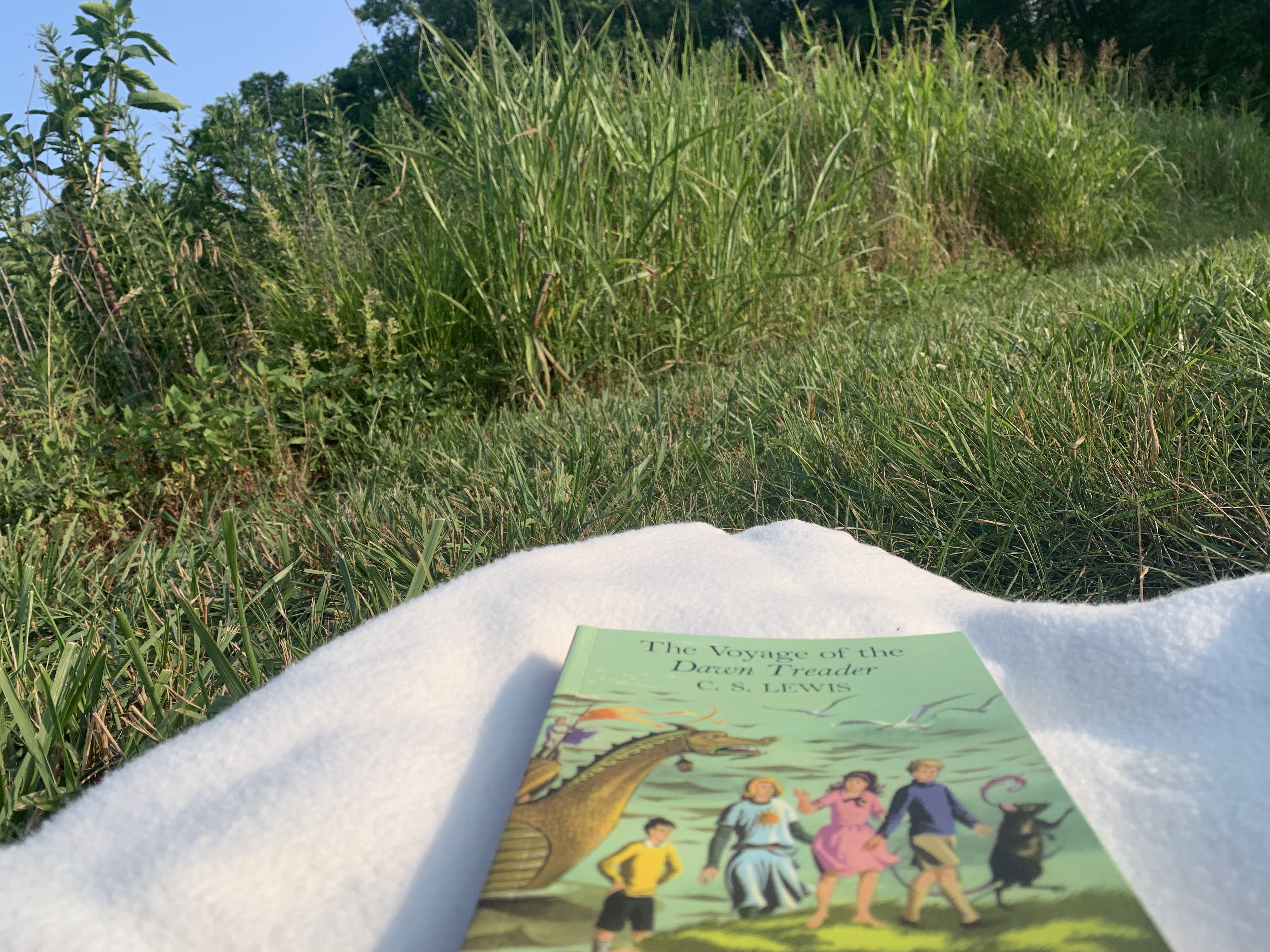
    In between Scriptural word-studies on darkness and frost, puzzling over texts like Vladimir Propp’s venerable Morphology of the Folktale, rereading The Voyage of the Dawn Treader and The Hobbit, giggling over a P.G. Wodehouse audiobook as I water my plants, and basking in the sun to erase my flip-flop tan, I have been trying to write stories again. After a year of settling in a new place and trying to build a life, somehow, writing is harder rather than easier. It is a perilous, vulnerable, precious thing to try to call a world to life with words; shape believable, complex characters; set a rhythm of exposition, action, and dialogue that summons readers into the waking dream of narrative. 

    A sweet and wise writer at the recent writer’s retreat told me that she is trying to write primarily for herself, for joy, first, before worrying about pleasing an audience. I am trying to have the courage to imitate her in that – to refresh my spirit with good, profound, beautiful things, and then use them to sing a new song. 

    Leaf by Lantern – Latest Podcast Episodes

    Episode 3: The Black Bull of Norroway

    I had a lot of fun putting this episode together. The episode examines how a Christian artist could interpret or use the images of the unexpected call, the black bull, the wandering in the wilderness, and the glass hill from this fairy tale. 

    Things I forgot or didn’t have room to mention in the episode (these will make more sense if you’ve already listened to it): 

    • I think the image of the black bull, a figure who is mysterious and scary at first but turns out to be good and kind, has some symbolic links to the idea of “holy darkness” that C.S. Lewis explores in his own fairy tale retelling, Till We Have Faces. I may do a podcast episode on that book later.
    • There are so many fascinating images in this tale I didn’t cover: the apple, pear, and plum given to the heroine that contain fabulous jewelry; the strange part of the tale when the sky turns red if the battle goes ill and blue if it goes well; the washing of the blood-stained shirt. I could have gone into themes of communion, provision, prophecy, sanctification, and recognition here – but to avoid making the episode too long or oversaturated with content, I had to focus on my favorite images.
    • In my own version of the tale, the one I read aloud at the beginning, I chose to have the prince say “At last!” when he sees the main character, his true bride. This phrase is an echo of Adam’s exclamation when he first sees Eve.

    Episode 4: Maid Maleen with Loren G. Warnemuende

    My friend Loren and I talk about her retelling of “Maid Maleen” – a trilogy called “Daughter of Arden.” We talked about the first book, “Exile,” and how Loren chose to interpret the father figure, the princess, the tower, and the garden. I also threw in a question about fancy dresses, since I have come to believe those are a crucial aspect of fairy tale retellings. 

    • You can order a copy of Exile here and Wandering here.
    • See Loren’s website for information more about her and her work.

    Wonders of a Southern Summer

    Amur honeysuckle. Black cherry. Honey locust. Tree-of-heaven. Sugar Hackberry. Eastern redcedar. Southern magnolia. Sawtooth blackberry. Crape-myrtle. Queen Anne’s-lace. The deep greens and golds, purples and whites of the flora is mesmerizing enough, but their fragrances make their own sacred pleasure-dome (to plagiarize Coleridge) in the warm air. The beauty makes me feel like I’m in some faraway, exotic place on vacation, but I’m not. This is my new home.

    Dove’s-feather white. Enormous as whales. Billowing like sails. Tinged with baby’s-breath blue. Scattered and wispy. Gray and thundering. A hilly country with more pastures and fields than forests and mountains has opened up the vast and quiet world of clouds to me. The humidity is heavy on my lungs and clammy on my skin, but makes each rainstorm a sweet relief. Cloudbursts douse the dry, dusty ground and brown grass, filling ditches and rivers. They keep the greenery lush – apart from a few leaves that have shriveled in the heat, turned banana-yellow, and fallen.

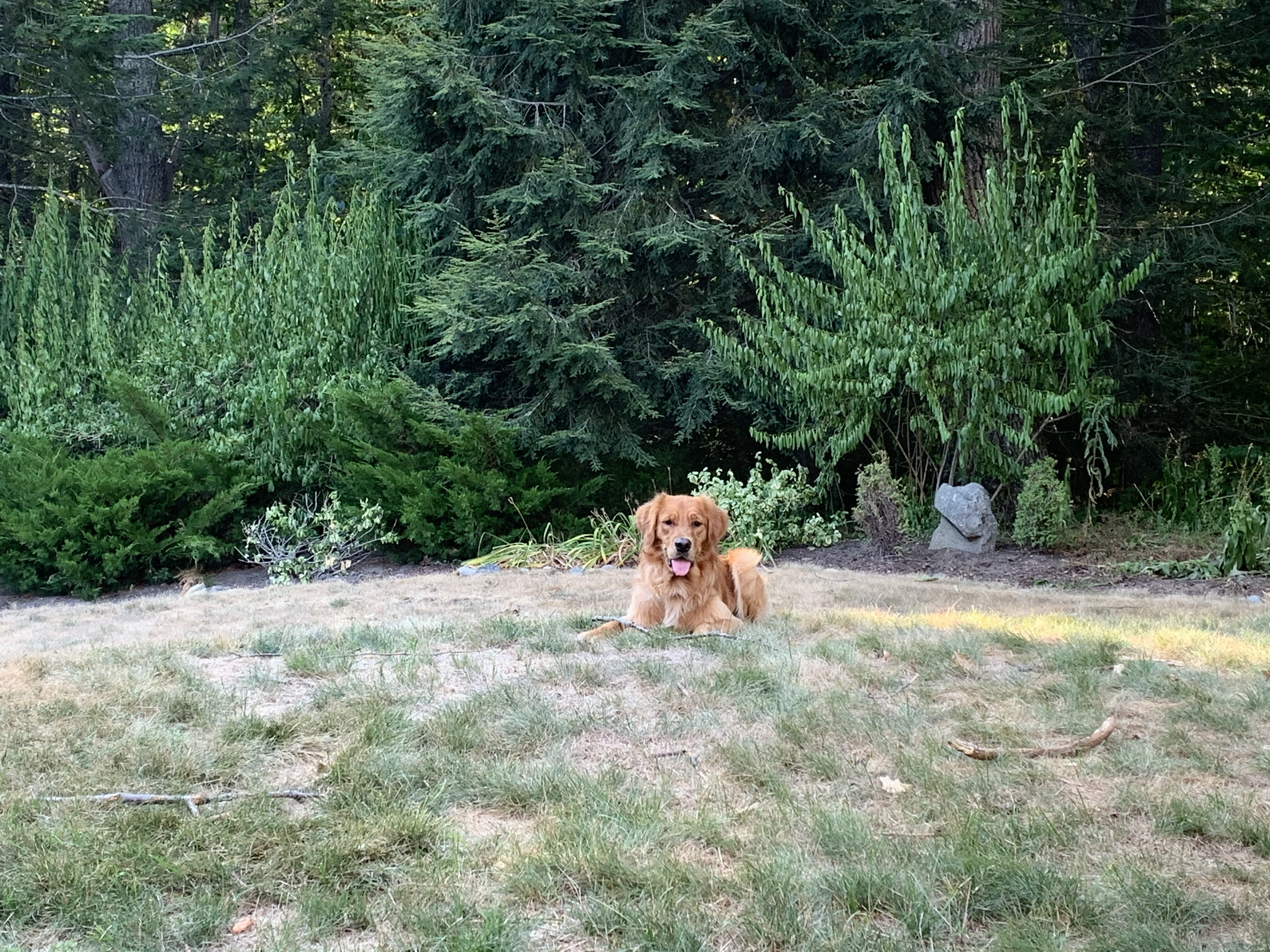
    Tiny, white-eared rabbits at silflay during golden hour. Cheery goldfinches, elusive cardinals, pert mockingbirds, and aggressive blue jays hopping around bird feeders. A mother cat and three silky black kittens with golden eyes watching me at dusk. A snake longer than my arm curled lazily in the middle of a path. Many of these creatures are familiar to me, but I love watching the drama of their alert watchfulness and quick movements on my walks. My own creature, a jolly golden retriever, enjoys chasing most of them, tongue hanging out, tail wagging.

    A high school performance of “A Midsummer Night’s Dream.” A four-person cast in a production of C.S. Lewis’s “The Great Divorce.” Lectures on time, the Christian values embedded in our culture, grief, and joy at the Rabbit Room’s North Wind Manor. Over the past few years, I have trained myself to listen to rumors of talks and conferences, performances and concerts that I could possibly attend on Eventbrite, Universe, Facebook, Instagram, the websites of faith & art or Christian-based intellectual organizations, and blog posts. Now, it is so good to have this wealth of opportunities within easy driving distance. Each event is a small wellspring of ponderings on time, love, justice, and joy that keep me from drying up in the grinding necessities of life (like grocery shopping and taxes).

    The turbulence of the past few years in the world and my life – COVID, moving a few times, war, government changes, travel, making and canceling plans – have made me expect ephemerality. As I shopped and hauled and hammered and shifted new furniture, I kept wondering how long it will be before I have to break down what I built, repack my possessions, and move somewhere else. I don’t feel comfortable imagining myself becoming safe and settled anywhere for more than a year. When will the next pandemic, tornado, hurricane, or recession break? When will I need to make a career movie or transition for family or friends? Every anchor I screw into drywall and rug I unroll is an attempt to create a fragile but cozy haven for a time, however long that time is.

    In these golden, sweltering, precious summer days, I’m reading stories and trying to craft my own. I savored Wilkie Collins’s The Woman in White in the sultry afternoon sun by the pool. I paged through Catherynne M. Valente’s The Girl Who Fell Beneath Fairyland and Led the Revels There on my phone as I waited in line at the county clerk’s office for new license plates. Every free evening, I hunt for magical creatures and literary archetypes in The Lore of Scotland and The Folk Tales of Scotland by the flickering light of a honey-scented candle. I can feel potential future readers with me in every scene I craft, as if I’m the driver of a safari bus tour, hoping I don’t run us all off the road into the jungle of clichés, melodrama, confusion, preachiness, or boredom.

    But finally, after empty for so long, I’m able to dream again.

    Blue Dreams and Green Stories: Summer Travel in Scotland

    I finally got to travel. After yearning for it in the golden fall, dreaming of it in the windy winter, and planning for it in the cool green spring, I finally got out to the Highlands & Islands and a bit of the Lowlands: the Isles of Mull, Staffa, and Iona one weekend, the Isle of Skye, and then Edinburgh.

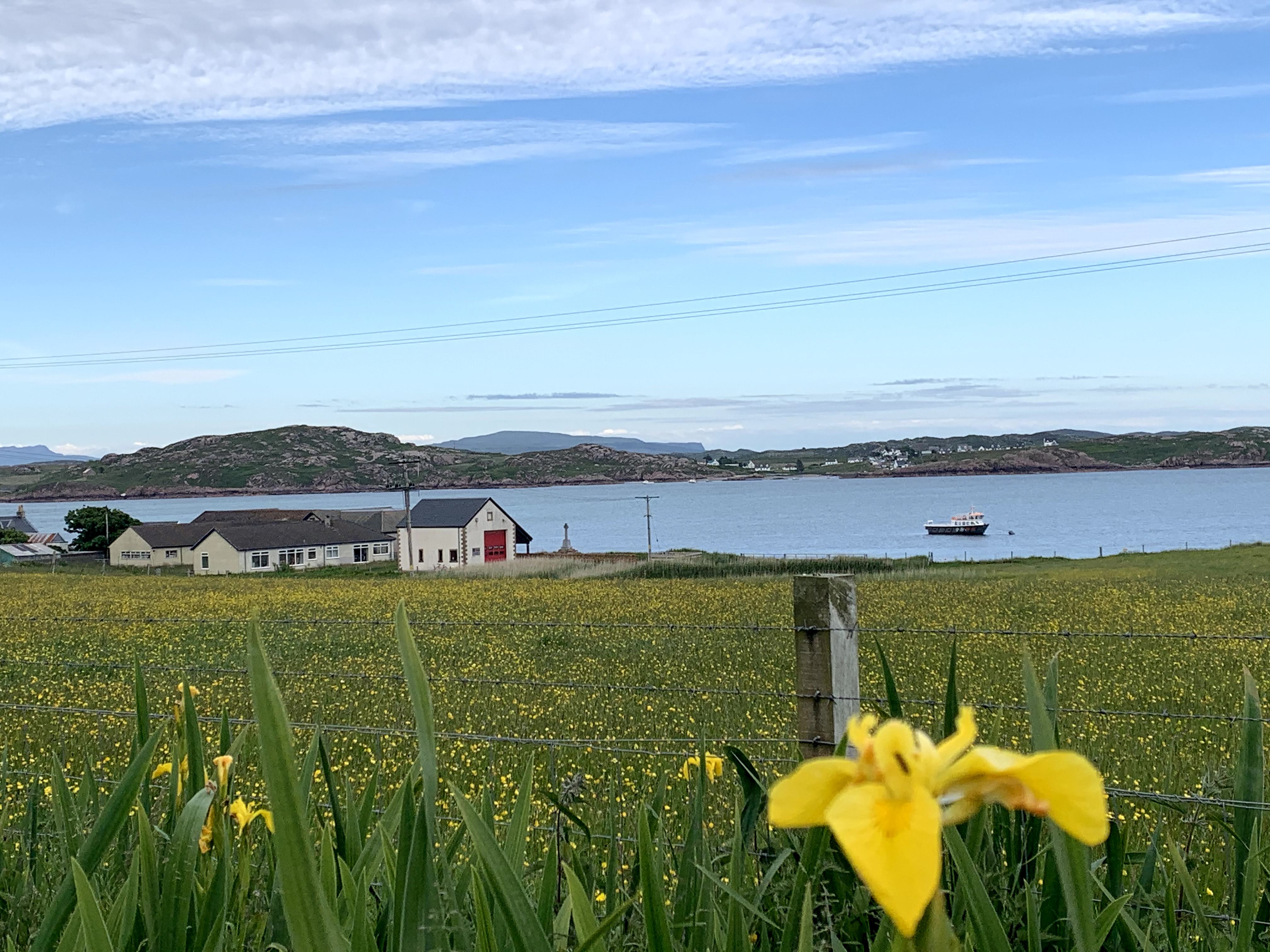
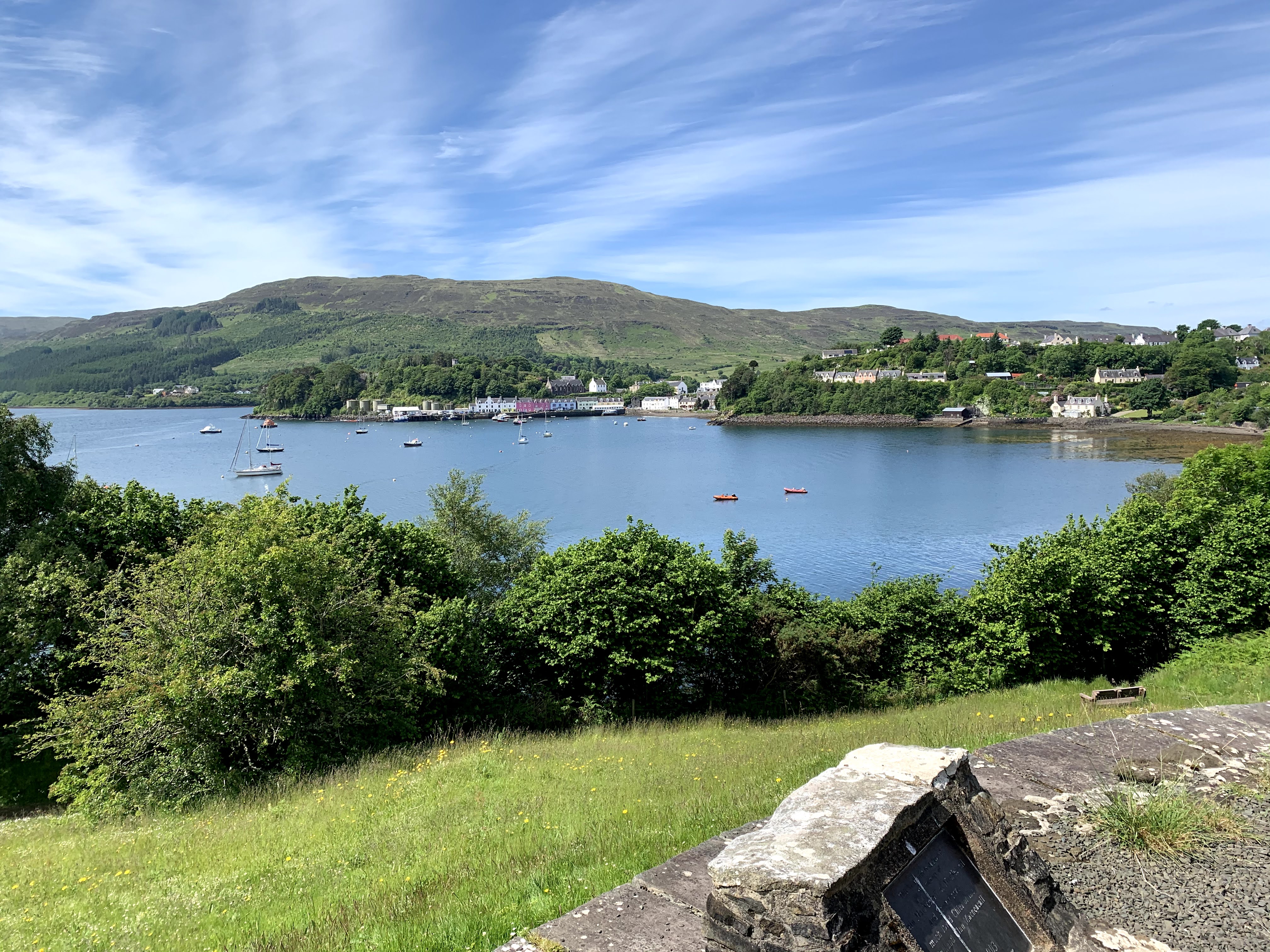
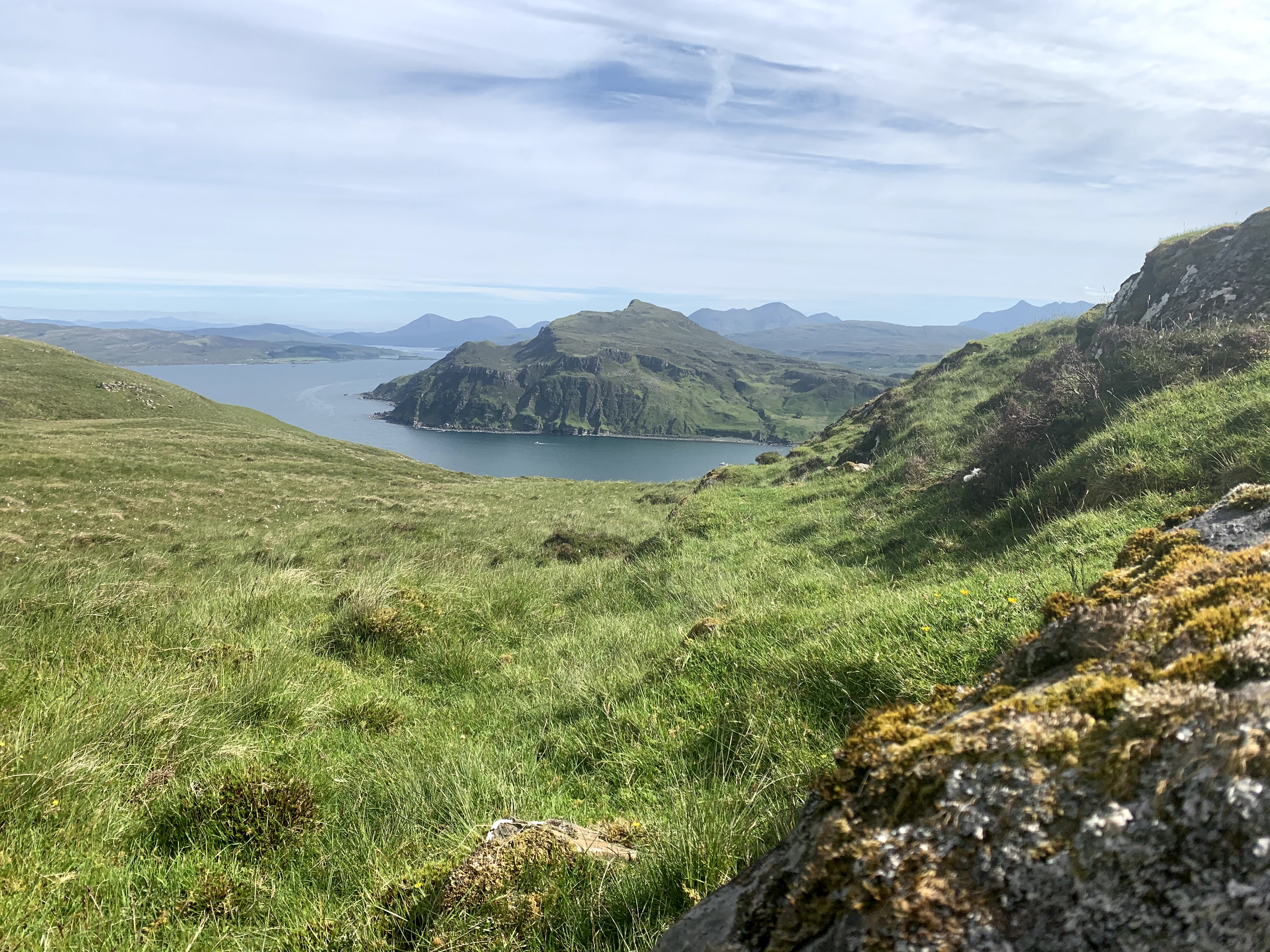
    It’s been glorious, exhausting, enlightening, stressful, blissful. Hikes across emerald slopes sprinkled with tiny daisies, buttercups, purple heather, and fluffy cotton-grass; cozy evenings in wood-paneled pubs with tartan carpeting and paintings of antlered deer; ferry rides past rugged peaks and lonely islands; views of faraway blue hills and glimmering lochs; laughter and long talks on train and bus rides. 

    Each place gave me memories, dreams, and fragments of stories.

    Iona

    Sacred Haven

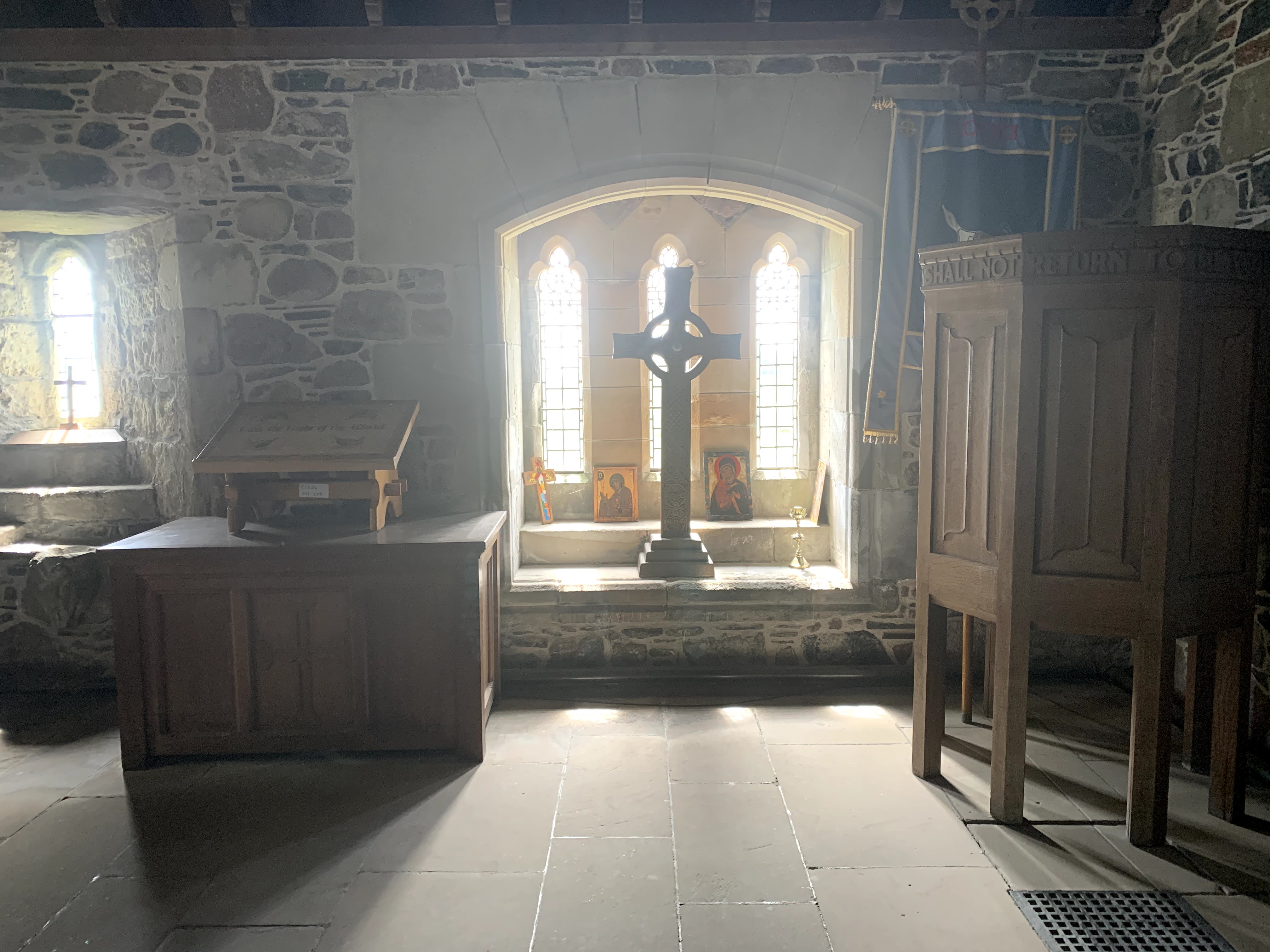
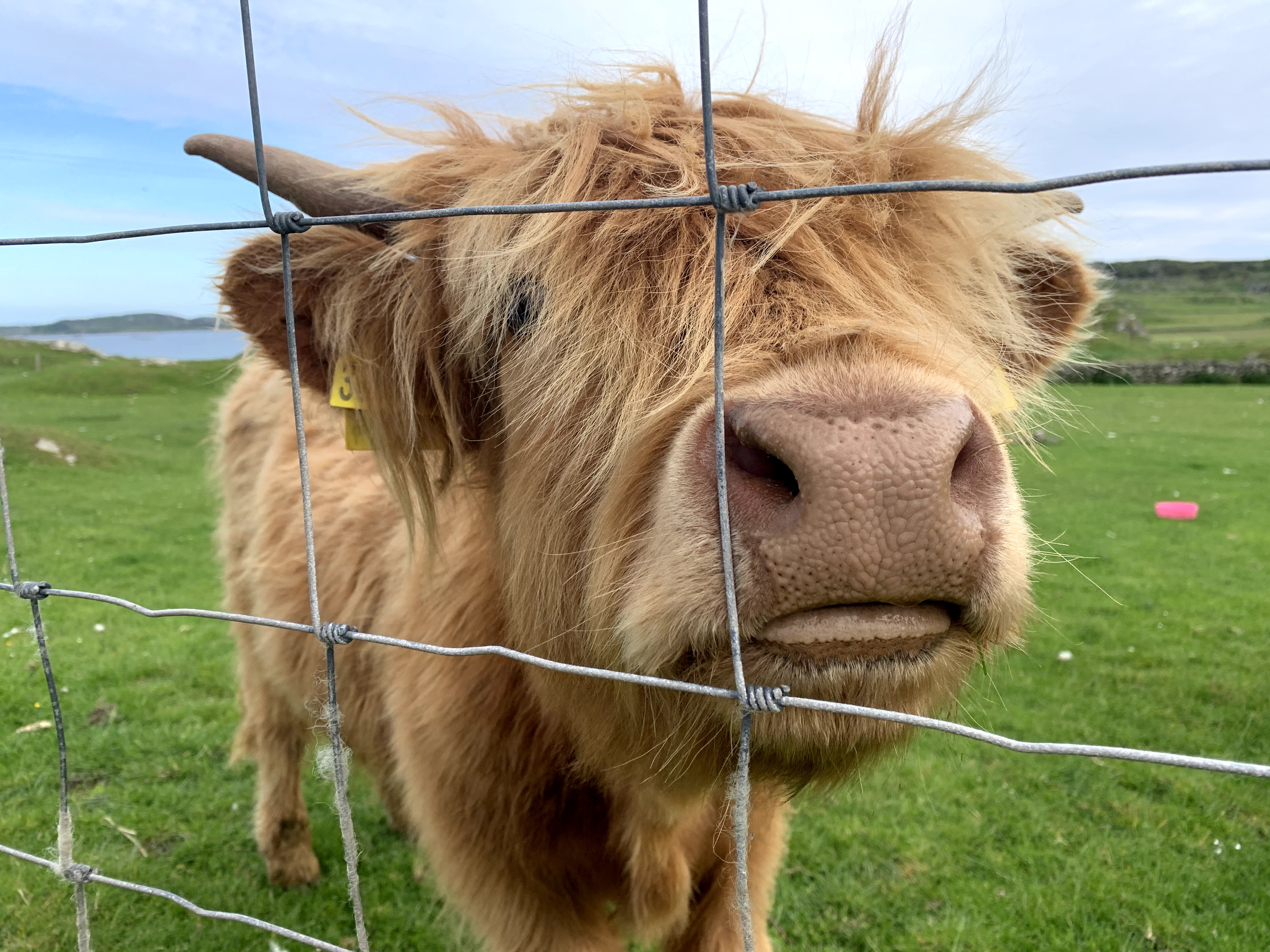
    Iona is a tiny island, 3 square miles, with only 150 permanent residents and herds of grazing sheep and Highland cows (“coos”). It is also the place where St. Columba landed from Ireland in the 500s (1500 years ago!) and started an abbey. A replica/rebuild of the abbey is there today, full of the remnants of Celtic crosses, new sandstone pillars covered in intricate carvings, and ancient gravestones. 

    One of my favorite insights was seeing the snake-and-boss design. Despite the Edenic tradition of snakes as creatures of evil, apparently the medieval Christians saw the casting and regrowing of skin as a symbol of death and resurrection. I have heard whispers of the richness of Celtic Christinaity, of thin places and rhythms of life and mysteries incarnate in the natural world (such as clovers representing the Trinity) but I want to study more. The whole island felt quiet and sacred – a place to come and heal, walk the pasturelands and talk to God, and feel connected with the great cloud of witnesses that is the universal Church.

    Story fragments
    • A sacred place of healing
    • An island at the end of the world
    • An abbey with a buried treasure

    Staffa

    Lonely Marvels

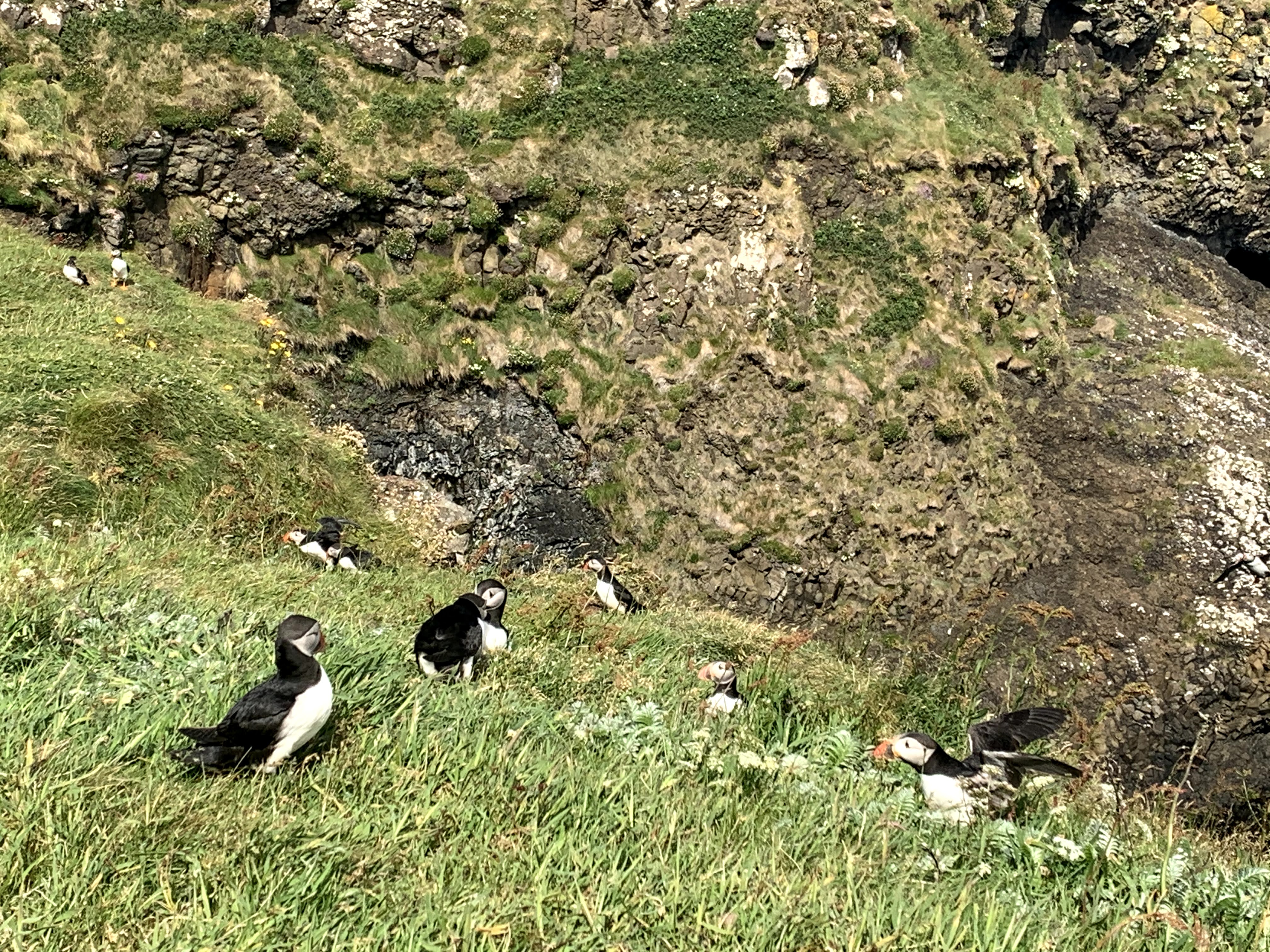
    Staffa is even tinier than Iona, shaped by some geological process I still don’t fully understand to have natural hexagonal pillars. It looks giant-carved. We rode out by ferry for an hour, chilled by the sea-wind and enchanted with a fluffy white dog who loved us dearly, and then had an hour to explore it. We sprinted down to the wonder of Fingal’s Cave, aquamarine water in a deep black vault, and then back across the steep cliffs to see the PUFFINS. They were just as clownish and cute as we hoped, though tinier. They didn’t care anything about us, but launched off into the sky as a dark seabird flew overhead.

    Story fragments
    • People resettling uninhabited isles and encountering magical creatures
    • An echoing cave that is really a shadow kingdom
    • A tour boat crew that has a special understanding with the mermaids in the area

    Skye

    Blue Kingdom

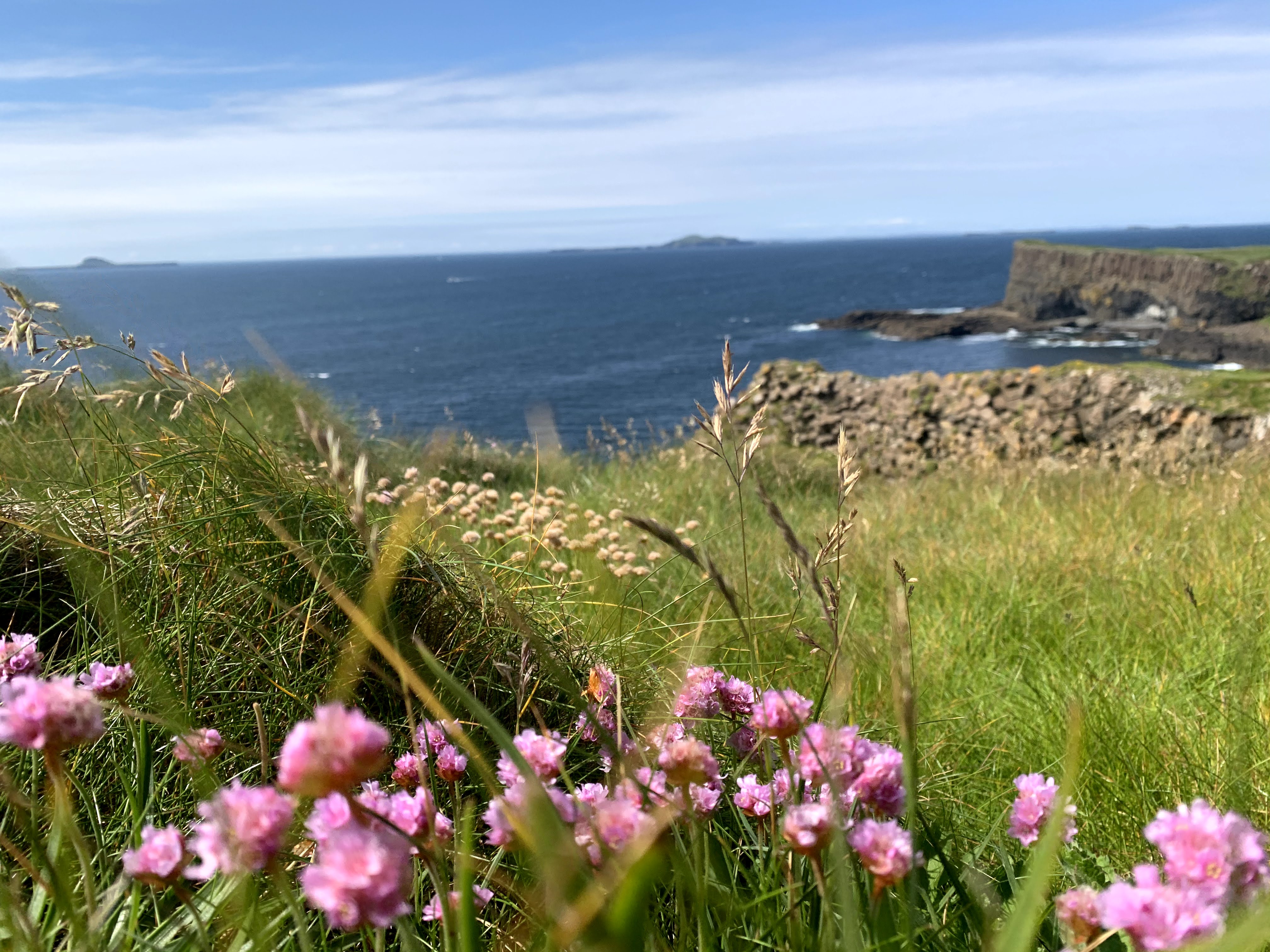
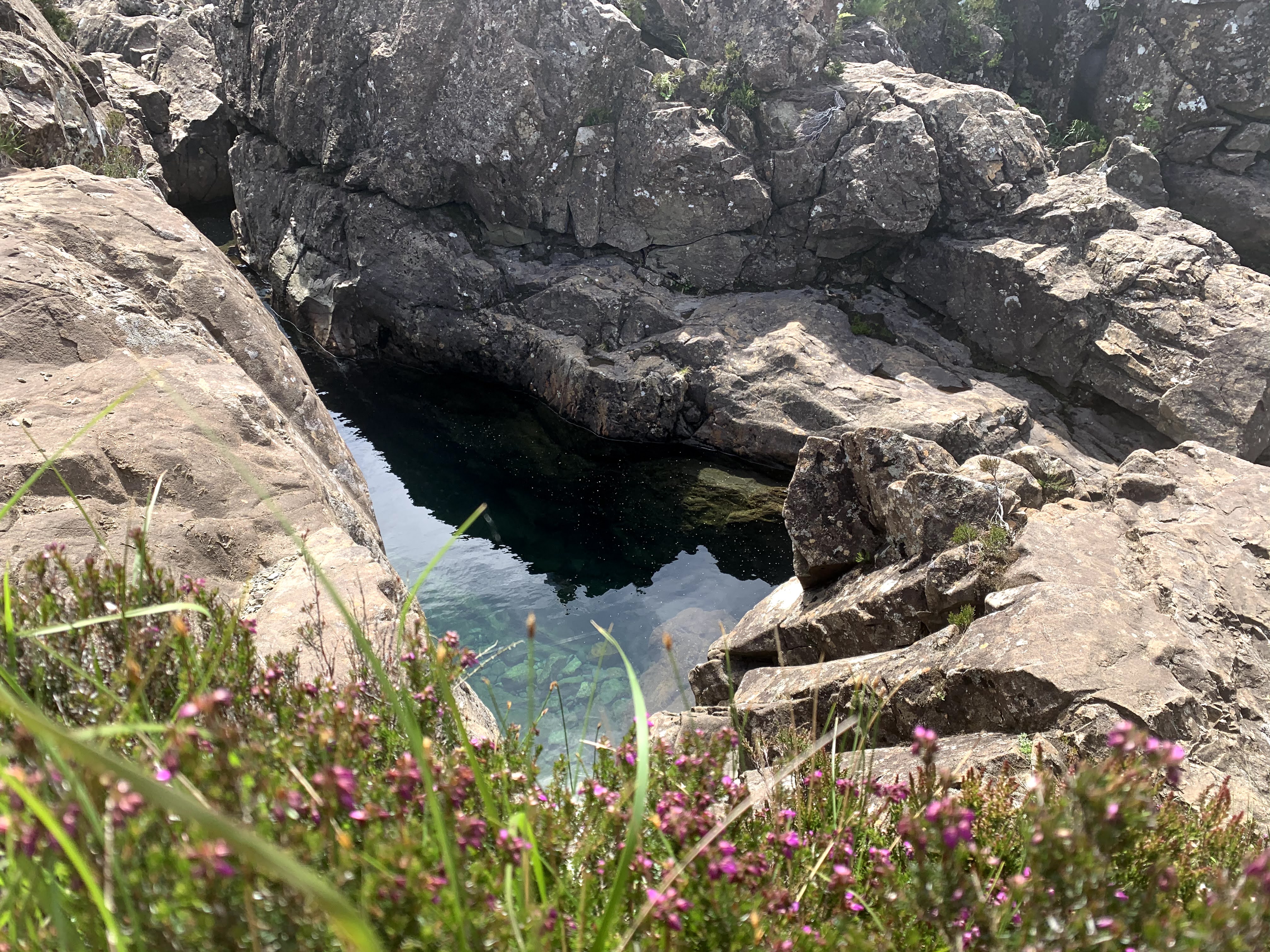
    Skye is more rugged than Iona, Mull, or Staffa. It’s also many shades of green and blue, with steep cliffs, purple heather, gray rock, and the same sprinkling of wildflowers. Slender waterfalls wend their way down the hills, among the evergreens. A Scottish shepherd recommended a gorgeous hike across the cliffs that gave us exquisite views: distant azure mountains, white sailboats on the sea, and window panes glittering in the town. We couldn’t capture it in photos, though we tried very, very hard. The shepherd also told us about the Nicholson clan of Portree (Port Righ in the Gaelic) who went broke in the 1800s and emigrated to Tasmania and the Carolinas. 

    We spent Sunday afternoon with Skye’s Magical Tours: an ex-fisherman named Brian took us to the glimmering Fairy Pools and around the island. Skye was magnificent, so old and huge that I felt small and lonely. We filled it with laughter, with dinner of shepherd’s pie and philosophical discussion, mornings of berry-and-Nutella crepes and foamy cappuccinos. 

    Story fragments
    • Cloud-creatures in a mountain country
    • Fairy folk who are defined by the color blue (as opposed to green, the traditional elvish color in Scottish lore)
    • Visitors arriving at a shepherd’s cottage
    • Selkies at twilight

    Edinburgh

    City of Stone

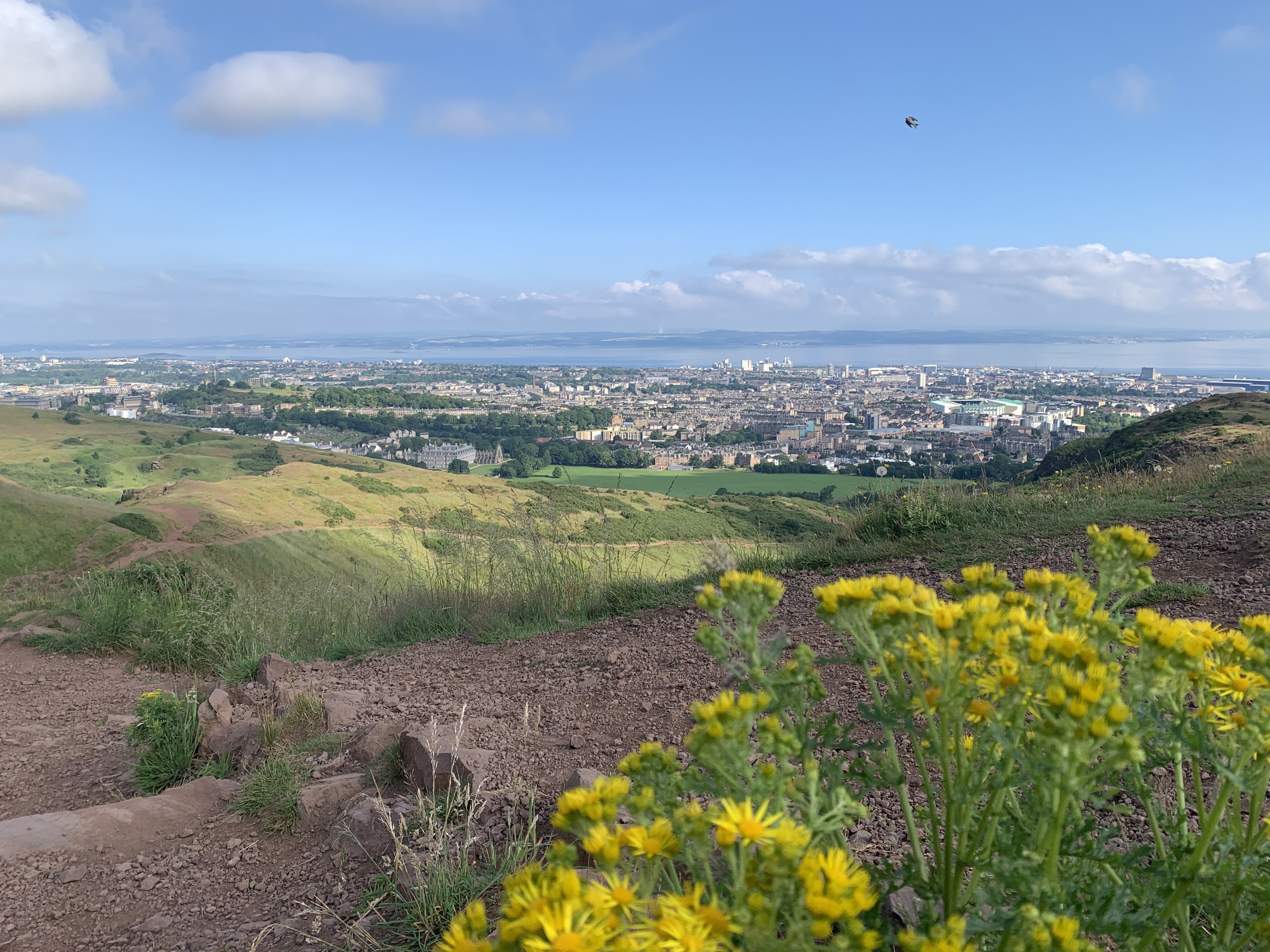
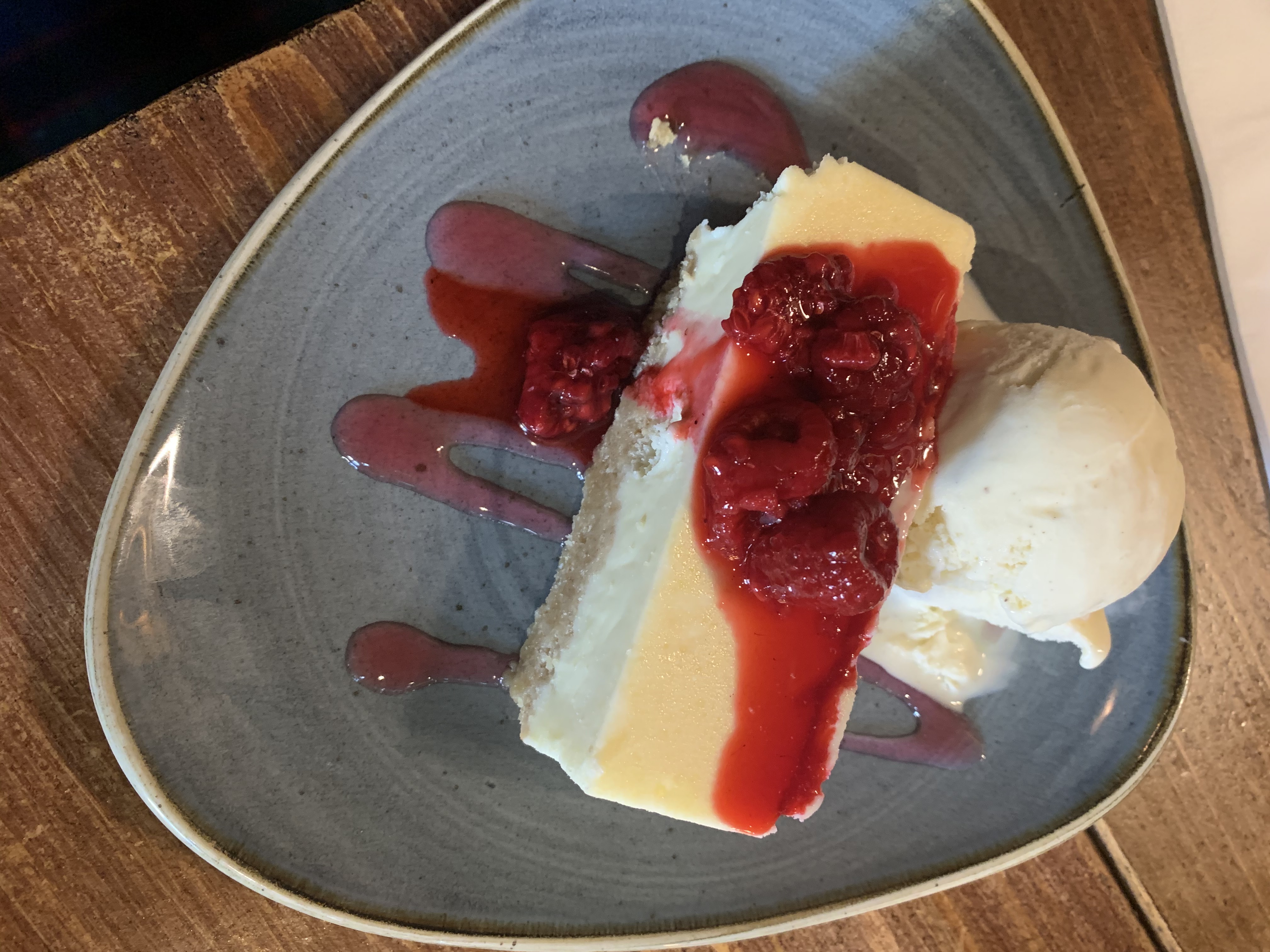
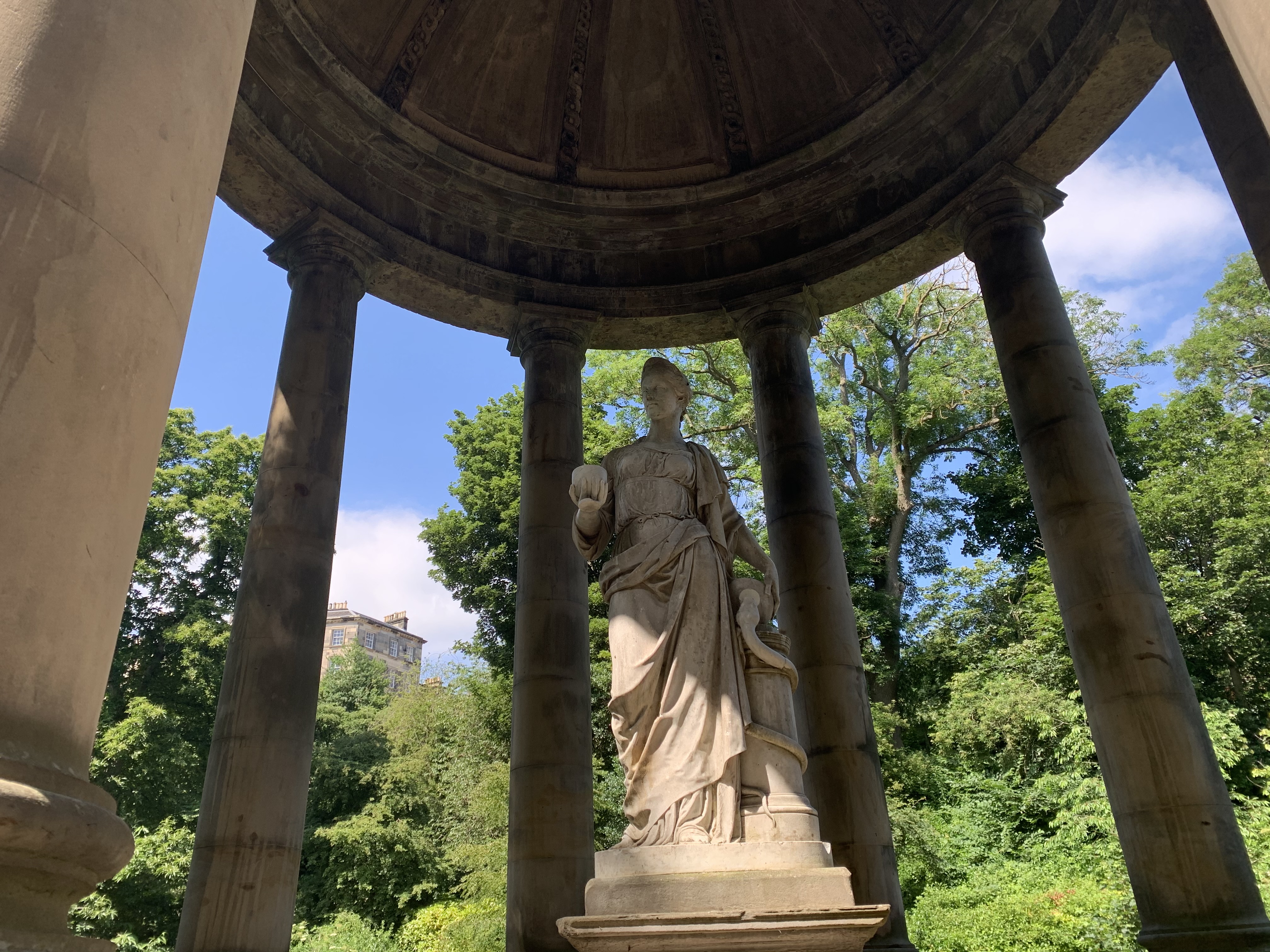
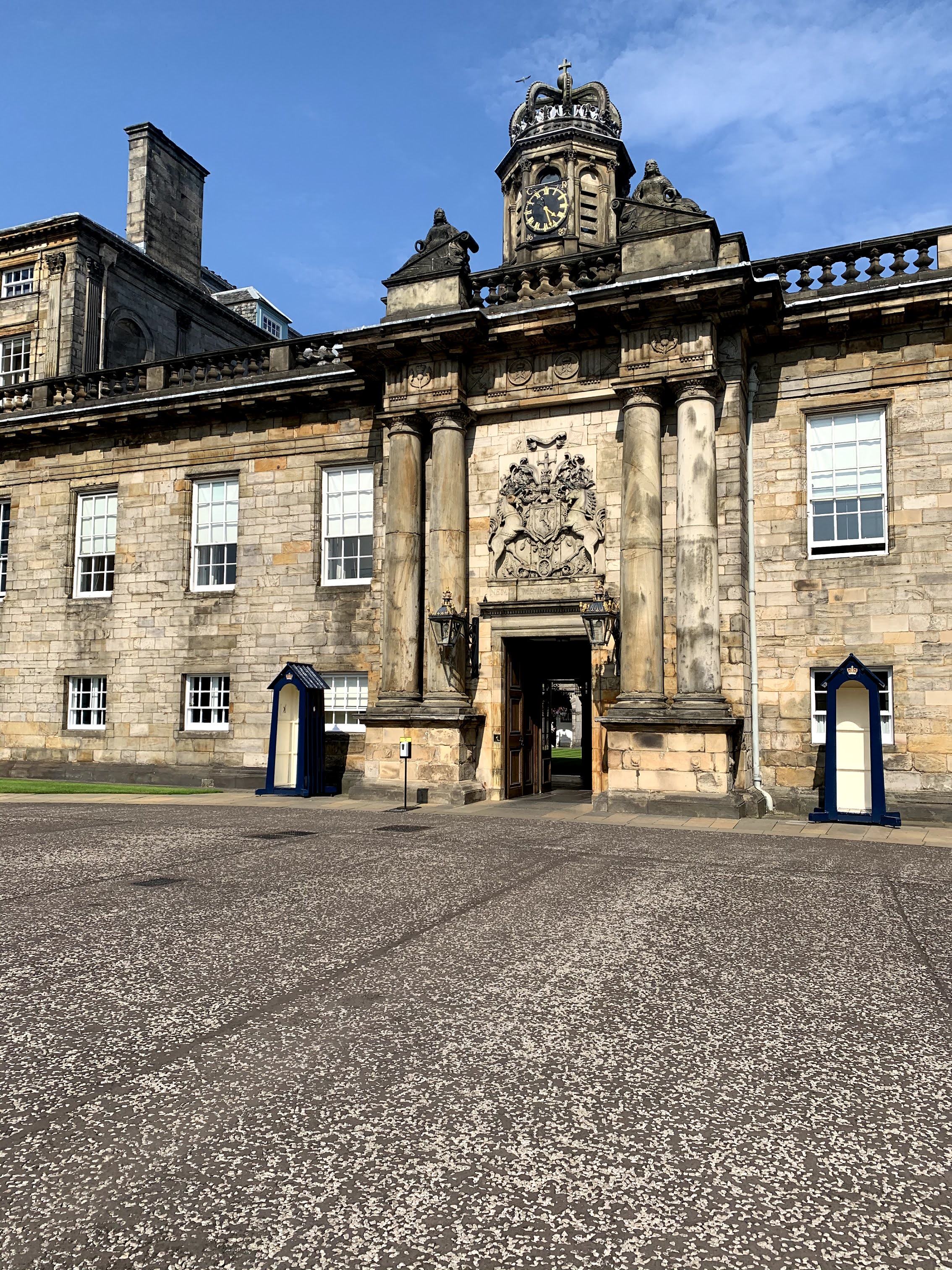
    After several trips in the wild, it felt strange to be in a busy city: buses and trams on Princes Street, women in flowery dresses, shops with tartan scarves and Celtic jewelry, gardens of pink roses and fragrant honeysuckle, Gothic architecture, and modern tinted windows. We feasted on the best of Edinburgh: touring the gilded halls of Holyrood Palace, cullen skink and clotted cream raspberry cheesecake at a cozy pub, dizzying views from Arthur’s Seat, dappled sunlight on the river by St. Bernard’s Well, and golden hour in Greyfriars Kirkyard.

    Story fragments
    • A tiled fireplace with a secret message (I fell in love with Holyrood Palace’s tiled fireplaces)
    • Swans and a ruined abbey
    • Queen Ann’s lace on a dormant volcano
    • A locked well with healing powers
    • A brownie who lives at an Air BnB

    Meditation: Commercialization vs. Reenchantment

    In Edinburgh, thoughts planted on Mull, Iona, Staffa, and Skye finally took root and began to sprout: I realized how dramatic the tourism industry is in Scotland, and probably in other places. I mean “dramatic” in the sense of performative or theatrical: the little shops in Iona, Portree, Old Town, and other places shout all the most distinctive and unique aspects of Scottish culture and history to attract attention. The symbols of Scotland’s Scottishness – tartan, bagpipes, highland cows, the Loch Ness monster, Celtic runes and symbolism, ancient ruins, haggis, thistles, unicorns, and teapots – are the most prominently displayed where strangers and foreigners like me can purchase them and carry them home, like chipping stones from a crumbling castle. Scottish people cannot love tartan that much; it’s outsiders who want the flavor and breath and music of Scotland, because we want to come and experience something fresh and different and fully its own, individual self, somewhere unlike our home place. Most Scottish people shop at the T.K. Maxx or luxury mall we visited, which are almost identical to retail in America.

    That made me sad. I know the Western world has many similarities – celebrities are popular in multiple countries, and so on – but I would hate to have all the beautiful distinctiveness of Scottish lore and heritage as a thing of the past. I have only been a Master’s student in an international university town for a year here, so I don’t feel that I really know the Scottish people and culture. But the sheer clamour of a few shops in New Town in Edinburgh made me uneasy, as if only the tourist industry wants to preserve full and distinctive Scottishness – and then, only to sell it.

    But I have tasted Scottish culture in literature. I’ve been a dragonfly skimming the depths of it: Scottish fairy tales like “The Well at the World’s End” and “The Black Bull of Norroway,” ballads like “Tam Lin” and “Thomas the Rhymer,” the mesmerizing fantasies of George MacDonald, the Jane Austen-ish societal explorations of Margaret Oliphaunt, the exquisite prose of George Mackay Brown, the haunting tales of James Hogg, and the simple profundity of Alexander McCall Smith. My side-project next year will be to delve more deeply into these and more. 

    These writers imbibed Scottish tradition and added to it, weaving the desires, dreams, fears, and tensions of their own time into the loom of myth and legend. As I writer, I want to follow in their footsteps and tell stories that help reenchant places like this. I want to reawaken the wonder of selkies on the beach in the moonlight and fairy folk dancing under the green hills, as well as capturing the mystery and dangers of our own time: the whispered rumors and masked faces of COVID, the political tensions that are re-tribalizing countries and regions, the seductive illusions of social media, and the now-too-familiar marvels of the Internet and smartphones. 

    St. Andrews 

    Gray Havens

    After so many buses, trains, and ferries, it is good to be in St. Andrews again. I’m astonished to find that after magnificent peaks and staggering views on Skye and Arthur’s Seat, the soft, golden-green beauty of fields and woods heals me instead of overwhelming me. 

    This place is not home. It’s only mine for the rest of the summer. But I will love every day I have left.

    Summer of Faerie: Poetry, a Golden Wood, and Departure

    Even on the most beautiful days in the whole year – the days when summer is changing into fall – the crickets spread the rumor of sadness and change.
    E.B. White, Charlotte’s Web, chapter XV, “The Crickets”

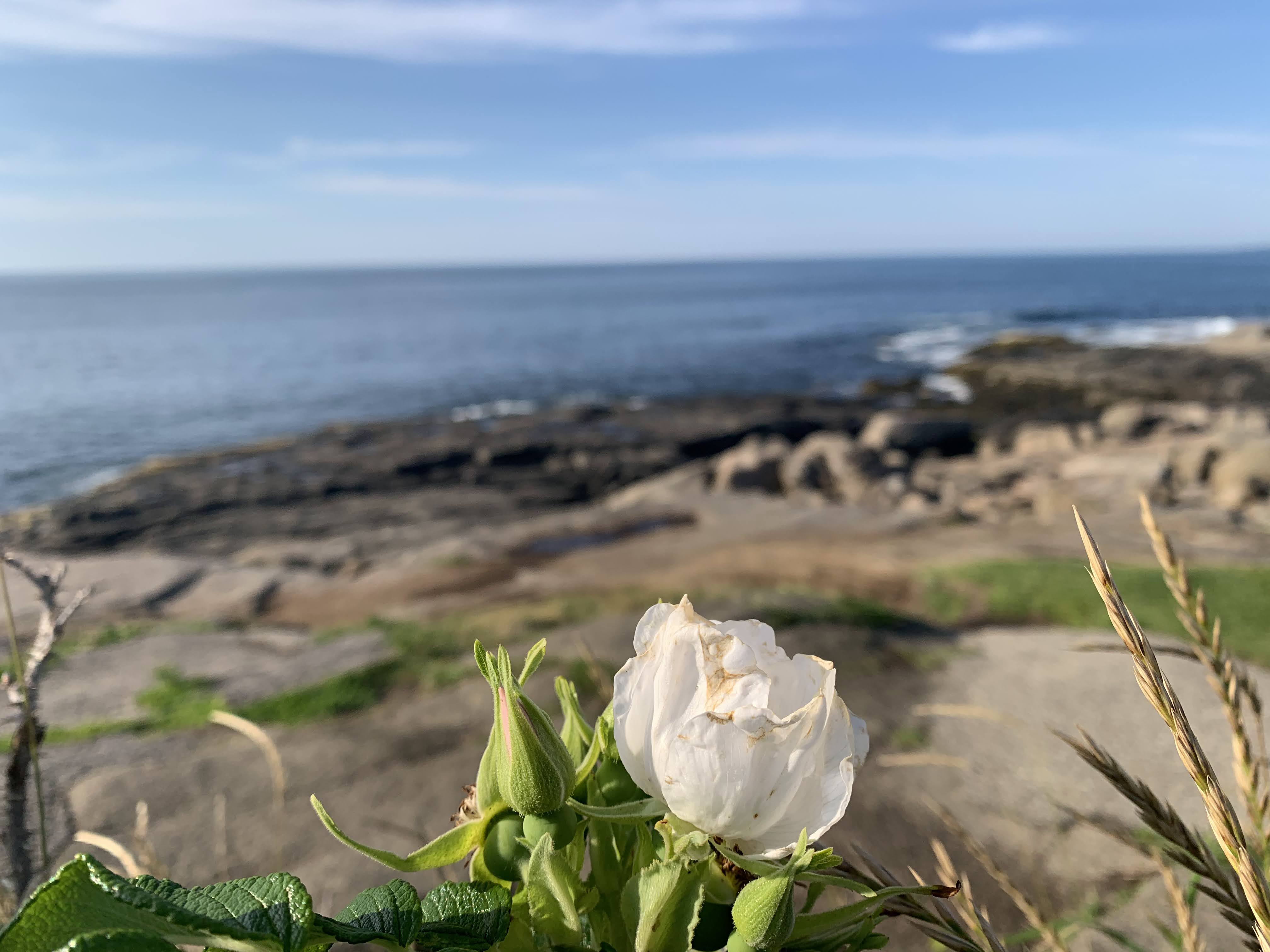
    I hope I never lose my awe at the change of seasons, the year’s wheel turning from red to white to green to gold. This year, the whispers of autumn in the cool breezes and silver-dipped backs of leaves hurts me as much as it excites me. This summer was a dream, from the beauty of blue horizons and pink beach-roses to the amazing contributions to the Summer of Faerie project.

    I’m ready to go to Scotland; ready for the long flight, the two-week quarantine, the world of books and music and art I will enter with the other students in my MLitt program. It will be good and hard and beautiful and strange. I have never lived in a foreign country; I have been dreaming of going to grad school for five years; I’m longing to dig deep into the richness of study; I’m nervous about the many things I don’t know, like what grocery store brands to buy or whether I can keep track of the dollar/pound conversion in my head.

    I wrote this poem to capture some of the beauty of this summer and a little of the scattered research I’ve done of Faerie.

    Faerie Country

    The lake

    Dipping paddles into darkness, stirring
    Pollen gold dust over pondering deep,
    We tune our ears by cicadas’ whirring,
    Hearing loons cry ah-oo, spell of noon’s sleep.

    Dragons dream below us. We glide like ghosts
    Over their ancient rest, tree-covered spines
    Watching like guards of a distant outpost
    Hungry, listening, waiting for mythic signs.

    Staghorn sumac raises scarlet pledges,
    Toasting endless sky, hailing dark green peaks.
    Silver birches gleam at twilight’s edges.
    We pause, haunted, as night’s veil speaks.

    The dream

    Golden moment: scent of pine in a glade
    Swirling rich and sweet. Steep hills overgrown,
    Tangled with roots. Heat shimmers; phantoms fade.
    Did I dream it, or remember? Unknown.

    The river

    Eelgrass rustles; breezes finger willows.
    Fireflies blink and twirl in shadowed trees.
    Green-Guards conduct the peepers’ twilight show,
    Their song of sleeping kings and emerald seas.

    Orange seaweed drifts up from the sea caves
    Remnants of the Sea Folk’s midnight fun.
    Splashes: kids jump off the bridge into waves.
    Tide-Keepers giggle, scales glinting with sun.

    Mourning doves cry oo-ah while the Dawn-Beasts
    Breathe on windows of a morning, fogging glass.
    Packing quickly, I watch the kindling east
    Turning green to gold. The zenith has passed.

    There seems to be an unwritten rule that artists should never explain the meaning of their work: they can either remain mysteriously silent or drop cryptic hints. I’m going to break that a little now to explain the middle section of the poem, “The dream” because there’s a mystery there. Since spring, I’ve had a recurring daydream of a golden wood, a pine hollow baked dry and amber by the sun, full of hills that roots break through. It’s warm, silent, peaceful, safe, beautiful, sad. There might be a castle nearby; I think it has a wishing well. It may be from a book or movie (Ever After, Bridge to Terebithia, The Book of Three, Prince Caspian) or somewhere I have traveled (New Hampshire, Cape Cod, Pennsylvania, Yosemite). I thought it might be in Acadia National Park, but I didn’t find it there in June.
    As I included that dream in my poem, I read Rebecca D. Martin’s beautiful article, on the Rabbit Room, “The Stories of Others.” I liked it so much that I went back and reread her Rabbit Room article from February, “Significant Lights.” The fourth paragraph brought me to a full stop: she describes a childhood dream

    … infused with a beauty so rich I can still sense it. In the dream, I walked through a golden wood, as haunting as autumn, as living as spring. There were elements other than the forest, too: a castle, the sense of mystery, a deep feeling of belonging and hope, and even sorrow—a pervasive sadness that I couldn’t keep staying here in this most perfect place. . . . sometimes I still lay on the edge of sleep longing for a glimpse of that forest again.

    Is my golden wood a subconscious memory of Rebecca’s article? (Probably.) Or did we both dream of the same place, miles and years apart? I have no idea, but the second idea reminds me of something I read in Madeleine L’Engle’s book Walking on Water: L’Engle noticed that a certain image she used in her book A Swiftly Tilting Planet, a bonfire of roses, also appeared in Dante’s Divine Comedy, George MacDonald The Princess and Curdie, and T.S. Eliot Little Gidding.

    Where did the fire of roses originate? I suspect that it goes back beyond human memory.
    Madeleine L’Engle, Walking on Water, chapter 10, “The Journey Homeward”

    Is the golden wood a whisper of Deep Magic? I want to believe that.

    I think the golden wood will haunt me in the darkness of winter in Scotland (six hours of light per day). I think it will come back to me when I slop through slush in the streets or feel cold, wet winds slicing through my jacket. I hope that instead of making me grumpy and discontent (as I can be), that fragrant silence, delicious heat, and golden radiance warm me from the inside out.

    Summer of Faerie: “The Decision” by Loren Warnemuende

    August is hot. Humidity hangs heavy in the air and (some mornings) paints fog on the windows. The leaves have darkened from their fresh spring green and hang limp, shriveled. I’m writing this while sitting on the back porch steps, my feet on the dusty earth and brittle grass, as our golden retriever sits in the middle of a lawn chewing a stick. Crickets murmur in the woods. Just now, though, a cool wind just came running through the tree canopy with that delicious rustling sound like running water.

    My Faerie research has lapsed (somewhat) as I work through summer reading for St. Andrews. On our Montana trip, however, I read Charlotte E. English’s delightful Faerie Fruit, a tale with shades of Eden, Christina Rossetti’s “Goblin Market,” and C.S. Lewis’s The Magician’s Nephew mixed in with small-town intrigue and told with enchanting prose. The first section was my favorite, but the whole story was a fascinating look at food and eating in Faerie (a branch of study I need to examine further), community and friendship, self-control and desire, love and choices.

    This week’s Summer of Faerie post also concerns choice and desire. Loren Warnemuende, who wrote a retelling of “King Thrushbeard” earlier this summer, also contributed an excerpt from her manuscript, Exile. It’s the first book in a trilogy named Daughter of Arden which retells the Grimm Brothers’ tale of “Maid Maleen.” I’ve had the privilege of reading some of the first drafts of the series, and it’s marvelous – rich, exotic, compelling, and gripping at every turn. I hope to see them in print someday. Enjoy!

    The Decision

    by Loren Warnemuende

    Cathedral interior
    Photo credit: Loren Warnemuende

    “Her Royal Highness, the Princess Maleen!” Minister Gooldon boomed. Echoes reverberated through the Hall, up against the arched stone ceiling and down across the glimmering windows.

     At the front of the Hall King Darrick rose, and the assembly turned toward the center where Maleen must walk. She swallowed. There were so many people watching. Three days before she had stood here alone with her father when he had given her the incomprehensible choice—marriage to Prince Jared of Dranneth, or sojourn in a tower. He said the tower was the only alternative to the marriage, and both were to keep her safe from the looming war with the barbarous Kalomenn. Maleen had begged him to consider other options—if only he would consider Prince Melanor of Pandor, the one she loved, who loved her!—but the king wouldn’t bend and now she had to announce her decision.

    Maleen took a deep breath, fixed her eyes on her father, and swept toward him. Colors swirled along her sides and the path moved on and on. She felt she traversed the history woven into each of the tapestries lining the walls, back to the dawn of Arden. At last she reached the steps of the dais. King Darrick stepped down to meet her and took her hands in his.

    They stood, brown eyes to brown. She did not speak, and tried not to look down, forcing her face to give no signs of her turmoil. The hush in the Hall was almost unbearable.

    “And so, Maleen?”

    His words were soft, but they permeated her being and flowed through the Hall. Maleen lifted her chin, but her gaze dropped.

    “I choose the tower,” she said, and the weight of the stone pressed in around her. But it was the only option that would give Melanor enough time to come for her.

    The king gripped her hands tightly and a chatter of voices rattled like tossed pebbles through the Hall behind her. The king’s hold loosened, and he sighed deeply. He stepped up to his throne, leading Maleen to her delicate copy of his massive seat before he sat down. He motioned to a guard who stood by the council chamber door. The guard stepped within, then emerged followed by a man and a woman. They approached the dais and bowed deeply to the princess and the king.

    “Princess Maleen,” King Darrick said, “I would like you to meet Sage Granimor and Dame Marietta. Granimor, as you know, will build the tower.”

    Maleen nodded in acknowledgment toward the man with the wind-grained face and bulky shoulders. The man’s frame seemed out of place in the ornate hall.

    “I am honored to see to your safety, Princess,” Granimor stated, looking at her with piercing blue eyes. He carried his authority as a sage like a mantle. Maleen wondered how honored the man really felt for Granimor revealed nothing.

    “And this,” Darrick continued, “is Dame Marietta, who will join you in the tower.”

    Maleen jerked her head toward her father, then turned her full stare onto the woman before her. Someone to accompany her? The thought had not crossed her mind! She assumed she was in this on her own—how could her father impose such a fate on anyone else? Then she realized her father would never force someone to join her. But who would come willingly? Not, of course, Maleen reminded herself, that they would actually enter the tower, but what if…. No, the idea was unthinkable.

    The woman stood quietly before her and Maleen wondered what far corner of the castle she had been found in. Her hair, dark brown except for some gray at her ears, was pulled back loosely from her tanned face. She, too, had keen blue eyes that were fixed steadily on the princess, and her mouth was firm, but not tight. A blue sash tied the waist of her brown linen gown and her back was straight.

    She stepped onto the first step of the dais and took Maleen’s smooth hands into her rough ones. Her eyes were now level with Maleen’s.

    “I am looking forward to serving you again,” she said smiling. Her voice was low and rich. 
    Maleen gaped openly at the woman now. She was sure she had never laid eyes on her, and yet this peasant had the audacity to take her sovereign’s hand. Maleen closed her mouth, smoothed her face, and drew her hands away. Marietta, unperturbed, nodded slightly and stepped back to the foot of the dais.
    Maleen saw her father frown faintly before he turned to her.

    “Marietta has been a faithful member of this household since before you were born,” King Darrick explained. “She has worked in the library and kitchens, but it was she who nursed you your first two years.”

    “Oh.” Maleen had no other words. She knew someone must have nursed her after her mother died, but no one ever said who. She’d never thought to ask. She stared again at this quiet woman who smiled at her with peaceful assurance.

    The king waved his hand at the enigmatical pair, and with another bow they retreated to the council chamber. Maleen couldn’t take her eyes from the door where they exited. The rest of the Hall no longer existed.

    Her father spoke beside her. “My dear, I hope you will continue your regular activities until the tower is built. It will be some months before it is complete.”

    Maleen tore her eyes from the door but focused on her hands and didn’t look toward him.

    “Yes Father, of course.”

    He coughed slightly, and stood. She looked up into his face, trying to put away any feeling. The sight of his sad eyes, brows crumpled, and mouth compressed was too much for her. She stood quickly so she could avoid looking into his face again.

     “You may go now,” the king said, his voice low. And then, “I will try to call you in more frequently, my child.”

     “I—I thank you,” Maleen stammered blankly. She turned and stepped down the dais, moving toward the distant open doors, willing herself to remain calm and poised. She must be stalwart before her people. What would they think if she broke down now? And how could she let her father see how she felt? Let him show his pain! He should be anguished over sending his only heir and daughter into a prison. Besides, she thought, there’s no need for tears or tantrums! Melanor will come and take me away, far away, from all these people who pity me. She raised her chin again and left the hall with swift, unfaltering steps.

     She had expected her ladies would follow. They had said they would stand behind her, and she thought they’d want to be there, if only for the purpose of scrutinizing her initial reactions. She had looked forward to venting her frustration onto them. But no one followed, and when Maleen reached the bottom of the Hall stairs she realized she was alone save the stony sentinels of the King’s Elite. She caught her breath, forcing down an unexpected lump in her throat, then conversely welcomed the rushing wave of relief that she was alone. 

     Maleen strode toward Ramia’s Garden, thankful there would be no unwanted company at this time of year. She wandered the paths in silence, trying to think only of the muted colors of winter. Eventually she settled onto a stone bench hidden in the rose arbor and wrapped her arms about herself to ward off the evening chill. 

    No roses bloomed, but the branches entwined the trellises, providing shelter from the cool winter breezes and possible prying eyes. The sun slipped behind the castle wall, but its ambient light cast a soft glow over everything. Maleen sat, drinking in the quiet, pushing thoughts away. Her eyes wandered, settling eventually on the brown stone of the Akklesia visible over the gardens. This building, a place of worship to the Mighty One, had stood for centuries here in Ardenay. It was a symbol of hope for the people—a center. It was only a small Akklesia, structured for the worship of castle inhabitants. Every castle and large town in the country had an Akklesia, most far more grand than this. But this one was significant because it was the first. Arden’s first king and queen had built it with their own sweat and blood, forging a core for their young kingdom. It was they who lit the first Light, the eternal flame that burned on a pedestal in the Akklesia, representing the Mighty One’s constant presence.

     And what was the Mighty One’s perspective on Maleen’s situation now? Wasn’t he worshipped and honored because he protected his chosen people? Maleen was from the line of Arden’s kings and queens—the blood of the firsts flowed through her. Why didn’t the One Who Saves reach down and change her situation now? Why had he even let it occur?

    No voice answered her questions; she hadn’t expected one. Instead the clear tones of the Akklesia choral girls rose, singing their evening hymn of praise. The single line of notes climbed sweetly into the clean air, dragging with it the lump lodged in Maleen’s chest. It rose into her throat and then mouth, and with it came the tears she had repressed so fiercely. A final ray of the sun lanced over the castle wall catching the roof of the Akklesia, and the water in Maleen’s eyes magnified it so it seemed to ignite and consume the building, annihilating hope. Without further care for appearances, Maleen lowered her head and sobbed.

    Loren Warnemuende

    When she was in fourth grade, Loren won a story-writing contest and decided that she’d grow up to be a writer. Since then God has led her into many roles including wife to her Renaissance man, Kraig, and mom and teacher to their three kids. Loren also teaches Worldview and Bible to high schoolers in a homeschool co-op, and adults at church. Through all these roles writing has been a source of hope and a way to share the stories and big ideas that fill her mind and heart. Loren lived most of her life in Michigan, but now calls East Texas home. You can find more of her sporadic writing on her blog Willing, Wanting, Waiting…..

    Summer of Faerie: “The Nightingale’s Song” by Rachel A. Greco

    Sun through leaves

    Hot, bright days that burn the grass brown and brittle; dim, humid days when the air hangs heavy; gray, stormy days of booming thunder and sweet, cool rain. Lately, I’ve been enjoying the aurora borealis of Coleridge’s theology and poetry through Malcolm Guite’s Mariner, the golden web of mythology and folklore through D.R. McElroy’s Superstitions, the thick jungles and shining palaces of India through Joseph Jacobs’s Indian Tales, the green mountains and stone castles of Wales through the Mabinogion, and the silver dreaminess of legend through Peter S. Beagle’s The Last Unicorn.

    While not every myth or fairy tale is my favorite (for instance, some of the monsters in Superstitions were quite shocking) I love how these stories remind me of the wonders of this world – fog on mountains, green tree-reflections on water, the glowing moon – and make me yearn to look over its edge into the wonders of eternity.

    This week’s Summer of Faerie story expresses that same wonder with a burning brightness like fireflies at night. Rachel A. Greco retells Hans Christian Andersen’s fairy tale, The Nightingale, with grace and depth, using such vivid language that I feel like I dreamed it. Enjoy!

    The Nightingale’s Song 

    by Rachel A. Greco          

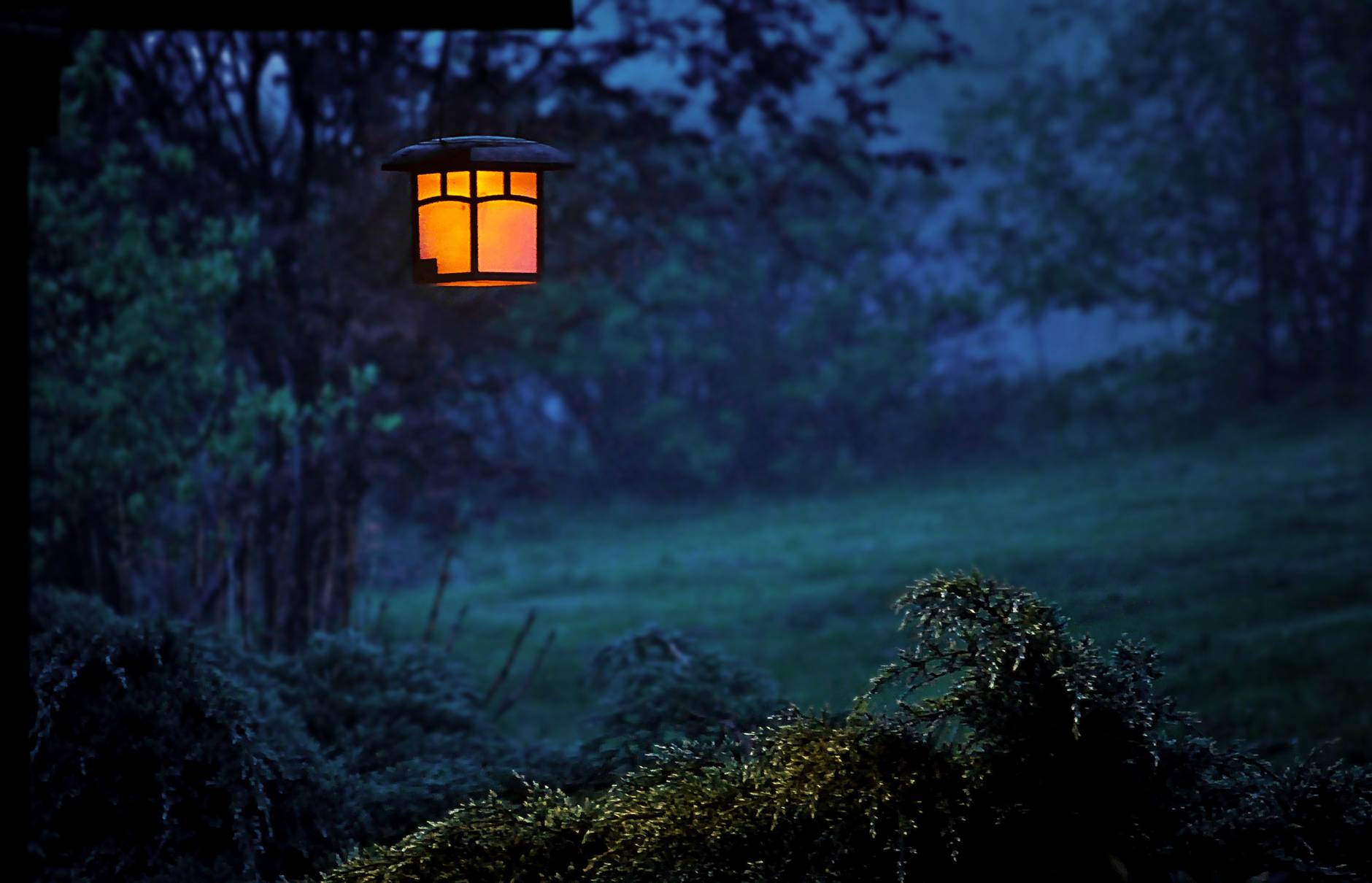
    Lantern in the woods
    Photo by Pixabay on Pexels.com

    Travelers braved the Briny Sea, the Peaks of Misfortune, and the Sands of Time to hear the nightingale’s song. Brighter than summer’s sun, sweeter than roses, it left the stoutest warrior’s heart quivering. But only at night did the enchanting music flood the forest.

    Although the nightingale sang in the forests surrounding his palace, Emperor Ghanzou had never heard or seen the bird.

    One evening, while showing dignitaries the splendors of his palace’s porcelain walls, ambassador Rolf asked the emperor, “Have you heard the nightingale’s song? It made me cry like a baby.”

    “I have yet to see or hear the bird,” the emperor growled, annoyed the men weren’t complimenting his sculptures. “How do we know such a creature exists? Perhaps it’s just the temple bells or a dragon’s song.”

    “Oh no, your majesty,” Rolf said. “It must be a nightingale.”

    “Then bring it to me,” Emperor Ghanzou commanded.

    The men stood as silent as the jade statues, for they didn’t know how to capture a nightingale or even find one.

    The kitchen maid’s daughter had overheard the conversation as she scuttled by to prepare their tea. “Please, your majesty,” she bowed before him, “the nightingale is a special friend of mine. I can convince it to come and sing for you if you wish.”

    The Emperor stared at the bowed head and food-smattered apron, surprised such an insignificant girl knew something the men did not. “Bring it at once.”

    The maid darted away.

    Emperor Ghanzou awaited the bird’s arrival after dinner and told a servant to bring a net in case the bird was as splendid as everyone said.

    The emperor’s fingers tapped against his jade throne. The windows opening onto the balcony let in moonlight and the fragrance of jasmine.

    A bird landed on one of the windowsills. It was a small, simple creature. How could such magnificent music come from such an insignificant source?

    The bird opened its beak, and Ghanzou no longer cared. Crystalline music filled his head with sunnier days, when life was simple and sweet. When he stole kisses from a kitchen maid whom he had loved but couldn’t marry. Tears streamed down his face.

    When the bird stopped, Ghanzou blinked as if coming out of a trance.

    With his permission, his servant leapt toward the nightingale with his net.

    The bird darted out the window.

    “Get it!” Ghanzou thundered. “I must have that bird.”

    The reward was set, the hunters found, and the search began.

    Although the sharpest-scented dogs and sharpest-sighted men trekked through the empire, they couldn’t capture the bird. Years passed, and the nightingale continued to sing, often near the palace, but the little bird proved too clever for the emperor and his men.

    Emperor Ghanzou’s rage and longing for the nightingale’s music drove him to bed with illness. As his strength drained away, his anger and greed drained with it. All he wanted was to hear the bird sing one more time before he died since he hadn’t heard its song since the night it escaped.

    One evening, when his coughs kept the nurse beside his bed, she said, “The nightingale has come to sing for you, your majesty.”

    He turned and saw its small figure on the windowsill, its beady eyes examining him. “So you’ve come now that I’m dying.” He sighed. “I suppose it’s what I deserve for trying to capture you. Thank you for coming.”

    The bird opened its mouth and sang. It sung all through the night, and the emperor smiled for the first time in a long time.

    “Your Majesty, the nightingale has turned into a girl,” the nurse’s voice hauled Ghanzou out of the pleasant memories the song had given him.

    The kitchen maid’s daughter sat on the sill, dirty and simple. But the dawn cloaked her in light.

    “Who are you?” He asked.

    “I am a nightingale by night and Chynna, the kitchen maid’s daughter who has no father, by day.”

    She stared at her feet. “You didn’t want me as your daughter, so I hoped you’d want me as your nightingale. I didn’t want to live in a cage, though.”

    She glanced up. “I heard you were dying, so I came to sing for you again.”

    Ghanzou knew the kitchen maid had carried his child and let her stay on. But he had put them from his mind so he could rule and produce heirs. Over the years he had forgotten the woman and child until the music had reminded him. He gazed at the young woman. His daughter. Poor and filthy, but not as insignificant as he once thought.

    “Come here.” He opened his arms.

    She sank into them, healing him with her song.

    Rachel A. Greco

    Rachel Greco

    Rachel Greco is a YA fantasy author who wishes she was a dragon. Her short story, Fairy Light, won an honorable mention in the Writer’s Digest Annual Writing Competition and another was published by White Cat Publications. When not writing, she can be found reading, kayaking, or dancing with elves in the forests of her South Carolina home. Visit https://www.rachelagreco.com/ for book recommendations and news about her writing world.

    Summer of Faerie: “Debussy’s Afternoon of the Faun: A Prelude” by Emma Fox

    Beach roses and the sea

    Summer: the smell of pine, sunscreen, and wood smoke, the feeling of the hot sun on your skin and wet grass on your bare feet, the sight of green leaves everywhere. For me, this is the time of greatest freedom and beauty: the season when you can turn on your favorite playlist in the car with the windows down; swim in cool water until your hands and toes are pruny; star-gaze in the warm nights; pick blueberries and bake them into cobbler. I taste sehnsucht when I see blue mist over the sea or hear the weird, chuckling cry of a loon.

    This week’s Summer of Faerie post is a fascinating one by Emma Fox. Emma introduced me to the French composer Claude Debussy, a lover of mythology and friend to many Symbolist poets and artists. Her poem was inspired by an image of Debussy and his beloved daughter Emma in a forest south of Paris, taken shortly before their deaths near the end of WWI (see the picture below). Debussy is famous for his orchestral work, “Prelude to the Afternoon of a Faun.” This poem asks, what if he really did see a faun there in the woods?

    Claude Debussy and his beloved daughter Emma in a forest south of Paris, taken shortly before their deaths near the end of WWI

    Debussy was fascinated the concept of Gesampkunstwerk or “total work of art,” or unifying text, visual art, music, and even movement into one work. In honor of that concept, I recommend listening to “Prelude to the Afternoon of a Faun” as you read this poem (and, perhaps, finding some woods to sit in as you do) – let them take you into this time, this moment, this vision.

    Debussy’s Afternoon of the Faun: A Prelude

    by Emma Fox

    Faun and dancers in the woods
    Nymphes et Faunes” by Jean-Baptiste Camille Corot

    There really was a faun—
    I know, because I glimpsed him in the southern forest.
    The war had dragged on, at the Somme and at Verdun,
    Verdant no longer, but choked
    With ragged brambles of barbed wire
    The tongues of dragon fire and poisoned fumes
    Driving from the woods both deer and dove.

    Paris had become a cage for us.
    The shuttered shops of the Champs-Elysees
    Sagged pale and weary, windows boarded up,
    Unable to bear the Arc de Triomphe
    Stranded in the star, cut off at the hip
    Like the legs of a broken Colossus.

    We fled to the forest, my daughter and I.
    We galloped on an iron horse to a far kingdom
    Where castles rose like broken dreams
    From the shrouded groves of memory.
    We found a spot between the trees
    To spread our blanket and eat apples,
    And listen to the language of the birds.

    That’s where we saw the faun.
    Just his curled horns at first, sticking out from behind a tree—
    He slept, unaware of our presence,
    His naked chest rising and falling with each breath
    And his furred legs nestled in the grass like foxes,
    While his bright hooves twitched to a silent tune.

    A warm wind stirred the leaves above our heads.
    He slept on—dreaming perhaps of virgin groves
    And naiads bathing in the stream,
    And the music of flutes beneath the stars
    In ancient times, long before Caesar
    Stormed in with the legions, striking down trees
    And strangling rivers with aqueducts.

    The faun never woke. We tiptoed away—
    Folded our blanket, and walked through the wood
    To the station. We were silent the whole journey home,
    But in my daughter’s eyes I saw summer leaves and starlight.
    And on the iron platform, her buttoned leather shoes
    Twinkled, waltzing to some silent melody.

    And I knew this afternoon would be the prelude to her song.

    Emma Fox

    Emma Fox

    Emma Fox first met a faun at age seven, when wandering through the Narnian woods. She fell in love with Claude Debussy’s music in high school, eventually leading to degrees in music and art history and a lifelong interest in the intersection of music, art and literature. She now lives in the “Magic City” of Birmingham, Alabama, along with her husband, three book-loving children, and a loyal border collie. Her debut fantasy novel The Arrow and the Crown has received multiple awards, including the Warren S. Katz Award for Juvenile Fiction and 1st Place in Young Adult Fiction from the SCBWI Southern Breeze division. Explore more of her fantasy world and work at http://emmafoxauthor.com/.