New Books, Beowulf, Habakkuk, Narnia, and a Question: How Vulnerable Should You Be on the Internet?

Sunset through trees in winter


This winter was full of wonders: long, dark nights lit by Orion and the rest of the heavenly host around a silver moon; days of cold so bitter it felt like my finger bones were freezing; deep snow that froze into crunchy drifts; cancelled church services; drives in the snow; a vigil that ended in a beloved family member sailing to heaven. The days have rushed by like pine trees seen through the window of a moving train, a blur of living, changing detail.

I’ve wanted to update this blog for a while, but I promised myself when I started blog-writing in 2017 that I would only post if I had something worthwhile to offer to readers. Here’s an attempt at an offering: a look at some new books I’ve found, workshops and courses I’ve enjoyed, and a question that’s been burning in me for months.

New Books to Treasure

For the last 12 months, I’ve struggled to find good new books, but a few treasures stand out:

  • Christina Baehr’s Secrets of Ormdale series — A brand-new, five-book series set in late Victorian England — with an actually likable Christian heroine and dragons? I was so afraid to have hope for this series, but it was marvelous. Christian Bhaer knows her stuff: Scripture, lore, historical and cultural detail history, Anglo-Saxon poetry, literature, and the best slow-burn romance I’ve read in a while are shining threads in this series’s fantastic tapestry.
  • J.A. Myrhe’s Rwendigo Tales — Set in central Africa, these books tell the story of four physical and spiritual quests with beautiful prose, exciting drama, and deeply relatable characters. The thoughtful, image-rich, matter-of-fact style reminds me of Alan Patton’s Cry the Beloved Country; the mythical and spiritual elements remind me of C.S. Lewis’s Cosmic Trilogy.
  • Diana Glyer’s The Company They Keep — I’ve been meaning to read this one for ages. In beautiful language and lots of deep research, Glyer studies that group of rare imaginations that included C.S. Lewis and J.R.R. Tolkien. She argues that, contrary to what most scholars have argued over the decades, the Inklings did influence each other by resonating, opposing, editing, collaborating, and referring to each other in their creative works. Highly recommended for Inklings fans and artists who long for community.
  • James M. Hamilton Jr.’s Typology-Understanding the Bible’s Promise-Shaped Patterns: How Old Testament Expectations are Fulfilled in Christ — I picked this book up on Audible after searching for books on typology, a topic I’ve been curious about for a while. I loved it. It offers a clear and careful examination of the images and structures that Biblical authors use to point to Christ as the king, suffering servant, redeemer of captives, and divine bridegroom. It’s accessible for both scholars and laypeople; joyfully and reverently written; full of brilliant insights about the patterns of Scripture. My favorite takeaway is Hamilton’s argument that the types of Scripture are 1) definitely intended by each Biblical author (not an accident or readers’ construction); and 2) historically grounded (more than just artistic collaboration by the authors).

Beowulf, the Anglo-Saxons, and Learning to Love Something

I began this year with something appropriately wintry and mysterious: a “How to Read Beowulf” course from the House of Humane letters. I’m more of a fairy tale, roses-and-summer reader than a fan of the grim, otherworldy, silvery beauty of Anglo-Saxon literature, but I know C.S. Lewis and J.R.R. Tolkien loved those tales, so I wanted to see what they saw.

The course was profound and thought-provoking in ways I didn’t expect. Angelina Stanford dived into:

  • The ruinous, twilight atmosphere of the Anglo-Saxon period
  • The violence of a culture that knew only revenge-killings and ransoms as means of justice
  • The nature of the monsters depicted
  • The very meaning and value of words

While I’m not sure I agree with every point made, the course left me with much to ponder and an ache to know more. I found myself going back to the very foundations of what a story is, how to read, and how to interpret literature – digging up my Literary Criticism and Theory notes from college, listening to more lectures on the Anglo-Saxon period, and wishing I had Tolkien’s gift for language. I’m newly convinced how much words matter, how every word and name is a story, and how Christ is the sun of righteousness who ends our dark night.

Habakkuk: The Word from the Watchtower

In February, I had the honor of going to a Charles Simeon Trust women’s workshop in Cambridge, MA. The Charles Simeon Trust Society trains Bible preachers and teachers in deep, thoughtful exegesis, theological reflection, and application. This workshop for women was as academically rigorous as any graduate seminar I experienced while also warmly encouraging. This workshop focused on practicing teaching prophetic literature with the book of Habakkuk.

Habakkuk is hard. The Charles Simeon Trust method begins with establishing the context and structure of a particular passage, and Habakkuk’s flow of thought is initially confusing. But it’s beautiful. Habakkuk’s earnest cry to the Lord, and the Lord’s sovereign and gracious response, are deeply comforting. The hymn of praise at the end is one I chose as an anthem for the past years, a song for troubled times.

This workshop showed me how clear, simple, and clean good Bible teaching should be. In my few attempts at teaching, I’ve often tried to dump all my insights, observations, musings, meditations, questions, and research on my poor helpless audience. Instead, the workshop taught me to distill my work into a simple main point that people will remember. For example, my original main point for a practice session on Habakkuk 3:1-19 was Christ is coming to administer justice and rescue His people, no matter how barren circumstances become. After workshopping this part of my presentation with my small group, I managed to streamline it down to Rejoice in Christ’s coming rescue even in barren times — turning an overflowing sentence into a comforting exhortation.

“Writing with The Horse and His Boy”: Rediscovering Old Loves

Yes, my life is merely a progression from one online literary course to another. This one was particularly fun because it was run by Jonathan Rogers, my writing teacher and the proprietor of the Habit writing community, which has been a source of delight, fellowship, encouragement, thought-provoking discussion, and community.
My creative inspiration, which has been fairly dry since January 2023, started to run again in a few of the writing exercises we did together. I remembered how much I love The Horse and His Boy: the beautiful, crisp, clear settings, Shasta’s intensely relatable awkwardness, self-pity, and courage; Bree’s pompous dignity; Aravis’s pride and honor; and the hilarious addresses to the reader. I was newly encouraged to follow tried-and-true writing wisdom like:

  • Look through your characters’ eyes and develop them from the inside, by what they notice and how they react
  • Stick with concrete details
  • Remember that each conversation has layers of dialogue: informational, atmospheric, relational, and more

If you are a creative writer curious about the intersection of theology and writing, longing for some practical tips for craftsmanship, or looking for community, please look out for the next Habit course.

A Question of Authenticity: How Vulnerable Should You Be on the Internet?

This question has been brewing in me for years: how vulnerable should you be on the internet?

I think this question started when I began blog-writing after college. I was inspired by the beautifully-crafted blogs and creative fiction of writers from places like the Rabbit Room or podcasts by artists, entrepreneurs, and other content creators: storytellers who captured the music of their lives in relatable but profound prose. Following their example, I translated my own life into words. I wrote vivid descriptions of scenery and seasonal changes, books I read, conferences I went to, meditations from Scripture, weaving them all into a few themes that culminated at the end of each blog post. My year in Scotland yielded a lot of fruitful experiences I could glamorize: gorgeous hikes in the countryside, fascinating lectures and reading assignments, and plenty of academic research to give credibility and substance to my musings on life, literature, and faith.

The years since returning to America, however, have not been as easy to write about. I’ve gone through a lot of change, including a few moves. Many of the mini-seasons in this long season have not been easy to write about — not for particularly interesting reasons, but because they included plenty of isolation, boredom, and loneliness, which don’t make for great writing material.

For the past few months, reflecting on my original goals and life since graduate school, I’ve been wondering: how much is it healthy, good, or noble to be vulnerable on the internet? This question multiplies into more:

  • How do you know when to share a personal story and when to keep it for your inner circle?
  • How long should you wait to write about an experience?
  • How do you respect others’ privacy when you share stories in which they’ve participated?
  • How many details should you share about a painful or difficult experience?
  • Should you write about unresolved conflict or past hurts? If so, how?
  • How hard should you try to end your personal story, especially a difficult one, on a certain emotional note – especially if you’re not sure that chapter of your life is finished?

Recently, I began pondering the question of Internet/public vulnerability in general after attending a conference in which a successful author, blogger, and podcast guest gave the keynote talk. He shared some deeply personal stories as part of his message: horrifying family tragedies, personal doubt, career struggles, unexpected triumphs, and new directions he’s taken. I’ve heard enough speakers by now to recognize some of the techniques he used, such as careful repetition, including concrete detail, and framing the whole talk with a quest structure. I’ve sat in lectures and talks with speakers who moved the audience to murmurs of awe, even to tears. Unfortunately, this one did not. Something about the speaker’s attitude, the personal details he revealed and concealed, the vaguely spiritual but self-centered ethic he preached, and the crescendo of his talk left me feeling emotionally manipulated — and awkwardly sitting during the applause as many of those around me rose to a standing ovation. I felt that the speaker was using grief and pain from his past to paint himself as both a victim and a victor and tell me how to run my life.

While this speaker was talking to a live audience, not on the Internet, his talk pushed me to a preliminary conclusion. How vulnerable should you be? is a wisdom issue, not a yes/no or fill-in-the-blank question. I walked away convinced that yes, there are good reasons and good ways to do so as well as bad ones. But how do you discern the right reasons and the right ways to share your story?

It’s as difficult a question as the one that haunted me in the post-college years: how do you live a good life? How should an artist use the raw material of her life, especially intimate things like family memories and struggles, in her art? Or should she do so at all?

Vulnerability and Influencer culture

On the internet, on social media, vulnerability is powerful. Someone who can share intimate, specific details of their days, families, work, hobbies, emotions, struggles, trauma, and celebrations can draw a following. I know of influencers who I deeply respect and have taught me wonderful things, but I’m becoming uncomfortable with how vulnerability equals money in the transaction of paid platforms, book deals, and commission sales.

Of course, people who work hard to create beautiful and useful things should be paid for their work. But I am getting concerned about a particular pattern: someone shares intimate details about their life consistently enough that their followers feel like they are personal friends – and, also, students and disciples. An influencer can become a personality who coaches followers on any topic: faith, mental health, life goals, relationship difficulties. One influencer I used to follow on Instagram went from giving life-advice and career coaching to selling a product by commission. She introduced a major world problem and talked extensively about it, then encouraged her followers that that product was a solution.

I know a few influencers who do a great job of cultivating real relationships in the online communities they’ve set up, and encouraging those followers to build real relationships with each other. My concern is when the relationship remains one-sided, digital, and transactional: the influencer offers vulnerable life details, and the follower reciprocates with likes, shares, attention, promotion, and money. Vulnerability sells.

Vulnerability, authenticity, truth: entering other territories

That keynote speech at the conference was just one thing that triggered this question in my mind. Another catalyst was the brief glance I took of a book of publishing advice for nonfiction writers. The book advised writers to be wholly “vulnerable” with their stories: write in blunt detail about humiliations, failures, scars, traumatic experiences, and deepest secrets. The book is a bestseller, and the author is right. Readers love intimate details, especially when they can get them without sharing their own secrets. But that advice makes my introverted self want to head for the hills.

I’m a hypocrite in this area. I love it when other writers share their intimate stories so I can read them from the comfort of anonymity. I crave the juicy details of their romances, either breakups and happy endings; parenting anecdotes; college tales; childhood memories; vacation stories; secrets; and I love not having to share any of mine in return. But vulnerability creates the illusion of friendship and intimacy without the full reality, and I’m afraid it just feeds the loneliness of our culture.

How vulnerable should you be on the internet? After all this thought, I finally looked up the definition. According to Merriam Webster, to be “vulnerable” is to be “capable of being physically or emotionally wounded,” or “open to attack or damage : assailable.” Ouch. But it is true. Sharing childhood memories, family stories, thoughts, and dreams on the Internet does leave you open to attack: mockery, scorn, criticism, and getting cancelled.

So why share your story at all?

I think back to some of the personal essays that have touched me deeply:

  • E.B. White’s “Ring of Time” and “Once More to the Lake” from his essay collection — achingly beautiful reflections of memory, time, and immortality, grounded in rich detail
  • Lanier Ivester’s “Seeds of Love” — an exquisite mingling of personal loss and eternal hope
  • Jennifer Trafton’s “This is For All the Lonely Writers” — a very relatable, exquisitely crafted meditation on loneliness, creativity, and community
  • Lancia Smith’s “Yes, Virginia, I Still Believe in Jolly Old Santa Claus” — a thought-provoking, joyfully reverent study of how the Christmas icon figures the tender love of God

In A Discovery of Poetry, Frances Mayes begins by exploring the purpose and meaning of poetry. “All these images [from poems] form a quick glimpse of how those mysterious others behind the glass live their lives. Poems give you the lives of others and then circle in on your own inner world . . . Like play, poetry lets us enter other territories” (xiii-xv, emphasis mine).

Well-written creative nonfiction and personal storytelling does the same, as do fictional stories. They give us a glimpse of another’s life, let us enter their territory. Done well, it’s invitational, relational, encouraging, challenging, comforting, and thought-provoking.

How vulnerable should you be on the internet? How vulnerable should you be in any form of writing? I think now of David, Asaph, Moses, and others pouring out their hearts in the Psalms; Nehemiah penning his cry to the Lord when he heard Jerusalem was in ruins; Paul writing of his past sins and current persecutions to the beloved members of the early church. Yes, for the right reasons and in the right way, opening yourself up to be wounded is a gift to your audience. Not to build a following of people who feed on your life and your advice, but to welcome them into following the Lord, the One of all creation who has the right and the goodness to influence us ultimately.

Some tentative personal resolutions

Public vulnerability is a wisdom issue, something that requires individual reflection and discernment. Done well, it’s a beautiful gift to readers; done poorly, and you really have opened yourself up to be wounded or to wound your readers. As I ponder this, here are a couple of principles I’m forming for my own writing:

  • Let Scripture guide you into making God the center. Use my writing to recognize the work of the Lord – not by slapping a Bible verse or pious-sounding conclusion onto every piece, but trusting that if I pay attention to detail, take the time to ponder an experience, and pray over it, I will find its intersection with eternal truth. I’ve seen this modeled brilliantly by the writers at The Cultivating Project, who weave Biblical insights, hymns, and other art into personal stories. A good artist can turn the telos or purpose of a piece into hope-through-lament, courage-through-darkness, joy-through-sorrow, and faith-through suffering without minimizing how hard life is.
  • Tell family and friends first. This is an old rule I made for myself, and I think I’ve managed to follow it. If I have exciting news in particular, I try to let my closest circles know first, and they get the real scoop on the most interesting details.
  • If it’s a hard subject, pray and wait before sharing. I don’t think I need a waiting period to share a fun hiking story or list of good books I’ve read recently, but if I choose to share something painful or complicated, I want to make sure I have a good reason for doing so.
  • Err on the side of others’ privacy. I never want to burn a relationship by turning a painful or private subject into a piece of content. Any money I might get from a commissioned piece, any number of likes, follows, or shares, is not worth hurting someone I love.

What do you think about vulnerability on the Internet? Where have you seen it modeled well or poorly? And what are some of your favorite examples of personal stories told well?


Lazy Late Summer

Summer days were just a magazine, a magazine, a magazine . . . 
Cutting grass for gasoline
For gasoline, so I can see ya soon . . .
“Dandelion Wine” by Gregory Alan Isakov

Gregory Alan Isakov is one of the best living poets I know of. His metaphors are rich, sweet delights that summon moods and moments, dreams and memories like spells. In “Dandelion Wine,” he captures the lazy, wistful, sultry days of late summer in that lovely image of dandelion wine – the golden flower-weeds that dot the green grass, the sleepy pleasure of drinking in the sun and the quiet of long days. 

It’s getting towards late summer now. Air that was heavy with humidity is now soft with cool breezes; the oaks bear little clusters of acorns turning from green to brown; dainty Queen Anne’s lace and radiant goldenrod are flowering in the ditches; the whir of cicadas and cooing of mourning doves sounds dreamy and content. After a tumultuous year, I’ve found that returning to things I love like Isakov’s music, T.S. Eliot’s Four Quartets, Lewis’s Chronicles of Narnia, and the Nancy Drew books is deeply comforting. It has been harder lately to feel that “yearning” that I made the theme of this blog — that deep, sweet longing for the presence of God — but good old stories, songs, and poems stir up the memory of it. Best of all are Psalms like Psalm 34 in its tenderness and Psalm 36 in its joyful wonder; I find the thirsty roots of my soul stretching into those passages.

Psalm 36:7-9 — 
7  How precious is your steadfast love, O God!
The children of mankind take refuge in the shadow of your wings.
8  They feast on the abundance of your house,
and you give them drink from the river of your delights.
9  For with you is the fountain of life;
in your light do we see light.

After spending last summer pouring over fairy tales for the Leaf by Lantern podcast, I decided to mix things up this summer and try to write a historical fiction/mystery set in New England in the 1950s. It’s definitely challenged my research skills. I want to summon the music of the past in minute detail: the use of suntan lotion vs. sunscreen, for example, the swish of circle skirts, the necessity of starching and ironing everything, the shadow of the Korean War, and the use of telegrams/radio/letters for communicating and spreading news. Great historical fiction authors like Eloise Jarvis McGraw and Rosemary Sutcliff managed to capture the smells, tastes, sounds, and textures of long ago in gorgeous detail, and I want to imitate them, but it takes a lot of digging to get there.

Wanderings in Faerie

But I still want some fantasy in my life. I finished Junius Johnson’s “Summer of Fairies” course with a rereading of George MacDonald’s Phantastes – a weird, wonderful song of Romanticism and fairy tale beautified with a Scriptural vision of redemption. We’ve explored the nature and characteristics of Faerie, Fairy Land, Elfland, or whatever others call the fairy world and what makes it fascinating and dangerous. 

One thing that’s surprised me in this course is realizing that the land of Faerie is perilous for the reader as well as the character. In a world where normal rules don’t apply and new, terrifying ones spring up, like “don’t tell anyone your true name” or “don’t eat any of the food or you’ll get stuck here,” you want a loving, wise guide like Tolkien, MacDonald, or Lewis with you. Tolkien, MacDonald, Lewis, and storytellers like them witness to the Lord who is Good Shepherd. He sees every lonely wanderer, every lost soul who gets caught in a trap of their own making, and offers a safe haven of forgiveness. I read the ebook version of Tolkien’s short story “Smith of Wooten Major” with Pauline Baynes’s bewitching illustrations, and that sense of sovereign mercy even in a perilous realm is so beautiful:

But he [the main character, Smith] had business of its own kind in Faery, and he was welcome there; for the star shone bright on his brow, and he was as safe as a mortal can be in that perilous country. The Lesser Evils avoided the star, and from the Greater Evils he was guarded.

“Smith of Wooten Major” by J.R.R. Tolkien

Authors who don’t have that Scriptural view of reality and shepherdly love for their readers can lead you down some dark roads. Faerie is, by nature, inexplicable and unmappable, but heaven’s love and justice are just as sovereign there as everywhere else.  

Saturnine Stories in the Light of Scripture

I’ve thought more about stories that lead their audiences down dark roads from a recent conversation with my dad. He asked me if the newish Marvel show, “Secret Invasion,” featuring an older Nick Fury battling a new threat, was any good. I had tried it out a few months before and didn’t like it. 

“It’s kind of sad,” I explained. “Nick Fury is older and keeps making mistakes, and everyone keeps reminding him that he’s not as strong and smart as when he was young, and some really lovable characters die, and it just feels like all the good times are gone and there’s nothing left. I don’t like those kinds of stories.” 

My dad thought for a moment. “Was it saturnine?” he asked. 

I gaped at him. We’d both read Michael Ward’s Planet Narnia years before; my dad was referencing Ward’s argument that the seven books of Lewis’s series are written in the spirit of the seven medieval planets. Each Narnia book has the tone, atmosphere, and resonance of each planet. It’s too long a thesis to describe here, but Ward argues that The Last Battle is written in the spirit of the planet Saturn: a spirit of decay, loss, old age, and death, good times past. Google “saturnine” and you’ll find various definitions of a person or mood that is cold, gloomy, forbidding, bitter, and sardonic. Ward explains how Lewis’s Christian vision reveals good, redemptive aspects of Saturn (read the book to find out more about that) but a saturnine story without that Scriptural hope is unreasonably depressing. My dad was dead center: “Secret Invasion,” or at least, the first few episodes, is saturnine.1

Remembering Michael Ward’s book reminded me of how much hidden meaning lies in stories. Stories are visions of the world; every word and sound, character portrait, image and plot point has a spiritual dimension. Many of the classics I read in school like John Steinbeck’s Of Mice and Men, Kamala Markandaya’s Nectar in Sieve, Aldous Huxley’s Brave New World, or John Knowles’s A Separate Peace are exquisitely crafted, but they leave the reader with a tiny fragment of hope at the very most.2 As I reflect on that part of my education, I feel more and more how wrong it was to give students a picture of victimhood without justice and suffering without hope. It would be easy to go to the opposite extreme and celebrate happy stories that have no darkness at all — but that wouldn’t be true to reality, either. The best stories look forward through pain to the God who will right every wrong and “wipe every tear from our eyes” in the New Creation. 

This will be my struggle as a writer: crafting stories that reckon with darkness while witnessing the victory of light, that reflect the redemptive shape of the gospel without “skipping over” the sad parts (as I wish I could skip over the sad parts of life). Scripture will help me in that, reminding me that Jeremiah’s lament is just as real as Nehemiah’s rebuilding of Jerusalem; that David’s sorrow over Absalom was as much a part of his life as his victory over Goliath; that Good Friday was necessary for Easter Sunday; that the New Jerusalem promises healing. In this “magazine” of golden late summer days and earthly peace, I look forward to the peace of the final victory, of drinking from the river of God’s delights forever.


Notes
1  “Secret Invasion” is a Marvel show, and Marvel stories usually work out to a happy ending, so I’m guessing that there is a turning point where things get better. I just didn’t want to sit through all the sad parts.
2 These books are classics for a reason, and I know I’m oversimplifying them by talking about them so briefly. They are extremely well-written and testify to important truths about the world. But all four of these books culminate in a significant death, and I don’t think they echo the gospel’s forgiveness and promise of resurrection. To be fair, my high school also assigned us Ray Bradbury’s Fahrenheit 451, Mark Twain’s The Adventures of Huckleberry Finn, and even Shakespeare’s tragic “Romeo and Juliet,” which do have redemptive hope.

Summer of Faerie: Lanterns in the Night

The summer heat has overcome most of the flowers, though the orange tiger lilies and small pink tea roses are still holding out. When I walk by the river, ocean breezes just barely disperse the steamy humidity.

This week’s Summer of Faerie post probably should have been the introduction to this blog series – a look into fairy tale scholarship from a Christian perspective. However, I didn’t have it ready when I started in late May, so it provides an academic interlude after the delightful prose and poetry other writers have contributed.

Many wise scholars have walked this path before me, exploring the relationship between Biblical truth, faith, and the space between once-upon-a-time and happily-ever-after. This essay explores a few of their thoughts and my own experiences in the perilous realm of Faerie.

Fairy Tales as Lanterns in the Night

Lanterns
Photo by Abby Kihano on Pexels.com

In the Cape Cod village where I grew up, the library had previously been the schoolhouse. It was a quiet, sunny building with gleaming wooden floors, framed Sailor’s Valentines made of seashells, and glass cases of wooden ship models. They kept fairy tales, fables, folklore, myths, and legends in the corner of the Children’s wing.

I returned to that corner over and over. These books filled my mind and fueled my own stories with images: golden palaces and dark woods, beautiful princesses and wicked witches, ravenous dragons and friendly enchanted frogs.

While I loved the excitement of these stories, I found that the more-developed characters and complex plots of fairy-tale-related books like C.S. Lewis’s The Chronicles of Narnia, Gail Carson Levine’s Ella Enchanted, and Edward Eager’s Half Magic series were even better. I grew away from the flat characters and simple plots of the original fairy tales, but still shivered with delight at the mention of enchantments, wizards, castles, sea serpents, riddles, and magic swords.

Since graduating from college, I’ve begun to explore literary scholarship more, especially the work of Christian scholars. I’ve discovered an army of great thinkers who believe that fairy tales are more than escapist fancies for children, but essential to moral formation, awakening wonder, valuing goodness and justice, strengthening courage, and clinging to hope. 

Romantic poet Samuel Taylor Coleridge said that reading of “Faery Tales & Genii” habituated his mind “to the Vast . . . I know no other way of giving the mind a love of ‘the Great’ & ‘the Whole.’” E. Nesbit, a fantasy writer from the Victorian era, argued that a properly educated imagination is like the light in a Japanese lantern: “It transfigures everything into a glory that is only not magic to us because we know Who kindled the inner light, Who set up for us the splendid lantern of this world.”

Photo by Ahmed Aqtai on Pexels.com

I had plenty of voices in my life that taught me to wonder at the vast and magnificent, such as my kindergarten teacher, who taught us about the magic of monarch butterflies, lady’s slipper orchids, and stars. However, fairy tales, especially beautiful illustrations like Angela Barrett’s, helped me accept and love the treasures of the universe: fiery sunsets over mountains, the smell of pine, golden pollen and pine needles floating on water.

G.K. Chesterton argued in “The Ethics of Elfland” that “conditions” of fairy tales teach us a “The Doctrine of Conditional Joy” that parallels the truth of the Bible: “A lamp is lit, and love flies away . . . An apple is eaten, and the hope of God is gone.” Rules like Cinderella’s midnight curfew helped tune my mind to the holy restrictions of the Bible, which did not always make logical sense, like Moses’s disobedience at the waters of Meribah.

C.S. Lewis, Christian apologist, professor, and author of the Chronicles of Narnia (and many other books) fell in love with the Form of the fairy tale for “its brevity, its severe restraints on description, its flexible traditionalism, its inflexible hostility to all analysis, digression, reflections, and ‘gas.'” A fairy story that leaves me wondering and a little mystified, like the Little Mermaid’s voyage to heaven (in the original tale) reminds me that there are mysteries on earth and in heaven too great for my mortal mind to grasp.

J.R.R. Tolkien argues that a fairy tale’s happy ending is a sudden “joyous  turn” or “Eucatastrophe” that gives us “a fleeting glimpse of Joy, Joy beyond the walls of the world, poignant as grief.” My child self learned to expect happy endings: spring after winter, health after sickness, and especially, Heaven after the difficulties of this life (which even I, loved and sheltered as I was, knew).

Other scholars and writers such as Angelina Stanford, Jeffrey Overstreet, Heidi White, and others have further explored the healthy and educational aspects of fairy tales and fantasy.

Truth. Joy. Wonder. Insight. With all of these brilliant voices before me, I don’t want to just repeat their thoughts – but I do want to consider them. How did fairy tales fill my mind and shape my heart?
I think of the little girl I was: a shy, moody bookworm who spent hours devouring books, a tree-climber in the Cape Cod woods, and a swimmer in the New Hampshire lakes. I preferred my curly hair wet because it looked more like a mermaid’s then, scribbled stories in dozens of spiral-bound notebooks, and acted out scenes from books or movies with my cousins. Fairy tales and other books gave me colors and shapes for my daydreams, vocabulary and information about the world, and a deep yearning for the eternal – the yearning that C.S. Lewis called sehnsucht

What did fairy tales do to me? They gave me visions of beauty and mystery: vice punished and virtue rewarded; battles and quests finishing with happy endings. They reinforced the framework that I believe is the real story of this world: the Fall that causes suffering, the Eucatastrophe or “joyful turn” that Tolkien described, and the happy ending that stretches into eternity.

Fairy tales gave me a hunger for the wild, the mysterious, the unknown. The lessons I learned through the green flannel-graphs of Sunday School or the boisterous songs of Vacation Bible School taught me goodness and truth, but sometimes made me think of my faith as something that belonged in white church buildings and wooden pews. Fairy tales and fantasies shaped my desire for midnight woods and perilous seas and green mountains beyond this world – a desire that is godly (just read Isaiah or 1 Peter).

To be honest, fairy tales did have some negative effects on me. They helped plant the false ideas of feminine beauty that our culture continually deplores and yet upholds. For a long time, I believed that vice would be punished and virtue rewarded right away, instead of after some years of undeserved suffering or prosperity. They made me long to be perfectly beautiful and good without trying at all, like a fairy-tale princess. Fairy tales gave me deep joys and fascinating ideas, but they were a golden framework, not the full picture of reality.

In our nightly reading time, my parents would read a Bible story and a “fun story” like Treasure Island, Johnny Tremaine, Treasures in the Snow, and The Rats of NIMH. It was the Bible stories that gave me a full picture of reality: the green Eden we lost, the devouring dragon, the righteous King who came to die on the Cross for us, the Spirit who comes like wind, like fire, the glorious kingdom that awaits us. Scripture tells the true story that is far more wondrous and beautiful than anything we sub-creating humans could make. 

Snow White is not my favorite Disney movie, partly because I don’t like polka dots. However, the last scene, when the prince and Snow White ride up on his horse and see his castle shining in the sunset, still hurts me because it makes me yearn for the Kingdom of Heaven. Fairy tales, like lanterns in the dark, helped remind me of the true Light.

Maranatha…

Snow White and the Seven Dwarfs – Once Upon A Disney Blog

Summer of Faerie: “Winds of Change” by Matthew Cyr

Faerie Wind

It’s the end of May and beginning of June: one of my favorite times of year, when purple lilacs bloom, the new leaves rustle in warm winds, and it’s hot and bright enough to put on sunscreen and enjoy its cool, thick smell.

These days at the lake have “slid along so quiet and smooth and lovely” (Mark Twain, The Adventures of Huckleberry Finn). I’ve had the undeserved luxury of hiking in the green mountains, paddle boarding during my lunch hour, a few frigid swims, and continuing to research fairy tales and folklore for the Summer of Faerie project. I hope to post more about this later, but for now, I have found a few treasures:

  • Kate Forrester’s Celtic Tales, a collection of British, Irish, Welsh, and Scottish legends with gorgeous silhouette illustrations
  • J.R.R. Tolkien’s “Mythopoeia,” a poem I had heard of but not read (and do not fully understand yet)
  • Angelina Stanford’s fascinating research on how fairy tales retell the Gospel

This week’s Summer of Faerie post is a piece by Matthew Cyr, whose masterful craftsmanship I first encountered in The Cultivating Project (a seasonal online journal). Matthew’s prose reminds me of an enchanted forest, with layers of vivid imagery and root-deep musings that leave me pondering for days. This short-short story explores some of the strangeness and mystery of the world of fairy tales.

Winds of Change

by Matthew Cyr

Eyes closed, head thrown back, Ehelia danced among the maple whirlywings, whirling with them as they fell. Cirigan watched her from where he was seated on a fallen linden trunk, playing a rippling tune on his polished swan’s bone flute. Merriment played on his usually-somber face as he followed Ehelia’s fluid spiraling.

As the breeze quickened and more of the winged seeds took flight, Ehelia swept up those around her and flung them back up to be joined by fresh ones from above. Again she swirled them up as they drifted down to her, and again until the air was awhir with spinning wings that flickered in and out of the dappled sunlight.

In the midst of her laughter something caught at Ehelia’s attention, as if a movement from the corner of her eye or a sound out of place, half-heard. She came to a stop and looked toward the river where it ran unseen behind the yarrow-clad hill.

Cirigan stopped piping. “What is it, Irushili?” He often called her that, Shower of Laughter, instead of her true name, which meant Heartsighted.

Ehelia had no word to give him back, but he followed when she started away toward the river.

Cresting the rise, she could see something heaped down by the water’s edge. She paused, then pushed closer. Cirigan crossed half in front of her and stopped, as did she. It was plainly a body, a figure lying as if spilled from a cup.

“Is that….” he began, without taking his eyes from the thing.

“Yes.” No cloud had passed over, but the sun-washed hilltop seemed to darken for a moment around them.

“I never thought… to find one outside of old tales. An Oulahlain.  How came it here? None have ever been near this place. ” His eyes narrowed slightly. “It still lives.”

Ehelia passed him, only half aware that she was drifting closer to the creature again. Cirigan twitched slightly but didn’t move to block her. She looked and listened and smelled, taking in the crude clothing, the mane of tangled hair, the shallow breaths.

Ehelia’s gaze passed on to the angry red scratches on the arms and legs, as if it had been plunging through thorn and thicket. The figure’s feet had scarcely stopped bleeding into the river as it whispered past. The tears in the thing’s coarse-spun garment looked fresh as well, and some of its shabbiness the mark of recent hard use and weather. 

“She was chased,” Ehelia said quietly.

“She?”

“She is female… and young, as they would reckon age. Little more than a child of her kind.” Ehelia didn’t try to unravel how she came by this surety, but Cirigan had known her long, and accepted it as truth without need of explanation.

“They’re dangerous at any size or age,” Cirigan said. “They all but destroyed our people. So few of us lived to flee here… and now again our place is found out.”

Ehelia made no reply, but the still air around her felt like a closed door. Cirigan turned to her, finally taking his eyes from the slumped creature to press Ehelia with his gaze.

“Where one comes, others will be drawn. If this one is hunted by its own kind, they that follow will be more and worse. They will bring the cold iron that slays our folk.”

Cirigan glanced back at the fallen thing on the riverbank. “Yet for it to return to its kind now might be more ruinous than if it remain. Could be that it will wander ever lost in the wilds instead…or a sleep be placed on it that it never wake.” He fingered the bone flute.

And now Ehelia turned to him. Her eyes, usually the pale green of the moon-moth’s wing, were like sunlight through young beech leaves. The floating tufts of cottonwood silk above the hillside seemed to slow in the air, and the river to further hush itself.

“None other will find its way here that we do not wish, “she said. “Our folk can keep the border.”

Like heat-shimmer off a sun-baked rock, she could feel the uncertainty rising from him, mingled with shame: none of their people would think to end a living thing before its time, but he had voiced the nearest deed to that.

“We must tell the others,” Cirigan said, his tone more subdued but still stubborn around the edges. “All must decide.”

Ehelia glided even closer to the strange figure till she hovered just over it. Under the burrs and dirt, the sleeper’s hair was ruddy-gold like a kingfisher’s breast, and fell across her eyes, hiding them.

The forest seemed to breathe again. Ehelia had made her decision. The breeze now wafted the cottonwood wisps into the river, which carried them past and on out of sight. A lift of air drew the sleeper’s hair away from her face, revealing a pale brow and lidded eyes. Oulahlain. The Unseeing Ones.

Soft, soft, like the feathered touch of a month’s antennae, Ehelia brushed the stranger’s eyelids with her fingertips. She whispered a few words that hung glistening in the air, like dewdrops on spider threads.

She knew without looking that Cirigan had vanished, as the figure shivered and its eyes sprang open. Eyes little less green than Ehelia’s own. The wakened creature drew back at the sight of her.

“Be at peace, Daughter of Man,” Ehelia said. “You are watched over, and none shall harm you here.”

Matthew Cyr

Matthew Cyr

Once upon a time, Matthew Cyr unearthed an ancient-looking early edition of The Hobbit in his elementary school library and has been wandering in Middle Earth ever since. He has a hobbitish appetite and prefers to keep a good book in one hand and good food in the other. Matthew is fascinated by the power of story to awaken us to redemptive Truth. Several years ago he took up a quest to own and read every book ever published by C.S. Lewis. He shares his home with his wife and daughter, three cats, and a smallish serpent who has thus far never instigated the consumption of prohibited produce. Some of Matthew’s writings can be found at thecultivatingproject.com.

Wars and Weddings

Summer is in its noon. This season, midsummer, was always the most heavenly time for me. New England is steamy with humidity on sunny days and rumbles with thunderstorms at least once a week. The lilies are opening up like small trumpets, pink tea roses bloom in my mom’s garden, and every weekend, the highways glimmer with the red taillights of families going to or from the beach.

In my childhood, mid-July was the climax of the year: swimming among the water lily pads in the kettle ponds of Cape Cod, hiking and catching salamanders in the green mountains of New Hampshire, and backpacking in the blue wilderness of Yosemite. 

A few months ago, I was musing about story climaxes and happy endings. My favorite stories ended happily, usually in one of three ways: with a war (or at least a battle), a wedding, or both. (To be precise, the war is often the climax, and the wedding is the happy ending.)

  • WeddingLast of the Really Great Whangdoodles, Half Magic, Jane Austen, Wuthering Heights, Jane Eyre, The Tenant of Wildfell Hall, Shirley, The Sherwood Ring, Time at the Top, Ella Enchanted, The Farthest-Away Mountain
  • WarThe Hobbit, Harry Potter, The Battle for the Castle, A Wind in the Door, The Great and Terrible Quest
  • Both The Lord of the Rings, The Hunger Games, the Prydain series, The Fairy Rebel

Wars and weddings make excellent climaxes/endings: the violence and suffering of war resolves itself in victory, and the pain and desire of love are resolved in marriage. I think there’s a deeper reason why these events make good endings, though: they point us towards the true end of the world.

Christians believe that history is teleological, or has a purpose and and ending (instead of being random, meaningless, or endless). The telos or purpose of history is the fulfillment of God’s judgement and redemption. God created humans to be in an intimate relationship with Him, but when the first man and woman sinned (broke God’s law), humanity separated from God. Jesus Christ’s death on the cross paid the price for sin and allowed humans to be reconciled to God. At the end of the world, that reconciliation will be complete, and those who believe in God will enter heaven to be with Him forever.

The end of the world includes the end of a War that has raged throughout history, the battle between Satan and the armies of God. It will conclude with a Wedding, the marriage of the Lord Jesus Christ and His Bride, the Church. 

I think every story that ends with a war, a wedding, or both foreshadows the reality of the last days. The War will be greater and more terrible than the flood that destroyed the old world – but it will end with victory. The Wedding will be more glorious than a summer sunset. Believers will cross the edge into eternity, where worshipping God is truly our happy ever after.

Revelation 21:1-4 – “Then I saw a new heaven and a new earth, for the first heaven and the first earth had passed away, and the sea was no more. And I saw the holy city, new Jerusalem, coming down out of heaven from God, prepared as a bride adorned for her husband. And I heard a loud voice from the throne saying, “Behold, the dwelling place of God is with man. He will dwell with them, and they will be his people, and God himself will be with them as their God. He will wipe away every tear from their eyes, and death shall be no more, neither shall there be mourning, nor crying, nor pain anymore, for the former things have passed away.”

Happy endings anticipate eternity. When a good book or series ends with “happily ever after,” readers can imagine the victory and marriage continuing in perfect joy, without having to watch the problems that are inevitable in a fallen world.

Not all good books end with wars and weddings – or, the war and the wedding are not the whole resolution. Some end with new beginnings, like Anne of Green Gables or Hannah Coulter. Others end with homecoming, like The Hobbit. Some end with a joyful death, like Les Miserables. I think all these happy endings are wrapped up in our yearning for heaven: the Homecoming, the Rescue, the beginning of the delicious mystery of Eternity.

A few years ago, one of my favorite English professors warned us about climax seasons. He said times of greatest joy and fulfillment – such as our wedding days – can also carry the greatest grief and yearning. Climaxes remind us how much we yearn for the true Happy Ending.

In this climax season (of the year, if not my life) of summer, I yearn for the end of the War, the Wedding, the Homecoming, and the New Beginning. And the happy endings of the books I love remind me that it is coming soon.

Musings from the UK: Oxford

On June 2nd, I flew back from a week in the UK – exhausted, content, pondering, and with a renewed sense of yearning. May was an intense month of travel (Colorado Springs, Denver, Pennsylvania, and then the UK) and I was more than ready to come home.

But it was beautiful. The rich history and traditions of Oxford, the mysterious beauty of the Lake District, the medieval look and modern busyness of Edinburgh, and the green peace of Durham gave me images and insights enough to ponder for a long time. I still need to sift through my hundreds of pictures and thoughts, but at first glance, here are a few things I discovered.

Oxford

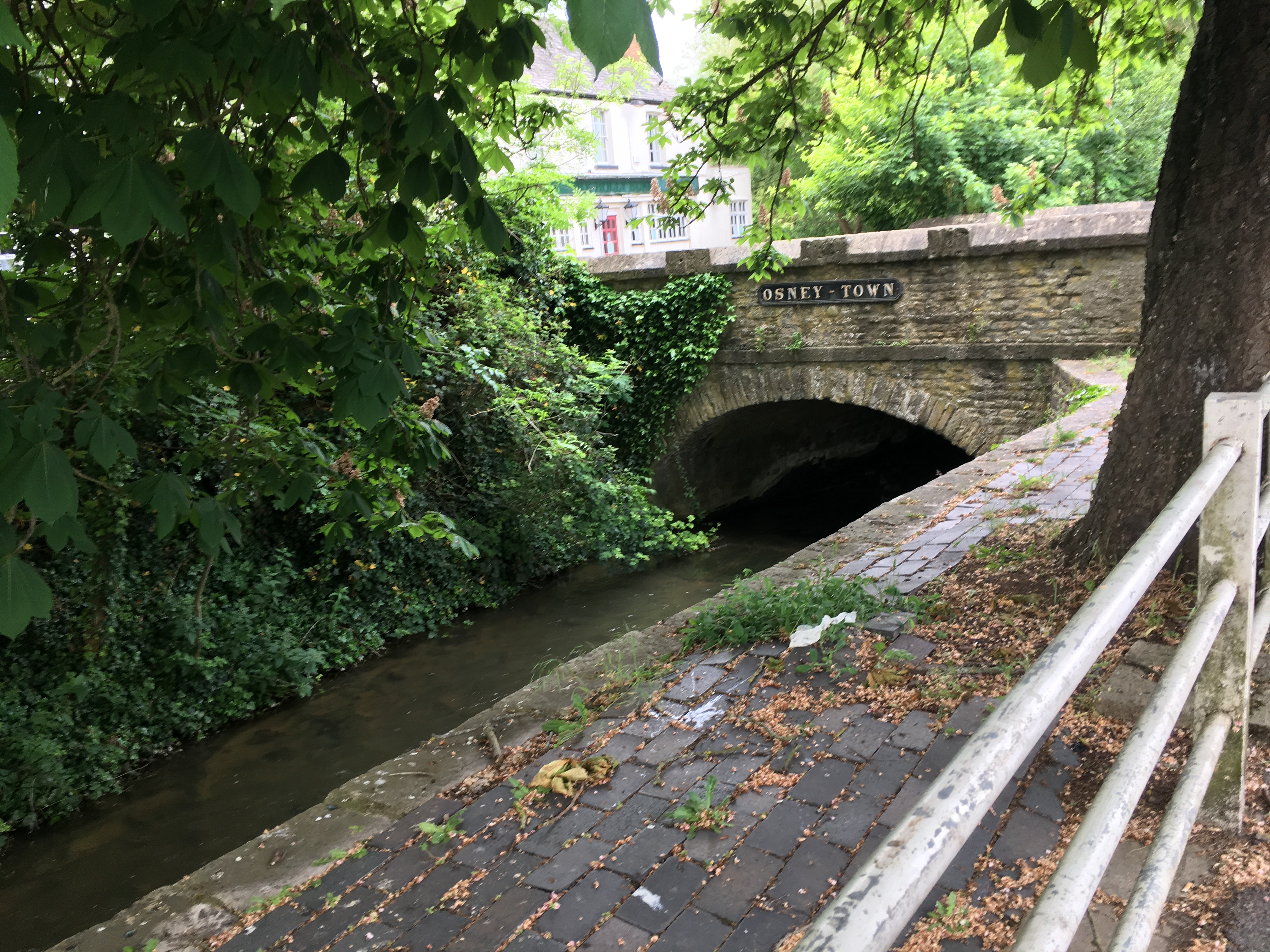
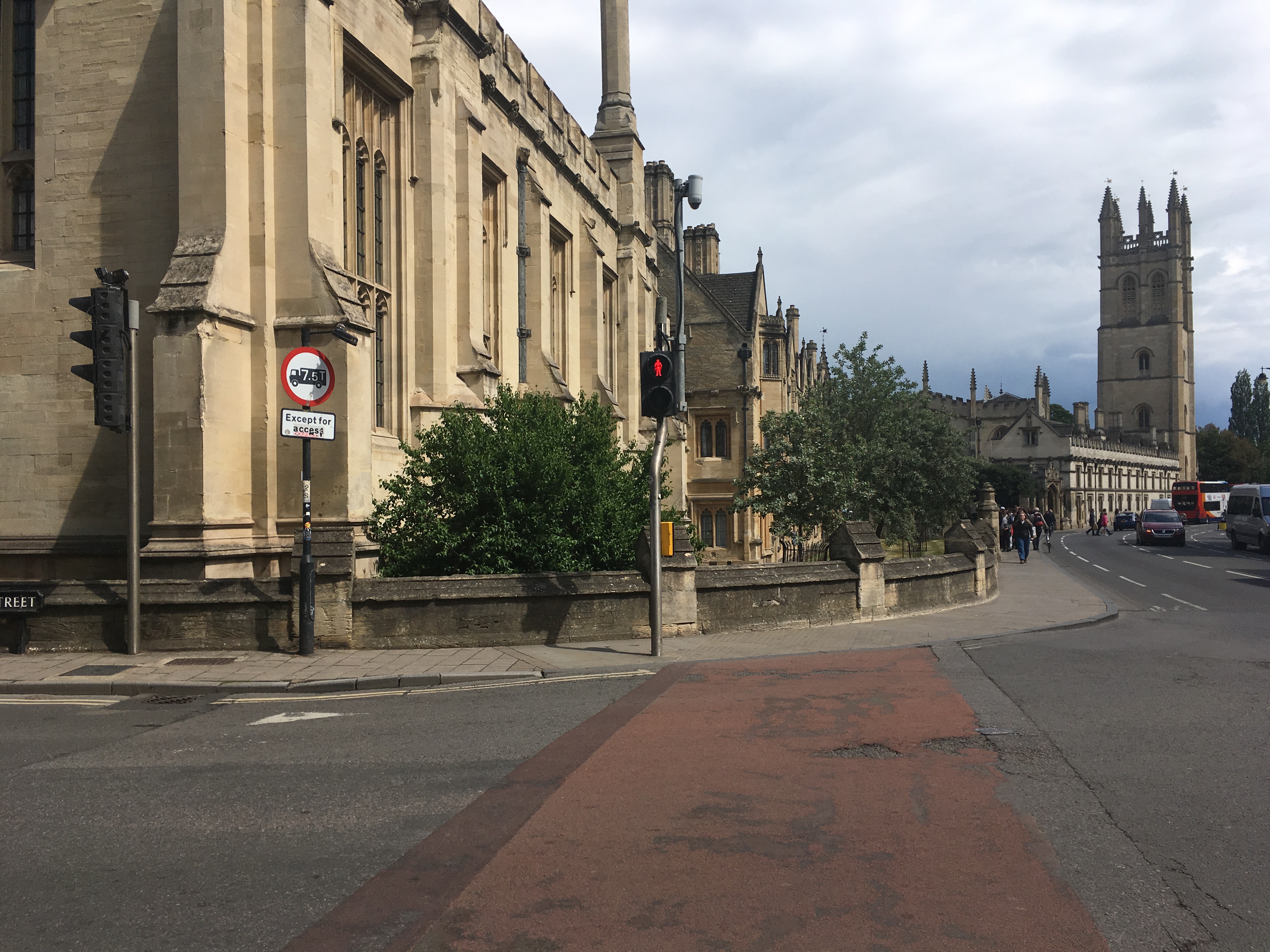
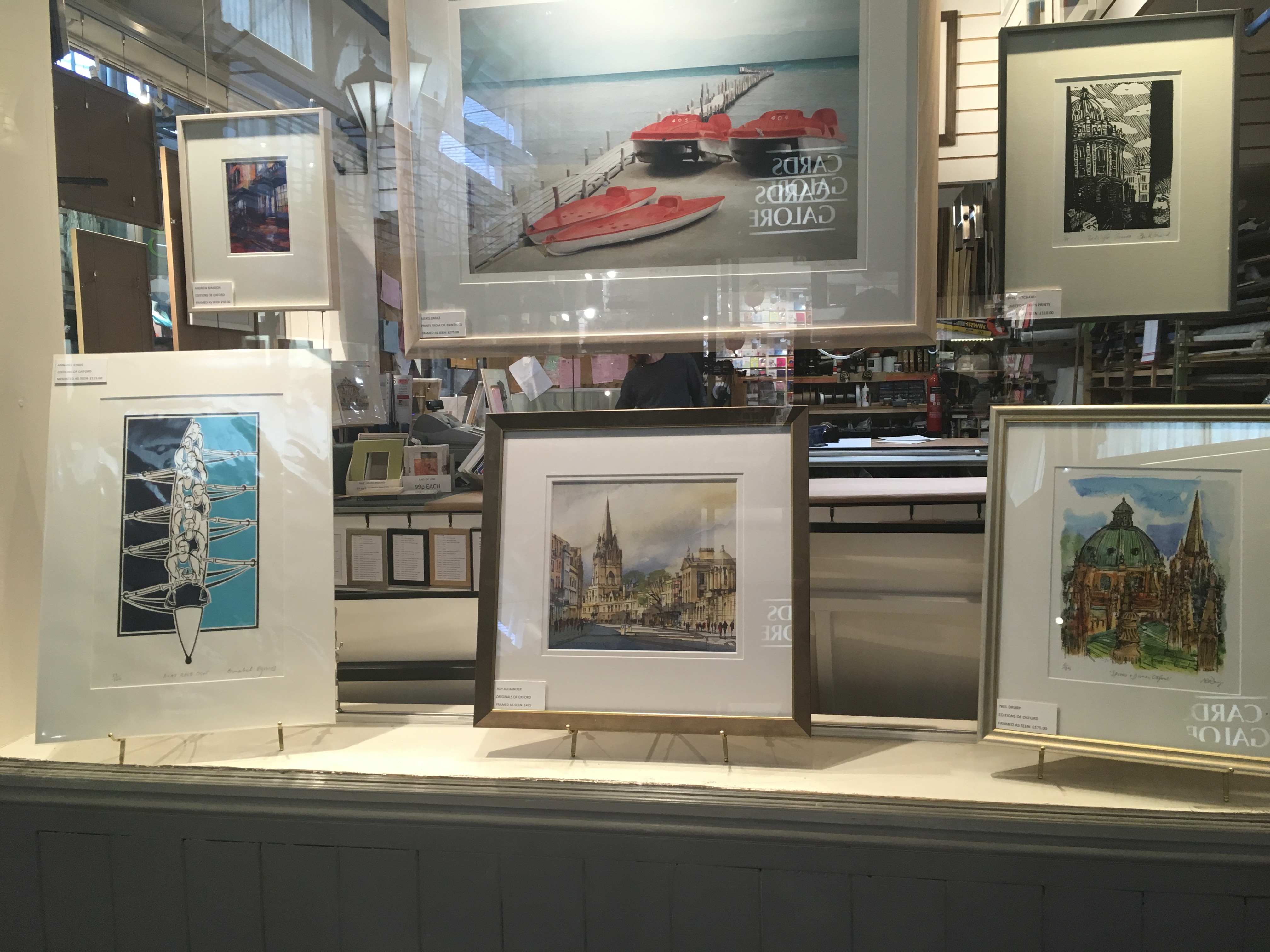
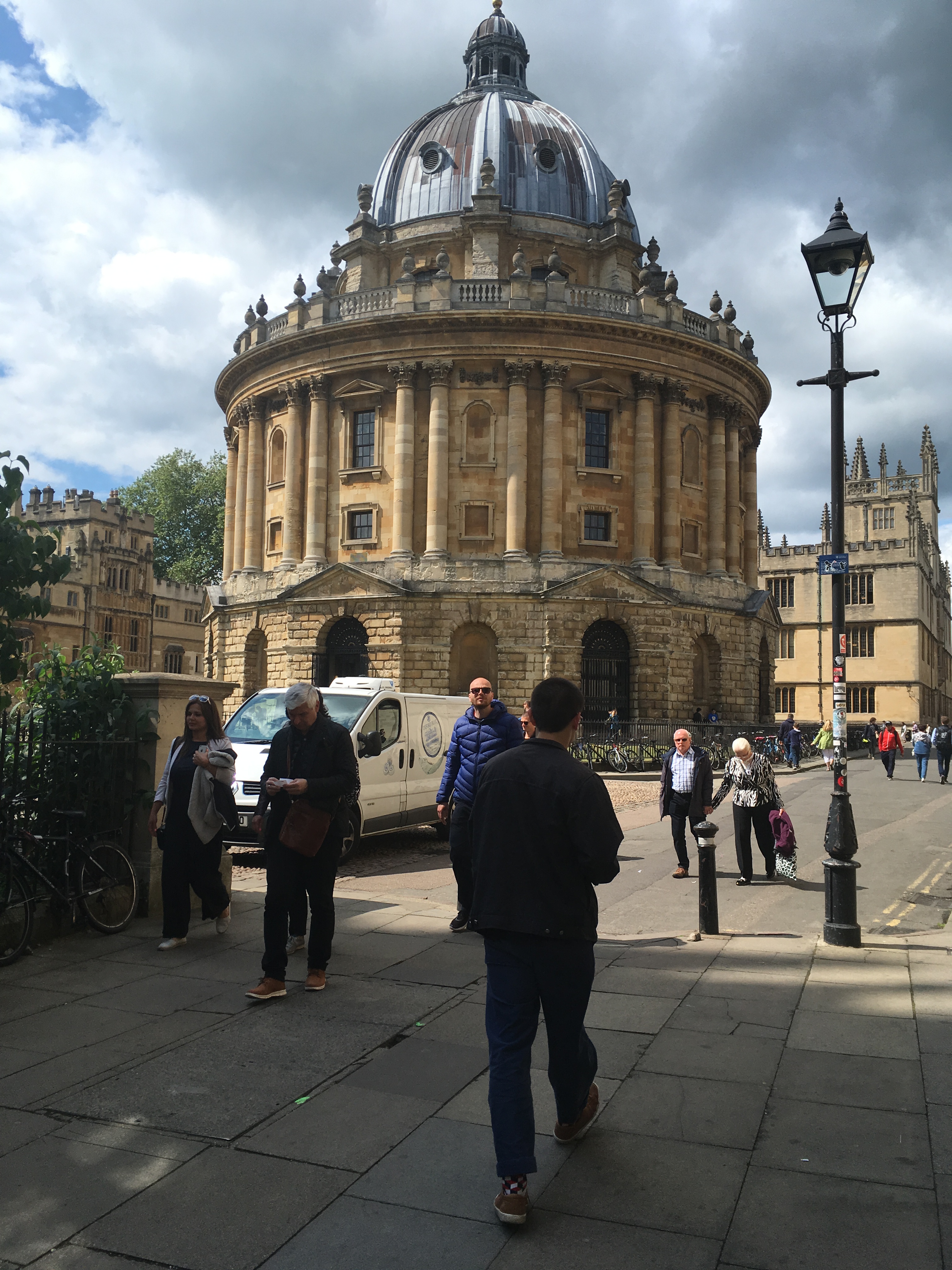
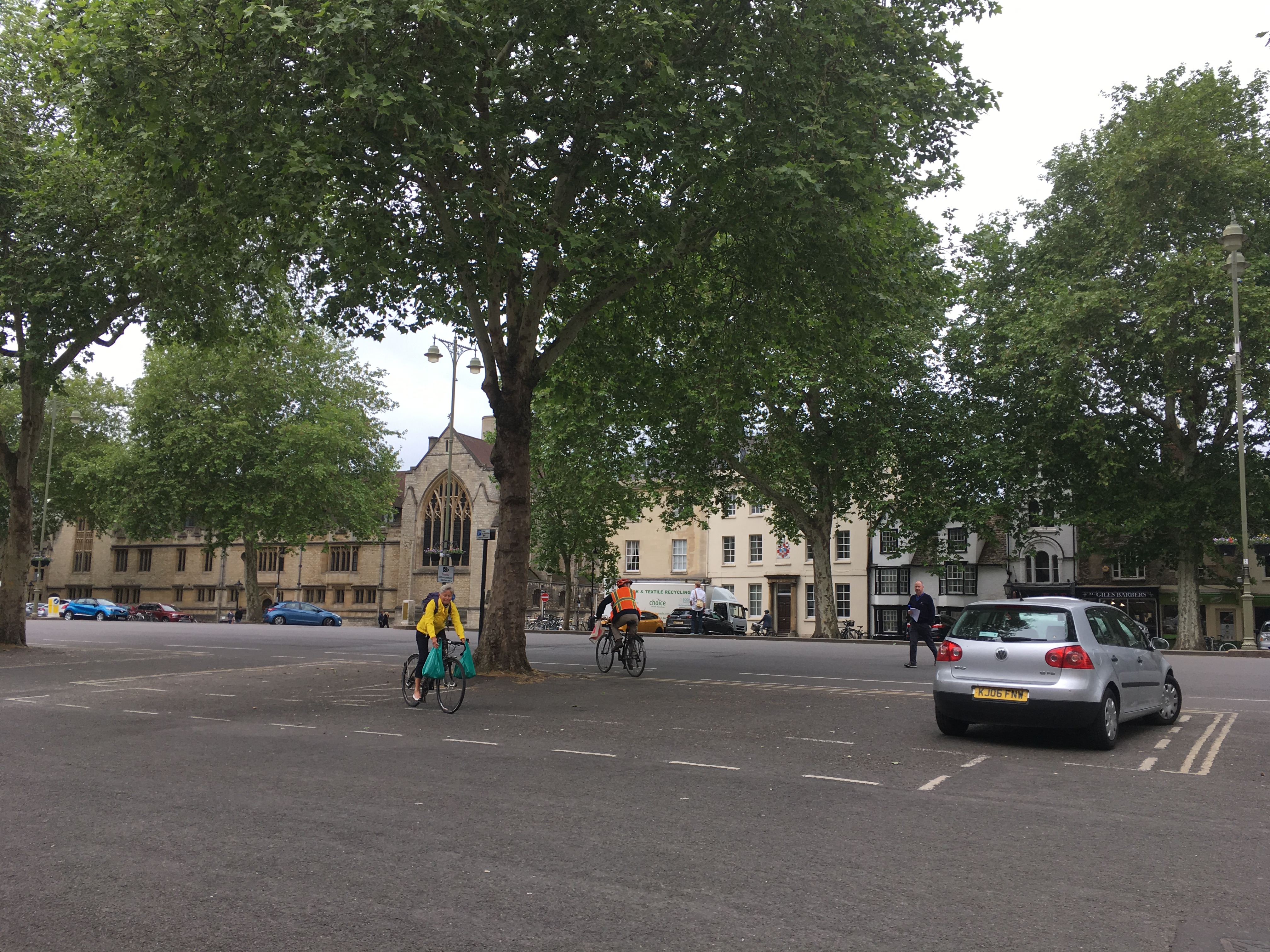
Oxford has layers of loveliness: the old beauty of stone walls, buildings, spires, and statues, all covered in the fresh spring beauty of yellow roses, green ivy, and flowering vines. We walked through the green parks every day, dodging bikes and other foot travelers, listening to birds cooing in the trees and watching ducks, swans, and ravens hop around among the lilly pads and cattails in ponds.

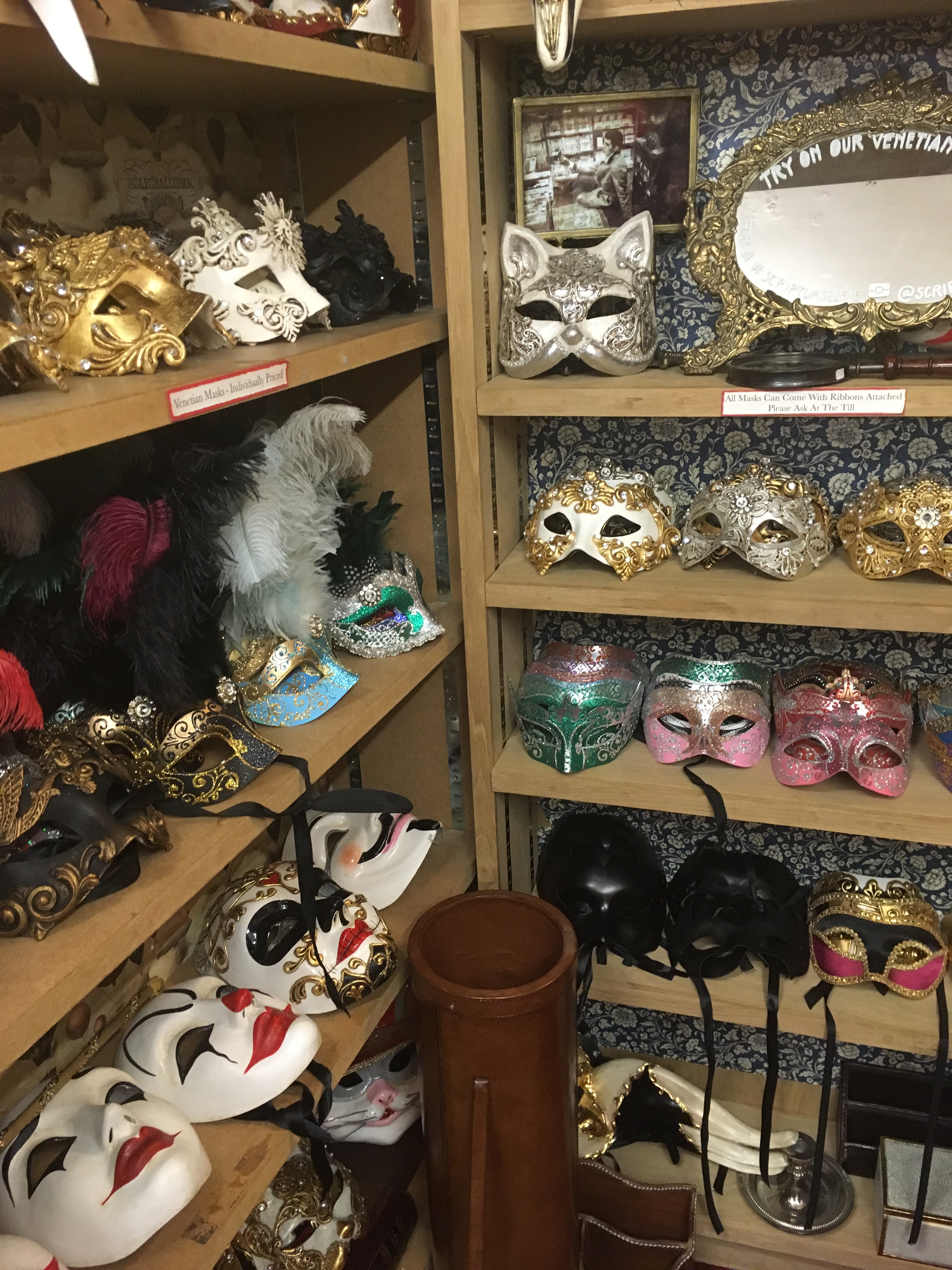
The town was full of tourists like us, the murmur of many languages, and students in black robes. We got chai tea and Italian hot chocolate (my life will never be the same) at a tea shop, wandered through a curio/bookshop full of quill pens and gilded masks, and explored the stalls of the Covered Market.

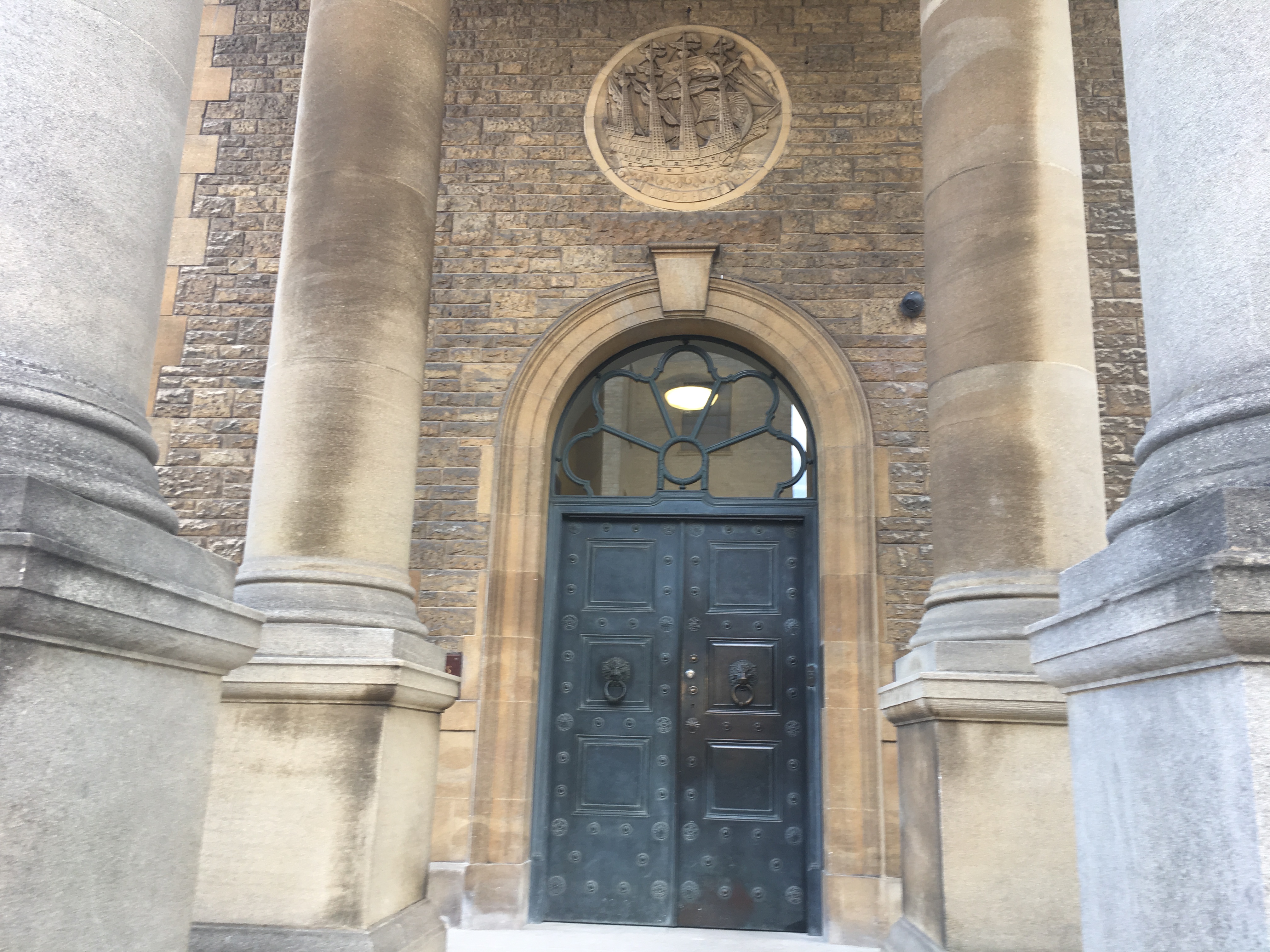
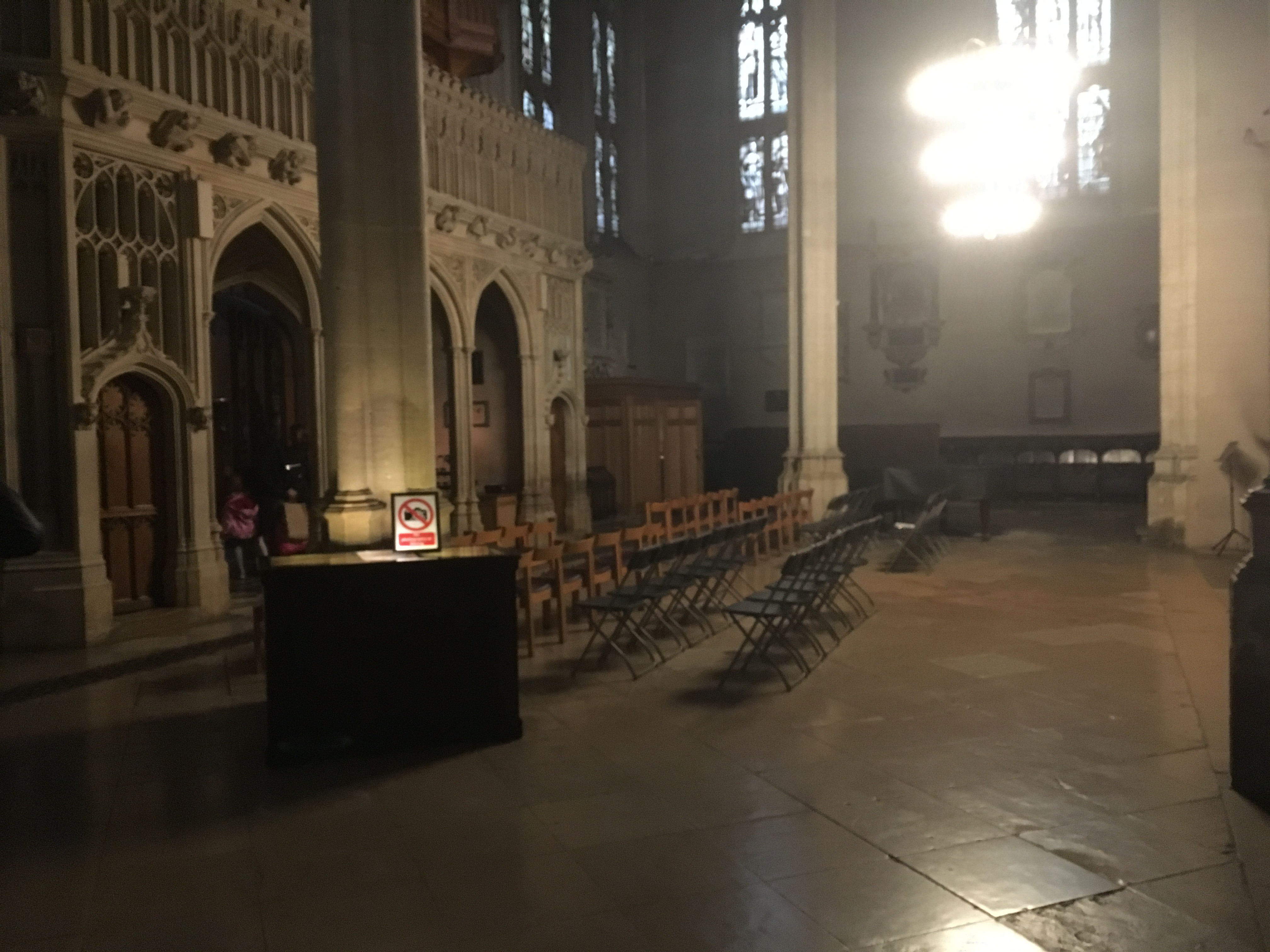
We heard echoes and whispers of the spirit of Oxford. The town and university are centered on thought leadership and intellectual discovery, but remember faith: we attended a lecture on “The Failures of Political Journalism” at Green Templeton college, wandered through the University Church of St. Mary, went to exhibitions on language and 3-D images at the Weston Library and Museum of the History of Science, and enjoyed an Evensong at Magdalen College.

Every day brought so much to ponder and so much to enjoy. I’ll reference this trip in many future posts, but for now, I came away with some important resolutions:

Enjoy nearby beauty

Oxford was breathtaking with its ancient stonework, glassy rivers, yellow roses, and silver skies. But I had a recurring realization: New England is just as beautiful: its starry mayflowers and pert black-capped chickadees, fragrant beach-roses and green maple trees. Though traveling is great in many ways, I only need to step out my front door to see beauty. I need to value the treasures around me, not just those that are far away.

Seek unity in diversity

Most of the “content” we found at Oxford in lectures and exhibitions presented a set of different opinions on each topic, without identifying any as primary or true. Diversity, inclusion, and redefinition (breaking down old meanings of humanity, gender, faith, language, science,etc.) were celebrated as the highest good.

I love listening to people who are different from me, being sharpened as iron sharpens iron. But I believe that the highest good is celebrating true things, not just different things. The original purpose of universities was to seek unity in diversity, with every individual discipline striving together to unravel mysteries. I yearn to seek transcendent, unifying truth, Wisdom, in literature, art, language, and theology, and from people of all nations, backgrounds, and experiences.

Burn bright in darkness; cultivate in the desert

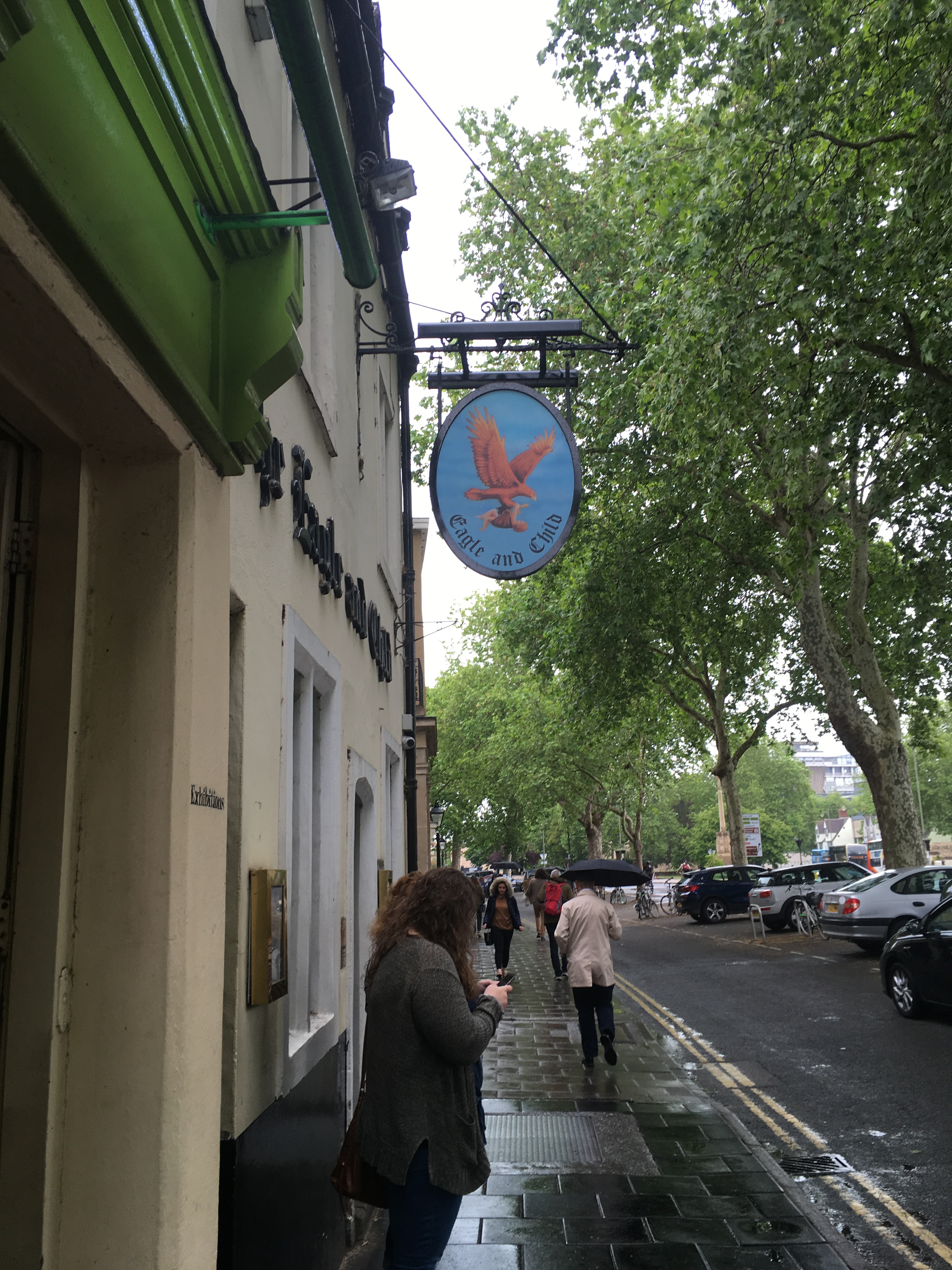
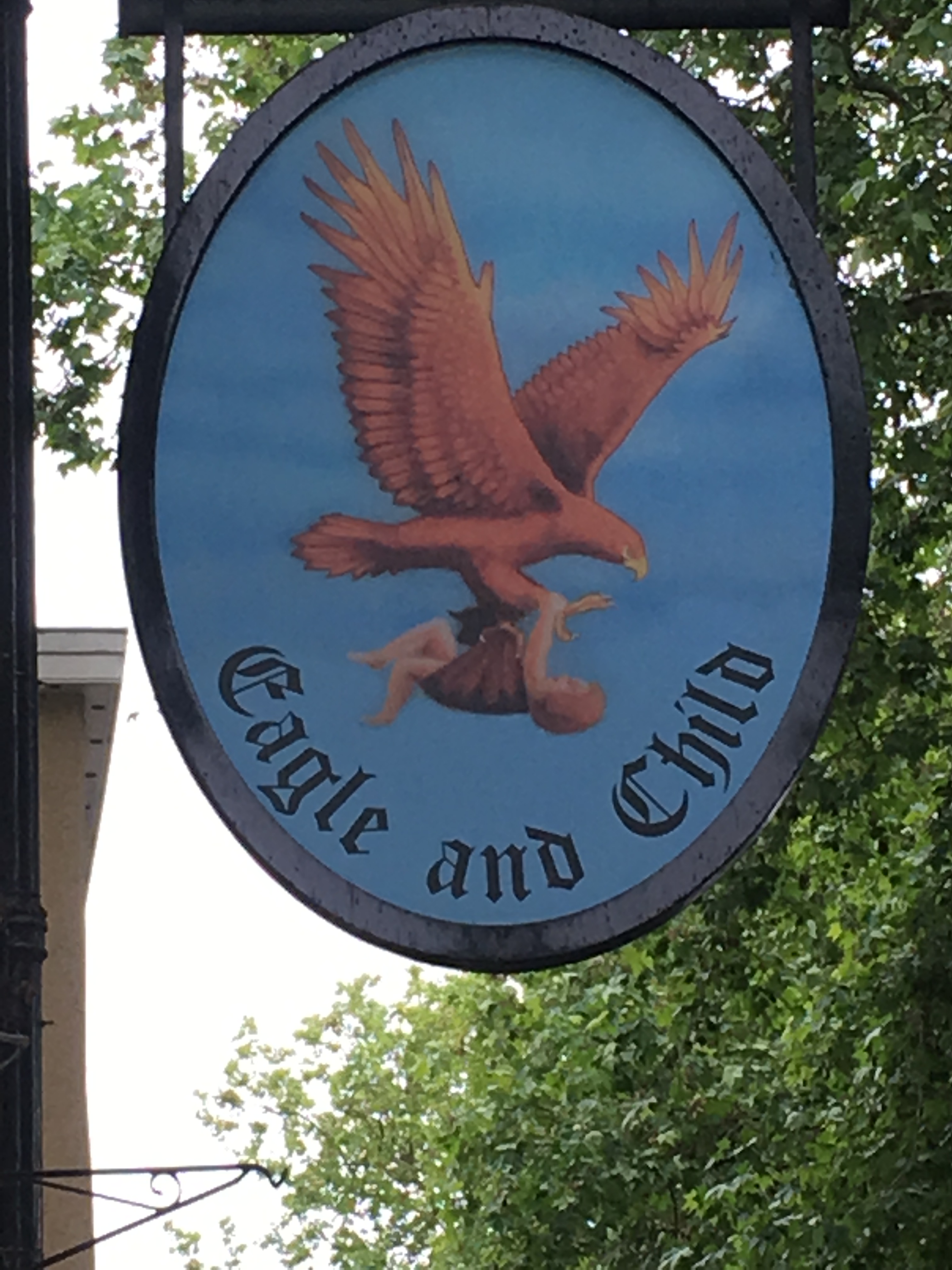
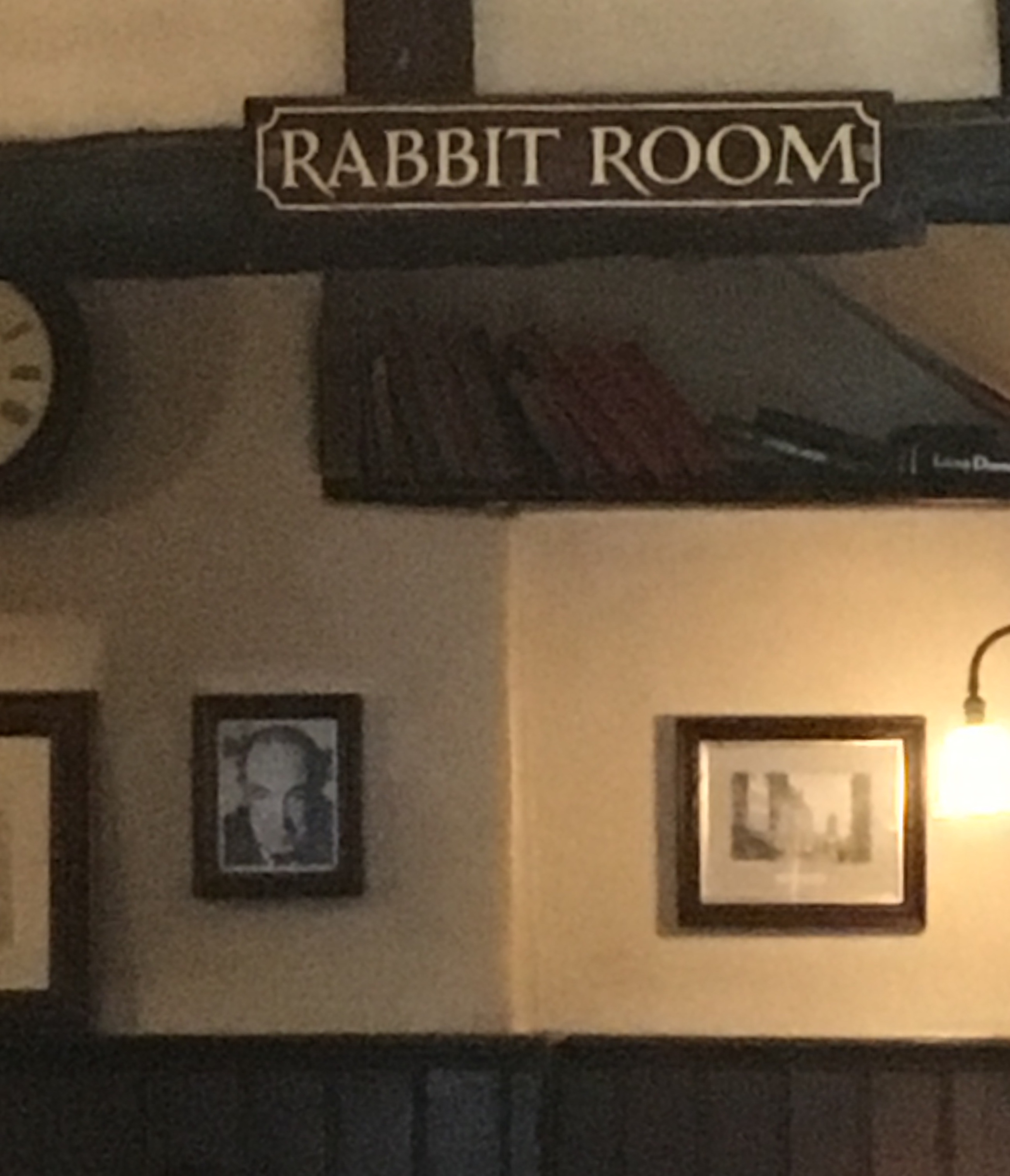
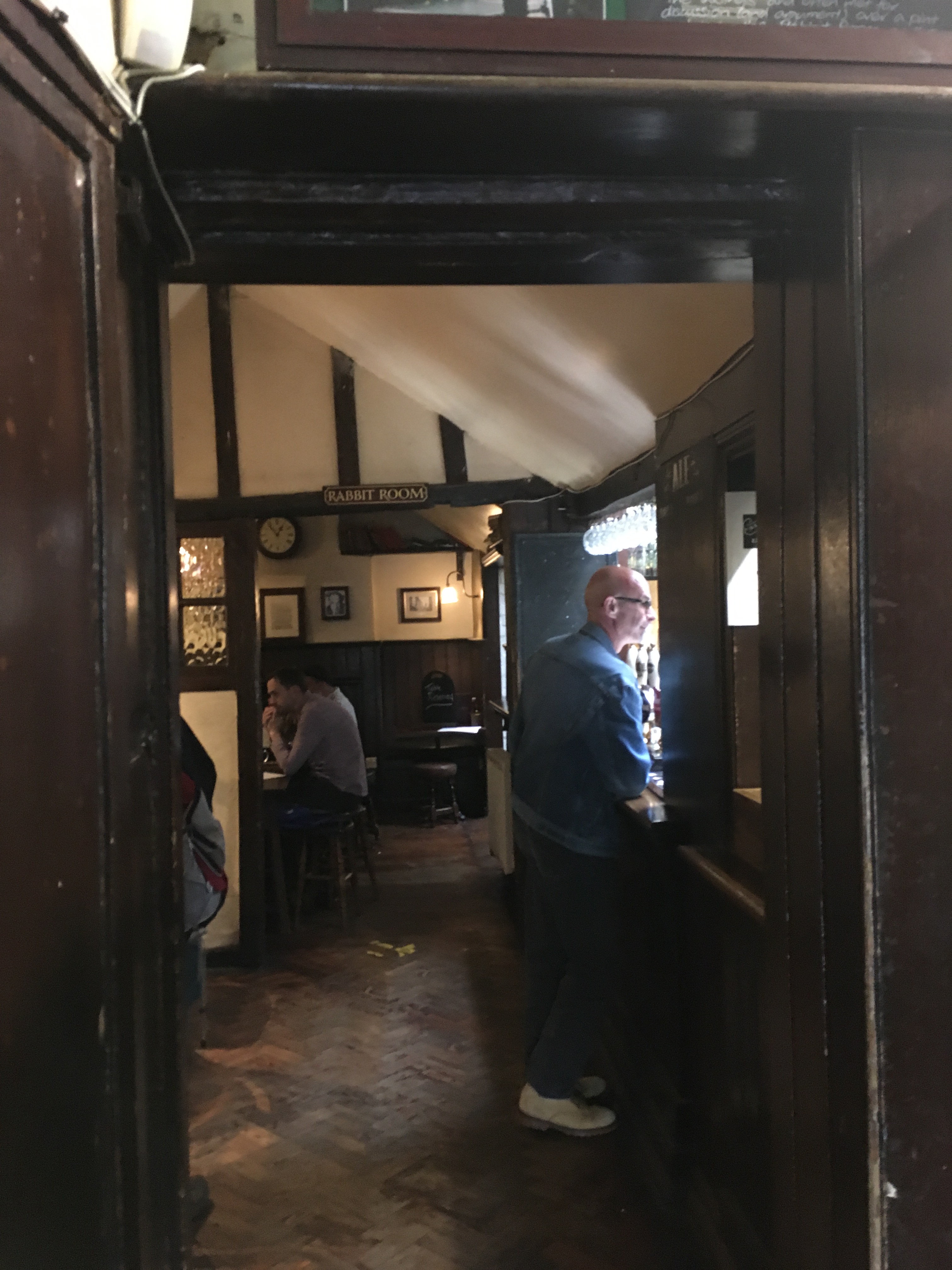
While rushing to the lecture, we had two minutes to duck into the Eagle and Child Pub, were Lewis, Tolkien, and the Inklings used to meet. My glimpse of the place stayed with me: dark, tiny rooms dimly lit by light bulbs, with barely enough places to squeeze faded armchairs beside brick fireplaces. The famous Rabbit Room was plain, with only a wooden table that may have seated five.

Lewis and Tolkien lived in a dark time: through the blood, fire, and fear of two world wars, sickness, grief, and a growing cynicism and loss of belief. But in imitation of God in Genesis 1, they spoke worlds into being: stories that acknowledge darkness and despair, but burned bright with love, beauty, and hope. The Inklings’ fellowship by the fire nurtured friendships, creativity, and joy that they poured out in stories that still kindle imaginations today.

The Christological center of Lewis and Tolkien’s imaginations stirred me deeper still. People of different faiths or no faith at all (like George R.R. Martin, Philip Pullman, Tamora Pierce, and Patricia McKillip) can also imagine worlds into being. But the narrative of an all-powerful, loving Redeemer who sacrificed Himself for humanity is the greatest Story; all other good stories echo it.

The world is still dark – maybe darker – today. But there are many light-bearers and dream-cultivators, people of strong faith and abundant imaginations, in Oxford (including Michael Ward, Sarah Clarkson, Joy Clarkson, and many others), in New England, and in the whole world. I can’t wait to discover more of them.

Resonance: Stories that Echo

Pink sunset over a beach.

Within my love for stories is embedded several, more specific affinities. One is for echoes, writers’ allusions to each other’s owork across the ages in archetypes, allusions, and retellings. I love tracing certain ideas across literature: for example, the fact that Cyrano de Bergerac’s large nose alludes to the classical poet Ovid’s physiognomy, or that Huckleberry Finn’s adventures fit into the genre of Bildungsroman.

Sitting in my British Literature Survey class, the first freshman English course at my school (where they weeded out all but the most passionate literature-lovers), I listened to my professor describing the land of Beowulf. She outlined the social structure of the mead hall, the king and the warriors, the scop’s entertainment during the nightly feasting in the communal sleeping hall, and though I had never read Beowulf before, I was thrilled by my own recognition. I had seen it before, as Tolkien’s Rohan.

The best writers are (usually) excellent readers, like rivers fed by the tributaries of their predecessors. They soak in wisdom and knowledge, images and patterns from their favorite works and then recreate them in the freshness of their own experience.

As a growing writer myself, I struggle to create stories that are wholly my own, while still following the traditions I love. For years, I longed to echo the stories I loved, with all their beauty and wonder – and created a rehash of C.S. Lewis, J.R.R. Tolkien, Lloyd Alexander, Madeleine L’Engle, Martha Finley, Roald Dahl, Elizabeth Bishop, L.M. Montgomery, George Macdonald, Elizabeth Winthrop, Betty Brock, Betty MacDonald, and Lynne Reid Banks that brought nothing new to the genre.

Around ten years old, I gave up. I finished Lewis’s Voyage of the Dawn Treader and felt the depths of joy and longing at its end fill my soul. I realized that I didn’t have the maturity to write something that rich – so I decided to stop trying.

I grew, and wrote, and started many stories that I never finished. I yearned to write about crumbling castles and mysterious mansions, faraway mountains and fantastic adventures, but scorned my own attempts as pathetically derivative.

My last semester of college, I took a Creative Writing course in which the professor had us read two short stories a week and write a reflection of what we wanted to “steal” (artistically imitate) from them.

I read Ursula K. Le Guin’s short story, “Ile Forest,” in the anthology I bought for the class. The richness of its gloomy atmosphere and wild setting, its old secrets and new passions, captivated me. I found myself questioning my self-imposed creed: Le Guin wrote a story brimming with tropes – the mysterious old house in the ancient forest, the enigmatic hero, the beautiful young woman, love and longing, in 1976 – years ago now, but long after those elements had been invented and reused by all those who came before. Were they trite, or classic?

I read Zilpha Keatley Snyder’s The Velvet Room and had a second shock: she, too, wrote yet another story about a mysterious old house – but I loved her book. She made it her own mysterious old house. So did Megan Frazer Blakemore in The Water Castle, and Jacqueline West in the Elsewhere series, and Daphne du Maurier in Rebecca, and Maryrose Wood in The Incorrigible Children of Ashton Place. I just finished Elizabeth Goudge’s bewitching, exquisite book, The Bird in the Tree, which is full of “tropes” – the mysterious old house, the place-of-refuge, the little village by the sea, and the drama of family.

Write what you know. I think that’s true; no one is going to be very impressed by my tale of an archeological mystery in Egypt unless I do a lot of research first, and even then, knowledge is often a pale imitation of experience. Yet the rule that is new to me (though others have discovered it first) is write what you love.

What settings, characters, plot structures, and genres inspire you? What sets your heart on fire, and lifts the weight of exhaustion and boredom from your shoulders when you think about it? What stories heal and comfort you? And what do they all have in common?

Choose a few ideas, settings, situations, etc. that could be considered tropes, and then think about how you could make them your own. I listed some of mine below.

TropeMaking it Mine
The child who is swept away from a dull/painful life to a magical country– Recasting the main character as an adult
– Making the real world better/happier than the magical country
– Creating an especially imaginative magical country; for example, as fascinating as The Rainbow Prison in Bruce Coville’s Luster series
– Playing with the obligatory lesson that the child learns; not the usual one of learning to “be brave” or “how to make friends,” but something less common like “doing justice” or “creating beauty”
The ancient, mysterious forest– Make the forest echo a real, earthly region its gorgeous intricacy: temperate, boreal, a bayou, a rainforest – use the beauty of a real ecosystem to make the fantasy more powerful
– Create a magical system that rules the forest with specific laws (ex. a certain species of tree becomes a gateway to other worlds at night)
Life of a poor but happy family– Pour my own experiences into each character; create tension through anger, jealousy, misunderstandings, loneliness, and frustrations that I know personally
– Give the family, or specific members, some creative or magical ability that makes up for their poverty
Send the family on an adventure

Like Roald Dahl’s BFG mixing dreams, I can “steal” (not plagiarize) the qualities of the stories I treasure and stir them into my own tales. My dreams, and my joy, could resonate as continuing echoes in the tradition of world-makers.

The Magic of the Ordinary

New York City skyline in the glow of sunset.

Nurtured by books like The Chronicles of Narnia and Lord of the Rings, I used to believe that modern technology has no place in literature. Medieval technology such as swords and ploughs, and maybe even Industrial Revolution technology like trains and mills, were acceptable, but nothing later than 1920s-era technology belonged in books.

My logic for this assumption ran deep into my beliefs about stories. I believed that stories were the exclusive realm of the mythical and the wonderful: ancient forests, splendid castles, beautiful princesses, and so on. As an avenue of the imagination, stories should be above the minor, ugly details of life, like technology.

This subconscious assumption ignored the wonderful details of ordinary life which Lewis, Tolkien, Lloyd Alexander, Edward Eager, Edward Ormondroyd, E. Nesbit, and others use. In Lewis’s Prince Caspian, Edmund remarks that being summoned from England by a spell without warning is “worse than what father says about being at the mercy of the telephone.” Ormondroyd uses an elevator as a key part of his Time at the Top

Mentioning current technology also gives stories the precious stamp of regionalism – memorializing a certain place and time so readers can visit it. Now, I love tasting the flavor of past decades through references to slates and record albums.

My assumption also glossed over the very real fact that swords and ploughs, trains and mills were just as boring and ordinary to our predecessors as subways and cell phones are to us. For all their mythology, swords are really just romanticized pieces of metal.

G.K. Chesterton explains this phenomenon of ignoring the romance of the present with reference to modern-day detective stories. He praised detective stories for capturing

. . . some sense of the poetry of modern life. Men lived among mighty mountains and eternal forests for ages before they realized that they were poetical; it may reasonably be inferred that some of our descendants may see the chimney-pots as rich a purple as the mountain-peaks, and find the lamp-posts as old and natural as the trees. (from here)

The storytellers from whom the Grimm brothers gleaned their material wove their tales with commonplace objects. Spindles are immortal because of Sleeping Beauty, but they were as normal as cars or coffee pots to the people who used them daily.

Chesterton’s perspective reveals the amazing possibilities of our world. We don’t need to reuse crowns and Gothic castles to spice up our stories (at least, not all the time). Why not mythologize Brooklyn apartments and Iphones? 

The technology of our day has near-magical capabilities. Google puts a world of knowledge at our fingertips; planes let us fly over thousands of miles in a single day.

With that in mind, I’ve put some story ideas below which realize a few possibilities of modern technology, the way fairy tales used magic rings or carpets:

  • Glitch in one particular Iphone which lets the user call other dimensions
  • Car (specific make and model) with a radio which begins receiving messages for help from another world/time
  • Computer virus which spreads a real, biological virus via the Internet
  • Windmills which were made not to generate clean energy, but to guard against holes in Earth’s magical atmospheric shield
  • Subway train which gets lost and discovers a network of caves full of secrets (treasure, ancient warnings about disasters, lost civilizations, etc.)
  • Stopwatch which begins to count down the days/hours/minutes until the next terrorist attack
  • Energy beings (aliens?) which communicate with the entire country using the powerlines