New Books, Beowulf, Habakkuk, Narnia, and a Question: How Vulnerable Should You Be on the Internet?

Sunset through trees in winter


This winter was full of wonders: long, dark nights lit by Orion and the rest of the heavenly host around a silver moon; days of cold so bitter it felt like my finger bones were freezing; deep snow that froze into crunchy drifts; cancelled church services; drives in the snow; a vigil that ended in a beloved family member sailing to heaven. The days have rushed by like pine trees seen through the window of a moving train, a blur of living, changing detail.

I’ve wanted to update this blog for a while, but I promised myself when I started blog-writing in 2017 that I would only post if I had something worthwhile to offer to readers. Here’s an attempt at an offering: a look at some new books I’ve found, workshops and courses I’ve enjoyed, and a question that’s been burning in me for months.

New Books to Treasure

For the last 12 months, I’ve struggled to find good new books, but a few treasures stand out:

  • Christina Baehr’s Secrets of Ormdale series — A brand-new, five-book series set in late Victorian England — with an actually likable Christian heroine and dragons? I was so afraid to have hope for this series, but it was marvelous. Christian Bhaer knows her stuff: Scripture, lore, historical and cultural detail history, Anglo-Saxon poetry, literature, and the best slow-burn romance I’ve read in a while are shining threads in this series’s fantastic tapestry.
  • J.A. Myrhe’s Rwendigo Tales — Set in central Africa, these books tell the story of four physical and spiritual quests with beautiful prose, exciting drama, and deeply relatable characters. The thoughtful, image-rich, matter-of-fact style reminds me of Alan Patton’s Cry the Beloved Country; the mythical and spiritual elements remind me of C.S. Lewis’s Cosmic Trilogy.
  • Diana Glyer’s The Company They Keep — I’ve been meaning to read this one for ages. In beautiful language and lots of deep research, Glyer studies that group of rare imaginations that included C.S. Lewis and J.R.R. Tolkien. She argues that, contrary to what most scholars have argued over the decades, the Inklings did influence each other by resonating, opposing, editing, collaborating, and referring to each other in their creative works. Highly recommended for Inklings fans and artists who long for community.
  • James M. Hamilton Jr.’s Typology-Understanding the Bible’s Promise-Shaped Patterns: How Old Testament Expectations are Fulfilled in Christ — I picked this book up on Audible after searching for books on typology, a topic I’ve been curious about for a while. I loved it. It offers a clear and careful examination of the images and structures that Biblical authors use to point to Christ as the king, suffering servant, redeemer of captives, and divine bridegroom. It’s accessible for both scholars and laypeople; joyfully and reverently written; full of brilliant insights about the patterns of Scripture. My favorite takeaway is Hamilton’s argument that the types of Scripture are 1) definitely intended by each Biblical author (not an accident or readers’ construction); and 2) historically grounded (more than just artistic collaboration by the authors).

Beowulf, the Anglo-Saxons, and Learning to Love Something

I began this year with something appropriately wintry and mysterious: a “How to Read Beowulf” course from the House of Humane letters. I’m more of a fairy tale, roses-and-summer reader than a fan of the grim, otherworldy, silvery beauty of Anglo-Saxon literature, but I know C.S. Lewis and J.R.R. Tolkien loved those tales, so I wanted to see what they saw.

The course was profound and thought-provoking in ways I didn’t expect. Angelina Stanford dived into:

  • The ruinous, twilight atmosphere of the Anglo-Saxon period
  • The violence of a culture that knew only revenge-killings and ransoms as means of justice
  • The nature of the monsters depicted
  • The very meaning and value of words

While I’m not sure I agree with every point made, the course left me with much to ponder and an ache to know more. I found myself going back to the very foundations of what a story is, how to read, and how to interpret literature – digging up my Literary Criticism and Theory notes from college, listening to more lectures on the Anglo-Saxon period, and wishing I had Tolkien’s gift for language. I’m newly convinced how much words matter, how every word and name is a story, and how Christ is the sun of righteousness who ends our dark night.

Habakkuk: The Word from the Watchtower

In February, I had the honor of going to a Charles Simeon Trust women’s workshop in Cambridge, MA. The Charles Simeon Trust Society trains Bible preachers and teachers in deep, thoughtful exegesis, theological reflection, and application. This workshop for women was as academically rigorous as any graduate seminar I experienced while also warmly encouraging. This workshop focused on practicing teaching prophetic literature with the book of Habakkuk.

Habakkuk is hard. The Charles Simeon Trust method begins with establishing the context and structure of a particular passage, and Habakkuk’s flow of thought is initially confusing. But it’s beautiful. Habakkuk’s earnest cry to the Lord, and the Lord’s sovereign and gracious response, are deeply comforting. The hymn of praise at the end is one I chose as an anthem for the past years, a song for troubled times.

This workshop showed me how clear, simple, and clean good Bible teaching should be. In my few attempts at teaching, I’ve often tried to dump all my insights, observations, musings, meditations, questions, and research on my poor helpless audience. Instead, the workshop taught me to distill my work into a simple main point that people will remember. For example, my original main point for a practice session on Habakkuk 3:1-19 was Christ is coming to administer justice and rescue His people, no matter how barren circumstances become. After workshopping this part of my presentation with my small group, I managed to streamline it down to Rejoice in Christ’s coming rescue even in barren times — turning an overflowing sentence into a comforting exhortation.

“Writing with The Horse and His Boy”: Rediscovering Old Loves

Yes, my life is merely a progression from one online literary course to another. This one was particularly fun because it was run by Jonathan Rogers, my writing teacher and the proprietor of the Habit writing community, which has been a source of delight, fellowship, encouragement, thought-provoking discussion, and community.
My creative inspiration, which has been fairly dry since January 2023, started to run again in a few of the writing exercises we did together. I remembered how much I love The Horse and His Boy: the beautiful, crisp, clear settings, Shasta’s intensely relatable awkwardness, self-pity, and courage; Bree’s pompous dignity; Aravis’s pride and honor; and the hilarious addresses to the reader. I was newly encouraged to follow tried-and-true writing wisdom like:

  • Look through your characters’ eyes and develop them from the inside, by what they notice and how they react
  • Stick with concrete details
  • Remember that each conversation has layers of dialogue: informational, atmospheric, relational, and more

If you are a creative writer curious about the intersection of theology and writing, longing for some practical tips for craftsmanship, or looking for community, please look out for the next Habit course.

A Question of Authenticity: How Vulnerable Should You Be on the Internet?

This question has been brewing in me for years: how vulnerable should you be on the internet?

I think this question started when I began blog-writing after college. I was inspired by the beautifully-crafted blogs and creative fiction of writers from places like the Rabbit Room or podcasts by artists, entrepreneurs, and other content creators: storytellers who captured the music of their lives in relatable but profound prose. Following their example, I translated my own life into words. I wrote vivid descriptions of scenery and seasonal changes, books I read, conferences I went to, meditations from Scripture, weaving them all into a few themes that culminated at the end of each blog post. My year in Scotland yielded a lot of fruitful experiences I could glamorize: gorgeous hikes in the countryside, fascinating lectures and reading assignments, and plenty of academic research to give credibility and substance to my musings on life, literature, and faith.

The years since returning to America, however, have not been as easy to write about. I’ve gone through a lot of change, including a few moves. Many of the mini-seasons in this long season have not been easy to write about — not for particularly interesting reasons, but because they included plenty of isolation, boredom, and loneliness, which don’t make for great writing material.

For the past few months, reflecting on my original goals and life since graduate school, I’ve been wondering: how much is it healthy, good, or noble to be vulnerable on the internet? This question multiplies into more:

  • How do you know when to share a personal story and when to keep it for your inner circle?
  • How long should you wait to write about an experience?
  • How do you respect others’ privacy when you share stories in which they’ve participated?
  • How many details should you share about a painful or difficult experience?
  • Should you write about unresolved conflict or past hurts? If so, how?
  • How hard should you try to end your personal story, especially a difficult one, on a certain emotional note – especially if you’re not sure that chapter of your life is finished?

Recently, I began pondering the question of Internet/public vulnerability in general after attending a conference in which a successful author, blogger, and podcast guest gave the keynote talk. He shared some deeply personal stories as part of his message: horrifying family tragedies, personal doubt, career struggles, unexpected triumphs, and new directions he’s taken. I’ve heard enough speakers by now to recognize some of the techniques he used, such as careful repetition, including concrete detail, and framing the whole talk with a quest structure. I’ve sat in lectures and talks with speakers who moved the audience to murmurs of awe, even to tears. Unfortunately, this one did not. Something about the speaker’s attitude, the personal details he revealed and concealed, the vaguely spiritual but self-centered ethic he preached, and the crescendo of his talk left me feeling emotionally manipulated — and awkwardly sitting during the applause as many of those around me rose to a standing ovation. I felt that the speaker was using grief and pain from his past to paint himself as both a victim and a victor and tell me how to run my life.

While this speaker was talking to a live audience, not on the Internet, his talk pushed me to a preliminary conclusion. How vulnerable should you be? is a wisdom issue, not a yes/no or fill-in-the-blank question. I walked away convinced that yes, there are good reasons and good ways to do so as well as bad ones. But how do you discern the right reasons and the right ways to share your story?

It’s as difficult a question as the one that haunted me in the post-college years: how do you live a good life? How should an artist use the raw material of her life, especially intimate things like family memories and struggles, in her art? Or should she do so at all?

Vulnerability and Influencer culture

On the internet, on social media, vulnerability is powerful. Someone who can share intimate, specific details of their days, families, work, hobbies, emotions, struggles, trauma, and celebrations can draw a following. I know of influencers who I deeply respect and have taught me wonderful things, but I’m becoming uncomfortable with how vulnerability equals money in the transaction of paid platforms, book deals, and commission sales.

Of course, people who work hard to create beautiful and useful things should be paid for their work. But I am getting concerned about a particular pattern: someone shares intimate details about their life consistently enough that their followers feel like they are personal friends – and, also, students and disciples. An influencer can become a personality who coaches followers on any topic: faith, mental health, life goals, relationship difficulties. One influencer I used to follow on Instagram went from giving life-advice and career coaching to selling a product by commission. She introduced a major world problem and talked extensively about it, then encouraged her followers that that product was a solution.

I know a few influencers who do a great job of cultivating real relationships in the online communities they’ve set up, and encouraging those followers to build real relationships with each other. My concern is when the relationship remains one-sided, digital, and transactional: the influencer offers vulnerable life details, and the follower reciprocates with likes, shares, attention, promotion, and money. Vulnerability sells.

Vulnerability, authenticity, truth: entering other territories

That keynote speech at the conference was just one thing that triggered this question in my mind. Another catalyst was the brief glance I took of a book of publishing advice for nonfiction writers. The book advised writers to be wholly “vulnerable” with their stories: write in blunt detail about humiliations, failures, scars, traumatic experiences, and deepest secrets. The book is a bestseller, and the author is right. Readers love intimate details, especially when they can get them without sharing their own secrets. But that advice makes my introverted self want to head for the hills.

I’m a hypocrite in this area. I love it when other writers share their intimate stories so I can read them from the comfort of anonymity. I crave the juicy details of their romances, either breakups and happy endings; parenting anecdotes; college tales; childhood memories; vacation stories; secrets; and I love not having to share any of mine in return. But vulnerability creates the illusion of friendship and intimacy without the full reality, and I’m afraid it just feeds the loneliness of our culture.

How vulnerable should you be on the internet? After all this thought, I finally looked up the definition. According to Merriam Webster, to be “vulnerable” is to be “capable of being physically or emotionally wounded,” or “open to attack or damage : assailable.” Ouch. But it is true. Sharing childhood memories, family stories, thoughts, and dreams on the Internet does leave you open to attack: mockery, scorn, criticism, and getting cancelled.

So why share your story at all?

I think back to some of the personal essays that have touched me deeply:

  • E.B. White’s “Ring of Time” and “Once More to the Lake” from his essay collection — achingly beautiful reflections of memory, time, and immortality, grounded in rich detail
  • Lanier Ivester’s “Seeds of Love” — an exquisite mingling of personal loss and eternal hope
  • Jennifer Trafton’s “This is For All the Lonely Writers” — a very relatable, exquisitely crafted meditation on loneliness, creativity, and community
  • Lancia Smith’s “Yes, Virginia, I Still Believe in Jolly Old Santa Claus” — a thought-provoking, joyfully reverent study of how the Christmas icon figures the tender love of God

In A Discovery of Poetry, Frances Mayes begins by exploring the purpose and meaning of poetry. “All these images [from poems] form a quick glimpse of how those mysterious others behind the glass live their lives. Poems give you the lives of others and then circle in on your own inner world . . . Like play, poetry lets us enter other territories” (xiii-xv, emphasis mine).

Well-written creative nonfiction and personal storytelling does the same, as do fictional stories. They give us a glimpse of another’s life, let us enter their territory. Done well, it’s invitational, relational, encouraging, challenging, comforting, and thought-provoking.

How vulnerable should you be on the internet? How vulnerable should you be in any form of writing? I think now of David, Asaph, Moses, and others pouring out their hearts in the Psalms; Nehemiah penning his cry to the Lord when he heard Jerusalem was in ruins; Paul writing of his past sins and current persecutions to the beloved members of the early church. Yes, for the right reasons and in the right way, opening yourself up to be wounded is a gift to your audience. Not to build a following of people who feed on your life and your advice, but to welcome them into following the Lord, the One of all creation who has the right and the goodness to influence us ultimately.

Some tentative personal resolutions

Public vulnerability is a wisdom issue, something that requires individual reflection and discernment. Done well, it’s a beautiful gift to readers; done poorly, and you really have opened yourself up to be wounded or to wound your readers. As I ponder this, here are a couple of principles I’m forming for my own writing:

  • Let Scripture guide you into making God the center. Use my writing to recognize the work of the Lord – not by slapping a Bible verse or pious-sounding conclusion onto every piece, but trusting that if I pay attention to detail, take the time to ponder an experience, and pray over it, I will find its intersection with eternal truth. I’ve seen this modeled brilliantly by the writers at The Cultivating Project, who weave Biblical insights, hymns, and other art into personal stories. A good artist can turn the telos or purpose of a piece into hope-through-lament, courage-through-darkness, joy-through-sorrow, and faith-through suffering without minimizing how hard life is.
  • Tell family and friends first. This is an old rule I made for myself, and I think I’ve managed to follow it. If I have exciting news in particular, I try to let my closest circles know first, and they get the real scoop on the most interesting details.
  • If it’s a hard subject, pray and wait before sharing. I don’t think I need a waiting period to share a fun hiking story or list of good books I’ve read recently, but if I choose to share something painful or complicated, I want to make sure I have a good reason for doing so.
  • Err on the side of others’ privacy. I never want to burn a relationship by turning a painful or private subject into a piece of content. Any money I might get from a commissioned piece, any number of likes, follows, or shares, is not worth hurting someone I love.

What do you think about vulnerability on the Internet? Where have you seen it modeled well or poorly? And what are some of your favorite examples of personal stories told well?

Scarlet, Sleigh, and Gift: How the Story of Santa Claus Reflects the Gospel

Christmas lights in the snow

I love this time of year: twinkling lights and glittering stars against the early dark; crimson and gold entwined in the rich green of wreaths and trees; the world-silencing wonder of the first snow; frost-flowers on window panes; the merriment that feels age-old and ever-new. This time of year, the story of the Myth-Become-Fact of Jesus Christ, the child of prophecy, reimposes its majesty, mystery, and closeness to our waking lives.

As I said in my last blog post, I really miss putting together “Leaf by Lantern” podcast episodes. I still don’t have the time to record, edit, and publish the audio, but I’ll keep writing out prose episodes as long as I have fairy tales and folktales to talk about.

For this episode/essay, I looked through a few fairy tales that could fit into a Christmas theme until I realized that there is a fascinating folk tale right at my fingertips to explore: Santa Claus. It is deeply sad that many have tried to replace the wondrous Incarnation, in all its holiness and mercy, with the story of a jolly, plump man who delivers presents — like replacing the sun with a cheap flashlight. But as I think about the tradition of Santa Claus, specifically the American version of the story I grew up hearing, I realize that it’s one of the better-known folktales of our age. Though it does have aspects of legend (history + fiction) going back to St. Nicholas of Myrna, who was a historical figure, elements like the North Pole, the reindeer, and the toyshop with elf employees have been added in and retold dozens of times. The “folk,” the common people, have made it our own. And like all good folktales, it points to the gospel.

Literary and film retellings of the folktale range from mythic and enchanting, like The Legend of Holly Claus and The Polar Express, to goofy, like Elf, Klaus, and The Santa Clause, to sweet, like the Prancer movies and Rudolph the Red-Nosed Reindeer, to tongue-in-cheek, like Red One of this year. Storytellers draw out the threads they like and reweave and reinterpret them: giving Santa various elaborate backstories, explaining the origins of the reindeer and North Pole workshop with greater detail, and incorporating other characters that the audience can relate to. I wrote a Santa retelling myself a few years ago, one of my favorite of my own stories, “Flight of the Gift-Giver.”

So I’ll look at the legend/folktale of Santa Claus in the same way I’ve looked at various fairy tales and ask:

  • How do the images in this story reflect the gospel?
  • How would a Christian artist who crafts a retelling of the Santa folktale do so in the light of Scripture, using the Bible as the reference for truth and beauty?

I’ll look at the images of Santa himself, the sleigh, and the naught vs. nice list.

Santa: Man and Myth

Most of the Santa figures I’ve seen in retellings portray him as jolly and silly, a good-hearted buffoon. He’s grandfatherly and more regal in Miracle on Thirty-Fourth Street and something more of a warrior in Rise of the Guardians. Michael Ward’s book Planet Narnia, which traces medieval planetary symbolism in C.S. Lewis’s Chronicles of Narnia, helped me to understand the Father Christmas who appears to the four children as a jovial figure, embodying the kingliness, magnanimity, wisdom, benevolent sovereignty, and peaceful prosperity of the medieval idea of Jove.

I see several Biblical images to work with in any retelling’s version of Santa:

  • The color red as luxury — The tabernacle and temple were full of “fine twined linen and blue and purple and scarlet yarns” (see Exodus 26:1 and many other verses in Exodus) and the wife of noble character of Proverbs 31 is “not afraid of snow for her household, for all her household are clothed in scarlet.” Scarlet or purple is a royal color, luxurious and lovely. Whether your Santa is stately and majestic, a kindly grandfather, a holy fool, or a more complex character with secrets and struggles of his own, I would not be afraid to lean into that regal aspect. He’s kingly, with authority over some sphere.
  • The color red as a representation of sin — “Come now, let us reason together, says the LORD: though your sins are like scarlet, they shall be as white as snow; though they are red like crimson, they shall become like wool.” (Isaiah 1:18, ESV). Red is the color of blood; the blood of bulls and goats atoning for Israel’s sin over and over, never enough, and the blood of the Lord Jesus shed once and for all as the Lamb of God. The paradox of a color that represents sin and the deliverance from sin is fascinating. How might your Santa represent the paradox of sin and redemption? How could he reflect the Messiah who was made to “be sin who knew no sin, so that in him we might become the righteousness of God” (2 Corinthians 5:21)?
  • Santa’s entry through the chimney — I don’t want to overanalyze this image (it may partly be functional — just a way of explaining to children why Santa doesn’t need a housekey) but I find it intriguing that Santa enters from above through an avenue normally reserved for fire. It reminds me of the Lord sending down fire in judgement on Sodom and Gomorrah in Genesis 19; in proof of His sovereignty in 1 Kings 18; in an outpouring of the Spirit with wind and tongues of fire at Pentecost in Acts 2. The fact that Santa comes with gifts instead of judgment reminds me of Christ who came to offer sinners a hope undeserved. How might the chimney/fire from above/hearthfire factor into your Santa’s abilities and character?
  • Santa as undying — Santa is an old man but immortal. He represents an age-old hope that never dies. While his joviality is, well, Jovial (again, the medieval idea of Jove is of a kingly, generous, serene figure), I also see a possible link to Saturn or Father Time. He serves as a foil for Christ, who came as a child and will never age or die. How would ageless age affect the character of your Santa?

Whether you’re drawn to the goofy or the phantasmagorical in developing your Santa, I would argue one last thing: the imagery of the Santa tale is good. I don’t see a good case for making him a villain. I might also suggest exploring Santa’s role as a guide between the ordinary and magical, like Mary Poppins or Peter Pan: someone who knows the deep secrets of the world and helps others on their quests, their journeys towards happy endings.

The Sleigh and Divine Intervention

The image of Santa’s sleigh pulled by flying reindeer past a gigantic moon is iconic. The sleigh’s passage from sky to individual homes links it with many passages about heaven meeting earth, the divine intervening in human history, the Most High reaching down to our humble estate to rescue us. The image of the flying sleigh coming at night reflects the image of Christ coming to us as light in our darkness, life to our shadow-lives of spiritual death.

But Santa’s flying sleigh intersects beautifully with another of my favorite Biblical images: the “chariots of fire and horses of fire” that come for Elijah the prophet when he “went up by a whirlwind into heaven”at the end of his life (2 Kings 2:9-12). Since reading this story in nightly Bible story time when I was little, I have a fierce, aching jealousy of Elijah’s flight from earth.

Thus the Bible has two glorious images you could use to beautify a Santa Claus retelling:

  • Divine intervention — Light in darkness; a redeemer who “descended”; a healer who comes to a land of terrible sickness; the Gospel of John, Paul’s letters, and many other passages of Scripture give soul-stirring metaphors to teach us what Christ did by coming to us. The more you can emphasize the sleigh as representing heaven’s reaching down to earth — joy in the midst of despair, the healing of a sickness, the lifting of a curse, the fall of an evil dominion, delight that overcomes despair — the closer you can bring your retelling to the mystery of the gospel.
  • Wind and fire — If you really want to dress up Santa’s sleigh, the fiery chariot and whirlwind of 2 Kings 2 could set your story ablaze. The image of fire in the cold of winter (apologies to anyone in the southern hemisphere who celebrates a warm Christmas) is also a beautiful one. The image of Elijah’s fiery chariot also connects with Santa’s entrance through the chimney . . . it’s intriguing how much fire lies hidden in this story’s images.

The Naughty vs. Nice Lists: The Law and Grace

At first glance, the naughty vs. nice list of the Santa folktale is nothing but the old, cheap trick of scaring children into good behavior. At second glance, it’s even worse: pharisaical works-righteousness and legalism, the lie that you can save yourself by Following the Rules. Spiritually, we are all much worse than naughty and deserve much worse than lumps of coal; that’s why we need grace.

And yet . . . as I look at it, the naughty vs. nice list and threat of coal vs. gifts could actually match up to the gospel in a different way. I’m reminded of Paul’s words about the Old Testament law: the law was like a guardian for the people of Israel (see Galatians 3). It was good in that it taught them the difference between sin and righteousness, holiness and defilement. The problem was that they could not keep the law on their own. They failed again and again by worshipping idols, intermarrying with other nations, or even with disobedient hearts as they keep the outward tenets of the law (see the entire Old Testament, or for a good picture of the situation, Isaiah 1). So the naughty vs. nice list may actually have that truth in it, the difference between right and wrong. And apart from Christ, we are all in the wrong.

The threat of getting a lump of coal instead of a gift has some interesting implications as well. In Isaiah 6, the prophet Isaiah is dismayed to find that he, a sinful man, has seen the Lord in his temple, attended by seraphs. In response, one of the seraphs brings him a flaming coal and touches it to his lips. “And he touched my mouth and said: ‘Behold, this has touched your lips; your guilt is taken away, and your sin atoned for’” (Isaiah 6:7, ESV). In a Santa retelling, an artist could take the disappointing gift of coal and turn it into something ironically wonderful and mysterious: something that purifies, restores, and redeems.

What about good gifts that are alternatives to coal? I don’t feel that plastic toys and mindless entertainment make the best symbol for the awesome gift of eternal oneness with the Living God. But as I thought about it, the idea of a child’s toy as something meant simply for joy and wonder, not a tool for labor or education, reflects the gratuitous, abundant richness of God’s goodness. If coal could be something glorious, what would a more direct symbol of divine grace be? I had a couple of ideas:

  • A gold ring — Gold as a nod to the golden streets of heaven; a ring as a sign of the covenant between Christ and His Bride, the Church
  • A key — Something that would open doors to adventure and mystery in your story, and also reflect Christ’s possession of the key of David (Revelation 3:7)
  • A dove — A living creature who acts as a guide, counselor, comforter, or helper, as a nod to the Holy Spirit
  • A music box or musical instrument — Something of delicate workmanship that makes music, an outlet of praise and awe

Hope everyone has a Merry Christmas! May good stories, feasting, and fellowship renew our wonder in the love of the Mighty King who clothes us in righteousness, washes us white as snow, descended into our darkness, and gives us the gift of Himself.

2023: The Close of the Year

Glittering ice storms and whimsical thaws and freezes; tiny white and purple wildflowers that sang like stars in the grass; a sweltering green summer full of dreams of dragons; a humming haze of an autumn, goldenrod and woodsmoke in the air. Playing the how-many-ebooks-can-I-check-out-per-month game on library apps; slipping into chiffon and satin for weddings; watching my dog roll around on his back like a deliriously happy bug; zipping up suitcases and carefully storing away parking tickets; sifting the pages of my Bible as if I climbed a stone staircase, trusting it to hold me. 2023 is finished – a translucent, winding, treacherous, wondrous year that taught me a lot of good things.

I wanted this to be a fruitful, abundant year, especially for my writing career. I resolved to edit the rough draft of a manuscript I’d just finished, submit at least one article for publication per month, release a fairy-tale-retelling podcast, and perhaps craft a few short stories for good measure – along with at least one blog post per month, of course. I accomplished a couple of those things, especially releasing the podcast, but for most of the time I found my heart and imagination blank and empty, unable to give birth to new ideas. 

At a writing retreat in February, my writing teacher reminded us that we writers are not machines with a set, predetermined production output. We’re more like trees, with seasons of fruitfulness and fallowness. I decided to fill myself up with good things in this fallow season, so when inspiration comes, it has plenty to work with: good books, good plays, good movies, and good teaching.

This blog post is a wrapup of some of the good things I filled up with in 2023, books and plays, as well as a few aftershow notes from recent “Leaf by Lantern” podcast episodes. 

Books of 2023

Researching the podcast this year kept me steeped in fairy tales, but I fed my soul with all the other books I could find. Here are some of my favorites:

Transformed: The Perils of the Frog Prince, by Megan Morrison – I wanted to read more fairy tale retellings so I could talk about them on the podcast, but I had trouble finding ones that weren’t dark, “steamy” YA fiction. Reading this story gave me a lot of pleasure during a long flight from the west coast. It’s actually the third in the Land of Tyme series (I have not read the first two) and features a brilliantly-developed, selfish and demanding main character who goes on a quest, solves a complex mystery, and undergoes a deep transformation.

This Rough Magic and Nine Coaches Waiting, by Mary Stewart – Despite the announcement on the covers of these paperbacks that these titles graced the New York Times Bestseller List (in the 1950s) and that Mary Stewart is famous as a master of “romantic suspense,” I had never heard of this author before. I could die of happiness. These books feature beautiful, daring heroines reminiscent of Grace Livingstone Hill girls or Nancy Drew; exotic locations described with lush, vivid prose (I adore detailed descriptions like these); thrilling adventures and wildly melodramatic romances. These books are definitely dated in certain ways, but they whisked me away to enchanted worlds for many happy hours. I would love to write books like these, set in places I know and love.

The Goldfish Boy by Lisa Thompson – I crave new, well-written mysteries, but it’s hard to find good ones outside of the Golden Age classics I have already reread many times (mainly Agatha Christie and Dorothy L. Sayers) that don’t feature grisly murders and questionable ethics. This middle-grade novel uses some of the classic tropes, including a housebound main character (suffering from crippling germophobia) who may have been the last person to see a toddler who goes missing. It’s a very sweet story, with a lot of self-discovery and friendship.

Ancora: The Fog Banshee’s Curse, Miriam Pittman – I met Miriam at a writer’s retreat and loved the sound of her Irish-lore-inspired story. This book overflows with sweet humor, beauty, adventure, and mystery, from a sinister spellcaster to magical horses and terrifying, murderous fog banshees. The personalities and relationships of the sisters are as clear, bright, and sweet as those in Little Women or The Penderwicks. Miriam did a fantastic job of playing chords of truth, self-discovery, repentance, courage, justice, and forgiveness in ways that ring true, without making the reader feel lectured.

Daughter of Arden series by Loren Warnemuende – After twenty-five years of writing and drafting and a few years of editing and review, my friend Loren’s book series is finally out! Watching Loren brainstorm and draft and piece the final parts together has been a delight. Loren is a master of character development and growth – I was astonished at the transformations she put together. Reading the final book, Promise, was also a lesson in revelation and exposition; many of the characters, events, and seemingly-extraneous details of the first two books suddenly rise up as essential plot points that lead to a thrilling conclusion.

The Carver and the Queen by Emma C. Fox – Before reading this book, I thought Siberia was a perfectly flat, frigid, depressing place with a constant snowstorm over grim gulags. Emma’s box opens up the dazzling world of Siberian folklore, from peasant festivals to fireflowers to a formidable Malachite Queen under the mountain. The prose of this book was so exquisite, I had to read and reread pages to soak it in. Deep, fascinating characters – some very lovable good guys, some very hateable bad guys – take part in a dance of duty and desire, frustrated longings and difficult sacrifices. I am a fast reader because I’m impatient, but this is a rare treasure, a story to savor slowly.

Son of the Deep and Orion and the Starborn by K.B. Hoyle – Emma’s The Carver and the Queen led me to Owl’s Nest Publishers, a great place to find middle-grade and teen literature that is actually written for readers in those age groups. This fairytale retelling and astronomical fantasy gave me a wholehearted pleasure – gorgeous settings in the deep sea or Orion’s belt, characters with zeal and longing, and, best of all, plots driven by romantic or familial love. I ached for the main characters in these books to find the wealth of community and keys to the mysteries in their lives. Both of these titles have sequels coming out in the next year, which makes me very, very happy.

Tales of Hibaria: The Awakening by Jamin Still – I wanted this book as soon as I heard its premise – a world where constellations or “Sky Lords” walk the earth and guide children on important quests – but I waited until I could ask for it as an early Christmas present. It’s marvelous: gorgeously illustrated, with intricate and colorful maps and breathtaking images of the stories; written with simple, eloquent prose like drops of rainwater on a pool; alive with child characters who look up to the stars, ponder strange memories or deep griefs, and set foot on the road to adventure with trembling hearts. Some of the short stories in this collection were so beautiful they hurt. My timing in reading it is excellent – this book’s sequel also comes out this year. 

The Turning by Emily Whitman – With delightful irony, I published a podcast episode on the “Selkie Wife” folktale one day, couldn’t sleep that night, and checked out this ebook on my library app to pass the time . . . which turned out to be a selkie story! Vivid, clear prose; a main character whose loneliness, love, and determination captured my heart completely; and a perfect balance between the discouragement of frustrated desire and choosing to hope. 

Personal reflection about all these books: the stories I loved the most in 2023 involved characters with profound yearnings, deep love, exciting adventures, and courageous hope. It has been fun to trace the Gospel patterns in the fairy tales I’ve studied on the podcast, looking for what truths of Scripture glimmer in motifs, archetypes, and structure and give them their beauty.

Plays of 2023

I attended every play I could find this year, mostly classics: 

  • Les Miserables, January
  • Peter and the Starcatchers, March
  • Pride and Prejudice, April
  • The Sound of Music, July
  • The Play that Goes Wrong, November
  • A Wrinkle in Time, November
  • A Christmas Carol, December

The Play That Goes Wrong – This performance matched my sense of humor perfectly (almost): consciously and unconsciously ridiculous, full of desperate attempts to save face and keep the show going on in the midst of abject failure and total mayhem. If you’re not familiar, the premise is that you’re attending an amateur drama club’s first major performance . . . and everything goes drastically, hilariously wrong, from actors forgetting their lines to the set falling apart. Watching this play reminded me of how much comedy, and storytelling in general, depends on the interplay of timing, setting audience expectations, and either meeting or breaking those expectations. The misspoken or forgotten lines were placed so that the audience knew what was supposed to be said, and how bad the actual delivery was; props were misplaced or forgotten in a specific order, so we knew specifically what should have happened. I could have used less (or no) slapstick fighting at the end, but otherwise, thoroughly enjoyed the artful silliness of this play.

A Wrinkle in Time – Fifteen cast members in a black box theatre brought this story to life – with some people acting and an ensemble taking turns reading out loud and playing minor roles. The wonder, humor, and startling creativity of L’Engle’s work was all the more delightful as an audiobook/live drama. Adapting a story to the stage or screen often means that the author’s prose is lost, or has to be inserted into dialogue, but the read-aloud aspect of this adaptation meant L’Engle’s prose was preserved and its beauty was amplified. I also appreciated that the play didn’t feel the need to update or change the story to “fit” our current cultural moment better; it was more timeless because it wasn’t trying to be relevant. 

Podcasts of 2023

One morning in May, as I was frantically trying to write/record the first episode and get all the necessary ingredients (show graphic + RSS feed + intro segment + etc.) I woke up feeling grumpy and unmotivated, wondering why on earth I was trying to do something as hard and scary as produce a podcast. I didn’t want to – it was too difficult and too intimidating. With a startling clarity, I realized that those two things, fear and laziness, are terrible reasons for doing or not doing something – and I managed to publish the episode a few days later.

Creating podcast episodes is much harder than writing essays or stories. A few things I’ve learned: 

  • Time – I have never regretted giving myself an extra day or so to refine the content, even when it means an episode is late. I’m careful about theological topics and Scriptural interpretations, and reading a script out loud multiple times gives me the chance to realize if I say something confusing or incorrect. 
  • Examples – Finding good, interesting examples of principles and applications is one of my favorite things – and one of the hardest parts of the podcast. Talking about any subject means that you have to be well-versed in it, in both breadth and depth – so technically, I should be a master reader of retellings. One problem I’ve encountered, as I mentioned above, is the rarity of good fairy tale retellings. There are gems out there, but there are a lot of retellings that try to “fix” the fairy tales or use them to teach moral lessons. Finding good retellings, or stories in general, is deeply refreshing and gives me hope.
  • Community – Good podcasts make themselves part of larger conversations, whether or not they have one host or several. I have learned so much from the guests I’ve had on the podcast, and would like to learn more. I hope to book more guests for season 3.

Reflections on some recent podcasts: 

The Golden Bird

This episode explored some very big and deep concepts, and I wish I had given myself a little more time to ponder them. I would add one thing to the third section, in which I discussed Scriptural examples of betrayal. I went over three Biblical stories of betrayal and how they provide patterns artists could learn from: Joseph and his brothers (betrayal > repentance > forgiveness and reconciliation), Cain and Abel (betrayal > no repentance > unexpected grace), and Judas Iscariot (betrayal > no repentance > condemnation). With further reflection, I wish I had talked more about the concept of betrayal and the Christian worldview. 

The idea of “betrayal” as something bad, a wrong that demands justice, is a Christian one. It rests on several things: 

  • The idea that to break your word, your promise, is wrong – words matter to God. God always keeps His Word. This principle also applies to lying (Ten Commandments).
  • The idea that hurting someone intentionally, not in self-defense or a just war, is wrong. “Love your neighbor” – Jesus commanded – and even, love your enemy. 
  • The idea that there is no sin that will not be found out. I don’t watch a lot of gritty TV shows – cop shows or the darker dystopias – but I’ve noticed in the few I have seen that there comes a moment when a situation becomes so tangled, so full of conflicting wills, wrongs, desires, and dangers, that even the good or sympathetic characters will do terrible things. In moral gray areas, it’s not always clear if there is a right thing to do. Scripture opens our eyes to a world in which God is always watching and always good; He sees every act of evil, and He will bring justice. Applied artistically, I believe that if you have a betrayal in your story, you need to figure out how justice will manifest itself, whether or not the betrayer is caught or the betrayed person survives. I don’t believe a story should display the betrayal of an innocent person without there being some justice – or at least, the shadow of some future reckoning. 

I also spoke a little on the four rivers of Eden (in relation to Havilah and the land of gold). Andy Patton’s meditation on the four rivers of Eden examines the Hebrew words and Old Testament imagery more closely, with some delightful insights. 

The Selkie Wife

This episode became one of my favorites; exploring the paradox of the sea as a realm of wonder and chaos was especially fun. I realized, in the making, that I failed to make an important distinction between the sea in the beginning of Genesis and the sea after Genesis 3. The sea is fallen, with the rest of Creation; the presence of sin and death mean that the ocean we encounter now, physically and metaphorically, is a corrupt version of the ocean God made. That being said, I love how this tragic tale captures the loveliness, loneliness, longing, and liminality of sea stories. 

The Frog Prince

I had lots of fun planning and recording this sci-fi episode with my dad. Envisioning what a sci-fi retelling of the Frog Prince might look like allowed us to delve into our favorite themes in science fiction, the imagery of transformation, friendship, and quests, and how to make characters likable, relatable, and able to grow. 

This episode reveals that I’m more of a plotter than a pantser, to use current creative-writing jargon – I like to have some overall picture of the plot in my head. The distinction with my writing brain is that I’m a holey plotter; I’ll have a general structure in my head and a certain number of scenes, but with big narrative gaps that I have to fill in. If I were to write a sci-fi Frog Prince retelling, the filling in of those holes and editing process would probably change the entire story. But it was fun to envision how a story like this could begin. 

Looking into 2024

I’m looking forward to 2024; a year with a nice, round number, a year four years removed from certain health-related events we would all like to forget; a year that, at this moment, is untouched by shadows. Every year, since college, has brought such life changes and unique seasons that I could never guess them all, from December to December – so for all the unknowns of 2024, I will trust what I know:

Psalm 36:7 How precious is your steadfast love, O God! The children of mankind take refuge in the shadow of your wings.

A Winter of Prophecy, Story, and Hearthfire


Winter in Tennessee has been a season of stark contrasts and startling shifts. We’ve had days clear and frigid enough to burst pipes; days of mellow sunlight and fresh breezes; days dark enough to light flickering candles; days of sharp sleet or glittering frost. Black buzzards circle above the hills; squirrels bustle in the bare trees, whisking their tails; golden daffodils and green leaf buds unfold in the woods. 

This is an awkward time of year, meteorologically and culturally. The merriment and busyness of Christmas, New Year, and Epiphany pass away into January that can be fresh and quiet and still – or dreary and dull and lonely. In February, the crimson, heart-shaped candy boxes and pink balloons that appear in Walmart are not a pleasant sight for everyone.

I expected a gray and sluggish January and early February. Instead, I found myself in a whirlwind of good, fascinating, exhausting things: 

The Lion on the Mountain: Studying Exegesis through Amos

A few weeks ago, I attended a Bible-teaching workshop that illuminated God’s leonine majesty and abundant mercy in the Book of Amos. The workshop focused on the practice of Scriptural exegesis, or drawing meaning out of the text rather than using it as a platform for your own assumptions. It was humbling and awe-inspiring. We learned more about determining contexts, stepping into the dusty world of the first audience; identifying the bones of structure to find the author’s points of emphasis; seeing the glimmers of gospel justice, mercy, sin, and grace in a particular passage; tuning your interpretation of the promises, warnings, and principles of the text to the ears of a modern audience. 

I felt, as I have never felt before, how much help we believers have in understanding the nature and will of God. The text itself leads you by the hand; the Holy Spirit overshadows you; the church walks beside you. The book of Amos uses multiple literary techniques to press its message on our hearts: the concrete images of a lion roaring, threshing sledges and plumb lines, summer fruit and mountains dripping with sweet wine; the repetition and rhythm of poetic lines; the command of imperatives, forceful verbs, and evocative nouns to call Israel to repentance. The very fierceness of the warnings testifies to the fierceness of divine love.

The workshop reminded me to listen, and listen wisely. Listen to the voice of God in His Word, the Spirit, and the true Church, and measure the trustworthiness of all other voices – family or friend, influencer or news source – by its integrity to His plumb line of truth. 

Goodness in Story and Song

It has been a month of stories. A few weeks ago, I sat in a high balcony seat with a partly-obstructed view and watched an incredible cast singing of candlesticks and barricades, rain, stars, black and red, love, grace, suffering, and heaven-longing in a performance of Les Miserables. At home, I’ve been delighting in the sonorous images of gold rings, glass hills, nightingales, wells, fawns, and ravens in Grimm’s Fairy Tales, which I have never read all the way through. 

For a book study, I’ve explored a narrative of ravenous swamps, a light twinkling through the fields, a terrible burden, and a shining city in John Bunyan’s Pilgrim’s Progress. As part of that study, I’m researching the mysterious, controversial, oft-misunderstood wayfarers known as the Puritans. There is so much to read and know about them, but in my research so far, they are defined by zeal: passion, earnestness, ardor, sincerity, boldness, perseverance, and painstaking care in all they did. 

These stories inspire and intimidate me as a storyteller. As an artist and a person, I want to be known for zeal, for gentleness, and for excellent craftsmanship: for creating story-worlds that resonate because they testify to the truth without being preachy or simplistic. Somehow, despite being extremely and unapologetically preachy, and using a form criticized for its simplicity – allegory – John Bunyan created a story that has shaped thousands of imaginations for more than three centuries. Les Miserables and Grimm’s Fairy Tales also meditate on justice, goodness, mercy, honor, and self-sacrifice in plain prose as well as poetic images. I hope I can learn to write well enough to write tales of goodness and wisdom, joy and courage without oversimplifying or making truth seem boring.

Hearth Fires and Hospitality 

Last weekend, I held an 80,000-word manuscript in my hands – my own manuscript, my own work, the first novel-length writing I have actually finished. A friend lovingly printed the copy for me. We sat in a room full of laughter, stories, and the smell of hot apple cider and woodsmoke at a writer’s retreat.

The weekend gave me much to reflect on in the mystery of hospitality and fellowship. Since childhood, I’ve struggled to understand how the deep friendships portrayed in books like The Lord of the Rings are hard to establish in real life. We all crave intimacy, to be welcomed into cozy rooms and laughing circles, but it is so difficult to find. Learning and remembering people’s names; asking the right questions; drawing out the quiet people or launching into a monologue to give them a break; introducing people to each other; setting up board games, walks, meals, or other gatherings; asking “how are you?” casually or seriously; it is all a dance, a pattern of wit and discernment and perseverance and sometimes chance. It is so delicate, but worth every careful step and cautious leap. 


All this winter busyness was good – beautiful, encouraging, and thought-provoking. It has also been exhausting. After years of seeking good things like fellowship, adventure, and opportunities, I have to remind myself that I need to seek rest, too. Maybe that’s why February is gray – not just the gray of drabness, but the gray of quiet. 

Blue Dreams and Green Stories: Summer Travel in Scotland

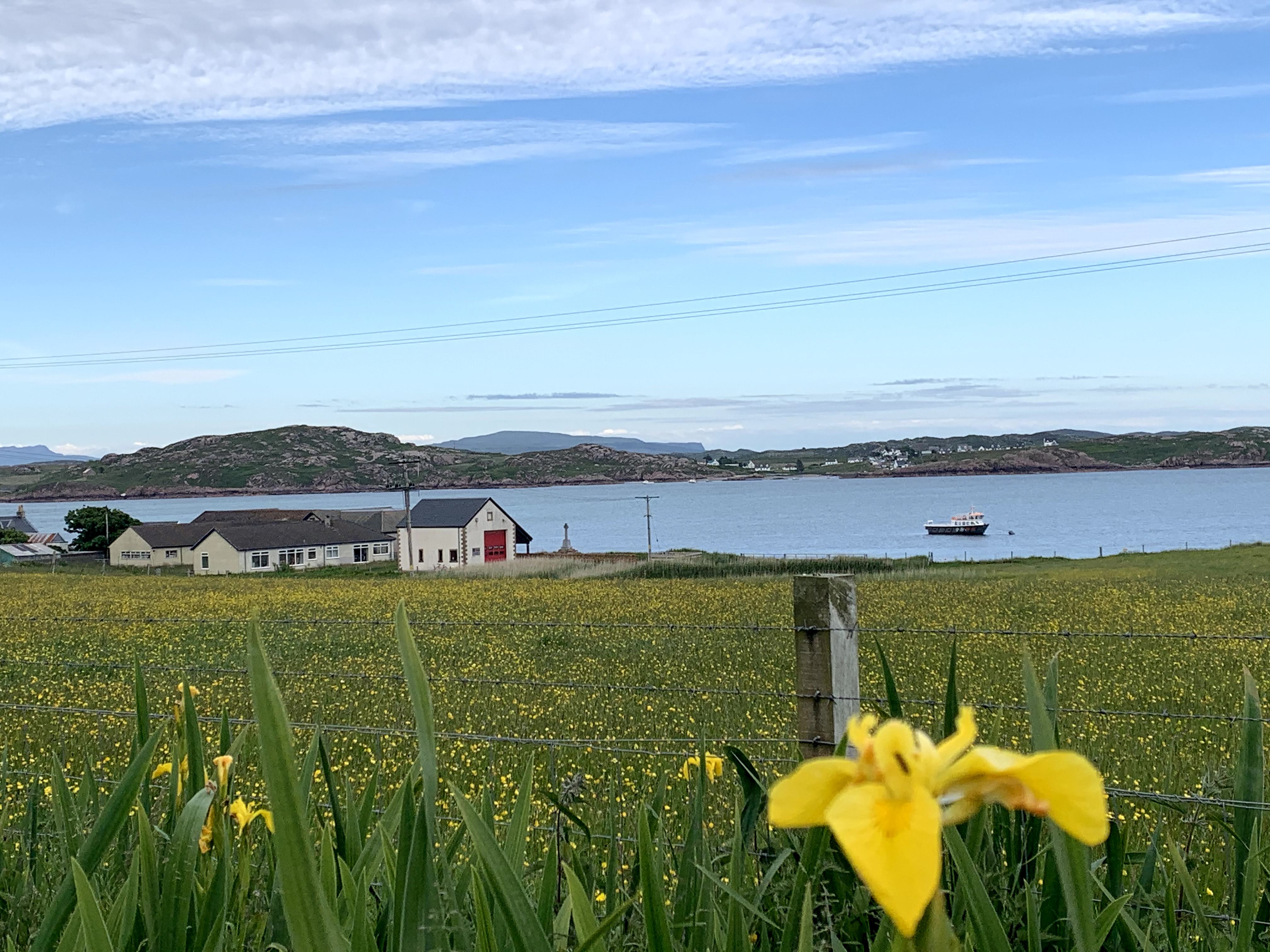
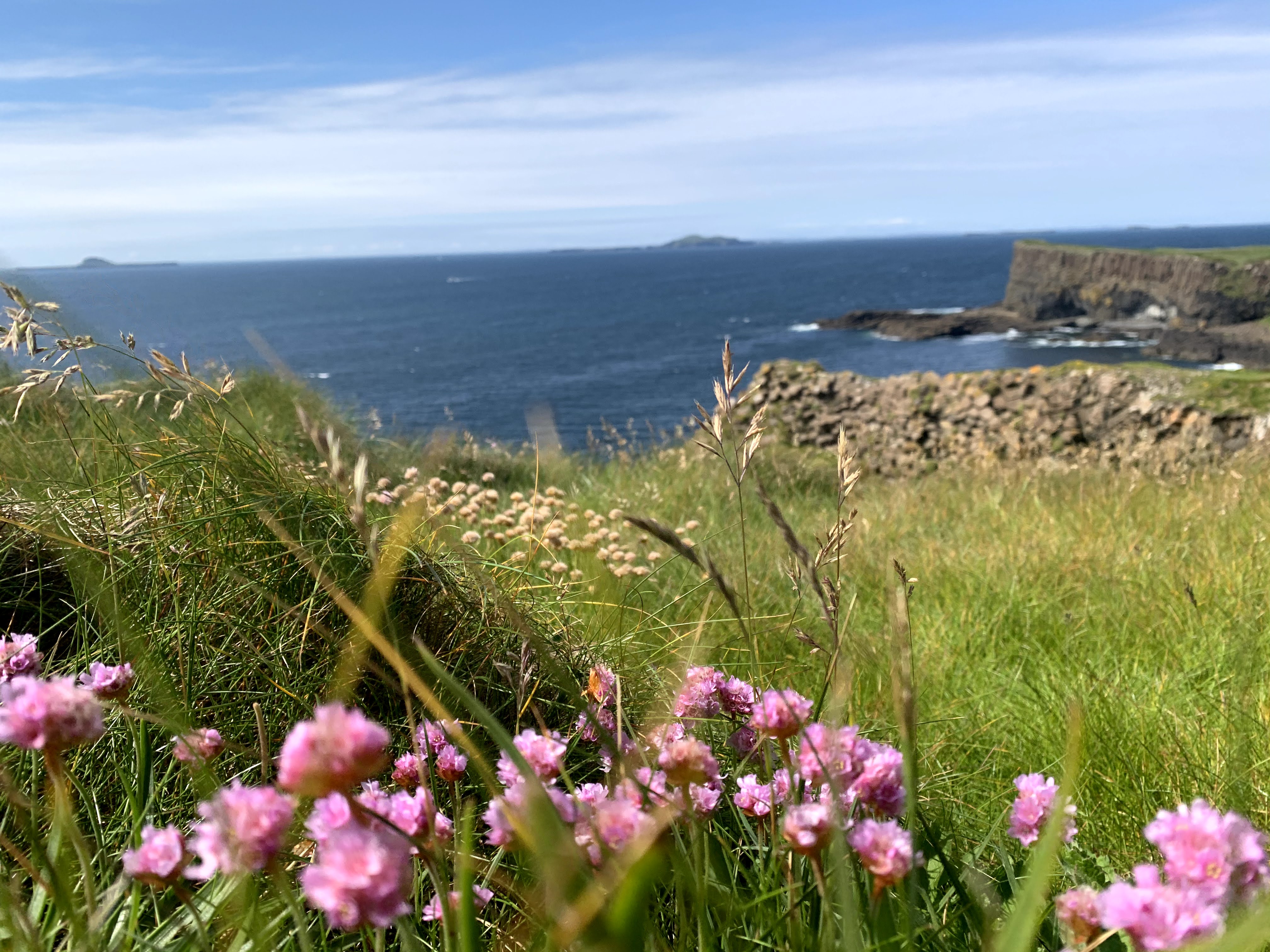
I finally got to travel. After yearning for it in the golden fall, dreaming of it in the windy winter, and planning for it in the cool green spring, I finally got out to the Highlands & Islands and a bit of the Lowlands: the Isles of Mull, Staffa, and Iona one weekend, the Isle of Skye, and then Edinburgh.

It’s been glorious, exhausting, enlightening, stressful, blissful. Hikes across emerald slopes sprinkled with tiny daisies, buttercups, purple heather, and fluffy cotton-grass; cozy evenings in wood-paneled pubs with tartan carpeting and paintings of antlered deer; ferry rides past rugged peaks and lonely islands; views of faraway blue hills and glimmering lochs; laughter and long talks on train and bus rides. 

Each place gave me memories, dreams, and fragments of stories.

Iona

Sacred Haven

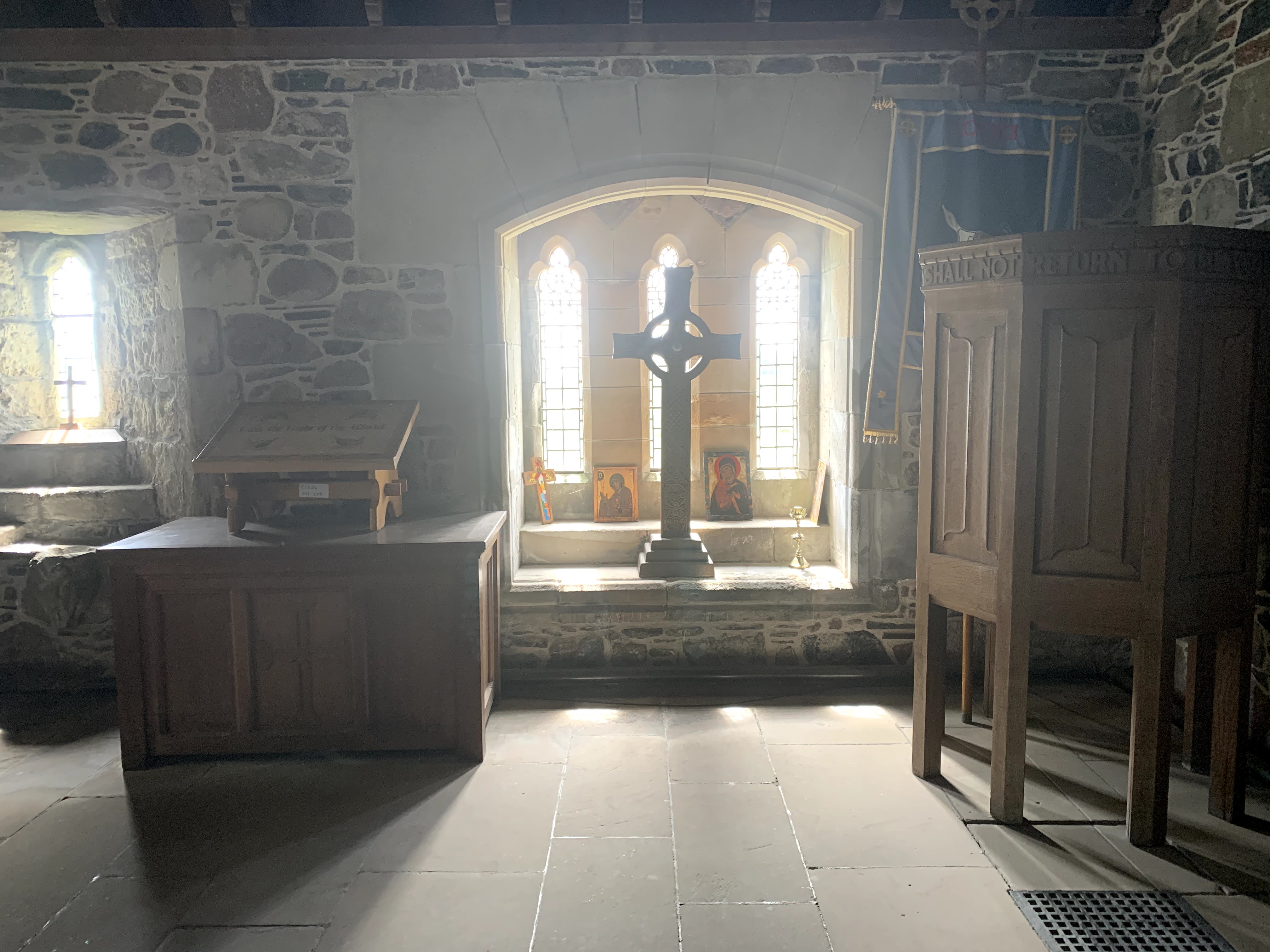
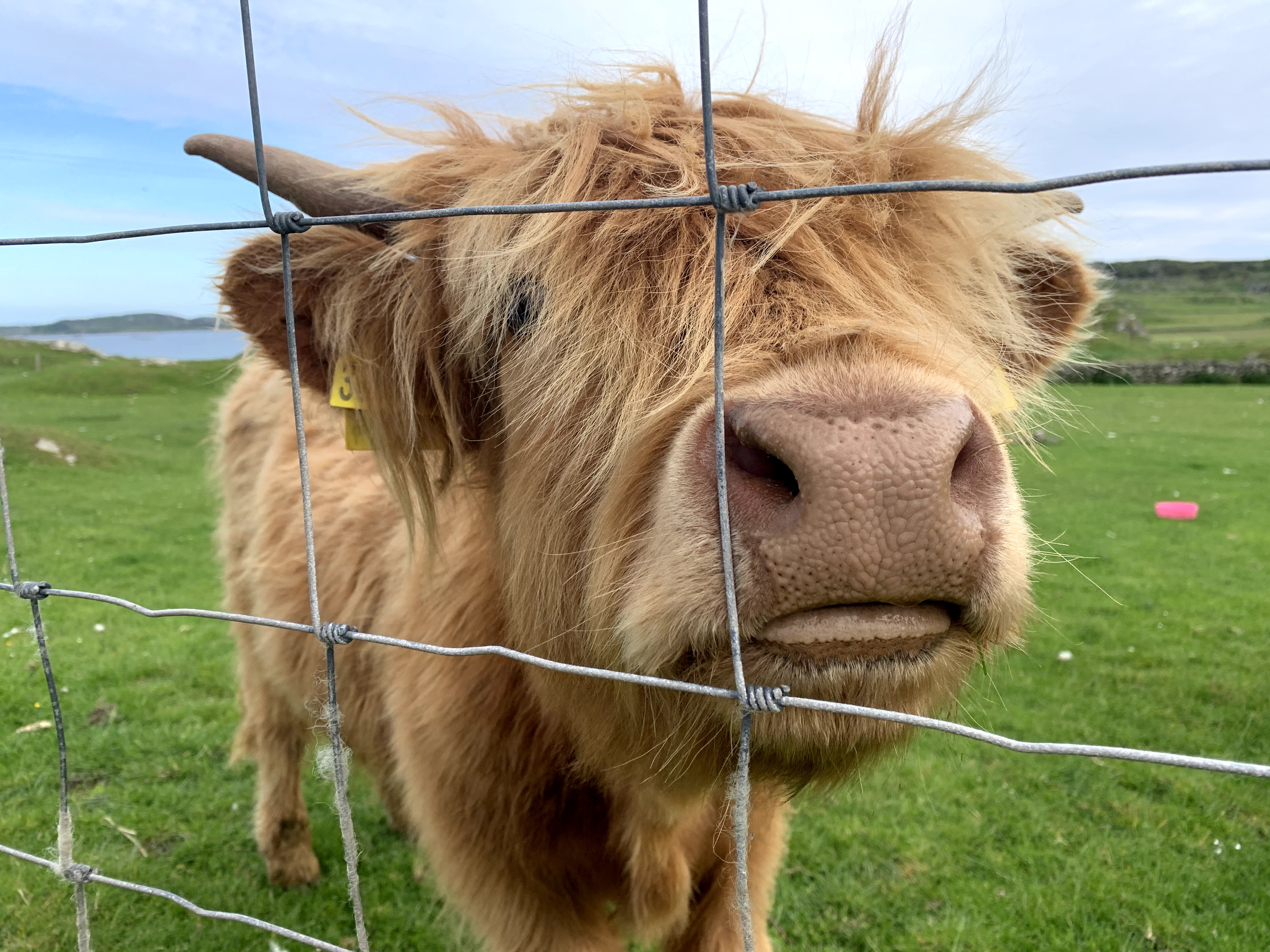
Iona is a tiny island, 3 square miles, with only 150 permanent residents and herds of grazing sheep and Highland cows (“coos”). It is also the place where St. Columba landed from Ireland in the 500s (1500 years ago!) and started an abbey. A replica/rebuild of the abbey is there today, full of the remnants of Celtic crosses, new sandstone pillars covered in intricate carvings, and ancient gravestones. 

One of my favorite insights was seeing the snake-and-boss design. Despite the Edenic tradition of snakes as creatures of evil, apparently the medieval Christians saw the casting and regrowing of skin as a symbol of death and resurrection. I have heard whispers of the richness of Celtic Christinaity, of thin places and rhythms of life and mysteries incarnate in the natural world (such as clovers representing the Trinity) but I want to study more. The whole island felt quiet and sacred – a place to come and heal, walk the pasturelands and talk to God, and feel connected with the great cloud of witnesses that is the universal Church.

Story fragments
  • A sacred place of healing
  • An island at the end of the world
  • An abbey with a buried treasure

Staffa

Lonely Marvels

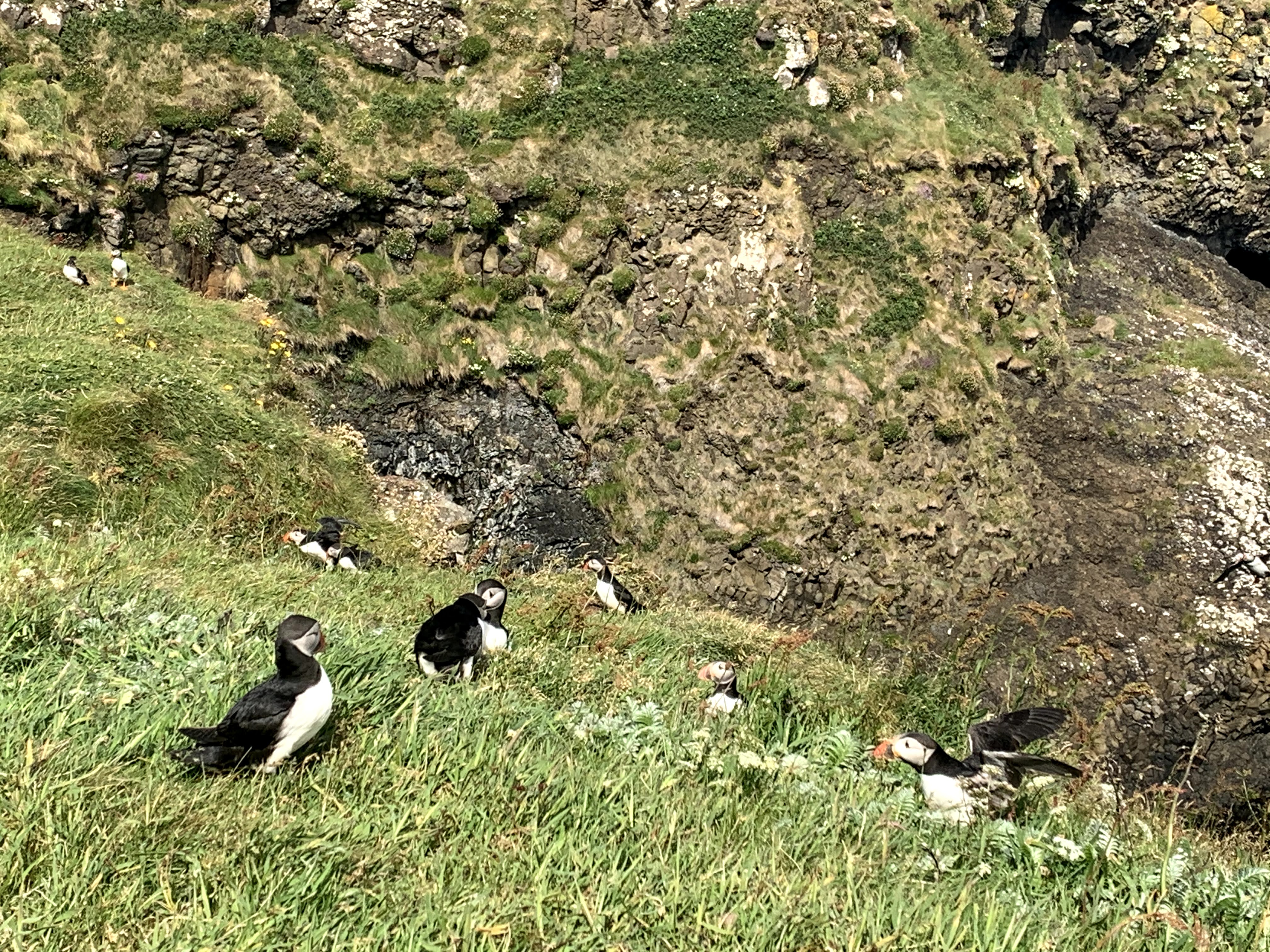
Staffa is even tinier than Iona, shaped by some geological process I still don’t fully understand to have natural hexagonal pillars. It looks giant-carved. We rode out by ferry for an hour, chilled by the sea-wind and enchanted with a fluffy white dog who loved us dearly, and then had an hour to explore it. We sprinted down to the wonder of Fingal’s Cave, aquamarine water in a deep black vault, and then back across the steep cliffs to see the PUFFINS. They were just as clownish and cute as we hoped, though tinier. They didn’t care anything about us, but launched off into the sky as a dark seabird flew overhead.

Story fragments
  • People resettling uninhabited isles and encountering magical creatures
  • An echoing cave that is really a shadow kingdom
  • A tour boat crew that has a special understanding with the mermaids in the area

Skye

Blue Kingdom

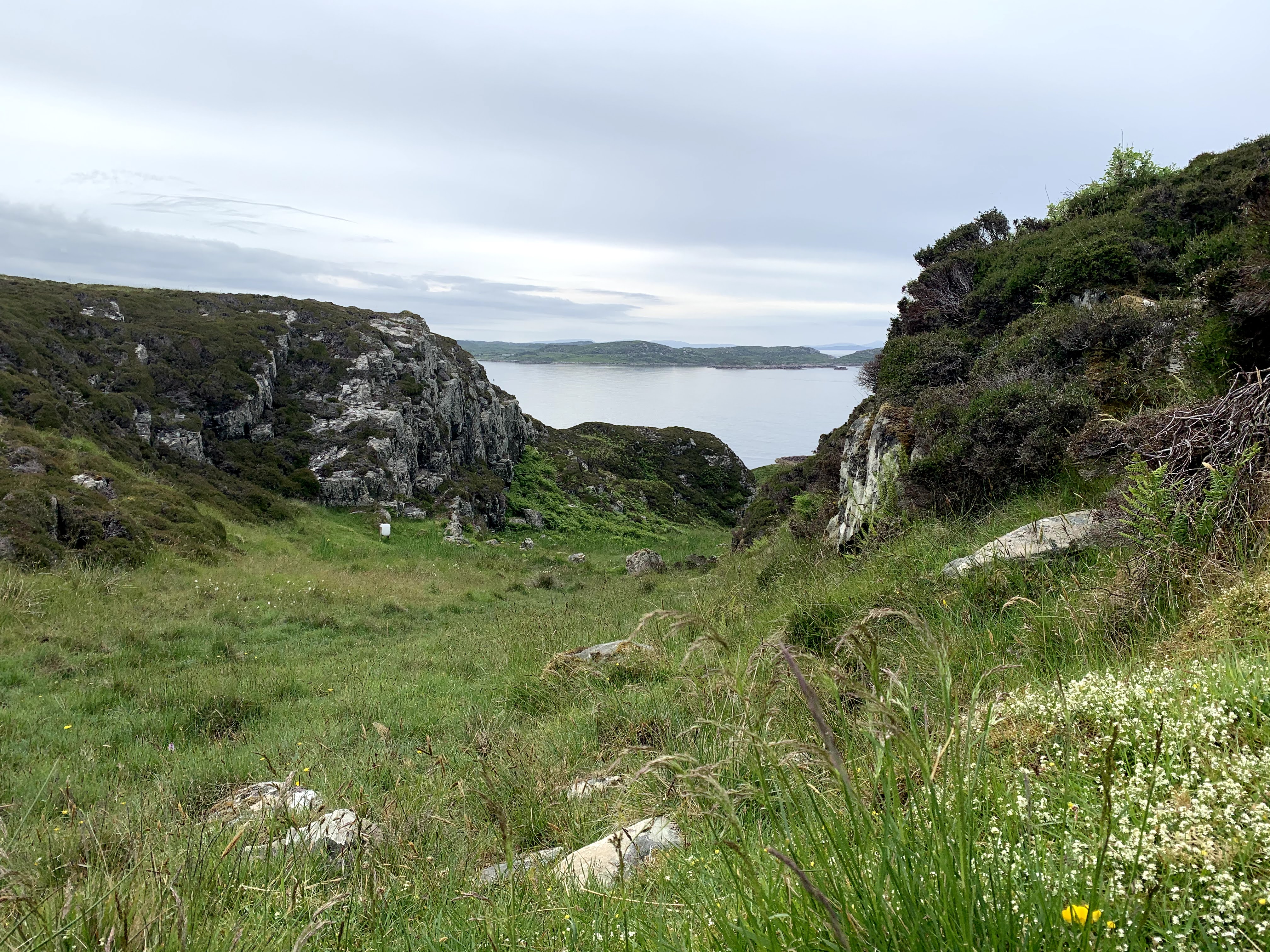
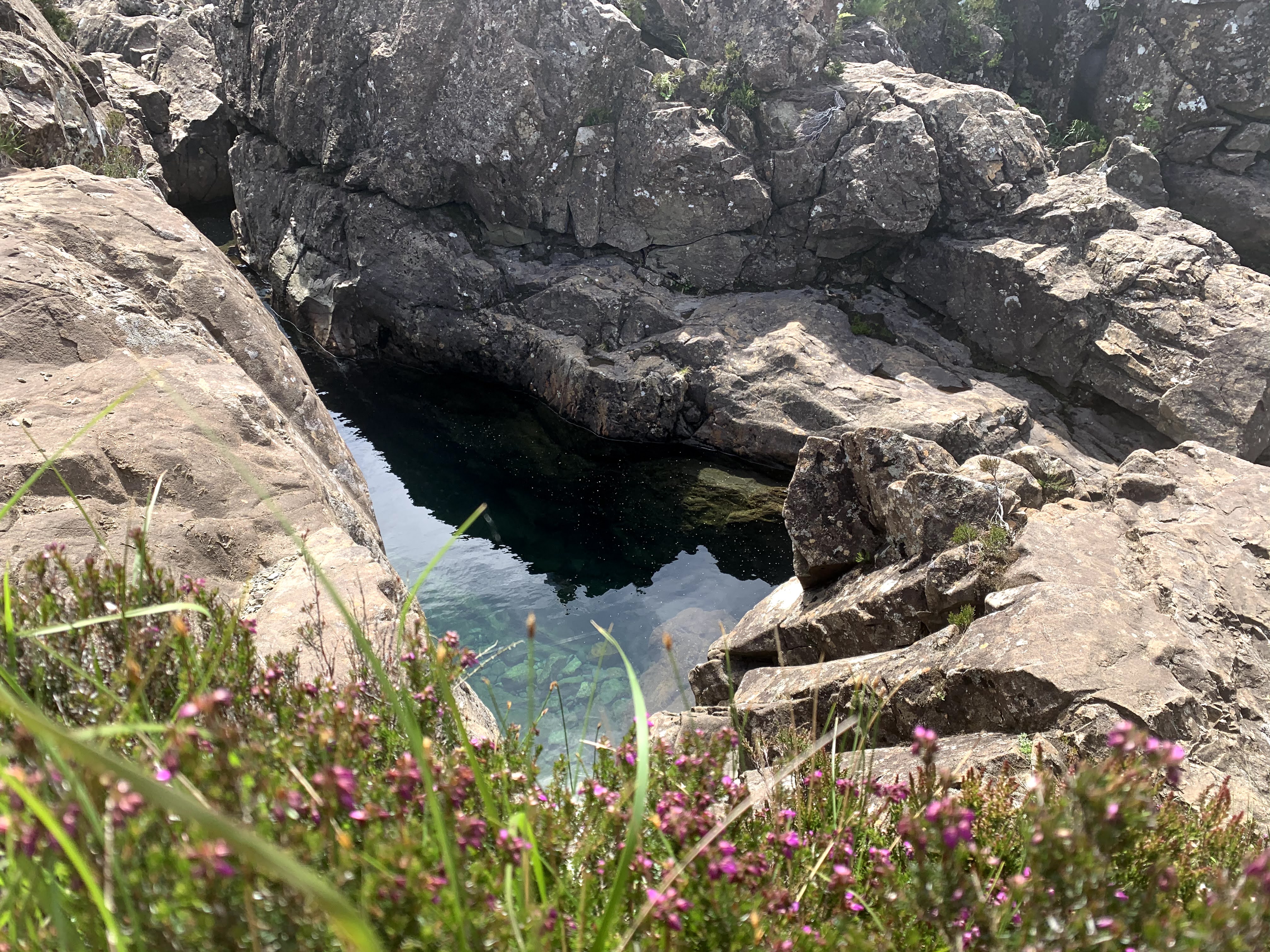
Skye is more rugged than Iona, Mull, or Staffa. It’s also many shades of green and blue, with steep cliffs, purple heather, gray rock, and the same sprinkling of wildflowers. Slender waterfalls wend their way down the hills, among the evergreens. A Scottish shepherd recommended a gorgeous hike across the cliffs that gave us exquisite views: distant azure mountains, white sailboats on the sea, and window panes glittering in the town. We couldn’t capture it in photos, though we tried very, very hard. The shepherd also told us about the Nicholson clan of Portree (Port Righ in the Gaelic) who went broke in the 1800s and emigrated to Tasmania and the Carolinas. 

We spent Sunday afternoon with Skye’s Magical Tours: an ex-fisherman named Brian took us to the glimmering Fairy Pools and around the island. Skye was magnificent, so old and huge that I felt small and lonely. We filled it with laughter, with dinner of shepherd’s pie and philosophical discussion, mornings of berry-and-Nutella crepes and foamy cappuccinos. 

Story fragments
  • Cloud-creatures in a mountain country
  • Fairy folk who are defined by the color blue (as opposed to green, the traditional elvish color in Scottish lore)
  • Visitors arriving at a shepherd’s cottage
  • Selkies at twilight

Edinburgh

City of Stone

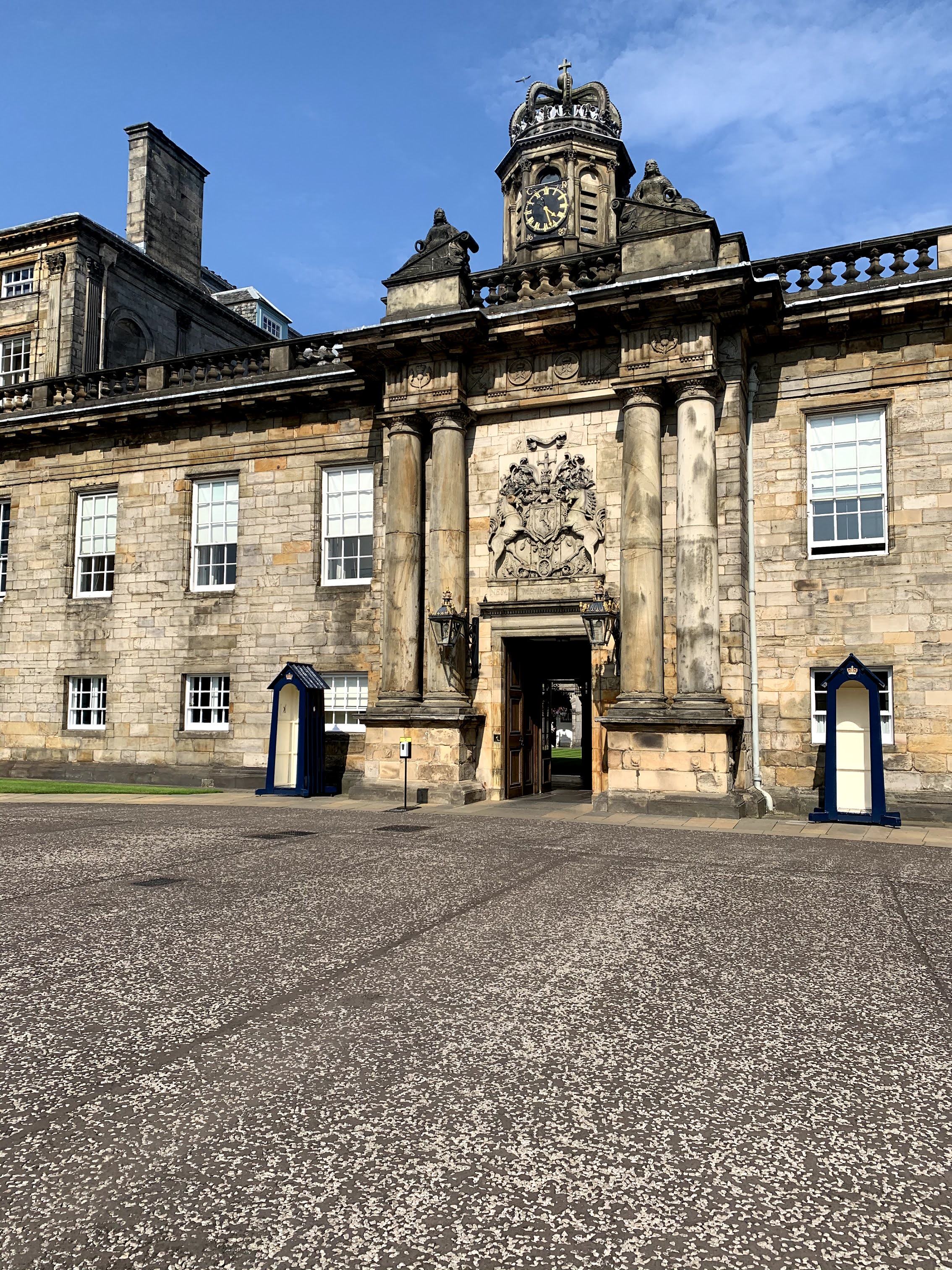
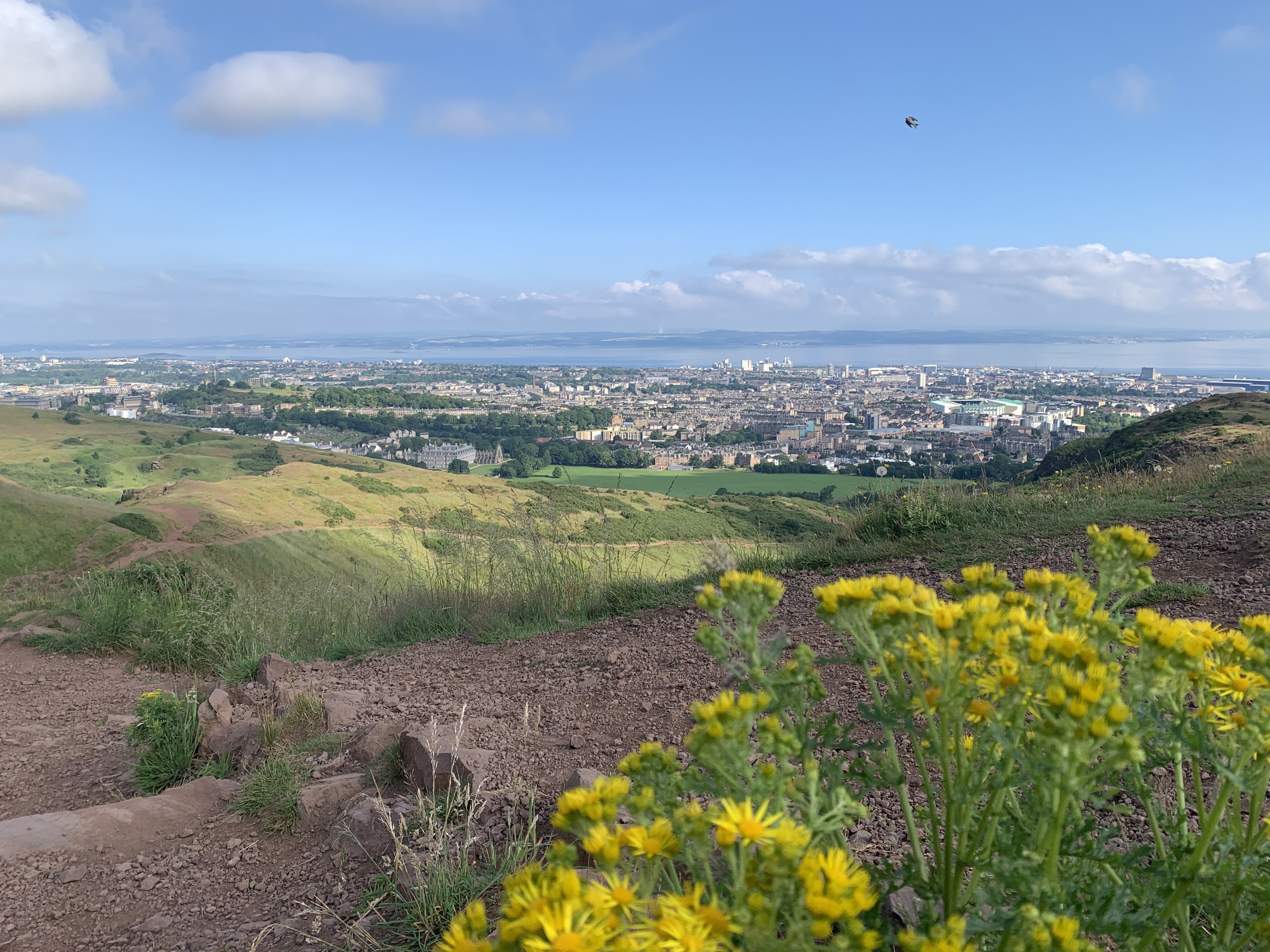
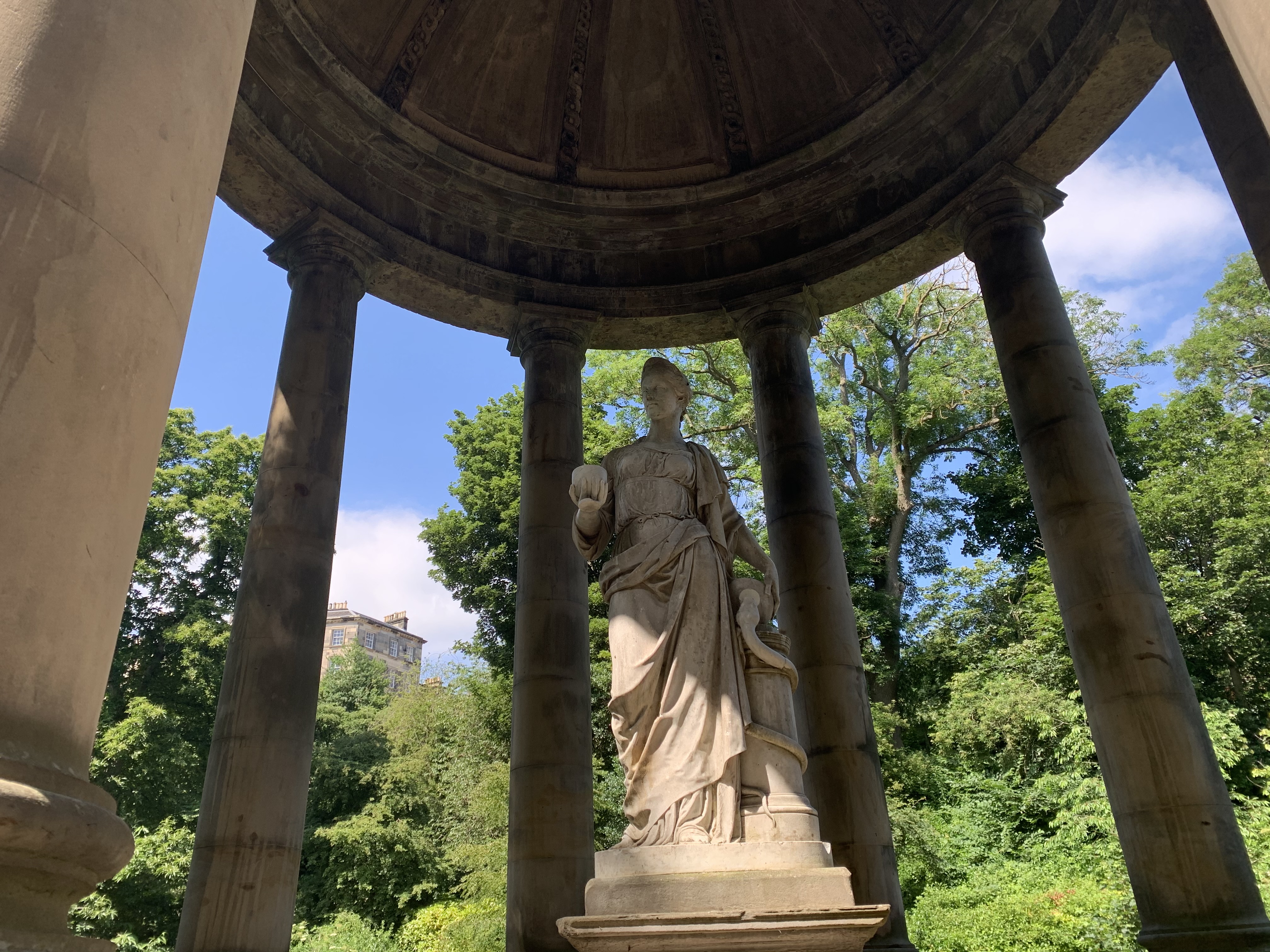
After several trips in the wild, it felt strange to be in a busy city: buses and trams on Princes Street, women in flowery dresses, shops with tartan scarves and Celtic jewelry, gardens of pink roses and fragrant honeysuckle, Gothic architecture, and modern tinted windows. We feasted on the best of Edinburgh: touring the gilded halls of Holyrood Palace, cullen skink and clotted cream raspberry cheesecake at a cozy pub, dizzying views from Arthur’s Seat, dappled sunlight on the river by St. Bernard’s Well, and golden hour in Greyfriars Kirkyard.

Story fragments
  • A tiled fireplace with a secret message (I fell in love with Holyrood Palace’s tiled fireplaces)
  • Swans and a ruined abbey
  • Queen Ann’s lace on a dormant volcano
  • A locked well with healing powers
  • A brownie who lives at an Air BnB

Meditation: Commercialization vs. Reenchantment

In Edinburgh, thoughts planted on Mull, Iona, Staffa, and Skye finally took root and began to sprout: I realized how dramatic the tourism industry is in Scotland, and probably in other places. I mean “dramatic” in the sense of performative or theatrical: the little shops in Iona, Portree, Old Town, and other places shout all the most distinctive and unique aspects of Scottish culture and history to attract attention. The symbols of Scotland’s Scottishness – tartan, bagpipes, highland cows, the Loch Ness monster, Celtic runes and symbolism, ancient ruins, haggis, thistles, unicorns, and teapots – are the most prominently displayed where strangers and foreigners like me can purchase them and carry them home, like chipping stones from a crumbling castle. Scottish people cannot love tartan that much; it’s outsiders who want the flavor and breath and music of Scotland, because we want to come and experience something fresh and different and fully its own, individual self, somewhere unlike our home place. Most Scottish people shop at the T.K. Maxx or luxury mall we visited, which are almost identical to retail in America.

That made me sad. I know the Western world has many similarities – celebrities are popular in multiple countries, and so on – but I would hate to have all the beautiful distinctiveness of Scottish lore and heritage as a thing of the past. I have only been a Master’s student in an international university town for a year here, so I don’t feel that I really know the Scottish people and culture. But the sheer clamour of a few shops in New Town in Edinburgh made me uneasy, as if only the tourist industry wants to preserve full and distinctive Scottishness – and then, only to sell it.

But I have tasted Scottish culture in literature. I’ve been a dragonfly skimming the depths of it: Scottish fairy tales like “The Well at the World’s End” and “The Black Bull of Norroway,” ballads like “Tam Lin” and “Thomas the Rhymer,” the mesmerizing fantasies of George MacDonald, the Jane Austen-ish societal explorations of Margaret Oliphaunt, the exquisite prose of George Mackay Brown, the haunting tales of James Hogg, and the simple profundity of Alexander McCall Smith. My side-project next year will be to delve more deeply into these and more. 

These writers imbibed Scottish tradition and added to it, weaving the desires, dreams, fears, and tensions of their own time into the loom of myth and legend. As I writer, I want to follow in their footsteps and tell stories that help reenchant places like this. I want to reawaken the wonder of selkies on the beach in the moonlight and fairy folk dancing under the green hills, as well as capturing the mystery and dangers of our own time: the whispered rumors and masked faces of COVID, the political tensions that are re-tribalizing countries and regions, the seductive illusions of social media, and the now-too-familiar marvels of the Internet and smartphones. 

St. Andrews 

Gray Havens

After so many buses, trains, and ferries, it is good to be in St. Andrews again. I’m astonished to find that after magnificent peaks and staggering views on Skye and Arthur’s Seat, the soft, golden-green beauty of fields and woods heals me instead of overwhelming me. 

This place is not home. It’s only mine for the rest of the summer. But I will love every day I have left.

After Martinmas and Candlemas

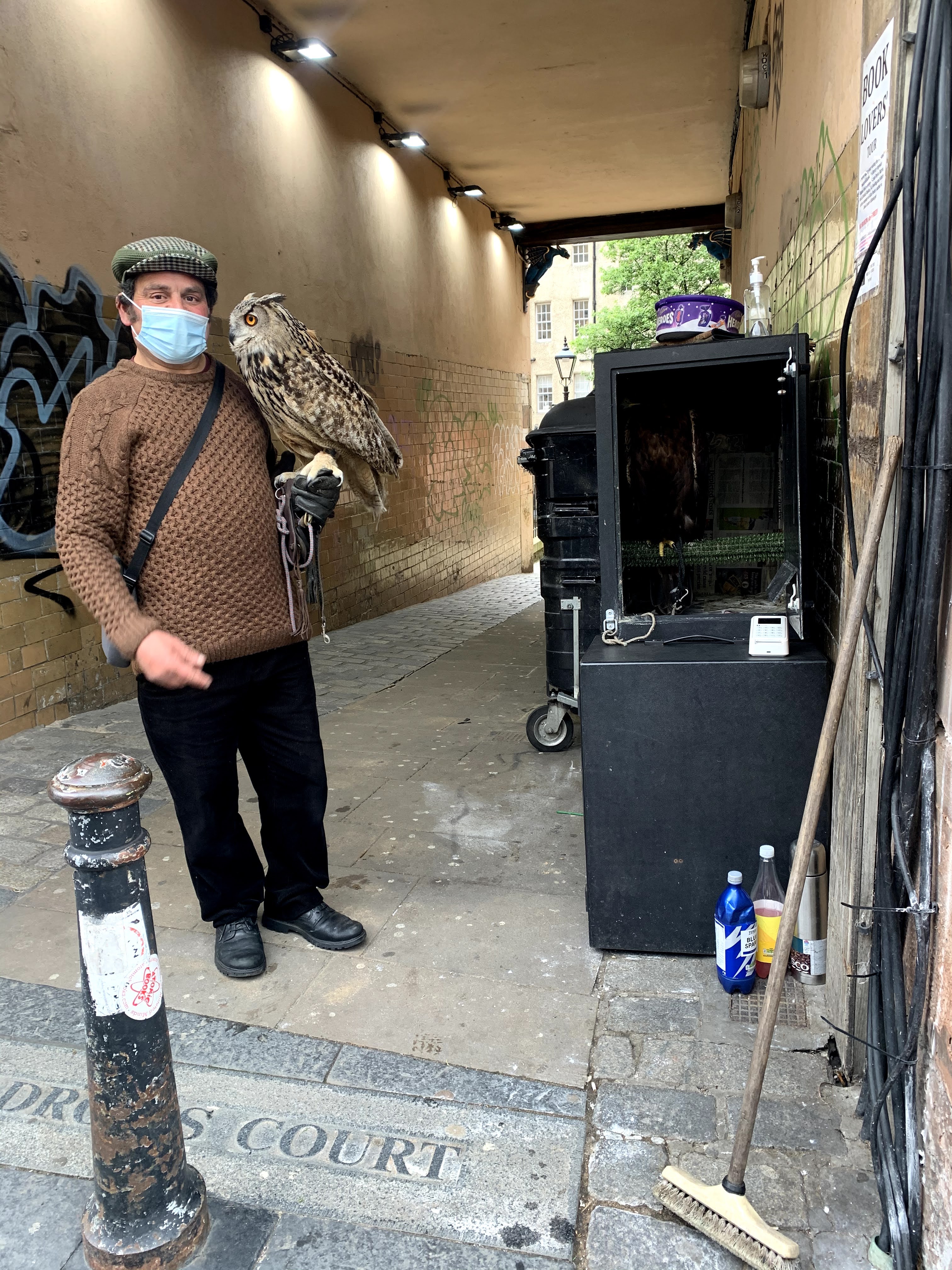
“Her name’s Hazel,” he said, gesturing to the huge owl perched on his left arm. She was the size of my torso, with enormous orange eyes in a face covered in light gray feathers. The rest of her feathers were black, white, and brown. Her pointy ears were turned back like a disgruntled cat’s. “Here, you can pet her with these.” He gave us feathers – I got a raven’s feather – and my friend, a couple of other tourists, and I used our feathers to stroke Hazel. She stared at me and blinked.

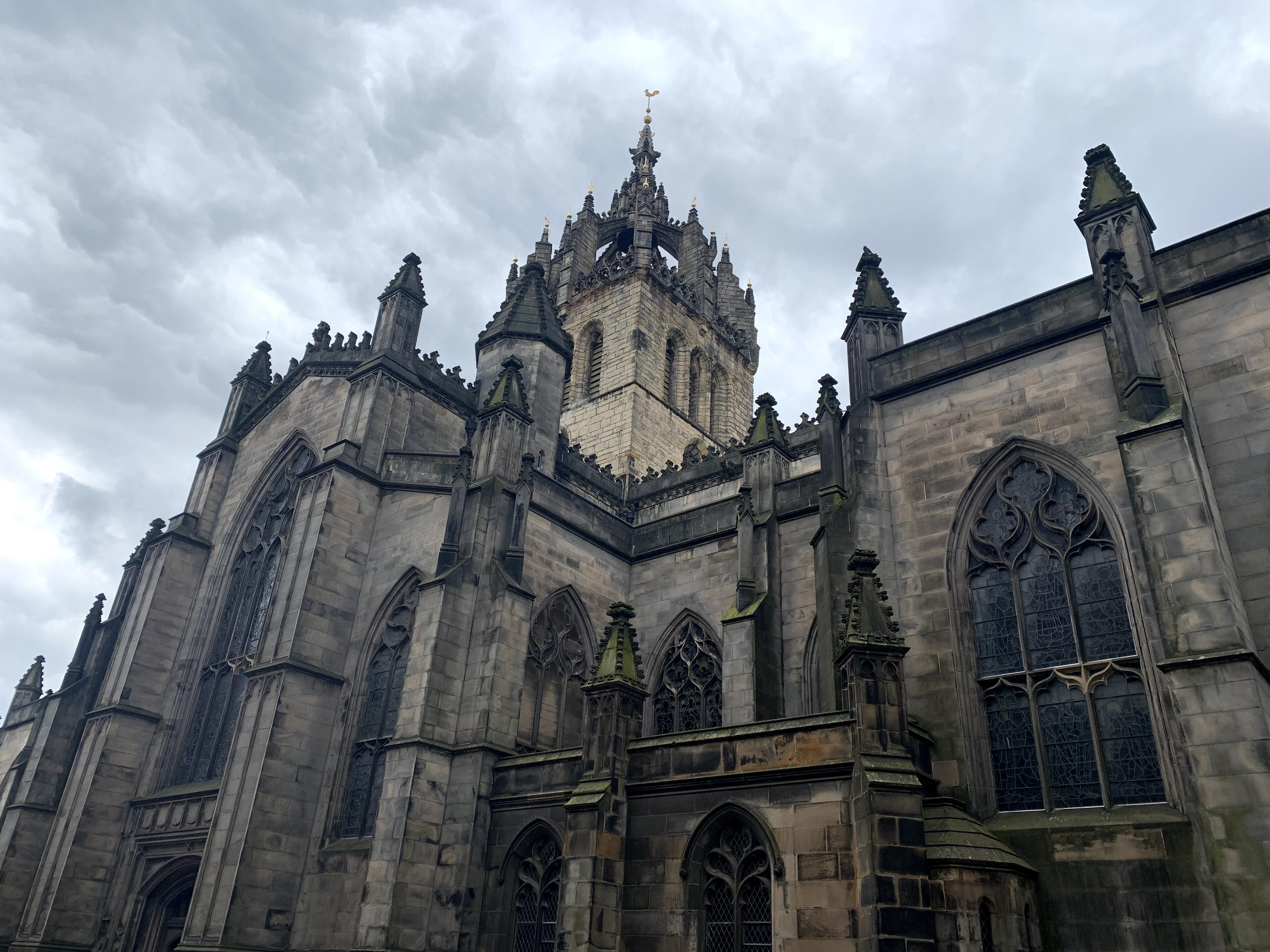
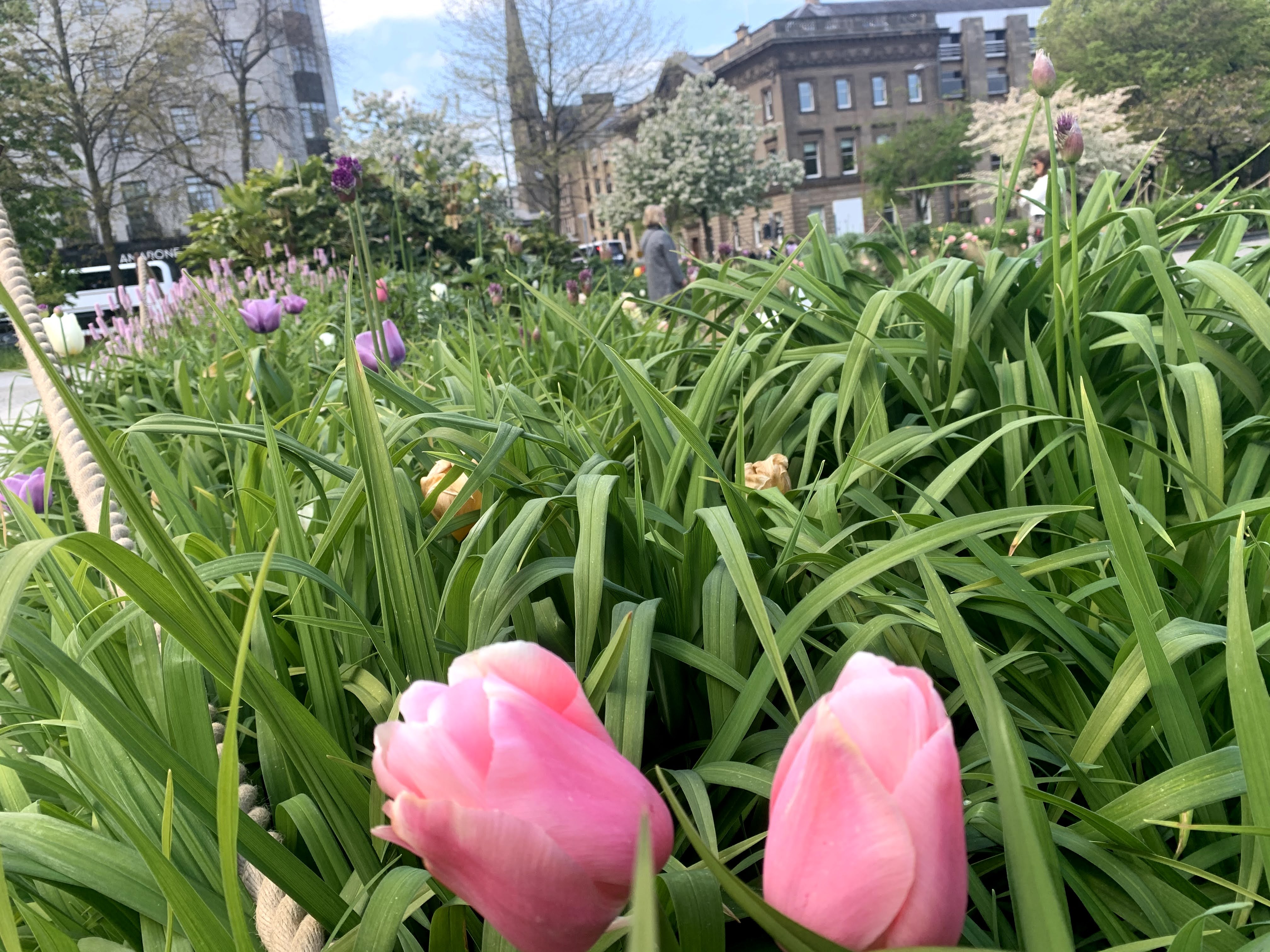
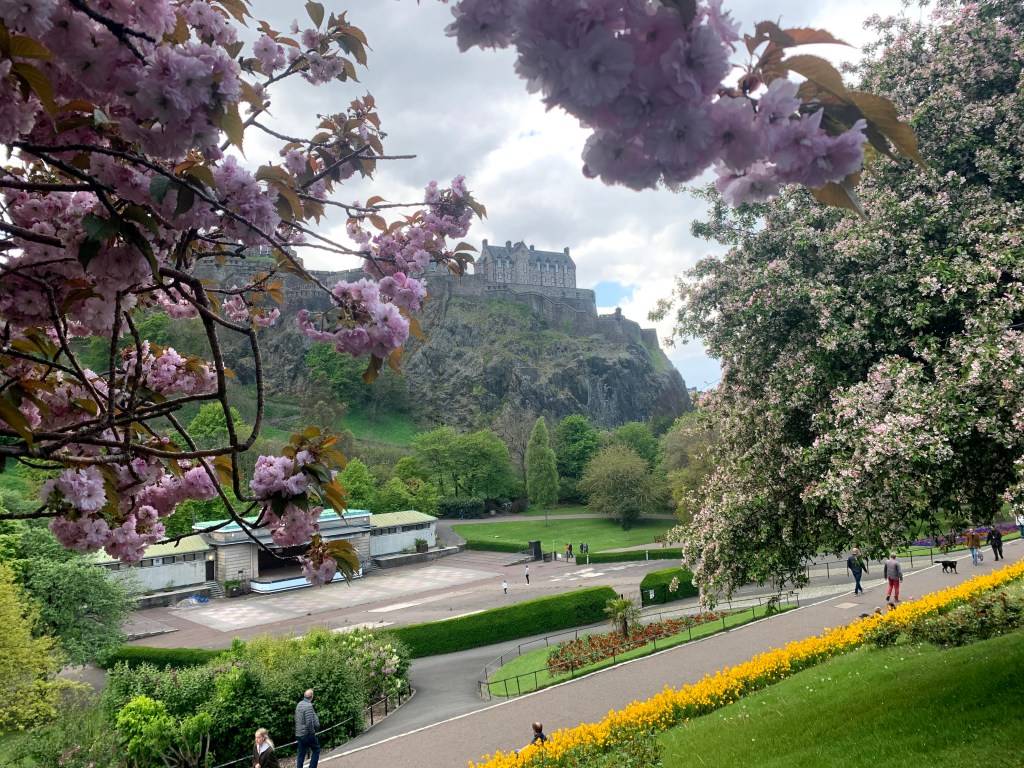
Edinburgh felt huge, fast, and busy after being in St. Andrews for nine months. The stone buildings, ornate scrollwork, Gothic spires, statues, and castles give it a medieval feel, but blinking traffic lights, blue and gray buses, and colorful storefronts mix in the neon of the twenty-first century. Pink cherry trees and tulips were in bloom in the city; yellow gorse made the surrounding hills glow.

Edinburgh Castle towers about the city like a dream in the sky.

It has been a stormy spring of cold rainfall, dark clouds, and winds that shake the blossoming trees. I’m not sure how I survived April’s pileup of assignments: an essay on Joy Davidman’s poetry and the theology of nostalgia; the relationship between faith, reason, and imagination in the works of Robert Kirk, James Hogg, and George MacDonald; a presentation on L.M. Montgomery and Dorothy L. Sayers’s contrasting perspectives on Christian doctrine; a class introduction for Part II of C.S. Lewis’s Till We Have Faces; an exam on T.S. Eliot’s Four Quartets, Shakespeare’s “A Winter’s Tale,” and Wagner’s “The Valkyrie.” I found cross-currents of beauty and wisdom in all of these works and my non-academic life:

  • The joy of new life, pain of growing, and mystery of resurrection as represented by Spring
  • The relationship between epistemology (the study of knowledge, or how you know what you know), truth, the natural world, and the supernatural
  • Love as a way of knowing
  • The paradox of surrender, grace, and continued effort in the life of faith

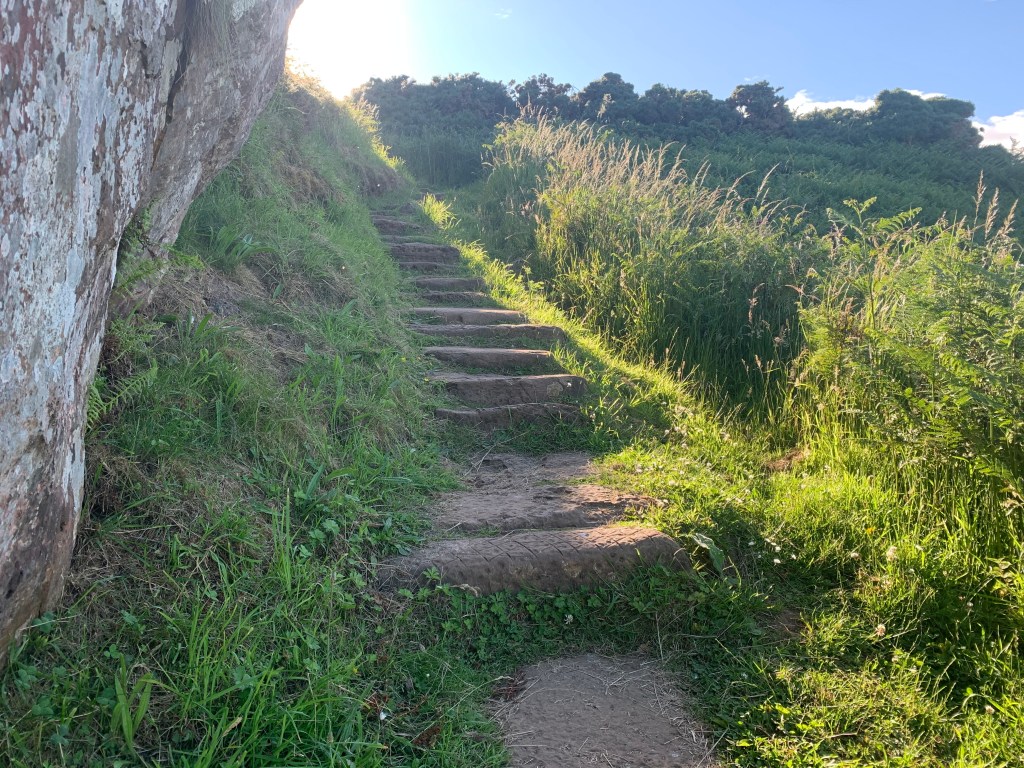
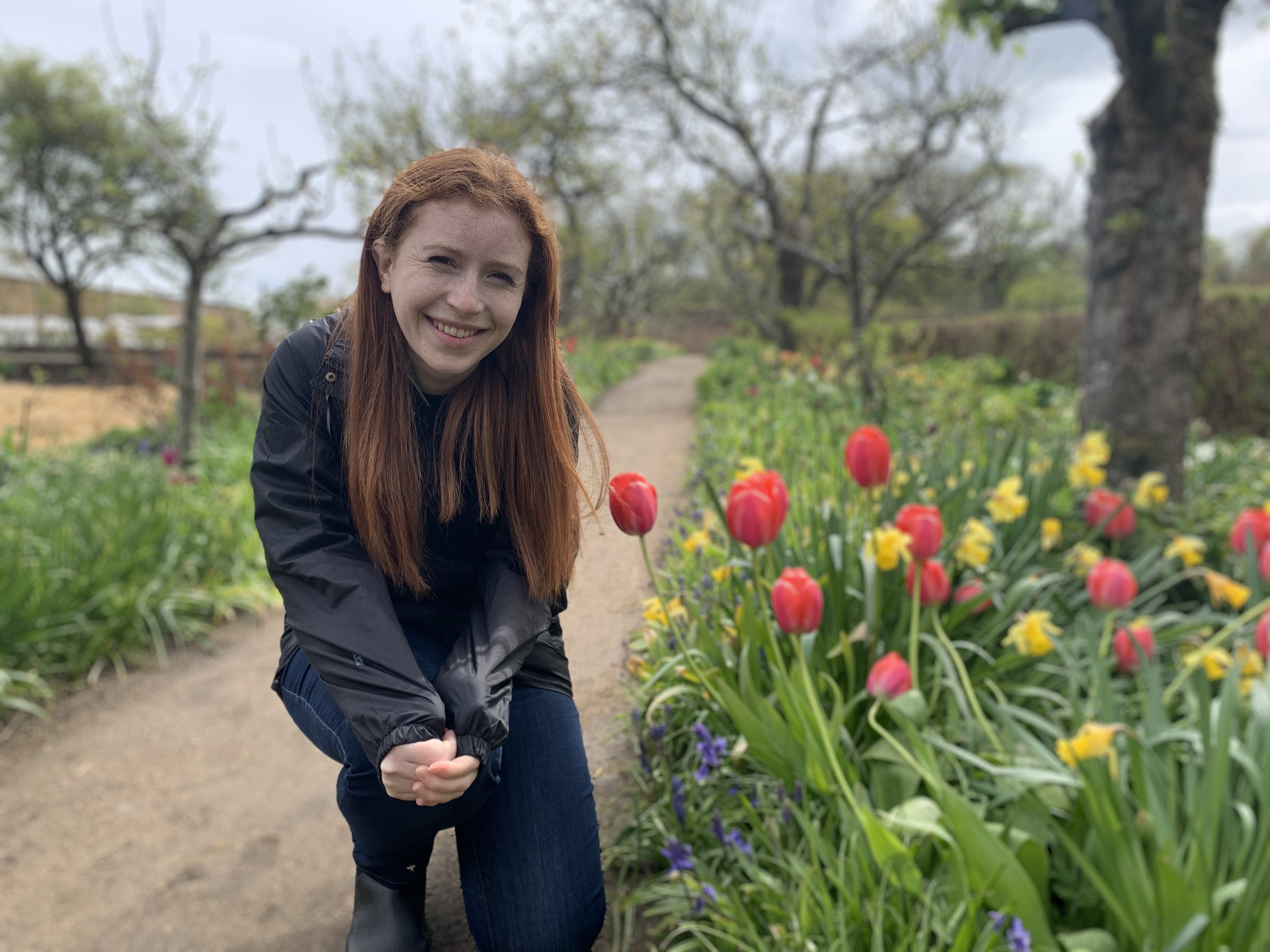
I have discovered that I am tireder, but more inspired and efficient, when I mingle fellowship and travel-adventures with study. Despite the weather, I have explored red sandstone clifftops and geos (sea inlets); the grounds of a castle surrounded by green woods full of white wild garlic; meadows of bluebells and cow parsley overlooking the harbor; a garden of purple-black, red, white, yellow, and pink tulips. Wandering through the hills and looking out over the sparkling ocean makes me feel like I’ve walked into a dream of paradise. Running through gray streets while trying to follow complex and contradictory GPS instructions to catch buses in the nick of time makes me feel like I’ve created my own nightmare. Travel is freeing, and wondrous, and so fun after months of lockdown, though I need to control my longing to go completely rogue as I still have a dissertation and part-time job to do.

This year has gone by so quickly. As I’ve said before, one Master’s degree does not even give you intermediate knowledge of a subject – just a cartographer’s view of your field of study, and not a detailed map, either. However, after two semesters of classes, I’ve discovered a few interesting things about Theology and the Arts and myself:

Academic vs. artistic thinking

I think my mind and skillset are better suited to a researching-artist’s life than an academic one. Academic thought requires absorbing an ocean of complex and diverse information (tons of books, articles, and lectures), meditating on it, and then synthesizing evidence to create a new perspective that will expand the field and spark new conversations. I can research and craft an argument, but my analysis tends to oversimplify and condense too much, ignoring the complexities of a subject. I still love learning, but I may be able to contribute better by creating stories than persuasive arguments.

The interrelation of doctrines and disciplines 

In our “Christian Doctrine and the Arts,” course, our professor emphasized the unity of all the doctrines of Christianity. It’s difficult to speak about the doctrine of God the Father (patrology) without explaining His relationship with God the Son (Christology) and God the Spirit (pneumatology), but then you probably should define the Trinity, and the nature of the Trinity explains how salvation works (soteriology), and then you should explain how humanity fits in (Christian anthropology) and then perhaps how the Church matters in all of this (ecclesiology) and how all of time is rushing towards the final revelation (eschatology) . . . you get the idea. The creeds are unified, as the Trinity is unified, and the true Church is one. 

I think disciplines of study are the same way. While it’s difficult to maintain both breadth and depth of knowledge, specializing in the humanities or the sciences means you neglect the wisdom of the other house. Interdisciplinary work is truly fascinating. One of our readings by Eleanore Stump, for example, drew on an analogy from math into theology by comparing the book of Job to a fractal (“The Story of Job: Suffering and the Second-Personal” in Wandering in Darkness: Narrative and the Problem of Suffering, pg. 220-21). Judith Wolfe, one of my professors, is working on a research grant now called “Mapping the Imagination” which combines psychology, philosophy, and phenomenology to examine how the imagination shapes what we perceive.

As a writer, I want to diversify my knowledge so that I can draw wisdom and analogies from many disciplines and create rich, complex, and fascinating worlds and stories. I will probably have to choose breadth of knowledge over depth.

The relationship between theology and the arts

In a previous post, I talked about the difficulty of defining the relationship between theology and the arts. In discussing religion and literature (I think this applies to the rest of the arts as well), John May describes a few perspectives: heteronomy (literature as the “handmaiden of faith”), autonomy (literature judged by its own norms), or theonomy (literature and religion both grounded in ultimate reality, God) (John May, New Image of Religious Film, 20).

My faith tradition is very Scripturally-focused: Plymouth Brethren/Baptist. I believe that the Word of God as a means of divine revelation comes first, before Church tradition, wordly ways of knowing, or personal experience. I am passionate about orthodoxy, or staying true to correct Spiritual teaching – hopefully in the truest sense, so that I am as fierce about living with grace, loving-kindness, and humility as I am about righteous behavior and beliefs.

For these reasons, my view is closer to heteronomy or “the arts as a handmaiden of theology,” demonstrating, exploring, discussing, or illustrating theological concepts, because I see theology or the study of God as the first thing, the pursuit that all other disciplines fall under. I see the arts as a means of glorifying God through human making, singing a “new song.” I don’t like overly simplistic, melodramatic, poorly-crafted artwork that tries to hammer morals into people’s heads by deception or manipulation. I love and want to create work that explores difficult questions, creates beauty, exposes ugliness, and seeks to love the artist’s audience through masterful craftsmanship and complex, thought-provoking techniques.

As an artist with academic interests, I have a new set of directions to explore as I work on my dissertation this summer and return home in the autumn, including protology (the study of Creation), ecclesiology (the study of the Church), mythopoeia (mythmaking art), and the folklore of Scotland and other parts of the world. This year’s coursework has given me enough to meditate on for a long, long time – but first, I have to finish it.

And, in the meantime, drink in all I can of Scotland as vaccines roll out and restrictions loosen: ruins dappled in golden afternoon light and shadow, hilltops shrouded in fog, sea caves echoing with the crash of waves, and cafes that serve interesting varieties of hot chocolate.

“Thresholds”: All Saints Day, 2020

When I started planning my own contribution to the Thresholds project, I knew from experience to pick a publication date right away. I started looking at holidays and astronomical events. Halloween was the obvious choice, but somehow I didn’t want to do a Halloween story – I have too many memories of neon-orange pumpkins, sugary candy corn, black-clad witches and goblins, grotesque masks at CVS, neon green and bright purple to leave much mystique and grandeur in that holiday. I decided to do All Saints Day instead, a holiday I knew almost nothing about beyond the name.

My most recent short stories have been dystopian, science fiction, and fantasy, so I decided to experiment with another of my favorite genres, mystery. It’s very difficult to cram a full detective story into a short story format – even Agatha Christie’s are a little cramped – so I wasn’t completely successful, but it was fun to try.

My brief, unofficial, scattered research of All Saints Day showed me that this day is just as mysterious and otherworldy as Halloween, or even more so, since it deals with transcendent mysteries. Sources like this one taught me that this feast honors all saints of the Church, the living and dead. Other sources like this one suggest that this Christian holiday is meant to replace the Celtic, pagan festival of Samhain (pronounced sow-in) on October 31, when Druids lit bonfires to celebrate the end of harvest, beginning of the darkness of winter, and night when the dead could come back to visit the living.

Bonfires and moonlight, restless sea and brooding sky…my imagination began to churn. I liked the idea of a night filled with holy fear; not the dark, hopeless terror of pagans trying to satisfy ruthless, capricious gods, but the sacred fear and reverent wonder of Jesus Christ and His Church.

C.S. Lewis, The Screwtape Letters, Letter II [speaking from a demonic perspective]: “One of our great allies at present is the Church itself. Do not misunderstand me. I do not mean the Church as we see her spread out through all time and space and rooted in eternity, terrible as an army with banners. That, I confess, is a spectacle which makes our boldest tempters uneasy. But fortunately it is quite invisible to these humans. All your patient sees is the half-finished, sham Gothic erection on the new building estate.

Day/night, living/dead, autumn/winter, invisible realities and visible illusions… The theme of this project is thresholds, a physical and metaphorical term for a boundary, liminal space, beginning and ending and in-between. The tale took shape. My partner, Karlee Lillywhite also gave me “artifacts” that sparked new ideas:

  • Gregorian chant
  • Woolen shawl
  • Decomposing apples

In the end, I spun this story between discussing the theology of music and re-enchantment in class, walking in golden woods and on windy clifftops, going on coffee dates and skimming scholarship on fantasy and faith. Enjoy!

Note: I recommend listening to INTROIT: Gaudeamus omnes in Domino as you read this.

All Saints Day, 2020 

…gaudent Angeli,  
et collaudant Filium Dei… 

It was the evening of November 1st. On the beaches, gales whipped the waves into a foaming fury. No one heard the silent keening or saw the dark mass huddled on the eastern shore. 

In a church in town, echoes and shadows danced among the columns. Drafts of chilly air made the candle flames shudder. A girl with wavy hair dyed black and a pale, freckled face exhaled softly. Kat’s breath fogged up her glasses through her face mask. She inhaled white rose perfume, musky cologne, and the smell of old stone walls and wooden pews. The small choir group separated from the congregation by plexiglass screens sang with voices of north wind and night. 

Exsultate justi in Domino… 

Someone touched her arm, making her jump. Her new housemate, Dan, stood in the aisle wearing his gray mask, eyes wide with urgency.  

“What?” she whispered, glaring at him. Other household groups, spaced six feet apart on either side, glanced at her. Dan turned to leave, beckoning her to follow. 

Sighing, Kat followed him outside into the chilly air. 

The streetlights were glaring after the warm golden glow of candlelight. “What’s going on?” Kat asked, pulling her mask off of one ear, then the other. Dan shivered in a thin argyle sweater, coatless, his neat blond hair ruffled by the wind. One shoe was untied. “I thought you had to study tonight.” 

“Do you know where Naira is?”

“Uh, I thought she was staying in tonight, too,” said Kat. “She said she was tired. Did you hear her go out?” 

“Yeah, I heard her take out the trash an hour ago,” Dan said. “But she didn’t come back in. Her curry burned on the stove. Her phone’s on the counter. I found this on the ground outside.” He held up a woolen shawl, crimson and gold.  

“You think something happened to her?” asked Kat. “Did you ask the neighbors?” 

“I asked everyone in the building,” said Dan. “It was awkward, but I just…it felt weird. No one saw her or heard anything. She can’t be visiting anyone — we’re still not allowed past the threshold of other houses.” 

“Ok,” said Kat, pushing her glasses back up her nose. “That does sound weird. Let’s go see if she came back while you came here.” 

They set off towards the house. A strong wind ruffled their hair. They passed closed cafes and the iron gates of one of the colleges.  

“I’m sorry I pulled you away from the service,” said Dan. “The singing was beautiful. It’s All Saints Day, isn’t it?”  

“Mm-hmm.” Kat kept her eyes on the ground. 

“Celebration of the whole Church, right? All the saints?” 

“Yep,” said Kat, nodding without looking at him. 

“That’s cool. Does your family follow the liturgical year?” 

“No.”  

Dan glanced at her, frowning, and then turned back to the uneven cobblestones. They waited for a car to go by, yellow headlights spilling on the pavement, and crossed the street to their housing block, stone with bright red doors. Dan unlocked the door, and they went in. Kat saw Naira’s wool coat hanging from a hook and her black boots on the mat.  

The kitchen light was on. Though the window was open, letting in a chill, the air smelled like burnt curry. “Naira?” Dan called. Naira’s iPhone lay on the counter. 

“She’s not in her room,” said Kat, coming down the stairs a few minutes later. Dan was scrubbing the blackened bottom of the curry pan in the sink.  

“This isn’t like her,” he said. “She doesn’t go out late or leave things on the stove.”  

Kat leaned against the mock-granite counter. “So she went outside to empty the trash,” she said, “and didn’t come back.” She and Dan looked at each other. 

“She’s a black belt in karate,” said Dan. “This is a very safe town.”  

“Let’s look outside again,” said Kat. 

“So she came out here,” said Dan, walking from their door to the trash cans, “and I found her scarf here.” He pointed to a patch of pavement.  

Kat walked up and down the street, studying the ground. “Asphalt and cement, so no footprints, obviously,” she said. 

“You’re Nancy Drew-ing it?” Dan asked, examining the sidewalk in the other direction. “I have five younger sisters,” he said when she looked at him. “I know all the girls’ books. It was self-defense.” 

“Yeah,” said Kat. “I used to read them.” She studied him. “That explains the Prince Charming.” 

“What?”  

“Uh, it explains why you’re so – why you – act so charming,” said Kat. “Asking questions…Naira and I couldn’t figure out if you were flirting or just that nice.”  

“Oh,” said Dan. “Uh, yeah, I’ve gotten that before. My female friends sometimes warn me about being creepy. Sorry.”   

Their phones chimed. Kat flipped open her iPhone; Dan opened his Android. 

“Drat, it’s another COVID update,” said Kat. “Dear students, I regret to inform you that the number of COVID cases in Fife has started rising again … high population of elderly…we are instituting another voluntary lockdown for students starting at 7 pm today.” 

“Please do not visit any pubs, coffee shops, or restaurants this week,” Dan continued.  “Please do not socialize with anyone outside your household, and avoid crowded areas where social distancing is compromised.”  

They looked at each other. “Naira’s so careful about the rules,” said Dan. “Her asthma…” 

“We need to find her,” said Kat. They were silent for a moment. “How do you track someone if they don’t have a phone?” she asked. “Satellite footage? Bloodhounds?” 

“Traffic cameras?” said Dan. “Wait. Bloodhounds. Dogs. She went out at 5:30 – that’s when Mrs. Morison takes Sausage out.” 

“Sausage?” 

“Her dachshund. Let’s ask if she saw something.”  

“Naira? The Indian girl with the pretty hair?” Mrs. Morison asked. She held her scarf protectively in front of her face with her right hand and her red door open with her left. “Yes, I saw her earlier when I took Sausage out.” Her Scottish “r”s and “oo”s were rich like dark chocolate. “She barely stopped to greet me, asked if I’d seen a child run by.” 

“A child?”  

“Aye, a wee lad running by. She said he was alone, going toward the cathedral. I said I hadn’t, so she took off in that direction.” 

All three of them looked left down the street, where the ruined cathedral stretched toward the sky. Through the black iron gates, yellow spotlights lit up parts of the structure: an archway, towers, a few walls, and gravestones on either side. 

They thanked Mrs. Morison. As the door shut behind them, they started walking down toward the cathedral. “She saw a child,” said Kat. “So she followed him to make sure he was okay.”  

They reached the sidewalk in front of the west entrance. The ruins were surrounded by a stone wall that reached chest-height and had an iron grill on top. The black iron gates were locked.  

“Naira!” Kat called. The heavy wind stole most of her volume. “Naira!” Dan called too, but when they paused to listen, they only heard the rush of the wind and the faraway pounding of the waves. 

“Scott and his flatmates are going to check Castle Sands,” said Dan, checking his phone, “Flat 6 is going down South Street, and the philosophy people upstairs are doing Market Street. I think we should look for her here. Maybe she fell and hurt herself? They have a couple of open vaults in there.” He put his hands on the iron grill at the top of the wall, hoisted one leg up, and jumped over.  

“I don’t…” Kat looked around.  

“I’m a volunteer warden, remember?” Dan called. “I have a key, but climbing over is more fun.” 

“Well, we have a good reason,” said Kat.  She climbed the wall and hopped over, too. 

The grass was slick with rain. They went down the stone steps to the western entrance, where the door’s archway and the vaulting remained intact. They crossed the threshold into the nave, of which only the wall on their right remained, lined with high-arched windows. They wandered towards the presbytery at the other end, checking various open vaults Dan knew about, around the stumps of the arcade piers, and then left into the north transept and around the graves and crosses on the lawn. They checked every corner, calling to Naira with no answer. 

“Some of these are unstable,” said Dan, looking around at the gravestones in one corner, dark gray granite with light green lichen. Kat pursed her lips and looked away. 

“You okay?” asked Dan.  

“I’m – it’s fine,” said Kat. “We had some deaths in my church this week.” 

“People close to you?” Dan asked. 

“Yes.” Kat looked towards the presbytery. “Wait – do you see a light over there?”  

On the other side of the site, the ocean-facing side, a light hovered among the gravestones: something small, flickering, and golden, unlike the glaring yellow spotlights.  

“Yeah,” said Dan, quietly. “That’s a lantern.” He gestured for her to walk in that direction. The grass muffled their footsteps. They dodged around several empty, open graves with stone coffins, through the foundations of the chapter house to St. Rule’s tower. When they reached the grassy area in front of the tower, Dan stopped so quickly she bumped into him.  

A man with snow-white hair and beard and a black coat stood at the door to St. Rule’s tower, holding the door open with his left hand, iron keys jangling in his right. Hooded figures were disappearing into the tower. “Thanks, Pearson!” the last said cheerfully.  

“Just an hour, mind!” said the man, closing the door after them. 

“Pearson!” said Dan in a voice of deep shock, walking towards him. “What are you doing? No one’s allowed in the tower! You can’t social distance in there.”  

“Hello, Dan,” said Pearson, showing no surprise as he pocketed his keys. “And who’s this with you?” he asked as Kat approached. She smelled the rich, autumn-wood smell of pipe smoke coming from him. 

“We’re housemates,” said Kat. “Are you a warden?”  

“Aye, of a sort,” said Pearson, nodding. In the eerie light, his face was pale: laugh-lines around the mouth, frown-lines on his forehead, light crow’s-feet around his eyes. “I coom out for holidays like this one. It’s tradition, Dan,” he said to Dan, gently. “They’re the SOMA, you know.” 

“The what?”  

“Society of Mystical Astronomers,” said Pearson. “They read poetry on cloudy nights. Usually in the castle, but that’s booked for a midnight masquerade tonight. Do you like poetry?” he asked Kat. 

“Sometimes,” said Kat, smiling a little. “I like the Irish poets. Seamus Heaney. Yeats.”  

“It’s a good night for it,” said Pearson. “The thresholds are thinner.” He looked up at the cloudy sky. “He reached a middle height, and at the stars, / Which are the brain of heaven, he looked, and sank. / Around the ancient track marched, rank on rank, / The army of unalterable law.”  

“Pearson, we’re looking for our other housemate,” said Dan. “Naira. Have you seen her?”  

“Pretty girl with dark hair?” said Pearson. “She dashed through here a while ago. Said she saw a child running by. Headed towards the sea.”  

“We need to find her,” said Dan. “Thanks.” He touched Kat’s arm, and they walked quickly towards the other gate. 

“He’s not all there,” said Dan softly, when they were out of earshot. “He’s not supposed to have keys, even. I like him, but…” 

“He reminds me of my grandpa,” said Kat dreamily. “He died last month.” 

“Oh,” said Dan. “I’m so sorry.” They were quiet as he fished out his own keys and let them out the iron  gate in the stone wall on the other side. A sea breeze hit them immediately. 

“Do you know what they call the two parts of the Church?” Dan asked suddenly as they turned right on the coastal path, toward the beach.  

“No.”  

“We, the living ones, are called the Church Militant,” said Dan. “The dead are the Church Triumphant.”  

The sea lay before them, dark and rippling. The waves were roaring tonight, receding from high tide. The yellow, white, and green lights of the houses and caravan park twinkled all the way up the coast past East Sands.  

“Do you see something down there?” said Dan suddenly. “By the water?” 

In the faint gleam of streetlights and dim glow of the sky, they could make out a dark patch on the beach.  

“Let’s look,” said Kat. They ran down the rest of the sidewalk over the bridge that spanned the river inlet and down to the sand, slipping and sliding.  

“Naira?” she called. The faint echo of an answer came through the wind. They ran the rest of the way down the beach, huge at low tide. Something fishy and seaweedy hit Kat’s nostrils as the wind shifted towards them, blowing her hair back.  

They reached the dark mass. “Oh,” said Kat, stopping. “It’s a whale.” 

The creature was the size of a car stretched into something long and narrower. It lay on its left side, fins splayed. “Oh, no,” said Dan. “It’s beached.” 

“Hey,” said a tired voice from the sand. Naira sat there, one leg stretched in front of her. A little boy with curly brown hair sat beside her, staring at them. 

“Naira!” Kat knelt beside her. “We’ve been looking for you! What happened?”  

“I saw a kid run by,” said Naira. “This one – his name is James. I followed him down here to make sure he was ok, and I saw the whale – he was sneaking out with his friends and they found it. I fell and hurt my ankle – I can’t put weight on it at all – and I left my phone. I can hear it trying to breathe,” she said shakily. “It’s going to get crushed under its own weight if we can’t get it back in the water.” 

“I’m calling the police,” said Dan, pulling out his phone again. 

“People are coming,” said Kat, taking off her coat and putting it on Naira. Voices echoed from up the beach; groups of iPhone flashlights wobbled toward them. In a few minutes, they were surrounded: people from Duke’s Court, St. George’s, George’s Place, and a few students from South Castle Street. 

“Don’t touch the whale!” Naira called. “It might have bacteria!” 

“Oh, the irony,” said Kat, massaging Naira’s hands to warm them up. 

A half hour later, even more people lined the sidewalk and clustered on the beach. The police cordoned off a perimeter around the whale as marine biologists from the university gathered around in lab coats and rubber gloves. 

“I really hope this doesn’t cause an outbreak,” said Naira, shivering and looking over the crowded beach as a paramedic examined her ankle.  

Someone lit a bonfire against the stone wall that bordered the beach, its red-orange blaze a fiery echo of the lights on the coast. The surf pounded as a team of researchers, police, and other volunteers started pushing the whale back into the sea with grunts and shouts of encouragement, a team of spotters rushing in to replace anyone who got tired.  

People cheered: the whale was only a few feet from the pounding waves. People slipped, slid, groaned, pushed until it was inches deep, a foot deep, pushed up by a wave and pulled back as it receded. Kat’s tiredness wove a dreaminess over the scene, so that individual moments swam by: Naira being carried off to the hospital for an X-ray; James being found, scolded, and carried off by his mother; the whale-pushers wading back through the surf, talking and laughing in ragged, triumphant voices; a small group of people in front of them suddenly beginning to sing. It was the group from the church.  

Gaudeámus omnes in Dómino, 
Diem festum celebrantes
Sub honore Sanctorum omnium: 
De quorum solemnitate gaudent Angeli, 
Et collaudant Filium Dei. 
Exsultate justi in Domino: 
Rectos decet colaudatio. 

As the police herded them back to their houses with warnings of forced isolation and fines, with the few words she heard and recognized – Gaudeamus (rejoice), Domino (God), Exsultate (exult) — echoing in her mind, she pictured the whale swimming back to the deep. Cloud-mountains sailed across the silvery patch of night sky where the moon hung. 

Reflections on the STC Conference 2019

Denver, Colorado in the rain.

In the gray days of February and March this year, I realized that the two conferences I wanted to go to in the spring were both in Colorado, both concerning writers, within a week of each other.

I returned home after the first one last week, the Imagination Redeemed conference. On Sunday, I flew out to Denver again for the Society for Technical Communication (STC) conference and returned late on Wednesday night.

The Imagination Redeemed conference was in Colorado Springs, that blooming valley in the mountains; the STC conference was in downtown Denver, where the brick-and-stone buildings were too short to block the rain-gray sky (unlike the dark skyscrapers of Manhattan – I couldn’t help comparing), and trees with bright green leaves or fresh blossoms dotted the sidewalks.

Though I didn’t plan to attend two conferences back-to-back, and my head spun with altitude sickness the first night and day, comparing the two gatherings was fascinating. Both organizations attract thoughtful, creative, and dedicated communicators who want to hone their craft and connect with people like them.

The STC is made of technical communicators, who help their coworkers or customers understand and use technical information: technical writers and editors, librarians, instructional designers, content strategists, and information architects from software, manufacturing, medicine, business and finance, and other industries.

As technical communicators (I’m a technical writer), we work with brilliant people – software developers, engineers, mechanics, architects, and others – to translate their complex knowledge into simple steps for audiences who benefit from their work. I attended sessions about integrating images and text, the power of story, career planning, best practices of knowledge management, and more.

The Imagination Redeemed conference focused on faith and beauty, imagination and worship; the STC conference focused on transforming the creations of geniuses into plain language and clear concepts. These gatherings represent two sides of my mind and heart that I’m cultivating in work and in play, united by a growing sense of yearning: I long to be a messenger, a world-maker, teacher, and healer through my writing, in my job and my own work.

Soon, I hope to write about how technical writing is so much more than the boring manual-writing I though it would be: how it’s as challenging, inspiring, and wonder-ful (in the old sense of the world) as studying English literature. For now, here are some resolutions as a technical writer to match the ones I made at the Anselm Society conference:

Tell stories for good – The STC conference reaffirmed what I already knew: that stories are powerful. From a technical writing perspective, stories help people understand complex concepts (think of how some people can remember all the plot threads in the Marvel universe) and remember important information. As a technical writer, I want to tell stories for good, to help people gain the knowledge they need to thrive.

Critical consumerism – One of the last speakers at the conference described how we can be critical consumers, thoughtfully examining the evidence to evaluate claims and rationales. Does the speaker’s conclusion exaggerate the evidence or ignore key findings? In the workplace and the rest of my life, training myself to examine evidence will guard me against misconceptions and manipulation.

Wonder in the ordinary – Several speakers emphasized the ancient roots of technical writing: from cairns marking paths in the mountains, to cave paintings, to medieval manuscripts, humans have been teaching each other to do complicated tasks since the beginning of time. I used to think technical writing was dull work, typing up thick manuals of small black text that no one wanted to read. Over this year, I’ve tasted the joy of learning how to uncover the creative genius of software developers and communicate it to non-experts: detective work as close to my childhood dreams of being Nancy Drew as I’ll probably get in real life.

It’s good to find wonder in your work; good to sit in awe of the mind of the Creator as you see the beauty of the human mind in lines of software code, or complex machinery, or the rhythm of a sonnet. In my technical and creative writing, I want to awaken that wonder in others.

My real vocation – A speaker on a podcast I listened to yesterday said that “you work to feed your dream, and then you work on your dream to feed your everyday work” (clumsy paraphrase). Am I a technical writer in the “real world,” to earn a living, or am I “really” a creative writer who has a day job so she can eat? Both – maybe not forever, but for this season, my real vocation is to become skilled at both types of writing.

But I’m back to New England again, at least for a few weeks. The cherry trees are blossoming in bright pink clusters; the rest of the leaves are peeking from the edges of tree-fingers; and I can walk along the beach at sunset with my sister and talk about life. Summer is stirring, and I have writing to do.

White blossoms on a branch.