One of my favorite findings in this Summer of Faerie project was an essay by George MacDonald in which he argues (in a lyrical, wandering way that doesn’t really feel like an argument) that the purpose of a fairy tale is, like music, to awaken readers instead of convincing them.
He says (speaking of the author):
… where his object is to move by suggestion, to cause to imagine, then let him assail the soul of his reader as the wind assails an aeolian harp. If there be music in my reader, I would gladly wake it. Let fairytale of mine go for a firefly that now flashes, now is dark, but may flash again. Caught in a hand which does not love its kind, it will turn to an insignificant ugly thing, that can neither flash nor fly.
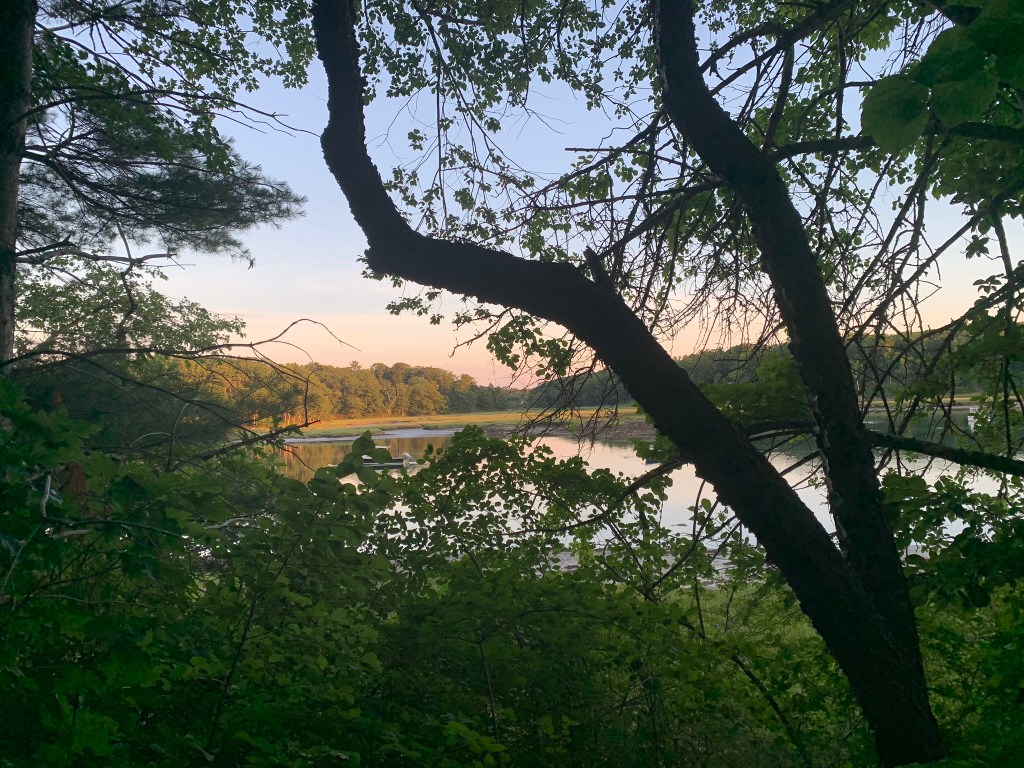
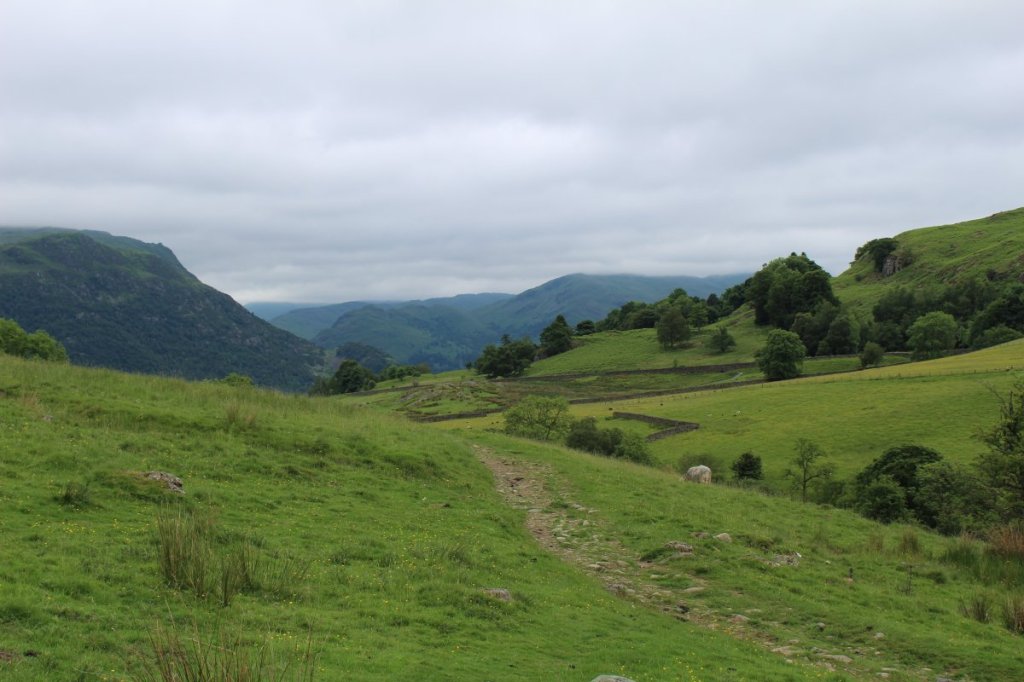
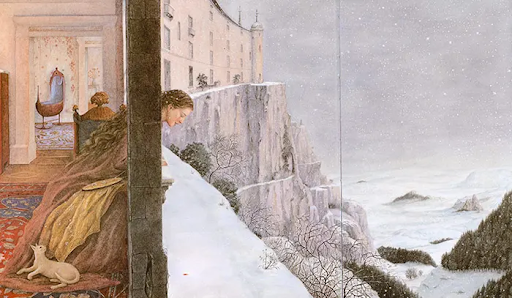
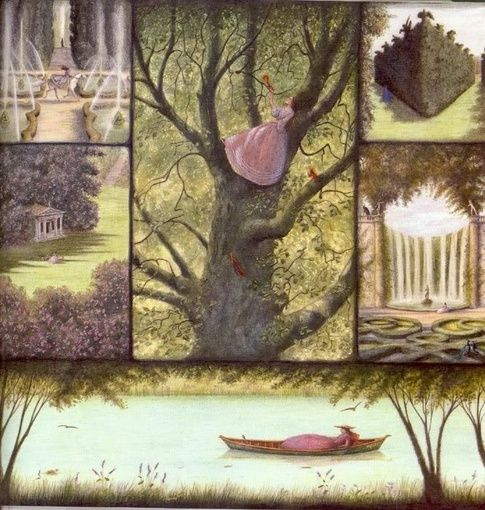
This week’s Summer of Faerie post, a haunting poem by William Stark, honors MacDonald’s vision of a work of art as an aeolian harp or firefly. Reading it rewakened my memories of the stormy, brooding Anglo-Saxon poetry of my freshman “Intro to British Literature” course; the misty, musical words of J.R.R. Tolkien’s Silmarillion; to the green hills and rainy skies of England’s Lake District. Enjoy!
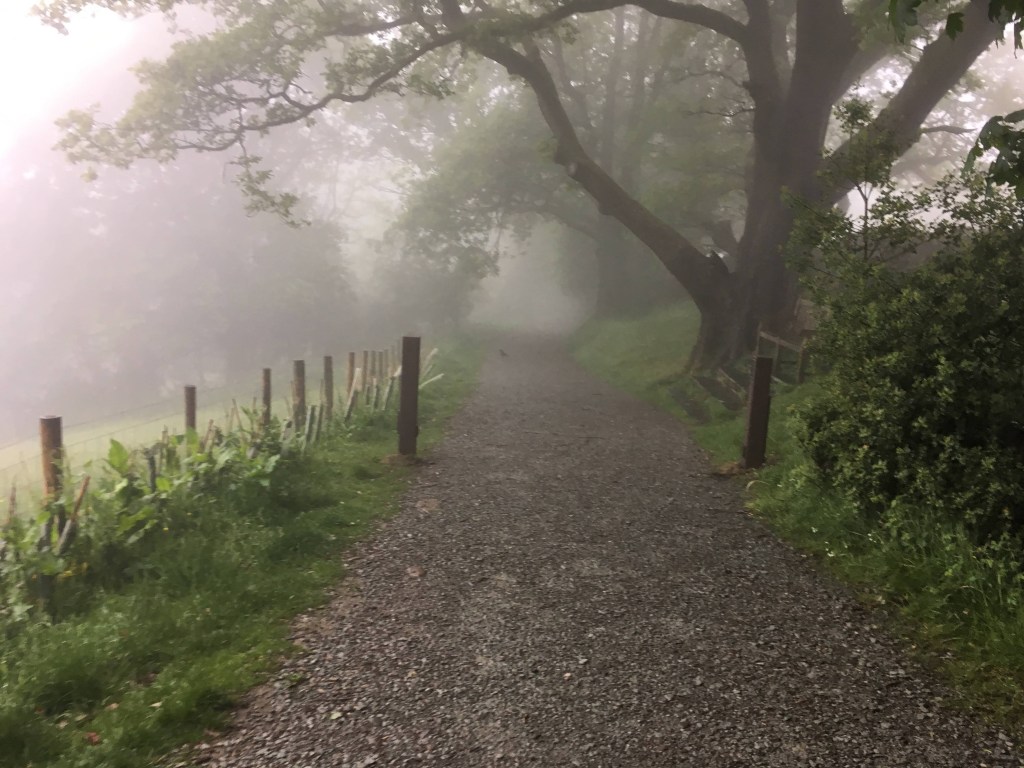
Threnody: The Fallen Kingdom
by William Stark
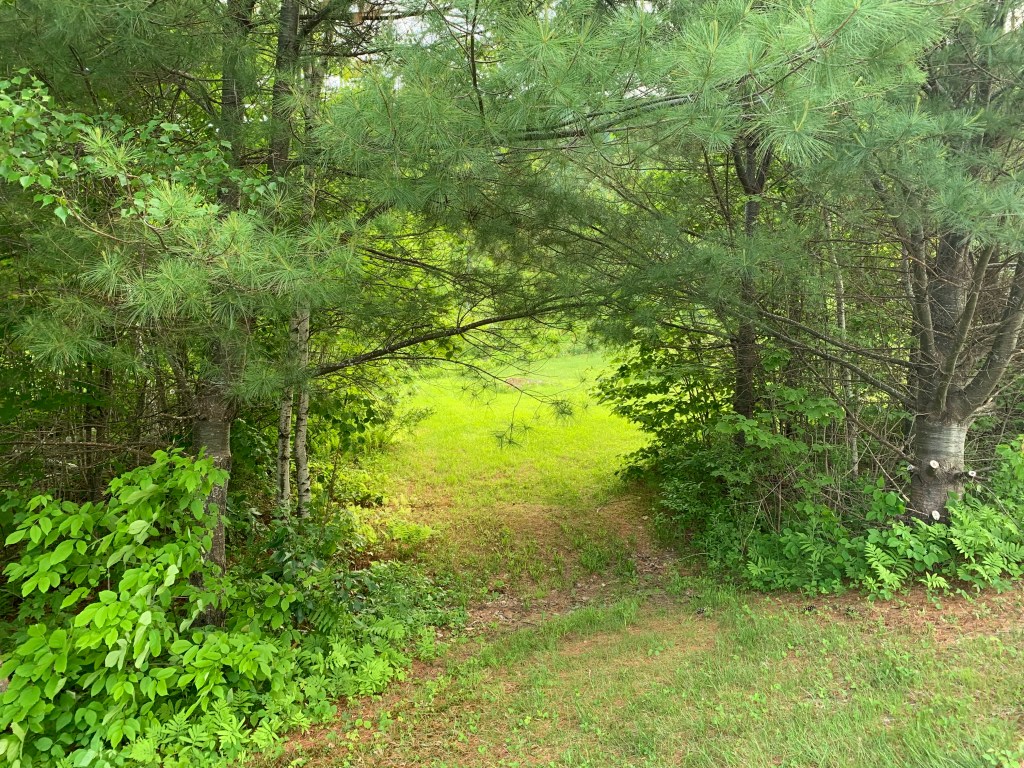
Photo credit: William Stark
Along the twilit road I trudged, yet seeming scarce to tire, as round about the raindrops muddied field and path to mire. No gleam of sun glanced through the gloom, no fire from hearth did flame, and all about was dark and cold, yet in that moment came a spark forth from my musings grim. that set my mind afire.
A dwindling, flick’ring, dying coal that gleamed with memory’s gold, recalling all the former days, those radiant years of old, when hearth and heart were warmed and filled, when singing never ceased, when friendship fair bound man to man, by doom nor foe released, and holy honor ruled the realms, as men of yore have told.
Castles and strongholds stout they raised, untouched by storm nor siege, whence warriors errant sought afar the kingdom’s furthest reach; and seven towers watched their strands, above the harbors still, and pillared halls they made themselves, and a city on a hill. For love and honor were their lords, and loyalty their liege.
These all shine clear before my eye, from flashing, noble past: the seven guarding towers pale, the ancient strongholds fast, the city white on verdant hill, that stoops to azure sea, awash in sunset’s golden rays from pinnacle to quay. But weep, for it could not endure, could not forever last.
The vision past, the towers fall, dissolving into rain; the sun-washed city on the hill gives way to gloom and pain. Its warriors sleep beneath the hills; their loyalty is dead, And only chill and dark endure, yet still I trudge ahead To wander on until at last my city I regain.
William Stark
William Stark is a rising high school senior from Georgia; an avid reader of epic, myth, and fantasy; and a writer of both poetry and prose. His poetry primarily follows formal structures such as the sonnet and blank verse and has been featured at the Foundling House website. His prose work combines elements of high fantasy and science fiction, and most recently produced the first draft of his first novel. William also maintains a website for reviews of lesser-known children’s books, which may be found at www.realmofbooks.com.
Hot, bright days that burn the grass brown and brittle; dim, humid days when the air hangs heavy; gray, stormy days of booming thunder and sweet, cool rain. Lately, I’ve been enjoying the aurora borealis of Coleridge’s theology and poetry through Malcolm Guite’s Mariner, the golden web of mythology and folklore through D.R. McElroy’s Superstitions, the thick jungles and shining palaces of India through Joseph Jacobs’s Indian Tales, the green mountains and stone castles of Wales through the Mabinogion, and the silver dreaminess of legend through Peter S. Beagle’s The Last Unicorn.
While not every myth or fairy tale is my favorite (for instance, some of the monsters in Superstitions were quite shocking) I love how these stories remind me of the wonders of this world – fog on mountains, green tree-reflections on water, the glowing moon – and make me yearn to look over its edge into the wonders of eternity.
This week’s Summer of Faerie story expresses that same wonder with a burning brightness like fireflies at night. Rachel A. Greco retells Hans Christian Andersen’s fairy tale,The Nightingale, with grace and depth, using such vivid language that I feel like I dreamed it. Enjoy!
Travelers braved the Briny Sea, the Peaks of Misfortune, and the Sands of Time to hear the nightingale’s song. Brighter than summer’s sun, sweeter than roses, it left the stoutest warrior’s heart quivering. But only at night did the enchanting music flood the forest.
Although the nightingale sang in the forests surrounding his palace, Emperor Ghanzou had never heard or seen the bird.
One evening, while showing dignitaries the splendors of his palace’s porcelain walls, ambassador Rolf asked the emperor, “Have you heard the nightingale’s song? It made me cry like a baby.”
“I have yet to see or hear the bird,” the emperor growled, annoyed the men weren’t complimenting his sculptures. “How do we know such a creature exists? Perhaps it’s just the temple bells or a dragon’s song.”
“Oh no, your majesty,” Rolf said. “It must be a nightingale.”
“Then bring it to me,” Emperor Ghanzou commanded.
The men stood as silent as the jade statues, for they didn’t know how to capture a nightingale or even find one.
The kitchen maid’s daughter had overheard the conversation as she scuttled by to prepare their tea. “Please, your majesty,” she bowed before him, “the nightingale is a special friend of mine. I can convince it to come and sing for you if you wish.”
The Emperor stared at the bowed head and food-smattered apron, surprised such an insignificant girl knew something the men did not. “Bring it at once.”
The maid darted away.
Emperor Ghanzou awaited the bird’s arrival after dinner and told a servant to bring a net in case the bird was as splendid as everyone said.
The emperor’s fingers tapped against his jade throne. The windows opening onto the balcony let in moonlight and the fragrance of jasmine.
A bird landed on one of the windowsills. It was a small, simple creature. How could such magnificent music come from such an insignificant source?
The bird opened its beak, and Ghanzou no longer cared. Crystalline music filled his head with sunnier days, when life was simple and sweet. When he stole kisses from a kitchen maid whom he had loved but couldn’t marry. Tears streamed down his face.
When the bird stopped, Ghanzou blinked as if coming out of a trance.
With his permission, his servant leapt toward the nightingale with his net.
The bird darted out the window.
“Get it!” Ghanzou thundered. “I must have that bird.”
The reward was set, the hunters found, and the search began.
Although the sharpest-scented dogs and sharpest-sighted men trekked through the empire, they couldn’t capture the bird. Years passed, and the nightingale continued to sing, often near the palace, but the little bird proved too clever for the emperor and his men.
Emperor Ghanzou’s rage and longing for the nightingale’s music drove him to bed with illness. As his strength drained away, his anger and greed drained with it. All he wanted was to hear the bird sing one more time before he died since he hadn’t heard its song since the night it escaped.
One evening, when his coughs kept the nurse beside his bed, she said, “The nightingale has come to sing for you, your majesty.”
He turned and saw its small figure on the windowsill, its beady eyes examining him. “So you’ve come now that I’m dying.” He sighed. “I suppose it’s what I deserve for trying to capture you. Thank you for coming.”
The bird opened its mouth and sang. It sung all through the night, and the emperor smiled for the first time in a long time.
“Your Majesty, the nightingale has turned into a girl,” the nurse’s voice hauled Ghanzou out of the pleasant memories the song had given him.
The kitchen maid’s daughter sat on the sill, dirty and simple. But the dawn cloaked her in light.
“Who are you?” He asked.
“I am a nightingale by night and Chynna, the kitchen maid’s daughter who has no father, by day.”
She stared at her feet. “You didn’t want me as your daughter, so I hoped you’d want me as your nightingale. I didn’t want to live in a cage, though.”
She glanced up. “I heard you were dying, so I came to sing for you again.”
Ghanzou knew the kitchen maid had carried his child and let her stay on. But he had put them from his mind so he could rule and produce heirs. Over the years he had forgotten the woman and child until the music had reminded him. He gazed at the young woman. His daughter. Poor and filthy, but not as insignificant as he once thought.
“Come here.” He opened his arms.
She sank into them, healing him with her song.
Rachel A. Greco
Rachel Greco is a YA fantasy author who wishes she was a dragon. Her short story, Fairy Light, won an honorable mention in the Writer’s Digest Annual Writing Competition and another was published by White Cat Publications. When not writing, she can be found reading, kayaking, or dancing with elves in the forests of her South Carolina home. Visit https://www.rachelagreco.com/ for book recommendations and news about her writing world.
The summer heat has overcome most of the flowers, though the orange tiger lilies and small pink tea roses are still holding out. When I walk by the river, ocean breezes just barely disperse the steamy humidity.
This week’s Summer of Faerie post probably should have been the introduction to this blog series – a look into fairy tale scholarship from a Christian perspective. However, I didn’t have it ready when I started in late May, so it provides an academic interlude after the delightful prose and poetry other writers have contributed.
Many wise scholars have walked this path before me, exploring the relationship between Biblical truth, faith, and the space between once-upon-a-time and happily-ever-after. This essay explores a few of their thoughts and my own experiences in the perilous realm of Faerie.
In the Cape Cod village where I grew up, the library had previously been the schoolhouse. It was a quiet, sunny building with gleaming wooden floors, framed Sailor’s Valentines made of seashells, and glass cases of wooden ship models. They kept fairy tales, fables, folklore, myths, and legends in the corner of the Children’s wing.
I returned to that corner over and over. These books filled my mind and fueled my own stories with images: golden palaces and dark woods, beautiful princesses and wicked witches, ravenous dragons and friendly enchanted frogs.
While I loved the excitement of these stories, I found that the more-developed characters and complex plots of fairy-tale-related books like C.S. Lewis’s The Chronicles of Narnia, Gail Carson Levine’s Ella Enchanted, and Edward Eager’s Half Magic series were even better. I grew away from the flat characters and simple plots of the original fairy tales, but still shivered with delight at the mention of enchantments, wizards, castles, sea serpents, riddles, and magic swords.
Since graduating from college, I’ve begun to explore literary scholarship more, especially the work of Christian scholars. I’ve discovered an army of great thinkers who believe that fairy tales are more than escapist fancies for children, but essential to moral formation, awakening wonder, valuing goodness and justice, strengthening courage, and clinging to hope.
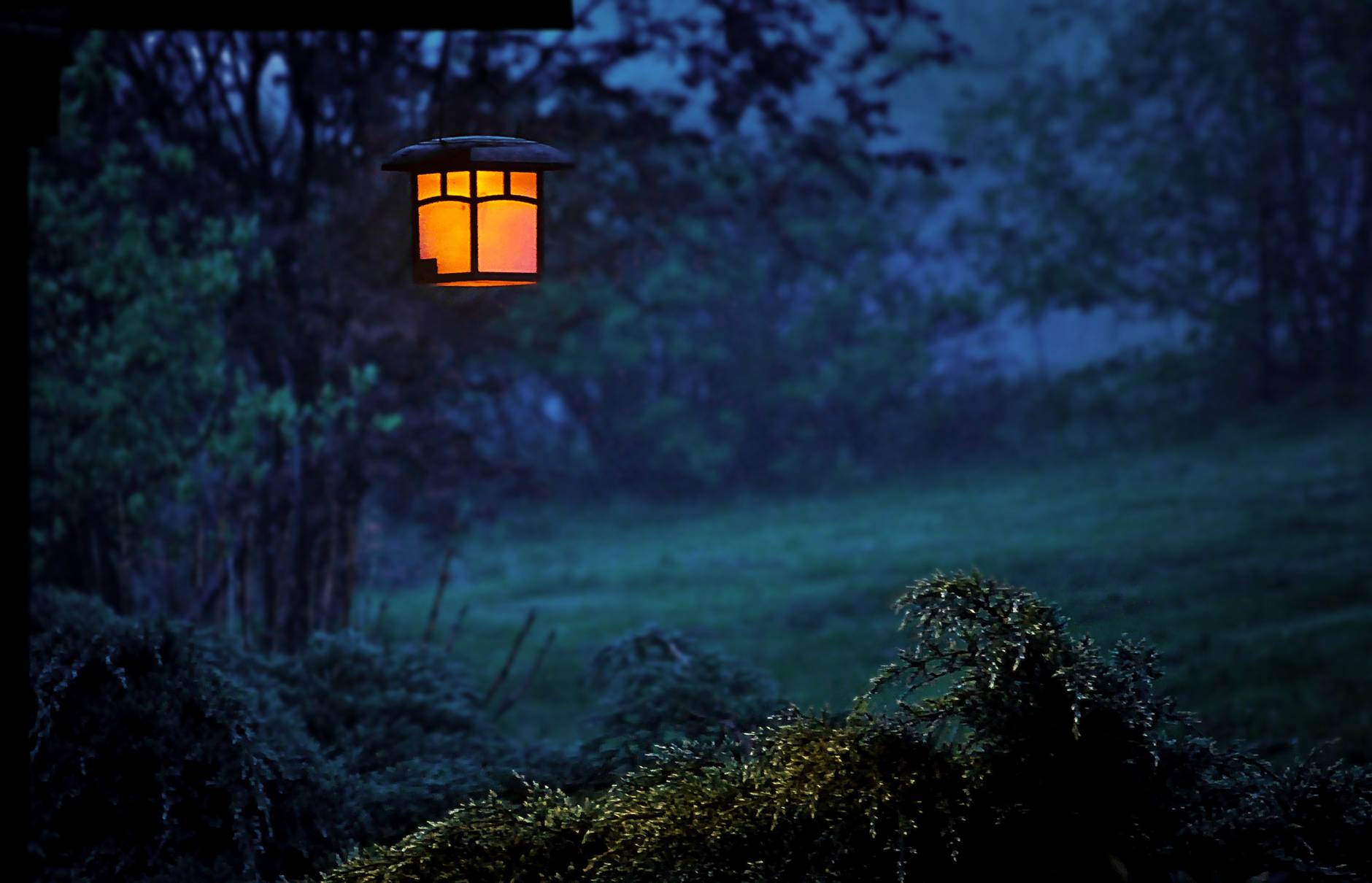
Romantic poet Samuel Taylor Coleridgesaid that reading of “Faery Tales & Genii” habituated his mind “to the Vast . . . I know no other way of giving the mind a love of ‘the Great’ & ‘the Whole.’” E. Nesbit, a fantasy writer from the Victorian era, argued that a properly educated imagination is like the light in a Japanese lantern: “It transfigures everything into a glory that is only not magic to us because we know Who kindled the inner light, Who set up for us the splendid lantern of this world.”
I had plenty of voices in my life that taught me to wonder at the vast and magnificent, such as my kindergarten teacher, who taught us about the magic of monarch butterflies, lady’s slipper orchids, and stars. However, fairy tales, especially beautiful illustrations like Angela Barrett’s, helped me accept and love the treasures of the universe: fiery sunsets over mountains, the smell of pine, golden pollen and pine needles floating on water.
G.K. Chesterton argued in “The Ethics of Elfland” that “conditions” of fairy tales teach us a “The Doctrine of Conditional Joy” that parallels the truth of the Bible: “A lamp is lit, and love flies away . . . An apple is eaten, and the hope of God is gone.” Rules like Cinderella’s midnight curfew helped tune my mind to the holy restrictions of the Bible, which did not always make logical sense, like Moses’s disobedience at the waters of Meribah.
C.S. Lewis, Christian apologist, professor, and author of the Chronicles of Narnia (and many other books) fell in love with the Form of the fairy tale for “its brevity, its severe restraints on description, its flexible traditionalism, its inflexible hostility to all analysis, digression, reflections, and ‘gas.'” A fairy story that leaves me wondering and a little mystified, like the Little Mermaid’s voyage to heaven (in the original tale) reminds me that there are mysteries on earth and in heaven too great for my mortal mind to grasp.
J.R.R. Tolkienargues that a fairy tale’s happy ending is a sudden “joyous turn” or “Eucatastrophe” that gives us “a fleeting glimpse of Joy, Joy beyond the walls of the world, poignant as grief.” My child self learned to expect happy endings: spring after winter, health after sickness, and especially, Heaven after the difficulties of this life (which even I, loved and sheltered as I was, knew).
Truth. Joy. Wonder. Insight. With all of these brilliant voices before me, I don’t want to just repeat their thoughts – but I do want to consider them. How did fairy tales fill my mind and shape my heart?
I think of the little girl I was: a shy, moody bookworm who spent hours devouring books, a tree-climber in the Cape Cod woods, and a swimmer in the New Hampshire lakes. I preferred my curly hair wet because it looked more like a mermaid’s then, scribbled stories in dozens of spiral-bound notebooks, and acted out scenes from books or movies with my cousins. Fairy tales and other books gave me colors and shapes for my daydreams, vocabulary and information about the world, and a deep yearning for the eternal – the yearning that C.S. Lewis calledsehnsucht.
What did fairy tales do to me? They gave me visions of beauty and mystery: vice punished and virtue rewarded; battles and quests finishing with happy endings. They reinforced the framework that I believe is the real story of this world: the Fall that causes suffering, the Eucatastrophe or “joyful turn” that Tolkien described, and the happy ending that stretches into eternity.
Fairy tales gave me a hunger for the wild, the mysterious, the unknown. The lessons I learned through the green flannel-graphs of Sunday School or the boisterous songs of Vacation Bible School taught me goodness and truth, but sometimes made me think of my faith as something that belonged in white church buildings and wooden pews. Fairy tales and fantasies shaped my desire for midnight woods and perilous seas and green mountains beyond this world – a desire that is godly (just read Isaiah or 1 Peter).
To be honest, fairy tales did have some negative effects on me. They helped plant the false ideas of feminine beauty that our culture continually deplores and yet upholds. For a long time, I believed that vice would be punished and virtue rewarded right away, instead of after some years of undeserved suffering or prosperity. They made me long to be perfectly beautiful and good without trying at all, like a fairy-tale princess. Fairy tales gave me deep joys and fascinating ideas, but they were a golden framework, not the full picture of reality.
In our nightly reading time, my parents would read a Bible story and a “fun story” like Treasure Island, Johnny Tremaine, Treasures in the Snow, and The Rats of NIMH. It was the Bible stories that gave me a full picture of reality: the green Eden we lost, the devouring dragon, the righteous King who came to die on the Cross for us, the Spirit who comes like wind, like fire, the glorious kingdom that awaits us. Scripture tells the true story that is far more wondrous and beautiful than anything we sub-creating humans could make.
Snow White is not my favorite Disney movie, partly because I don’t like polka dots. However, the last scene, when the prince and Snow White ride up on his horse and see his castle shining in the sunset, still hurts me because it makes me yearn for the Kingdom of Heaven. Fairy tales, like lanterns in the dark, helped remind me of the true Light.
Summer: the smell of pine, sunscreen, and wood smoke, the feeling of the hot sun on your skin and wet grass on your bare feet, the sight of green leaves everywhere. For me, this is the time of greatest freedom and beauty: the season when you can turn on your favorite playlist in the car with the windows down; swim in cool water until your hands and toes are pruny; star-gaze in the warm nights; pick blueberries and bake them into cobbler. I taste sehnsucht when I see blue mist over the sea or hear the weird, chuckling cry of a loon.
This week’s Summer of Faerie post is a fascinating one by Emma Fox. Emma introduced me to the French composer Claude Debussy, a lover of mythology and friend to many Symbolist poets and artists. Her poem was inspired by an image of Debussy and his beloved daughter Emma in a forest south of Paris, taken shortly before their deaths near the end of WWI (see the picture below). Debussy is famous for his orchestral work, “Prelude to the Afternoon of a Faun.” This poem asks, what if he really did see a faun there in the woods?
Claude Debussy and his beloved daughter Emma in a forest south of Paris, taken shortly before their deaths near the end of WWI
Debussy was fascinated the concept of Gesampkunstwerk or “total work of art,” or unifying text, visual art, music, and even movement into one work. In honor of that concept, I recommend listening to “Prelude to the Afternoon of a Faun” as you read this poem (and, perhaps, finding some woods to sit in as you do) – let them take you into this time, this moment, this vision.
There really was a faun— I know, because I glimpsed him in the southern forest. The war had dragged on, at the Somme and at Verdun, Verdant no longer, but choked With ragged brambles of barbed wire The tongues of dragon fire and poisoned fumes Driving from the woods both deer and dove.
Paris had become a cage for us. The shuttered shops of the Champs-Elysees Sagged pale and weary, windows boarded up, Unable to bear the Arc de Triomphe Stranded in the star, cut off at the hip Like the legs of a broken Colossus.
We fled to the forest, my daughter and I. We galloped on an iron horse to a far kingdom Where castles rose like broken dreams From the shrouded groves of memory. We found a spot between the trees To spread our blanket and eat apples, And listen to the language of the birds.
That’s where we saw the faun. Just his curled horns at first, sticking out from behind a tree— He slept, unaware of our presence, His naked chest rising and falling with each breath And his furred legs nestled in the grass like foxes, While his bright hooves twitched to a silent tune.
A warm wind stirred the leaves above our heads. He slept on—dreaming perhaps of virgin groves And naiads bathing in the stream, And the music of flutes beneath the stars In ancient times, long before Caesar Stormed in with the legions, striking down trees And strangling rivers with aqueducts.
The faun never woke. We tiptoed away— Folded our blanket, and walked through the wood To the station. We were silent the whole journey home, But in my daughter’s eyes I saw summer leaves and starlight. And on the iron platform, her buttoned leather shoes Twinkled, waltzing to some silent melody.
And I knew this afternoon would be the prelude to her song.
Emma Fox
Emma Fox first met a faun at age seven, when wandering through the Narnian woods. She fell in love with Claude Debussy’s music in high school, eventually leading to degrees in music and art history and a lifelong interest in the intersection of music, art and literature. She now lives in the “Magic City” of Birmingham, Alabama, along with her husband, three book-loving children, and a loyal border collie. Her debut fantasy novel The Arrow and the Crown has received multiple awards, including the Warren S. Katz Award for Juvenile Fiction and 1st Place in Young Adult Fiction from the SCBWI Southern Breeze division. Explore more of her fantasy world and work at http://emmafoxauthor.com/.
My research methods for this Summer of Faerie project have been quick, messy plunges instead of the careful, methodical, deep dives of a professional scholar. However, I am finding treasures. J.R.R. Tolkien, George MacDonald, Ursula K. Le Guin, Alan Jacobs, Madeleine L’Engle, and many others have explored the mysteries of Faerie, including memory, imagination, wonder, and beauty. My latest pleasure was finally reading George MacDonald’s The Golden Key, which I had heard about but not read – a sparkling, mesmerizing tale with echoes of dreams, death, and eternity.
The other writers who have joined me in this quest of celebrating and adding to the Faerie canon continue to delight. Rachel Donahue returns with another poem that “strips the veil of familiarity from the world” to expose “its sleeping beauty” (stole that from Shelley). Rachel also contributed a story that reminded me of a hearthfire on a cool, misty day – atmospherically, somewhere between the Shire and the Misty Mountains. Enjoy!
King Midas Chased Me This Morning
King Midas chased me this morning.
I saw him coming in the rear view glass, his broad reach spreading o’er field and tree and man alike, gilding everything in sight until he reached my pane, besmirched with dust, and I could see no more through the aurous wash.
As I fled, I turned to spy him rising there behind a tree, and when I least expected him, his fingers reached deliberately and touched my eyes till all I saw was gold.
Summer of Invisible Dragons
by Rachel Donahue
3.5.42
Plowed the back pasture today. Tom Shepherd came down the lane with his flock and brought word that dragons have descended from the top of Mt. Summit. Strange news. He’s not one to believe in fairy tales. I’m afraid he may have the dropsy mind.
7.5.42
Successful day at market. Folks love Mae Ella’s rhubarb jam. Stopped by the inn for a brew and heard a traveler saying that Dunn Castle is under siege by invisible dragons. The other patrons laughed at his strange tale, but his story gave me a bad feeling. I told Mae Ella about it and what old Tom said the other day.
9.5.42
Helped Mae Ella prep her flower beds. Sowed the back pasture.
11.5.42
Cut hay in the meadow.
12.5.42
Figured out where the story of invisible dragons came from. They aren’t invisible at all—you just can’t see them. A messenger from Allendale said the eternal cloud at the top of Mt. Summit has descended upon Dunn Castle where it sits at the foot of the mountain. The castle is completely hidden from view. Said he could see flashes of fire inside the cloud all the way from Allendale.
13.5.42
Baled hay. Mae Ella helped.
14.5.42
Went to a meeting in the square this afternoon at Mae Ella’s urging. Rumor reached us this morning that the dragons have spread from Dunn Castle to Allendale. Some believe the dragons can smell crowds, so they refuse to go outside. That explains why the market was so slow. Wish I could’ve stayed home myself. There’s talk of canceling the lantern festival next week, though I don’t see the reason for such fuss. We’re a long way from Allendale.
15.5.42
Smithy says there’s an inventor coming to Redfield to teach all the smiths from surrounding villages how to make his contraption—a kind of metal parasol. Says it’ll protect from dragon fire. Smithy’s already asking folks to give up their swords and shields and any other scrap metal they can afford. Says once the dragons get here we won’t have much use for them anyway. Not sure that I’m ready to give up my weapons on a hunch. But I did check the roof over and patch a couple places.
16.5.42
Mended the fence in the south meadow.
17.5.42
Word came that the dragons seem to have a taste for elders and are sparing the children. Maybe they’re attracted to the smell of menthol and camphor, I don’t know. But there’s a cloud over Sweetdale now, so they’re one step closer. There’s another meeting in the square tomorrow morning—only one representative from each family. Guess it’s up to me to go.
18.5.42
We canceled the lantern festival. Who could have imagined. We’ve celebrated this festival on the same day for hundreds of years. But we can’t risk attracting the dragons with large crowds. Our elders are too valuable.
19.5.42
Planted the garden. Feels strange to be sowing with the threat of dragons. Wondering if we’ll even be here to harvest.
20.5.42
I took my shield and extra swords to Smithy today. Never thought I’d be protecting my family by surrendering my weapons. Nothing makes sense any more now that there are dragons. They’ve moved on to Birchwood, so it’s just a matter of time before they get here. People are celebrating the lantern festival by placing their lanterns in windows. It’s not the same, but it’s a mighty nice view from our end of town to see so many little lights aglow.
21.5.42
A traveling merchant in the market today was selling what he called “dragon repellent”—a stink cream guaranteed to keep them away. He made some sales, but I didn’t buy it. Mae Ella asked around and found it was something she could make herself. Now the kitchen stinks to high heaven. I sure hope she don’t expect me to smear that stuff on when I go out.
22.5.42
Yep, she did. I smell so bad I can hardly stand myself. But I sure do love that woman. She makes so few demands of me, if she feels better with me stinking, I reckon I’ll do it. Good thing is, I’m not the only one. There’s enough of us wearing the stink that you can’t tell who it is that smells so bad. It might or might not keep the dragons away, but it’ll sure work on everything else. Even Bo and Bess won’t come near me. Glad the planting’s all done.
24.5.42
Well I never. I’m so cross I can’t see straight. Heard that our neighbors over in Greenfield are pushing their elders out of town, sending them out as a kind of offering to the dragons. Said they won’t be caught stinking or using funny parasols—they have the right to go about their lives like normal. Said if the dragons want the elders they can have ‘em, that way they’ll leave the rest of the village alone. Folks tried to tell ‘em it don’t work that way, but they won’t listen. We here in Redfield been taking those elders in for safekeeping. It may put us at higher risk, but with the stink cream and the parasols and everyone staying indoors, we suspect to be OK.
27.5.42
Got a nasty splinter while making stakes for the tomatoes. Mae Ella got most of it, but couldn’t get the last sliver. Elder Roy made up a paste to draw it out. I wonder what other useful things he’s got stored up in that head of his.
28.5.42
No market this week. Working the land with my parasol contraption close by. It’s a bit unnerving, having to watch and listen so close while I work, but I got to keep the farm going.
30.5.42
Folks is growing restless, what with being cooped up with the stink and all. The inn’s closed, and the taverns, too, and no one’s meeting in the square. I only leave to tend to my animals, and poor Mae Ella hardly leaves at all. It’s hard to see that sweet blossom withering on the vine, but she’s determined to take good care of the three elders we got staying with us. To pass the time we all tell stories of an evening. I’ve been amazed to hear what they’ve seen in their day, but it’s nothing like the dragons. They’ve never lived anything like this.
2.6.42
The dragons are at Greenfield. Maker have mercy. Some from town went to see if they could help, to carry them some cream and a few extra parasols, but it was too late. The cloud had already covered the village. We could see flashes of fire out west in the early morning hours before the sun was up. It’s eerily quiet here—no birds or chitterin, no wagons or talking. Everyone’s locked up tight now, just waiting.
4.6.42
The dragons passed us by. I’ve never been so scared in my life. We been spread out in the house, not more than two together, and all of us under parasols as much as possible. Only sound I heard for two days was a baby crying down the street and the animals restless in the barn. No one knows when they’ll be back or exactly why they kept going, but we’re all breathing careful tonight.
5.6.42
Still no sign of dragons here, but no one goes outside unless they need to. Taking every precaution. Got word from Greenfield today—the whole village is in mourning, hardly a family untouched. Some dead, some suffering burns, a couple houses charred to a crisp. Someone sent word thanking us for saving their elders from such a fate. The elders are mourning, though. They’ve lost more than most.
8.6.42
Been at Greenfield for two days, helping to clean up the remains. Mae Ella sent me off with baskets of food and all the extra stink cream she could spare. Only seven of us made the trip from Redfield, but we didn’t walk together for fear of drawing the dragons back. It was a lonely journey. I’ve worked so hard the last two days I ache in places I’d forgotten about, but I was determined to get home to my sweet Mae Ella soon as I could.
11.6.42
The elders have decided to return home. Greenfielders are staying indoors now and using all the stink cream and parasols they can get, and they’re in sore need of their elders. I’m mighty proud of the folks from our village who are stepping up to help and donating what they can. A few old misers in town are more interested in being right and teaching them a lesson, but I say that that poor village has suffered their folly enough without anybody else heaping coal on the fire. The ones of us who went to help the other day saw that plain enough.
12.6.42
Weeded the garden. Caught a glimpse of the firstfruits.
15.6.42
There’s a new normal around here. We live every day with the threat of dragons (word still comes of villages hit near and far) but we’ve been fortunate. Hard not to let our guard down when the skies are so clear. But we all care about each other too much to be careless. Even the ones that was skeptical are taking up parasols now that it’s hit so close to home. Some of the ladies done gone to painting theirs, making it a new kind of fashionable thing. I got to say I don’t mind it so much. Those little spots of color—like the zinnias that popped up in Mae Ella’s flower bed—just brighten up the place and help it not to feel so dark and dreary. Eventually the dragons will come—I can feel it in my bones—but that don’t mean we can’t take care of what’s here right now. If Mae Ella’s taught me anything in all my years with her, it’s that. We got work to do.
Rachel Donahue
Rachel S. Donahue holds a B.A. in English and Bible from Welch College in Nashville, TN, and has more than eleven years’ experience changing diapers. She and her husband, Mick, previously lived and worked in Spain serving people groups at risk of marginalization. They now live near Charlotte, North Carolina, where they’re both involved in the family greenhouse business while raising three sprightly boys and a sweet-as-pie little girl.Visit her website/blog at www.thedonahuedaily.com. Her book, Real Poems for Real Moms: from a Mother in the Trenches to Another, can also be found on Amazon or bookshop.org.
June is flying by in a blur of hot green days and cool blue nights (I sort of stole that phrasing from Tolkien). Pink peonies are nodding in our garden and paddle boarders and kayakers have been cruising by on the river. I wish I could bottle up all this lush, vibrant loveliness and save it for some slushy late winter afternoon.
This week’s Summer of Faerie contribution is a short story by Loren Warnemuende, who has an Jane Austen-ish or George Eliot-esque mastery of character-creation. Whether protagonists or villains, she crafts believable, flesh-and-blood people with memories and desires that feel so real.
Loren took on a significant challenge in this fairy tale retelling by tackling the tale of King Thrushbeard, a lesser-known and highly shocking tale that would not be publicly acceptable today. If you don’t know it already, I highly recommend reading the original tale before you read her retelling. Enjoy!
Carla and the Prez
by Loren Warnemuende
Photo by David Givens
When Dad said I’d better get a job or start working toward a degree, I thought he was joking. I mean, I didn’t need to rush. For years, Dad made plenty in consulting, and even though he was teaching at a university now we had enough for a good life. The thing is, when we moved from suburban Michigan to the piney woods of East Texas for Dad’s teaching job, all my motivation to do something was completely squelched. Maybe it was the crazy humidity that bushed my straight hair and zapped my energy.
Despite this, after Dad’s first semester he declared I’d have to do something productive. I told him I needed more time to adjust, but when he heard about a job fair in nearby Glimmer he dragged me to it.
Now, I knew there were educated people in this part of the world, but honestly! These job reps were the epitome of Southern redneck. I told Dad they were. One barbecue restaurant rep had a gut like a lard bucket. “Dad! He lives in fat!” I whispered. Then there was the hotel rep who called me “Dahling” and “Sweetie.” I told Dad that she’d never have gotten away with that condescending terminology if she’d been up north.
Every one of them was like that, but the clincher was the last—a guy around my age. When I stepped up to his booth, he tipped his cowboy hat and I blurted out, “Hey, it’s the President!”
Dad turned beet red and this fellow asked (in a perfect Southern drawl), “Sorry, Ma’am?”
“You look like G. W. Bush!” I laughed.
The guy stared at me, his face kind of white, and dad started dragging me off.
“Bye Prez!” I laughed as we left. He was cute.
“I can’t believe your behavior,” Dad hissed. “What’s gotten into you, Carla?”
“Dad,” I sighed, “You and Mom didn’t raise me so I could work for some local yokels.”
Dad ran his hand over his forehead, and groaned. At dinner the next evening, he put his fork down and looked at me.
“Since you won’t seriously look at work or school, we’ve decided you’ll take the first job we find you.”
“But Dad!”
“No buts. In fact, I’ve arranged a job interview for you.”
I cried, but Dad was set. The next day he drove me to Glimmer and pulled up at the local Whataburger.
“Are we getting lunch?” I asked.
“Oh no, this is it,” he smiled grimly.
And he sent me into a fast food place to interview! I almost walked out when the manager greeted me. I thought the job fair folks were stereotypical Southerners, but this guy! His name, he said, was Joe Bob and he had a set of real Bubba teeth. I endured his drawl and spoke very properly back to him. I mean, he was polite and I didn’t want to be rude, but I wanted to clarify the difference between us. Finally, he stood and stuck out his hand.
“Welcome to the team, Miz Carla,” he grinned around those awful teeth. “You’ll be workin’ with Mindie.”
I started the next day, and sure enough, working at Whataburger was boring. Glimmer’s a one-stoplight town, and we were never busy. Thankfully Mindie was fun, and entertained me with all kinds of stories about the area. Her ancestors had lived near Glimmer since Texas was a Republic, and before that hailed from Ireland. Her family had a signed land deed and red hair to back her claims. Even though she was biased, Mindie liked my stories about winters and the gorgeous clear lakes in Michigan.
Glimmer wasn’t pretty, but the pasture lands around it were. I looked forward to the daily rides in and out of town because I loved to watch the sleek cows and horses browsing in the early spring fields. Mindie lived near me so she drove me home each day. Every evening we took a little farm road to my house. The first time we spotted a white pickup parked along the road by a field and this cowboy leaned against the truck, his eyes on the setting sun and a camera in hand. He heard us and turned, touched his hat, then went back to his view.
I gasped. “That was Prez!”
“Who?” Mindie asked. “Wait, you mean Rob there?”
But it was him, the job fair guy. Mindie cracked up when I explained the nickname and agreed there was a resemblance.
“So does he live around here?”
Mindie looked at me like I was crazy.
“That field he was by?” she said. “That’s just one on his family’s ranch.”
Well that floored me. I started to wonder what kind of job he’d been offering. Every evening after that I’d see Prez there by that field eyeing the sunset, and I’d wonder.
Most people who came to Whataburger were pretty nice. I had to admit there was a lot of truth about Southern charm. Even when someone obviously thought I was a nitwit they were polite. Joe Bob, bad teeth and all, was a decent manager. He complimented my work and started giving me other jobs—he said I had good organizational and communication skills.
But then one horrible day came at the beginning of May. I was at the register when this guy strode in like he owned the place. He wore ritzy sunglasses and didn’t even take them off inside. His hair was slicked back and his expensive gray sports coat was slung over his shoulder. Leaning over the counter, he pushed his glasses down his nose and glared at me.
“Bacon and cheese burger,” he said, his accent straight out of the upper Midwest. “No onions, no cheese. Mayo, ketchup—no mustard. Fries. Large. And pop—make it a large, too.”
I gaped at him. It had been so long since I’d heard the Midwest accent it took me a second to understand him. I even had to mentally translate “pop” to “soda.” And he was so rude!
The guy stood and tapped his foot. “Well? I don’t have all day!”
I mumbled an apology and tried to put his order in. He’d so rattled me that I messed up; then he got mad and started calling me all kinds of names so I messed up again. Mindie organized the meal but when we handed him the tray he went ballistic and threw the whole thing over the counter at us. The soda soaked me top to toe. Then he turned on his heel and stalked out.
Mindie helped me mop up, but I was so upset it was hard to say how much of my soaked shirt was from soda and how much was tears. Joe Bob came in while we were still cleaning. When we told him what happened he looked worried.
“That was our new boss,” he said. “I think he was testing you, Miz Carla.”
“Well, I failed!” I sobbed. “Now what am I going to do?”
Joe Bob ruminated, then his eyes lit up.
“I got a job for you gals if y’all can spare an evening. My sister is catering barbecue for a big shindig tomorrow night. If y’all can help, the cash can tide ya over if y’need to find a new job.”
Mindie shrugged and I agreed reluctantly. Dad was going to be sad I’d lost my job. And, much as I hated to admit it, I’d come to like my Whataburger gig.
It turned out Dad and Mom had a year-end thing at Dr. Hart’s, the university president, so Mindie picked me up the next evening. We drove out through pastures wreathed with Queen Anne’s Lace and golden bitterweed. We passed the field where I always saw Prez and his pickup, but he wasn’t there. Eventually Mindie turned in at a set of wrought iron gates and worked our way up a winding drive through scrubby pines and live oaks. Suddenly we rounded a bend and the house opened up before us.
“What in the world?” I gasped. “This in East Texas?”
The house looked like someone had picked up a colonial mansion and set it down in the piney woods. Its brick face rose tall and classic, the front lined with cedars, and a multicolored gravel circle fanned out before it. Fields opened up behind gridded with pretty white fences.
“Oh, I know whose house this is!” Mindie laughed, driving us around the corner to the kitchen entry. “It’s President Hart’s house. He modeled it after Mt. Vernon.”
“What?” I strained around to see the cars pulling up on the front circle to let out visitors. “My parents’ll be here and all the profs who know me. How embarrassing!”
“Buck up,” Mindie said. “It’s an honest living.”
Joe Bob met us at the kitchen door looking scrubbed and uncomfortable in a bolo tie, buttoned shirt, and fancy jeans. He waved us into the lofty, flagstoned room and introduced us to his sister who looked a lot more polished than him.
“I gotta run and take care of other details, gals,” he said. “See y’all ‘round.”
Joe Bob’s sister put us to work and soon we were up to our ears in brisket and cole slaw. The wait staff scurried in and out to collect trays and I glanced out the tall windows at the back portico and manicured lawns filling with dressed-up folks. I couldn’t help but wish I was out there with Mom and Dad.
After a bit Mindie took a quick break. When she returned she caught Joe Bob’s sister who nodded to me.
“Carla, can you take out a fresh pitcher of sweet tea? I need Mindie here.”
My heart dropped, but I nodded and grabbed the pitcher, the glass slippery with condensation. I pushed out the kitchen door onto the portico and turned, only to see Prez—that is, Rob, the sunset watcher. He stood chatting casually by President Hart. Prez looked classy in his cowboy hat, his bolo tie glinting in the late sun. I stepped behind a pillar and swallowed. What was he here for?
“Carla, isn’t it?” One of the wait staff pulled up by me. He motioned to the president’s group. “Dr. Hart’s son was asking for tea.”
“Dr. Hart’s…that’s his son?” I stared around the pillar. The president’s son looked up as I moved.
“Well, yeh—his son runs this ranch,” the waiter said, rolling his eyes.
I squeezed mine tight.
“Excuse me, Ma’am. Could I get some tea, please?”
My eyes flew open to see Prez standing there, smiling pleasantly. His smile widened.
“Wait—you’re Dr. Moore’s daughter, aren’t you? Come on out and say hey.”
He took me by the elbow before I could speak and maneuvered me into the open. I stumbled a little and my pitcher sloshed this way and that. I tried to steady it, but it slipped in my hands. Prez glanced over, then paused as if to help, but that threw me completely off balance. The whole pitcher slid out of my hands and fell at my feet sending a wave of sweet tea up my legs.
“Oh!” I cried, and then I shrieked, “Ow!”
Little fiery pinpricks lit into my sandaled feet and up my ankles. I looked down and saw ants running all over their mound and swarming up my legs. “Ow!”
I started dancing and slapping like an idiot. Prez grabbed me by the waist and lifted me off and away from the mound. His shoulders were shaking with laughter, but he pulled out a handkerchief and bent down to wipe the beasts off of me.
“Welcome to East Texas, Miss Carla,” he said.
My face must have been as red as Glimmer’s traffic light. I could see folks gawking, and my parents hurrying toward me. My soaked legs and feet burned and ached from the fire ant bites and the aroma of sweet tea saturated the air around me.
But for all that distraction, there was something in the way Prez spoke that stopped me cold. I stared down into the kind eyes lifted up to me.
“Joe Bob?” I whispered.
He grinned then and stood, his hand in the pocket of his fancy jeans. When he pulled it out, he held a set of fake teeth—Joe Bob’s teeth.
“Aren’t you ‘Rob’?” I gasped, remembering what Mindie had called him.
He tipped his hat slightly. “To my family—yep. Joseph Robert Hart at your service.”
“But…but…why?”
I was so confused and mortified. My folks came up and I saw Dr. Hart nearby. They all were smiling.
Prez had the decency to look chagrined, but Dad said, “Honey, I put him up to it.”
“No, Sir,” Prez said. “I’ll take the fall. You see, Miss Carla, I was fuming when you called me Prez at the job fair. I was so sick of that nickname from school days—it didn’t help that my dad is a university president. Then your Dad contacted me and apologized, and said if you shaped up you were more than qualified for the job I had. I decided I’d test you a bit and your dad agreed, so Mindie let me play my game….”
“Mindie?” I asked blankly.
“She owns the Glimmer Whataburger,” Prez admitted. “And she’s my cousin.”
“She owns it? But what about the new boss?”
Prez coughed and pulled a pair of snazzy shades from his breast pocket. He put them on and said without a hint of a southern drawl, “You gonna to get me some pop since you spilled all that tea?”
“That was you, too?” I yelped.
“Well, you enjoyed Whataburger so much I didn’t know another way to get you out here,” Prez said, removing the sunglasses and falling back into his drawl.
I shook my head, my face still hot. I looked at Mom and Dad who kept grinning like fools, then at Dr. Hart who was trying to reign in a smile.
“Will you forgive me?” Prez—I mean Rob—said. “I shouldn’t get so touchy about who I am. I would have let up a while back, but Mindie was having fun getting to know you. You’ve shown in the past few months that there’s a lot more to you than some sassy-mouthed northerner. You’d do great in the office management job we have if you want it.”
He looked so sincere and apologetic. I sighed and looked down at the welts rising all over my feet.
“I forgive you. I’m sorry I was so rude,” I said. “If you can forgive me, I think I’d like to take that job you have…as long as I don’t have to deal with obnoxious northerners or fire ants.”
Loren Warnemuende
When she was in fourth grade, Loren won a story-writing contest and decided that she’d grow up to be a writer. Since then God has led her into many roles including wife to her Renaissance man, Kraig, and mom and teacher to their three kids. Loren also teaches Worldview and Bible to high schoolers in a homeschool co-op, and adults at church. Through all these roles writing has been a source of hope and a way to share the stories and big ideas that fill her mind and heart. Loren lived most of her life in Michigan, but now calls East Texas home. You can find more of her sporadic writing on her blog Willing, Wanting, Waiting…..
Summer here feels so right: bright misty mornings and cool blue twilights, woods thick and green with staghorn sumac and ferns, the smell of honeysuckle in the wind.
Years ago, a few professors from another school came to my college and gave a presentation about beauty and culture. They described a project in one of their core humanities courses: students had to do something to make the world more beautiful. One student completed the project by handing out red roses in the street.
“Some students tried to combine beauty and justice in this project, but we tried to make them focus on just beauty,” one of the professors said.
It made me wonder: what does it look like to combine beauty with justice? Justice is beautiful metaphorically, but practically, what does that look like?
These past few weeks have been full of pain, grief, rage, horror, and the desire to act. Our hearts are crying out for justice. Does beauty have a place here?
Maybe. I hope so – if beauty is for healing and not just escapism, for goodness and restoration, for reminding ourselves of the coming Kingdom that will right every wrong. Beauty is not a Band-Aid to put on raw wounds, or a dream to distract us from uncomfortable realities. It doesn’t fulfill all of the real needs of administering justice and restoring peace, healing wounded hearts and souls, creating or repairing relationships, and examining our own hearts.
But maybe the small wonders of Creation still have a place in a time of anger and fear. Maybe watching dust motes floating in a sun-shaft, listening to peepers chorusing at dusk, or enjoying the sweetness of wild strawberries reminds us of what we had in Eden and will have in the New Jerusalem: a world of beauty and justice, where people of every “tribe and language and people and nation” worship God together.
With that hope, I am excited to present some exquisite poems by Rachel Donahue, a writer and poet whose work has been reawakening me to the glimmering beauty of everyday life.
Fairy Wings
When a fairy with hands of blue in need of help quick-comes to you with sunlight in her hair and a prim, expectant stare, please be careful of her wings when you lift her to the stream so that she can flit away when her hands are clean for play.
Reflection
A glimmer caught my eye. Looking full upon it I saw (forsooth) a sprite, dancing upon the ceiling.
It waved and shimmered, and though we searched, we could not find whence it came.
When I looked again, the sprite had skittered to the corner and was creeping down the wall, still dancing ever so gaily in the fading light.
As the sun passed the water table, the sprite disappeared and left us with quickened hearts and the memory of her likeness.
Rachel Donahue
Rachel S. Donahue holds a B.A. in English and Bible from Welch College in Nashville, TN, and has more than eleven years’ experience changing diapers. She and her husband, Mick, previously lived and worked in Spain serving people groups at risk of marginalization. They now live near Charlotte, North Carolina, where they’re both involved in the family greenhouse business while raising three sprightly boys and a sweet-as-pie little girl.Visit her website/blog at www.thedonahuedaily.com. Her book, Real Poems for Real Moms: from a Mother in the Trenches to Another, can also be found on Amazon or bookshop.org.
They read us tons of picture books in school: books about Johnny Appleseed, Jackie Robinson, Paul Bunyan, apple-picking, and a menagerie of animals. We would sit cross-legged in a circle on braided rugs, watching the teacher hold the book out so we could see the pictures.
We read fairy tales, my favorite: Cinderella, Snow White, Rapunzel, Sleeping Beauty, Rumpelstiltskin, Beauty and the Beast, The Little Mermaid, and others.
We read histories and historical fiction: books about the American Revolution and Civil War, Underground Railroad, pioneers, World Wars, and astronauts.
I read on my own, too: I still love the Hutchinson Treasury of Children’s Literature and got a copy for our library. I also bought a Treasury of Children’s Literature anthology and a Beauty and the Beast picture book by Max Eilenberg, illustrated by Angela Barrett. The magic of these illustrations overwhelmed me; I would sit for unnecessary lengths of time, studying the luminous colors and fantastic scenes. They opened a world of beauty, mystery, magic, and adventure I yearned to enter.
Illustrations from top left moving clockwise: “Snow White,” retold by Josephine Poole, illustrated by Angela Barrett; Beauty and the Beast, retold by Max Eilenberg, also illustrated by Angela Barrett; The Thorn Rose by the Brothers Grimm, illustrated by Errol Le Cain.
The fairy tale illustrations I loved had one particular characteristic: as tales from the United Kingdom and Europe, they usually featured, well, white people. I remember a fair amount of gorgeous tales with Chinese, Japanese, Indian, and other Asian characters, but most of the picture book illustrations I remember that featured people of African heritage were historical or realistic fiction about dark times in American history: slavery, the Jim Crow laws, and the Civil Rights movement of the 1960s.
Illustrations from top left moving clockwise: “Prayer at Valley Forge” by Arnold Friberg; A Picture Book of Jackie Robinson by David A. Adler, illustrated by Robert Casilla; Little House on the Prairie by Laura Ingalls Wilder, illustrated by Renée Graef; “The Underground Railroad in Indiana.”
Illustrations shape our visual imaginations. I began to separate in my imagination the fairy-tale world of golden palaces and enchanted forests, inhabited by magical creatures and white people, from the real world of plantation fields, brick buildings, gray cities, cruelty, and injustice inhabited by white and black people.
I read lots of chapter books, too. The Dr. Dolittle books are funny, and sweet, and adventurous, but the first one has a peculiar scene: Dr. Dolittle and his animal friends have gone to Africa to help with a terrible sickness among the monkeys. While there, the crew is chased around by the local inhabitants, the Jolliginki. Prince Bumpo, the heir of this kingdom, strikes a deal with Dr. Dolittle: he will let Dr. Dolittle and his crew out of prison and get them a ship back to England if Dr. Dolittle can make him white. He describes why:
“White Man, I am an unhappy prince. Years ago I went in search of The Sleeping Beauty, whom I had read of in a book. And having traveled through the world many days, I at last found her and kissed the lady very gently to awaken her—as the book said I should. ’Tis true indeed that she awoke. But when she saw my face she cried out, ‘Oh, he’s black!’ And she ran away and wouldn’t marry me—but went to sleep again somewhere else. So I came back, full of sadness, to my father’s kingdom. Now I hear that you are a wonderful magician and have many powerful potions. So I come to you for help. If you will turn me white, so that I may go back to The Sleeping Beauty, I will give you half my kingdom and anything besides you ask.”
Dr. Dolittle agrees, and creates a mixture from his medical bag that transforms Prince Bumpo from a man with dark skin and brown eyes to a man with skin “white as snow” and eyes that are a “manly gray.” Prince Bumpo is thrilled and fulfills his end of the bargain.
Remembering and rereading this fills me with sadness – and shame. I remember that I didn’t question this scene at all when I first read it, though I knew racism was wrong. As a kid, I could not picture a black person living in the fairy-tale world of silver castles and green mountains, defeating dragons or rescuing princesses.
(Note: In the The Voyages of Dr. Dolittle, Prince Bumpo returns. The mixture has worn off, and he has resumed his original appearance. He is a friend and companion in this book, though his characterization and the descriptions and dialogue surrounding him are horribly racist.)
My division between a mythical land of white people and a real world where minorities faced cruelties and injustice was, of course, wrong. Imagination and wonder are a divine gift to all humans. The Kingdom I ached for – a land of beauty, mystery, wonder, and adventure – is real, and it is the heritage of Christ-followers from every tongue, tribe, and nation:
Isaiah 2:2 (ESV): It shall come to pass in the latter days that the mountain of the house of the LORD shall be established as the highest of the mountains, and shall be lifted up above the hills; and all the nations shall flow to it . . .
Revelation 7:9-10 (ESV): After this I looked, and behold, a great multitude that no one could number, from every nation, from all tribes and peoples and languages, standing before the throne and before the Lamb, clothed in white robes, with palm branches in their hands, and crying out with a loud voice, “Salvation belongs to our God who sits on the throne, and to the Lamb!”
Isaiah and Revelation remind me: Elohim, the Creator-God who made all people, is our Judge. Our genetic differences are glorious signs of His imagination and creativity. We are accountable to Him for how we treat each other.
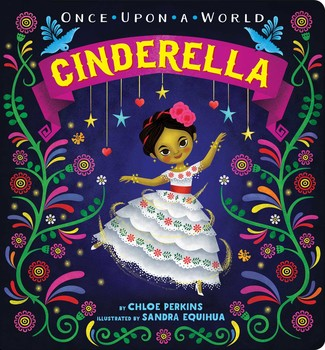
How does this influence this Summer of Faerie project, an exploration of the meaning and magic of fairy tales? For one thing, every tongue, tribe, and nation has legends and stories of wonder and mystery; this investigation will be infinitely richer if it is global. I also found some more recently-published retellings of some of my old favorites with diverse characters. The illustrations are, frankly, adorable:
We need good, beautiful stories that are true; that shape our imaginations and open our eyes. More than that, we need God’s story: His tale of sin and the Fall, evil and injustice, hope and restoration in a Kingdom of light.
If you know of any other beautiful, culturally-diverse fairy tale picture books or fairy tale retellings, could you leave a comment with a picture or a link?
It’s the end of May and beginning of June: one of my favorite times of year, when purple lilacs bloom, the new leaves rustle in warm winds, and it’s hot and bright enough to put on sunscreen and enjoy its cool, thick smell.
These days at the lake have “slid along so quiet and smooth and lovely” (Mark Twain, The Adventures of Huckleberry Finn). I’ve had the undeserved luxury of hiking in the green mountains, paddle boarding during my lunch hour, a few frigid swims, and continuing to research fairy tales and folklore for the Summer of Faerie project. I hope to post more about this later, but for now, I have found a few treasures:
Kate Forrester’s Celtic Tales, a collection of British, Irish, Welsh, and Scottish legends with gorgeous silhouette illustrations
J.R.R. Tolkien’s “Mythopoeia,” a poem I had heard of but not read (and do not fully understand yet)
Angelina Stanford’s fascinating research on how fairy tales retell the Gospel
This week’s Summer of Faerie post is a piece by Matthew Cyr, whose masterful craftsmanship I first encountered in The Cultivating Project (a seasonal online journal). Matthew’s prose reminds me of an enchanted forest, with layers of vivid imagery and root-deep musings that leave me pondering for days. This short-short story explores some of the strangeness and mystery of the world of fairy tales.
Winds of Change
by Matthew Cyr
Eyes closed, head thrown back, Ehelia danced among the maple whirlywings, whirling with them as they fell. Cirigan watched her from where he was seated on a fallen linden trunk, playing a rippling tune on his polished swan’s bone flute. Merriment played on his usually-somber face as he followed Ehelia’s fluid spiraling.
As the breeze quickened and more of the winged seeds took flight, Ehelia swept up those around her and flung them back up to be joined by fresh ones from above. Again she swirled them up as they drifted down to her, and again until the air was awhir with spinning wings that flickered in and out of the dappled sunlight.
In the midst of her laughter something caught at Ehelia’s attention, as if a movement from the corner of her eye or a sound out of place, half-heard. She came to a stop and looked toward the river where it ran unseen behind the yarrow-clad hill.
Cirigan stopped piping. “What is it, Irushili?” He often called her that, Shower of Laughter, instead of her true name, which meant Heartsighted.
Ehelia had no word to give him back, but he followed when she started away toward the river.
Cresting the rise, she could see something heaped down by the water’s edge. She paused, then pushed closer. Cirigan crossed half in front of her and stopped, as did she. It was plainly a body, a figure lying as if spilled from a cup.
“Is that….” he began, without taking his eyes from the thing.
“Yes.” No cloud had passed over, but the sun-washed hilltop seemed to darken for a moment around them.
“I never thought… to find one outside of old tales. An Oulahlain. How came it here? None have ever been near this place. ” His eyes narrowed slightly. “It still lives.”
Ehelia passed him, only half aware that she was drifting closer to the creature again. Cirigan twitched slightly but didn’t move to block her. She looked and listened and smelled, taking in the crude clothing, the mane of tangled hair, the shallow breaths.
Ehelia’s gaze passed on to the angry red scratches on the arms and legs, as if it had been plunging through thorn and thicket. The figure’s feet had scarcely stopped bleeding into the river as it whispered past. The tears in the thing’s coarse-spun garment looked fresh as well, and some of its shabbiness the mark of recent hard use and weather.
“She was chased,” Ehelia said quietly.
“She?”
“She is female… and young, as they would reckon age. Little more than a child of her kind.” Ehelia didn’t try to unravel how she came by this surety, but Cirigan had known her long, and accepted it as truth without need of explanation.
“They’re dangerous at any size or age,” Cirigan said. “They all but destroyed our people. So few of us lived to flee here… and now again our place is found out.”
Ehelia made no reply, but the still air around her felt like a closed door. Cirigan turned to her, finally taking his eyes from the slumped creature to press Ehelia with his gaze.
“Where one comes, others will be drawn. If this one is hunted by its own kind, they that follow will be more and worse. They will bring the cold iron that slays our folk.”
Cirigan glanced back at the fallen thing on the riverbank. “Yet for it to return to its kind now might be more ruinous than if it remain. Could be that it will wander ever lost in the wilds instead…or a sleep be placed on it that it never wake.” He fingered the bone flute.
And now Ehelia turned to him. Her eyes, usually the pale green of the moon-moth’s wing, were like sunlight through young beech leaves. The floating tufts of cottonwood silk above the hillside seemed to slow in the air, and the river to further hush itself.
“None other will find its way here that we do not wish, “she said. “Our folk can keep the border.”
Like heat-shimmer off a sun-baked rock, she could feel the uncertainty rising from him, mingled with shame: none of their people would think to end a living thing before its time, but he had voiced the nearest deed to that.
“We must tell the others,” Cirigan said, his tone more subdued but still stubborn around the edges. “All must decide.”
Ehelia glided even closer to the strange figure till she hovered just over it. Under the burrs and dirt, the sleeper’s hair was ruddy-gold like a kingfisher’s breast, and fell across her eyes, hiding them.
The forest seemed to breathe again. Ehelia had made her decision. The breeze now wafted the cottonwood wisps into the river, which carried them past and on out of sight. A lift of air drew the sleeper’s hair away from her face, revealing a pale brow and lidded eyes. Oulahlain. The Unseeing Ones.
Soft, soft, like the feathered touch of a month’s antennae, Ehelia brushed the stranger’s eyelids with her fingertips. She whispered a few words that hung glistening in the air, like dewdrops on spider threads.
She knew without looking that Cirigan had vanished, as the figure shivered and its eyes sprang open. Eyes little less green than Ehelia’s own. The wakened creature drew back at the sight of her.
“Be at peace, Daughter of Man,” Ehelia said. “You are watched over, and none shall harm you here.”
Matthew Cyr
Once upon a time, Matthew Cyr unearthed an ancient-looking early edition of The Hobbit in his elementary school library and has been wandering in Middle Earth ever since. He has a hobbitish appetite and prefers to keep a good book in one hand and good food in the other. Matthew is fascinated by the power of story to awaken us to redemptive Truth. Several years ago he took up a quest to own and read every book ever published by C.S. Lewis. He shares his home with his wife and daughter, three cats, and a smallish serpent who has thus far never instigated the consumption of prohibited produce. Some of Matthew’s writings can be found at thecultivatingproject.com.
Spring has fallen upon us all at once this week: gray clouds have melted into clear skies, bright green leaves have filled up the woods, and the temperatures jumped from the 50s to the 80s. For me, this Memorial Day weekend is the real beginning of summer, when lawnmowers roar to life, lilacs fill the air with sweetness, and the heat of the sun fills your winter-harrowed soul.
After enjoying several creative collaboration projects with other writers for Thanksgiving and late winter, I wanted to do something fun for this summer. I toyed with a few ideas, but finally settled on a project called Summer of Faerie that was born from my love for fantasy and fairy tales.
For this Summer of Faerie project, I gave some fellow writers from The Habit the following prompt, inviting them to contribute:
Short, prose fairy tale retellings
Faerie/fairy tale-themed poetry
Creative nonfiction about fairy tales in general
I had three suggestions for these works:
Consider focusing on something other than romance.
Consider mythologizing your own region through this work – how can your hometown or city be just as magical as a castle on a mountain or tower in the wilderness?
Consider how we can meditate on the Gospel through thinking about fairy tales. G.K. Chesterton argued that “conditions” of fairy tales teach us a “The Doctrine of Conditional Joy” that parallels the truth of the Bible: “A lamp is lit, and love flies away. A flower is plucked, and human lives are forfeited. An apple is eaten, and the hope of God is gone.” (I’m quoting his weird and wonderful essay, “The Ethics of Elfland,” in his book Orthodoxy.)
Several writer-friends responded to the challenge, and the contributions so far have dazzled me. One of the first contributors was AJ Vanderhorst, who just released an amazing novel, The Mostly Invisible Boy. Enjoy!
Housing Problems
by AJ Vanderhorst
Two parents with too many hobbies. Two parents with four crazy, precocious boys. We overlooked the low sales price. We overlooked a lot. We were a little desperate, well, more than a little. We needed someplace big and HOA-free and durable—and fast.
The missing background didn’t bother me at first and I’m a journalist at the Kansas City Star. At least I used to be. Go on, laugh. These things have a way of creeping up on you.
The house’s previous owner, a genial, raisin-skinned gentleman who gave you the impression of holding nothing back, told us the sprawling four-story place was built in 1915. We believed him. Not that we cared, because the house was gorgeous. Dwell Magazine with vintage swagger. You felt taller just standing in the shade of its colonnades.
By the time I got around to checking, the origin story proved impossible to verify. No records on micro-fiche. No permits at KC Planning & Development—not that they looked very hard. For a while I dug around in the basement, hoping to find old documents in a forgotten corner. Believe me, there were plenty of those.
Forgotten corners, I mean.
When we knocked down nonstructural walls, which happened a couple times as we got moved in, I’d scan each yellowed page of newsprint while the kids sifted dust for arrowheads and shark teeth. Nothing.
Sometimes the clue you need is staring you in the face. In this case, the clue was: nothing. Absolutely nothing.
Plenty of dirt on everyone else though. One rabbit trail through KC history gave me an inside track on the next door neighbors. They’d been accused of witchcraft in 1740, which, reading between the lines, was code for “really big jerks we don’t want at the barbecue.” That family is still here and they’re still obnoxious and I can totally see it.
In 1911 someone’s rooster got blasted with a shotgun and buried in concrete for crowing at 4:59 instead of 5 am. I can’t help feeling neighborhood news has become a lot less interesting.
In the more recent past, I learned how mob “Boss Tom” Pendergast got his claws in the KC Code Department—and made it so crooked that today it still can’t stop citing and snickering long enough to look you in the face.
But I found nothing on our cavernous brick house. Only the growing feeling, as I walked its wide staircases and traced the shadows of its vaulted ceilings, that it wasn’t normal. Which was fine at first. Because downtown thought our family, with its size and irrepressibility, was pretty weird too.
I formed a theory that an exasperated realtor had pulled the 1915 date out of thin air and slapped it on his deed of sale. There were no records of the behemoth’s original use. No tales of mobs it’d outlasted with its quintuple-thick walls. No reason given for its many secret crawl spaces. The deep gouges in its irreplaceable timber floors. Or its poured concrete roof.
At the time, my most intriguing find was a sentence from an 1875 account of Kansas City’s stockyards: “The beef barons shipped their assets on the hoof, and herds of cattle, sheep and pigs overran the West Bottoms daily. This was a stark contrast to the more exotic, costly creatures that were rumored to arrive on the riverfront under cover of darkness.”
The “news” story gave me a prickly feeling behind my eyes. The feeling was hard to pin down as it scurried along my bones. I labeled it curiosity and tried to forget it. Curiosity isn’t usually so nagging. It doesn’t usually cause you to turn on extra lights and stay up late at night.
But the story appeared next to an ad for “MAGIC medicinal TONIC for the FORTIFICATION of boys, girls and calves.” So I felt justified in dismissing it, or trying to. Now, with the benefit of hindsight, I know this was my first mistake. Snobbery toward old news—news I stupidly wrote off because I could associate it with hoaxes.
Before everything happened, people often asked me for advice (free of course) about buying and fixing up old houses. Now, as the sun hangs in the middle of the sky and cocktail hour approaches, I know what I should’ve told them:
“Yeah, remodeling physical history is a nasty beast. But let’s step back. How old is the place? Is it too big? Just…Way. Too. Big? In a strange Hitchcockian way that gnaws at you slowly, offending your sense of proportion? Are there too many fireplaces? Do the quiet, twisting hallways send centipedes down your spine?”
That’s all the free advice I’d offer. But if they could afford to pay me for my time…and my scars…and my abrupt career change, I’d say:
Dragons. It just might be dragons. So point me in their direction and get out of the way.
AJ Vanderhorst
AJ Vanderhorst is a husband, dad and author who loves barbecue, as do all right-thinking people. His relationship with monsters is long and complicated. Visit him online at ajvanderhorst.com.