Two Sides of Yearning: Adventures and Koselig in Norway

The sweetest thing in all my life has been the longing — to reach the Mountain, to find the place where all the beauty came from — 

C.S. Lewis, Till We Have Faces

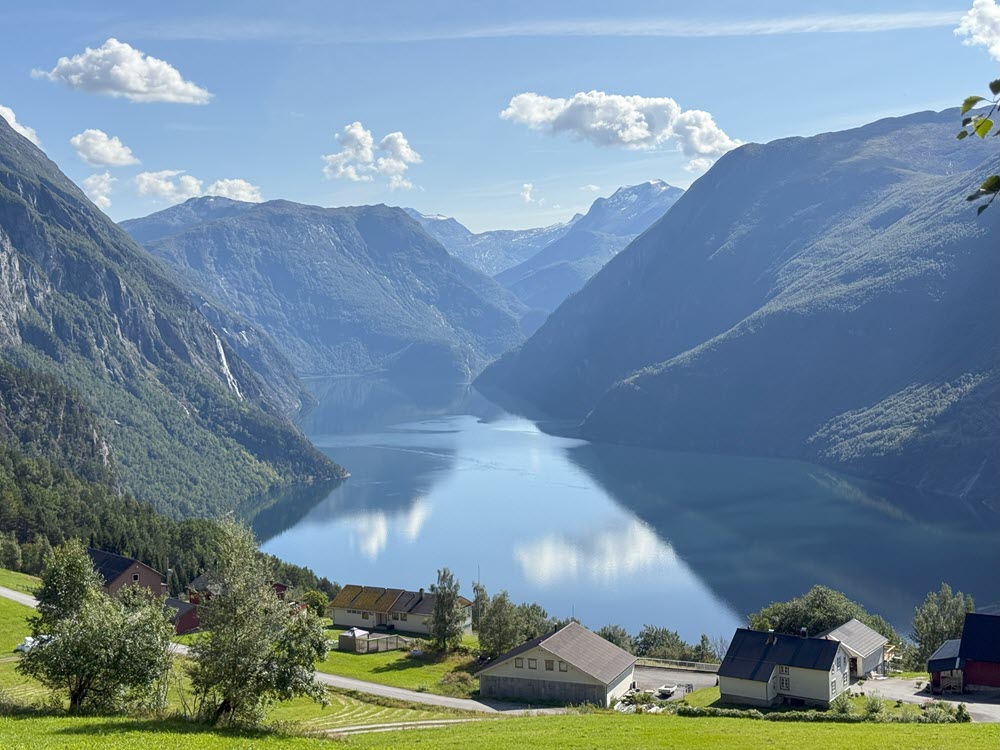
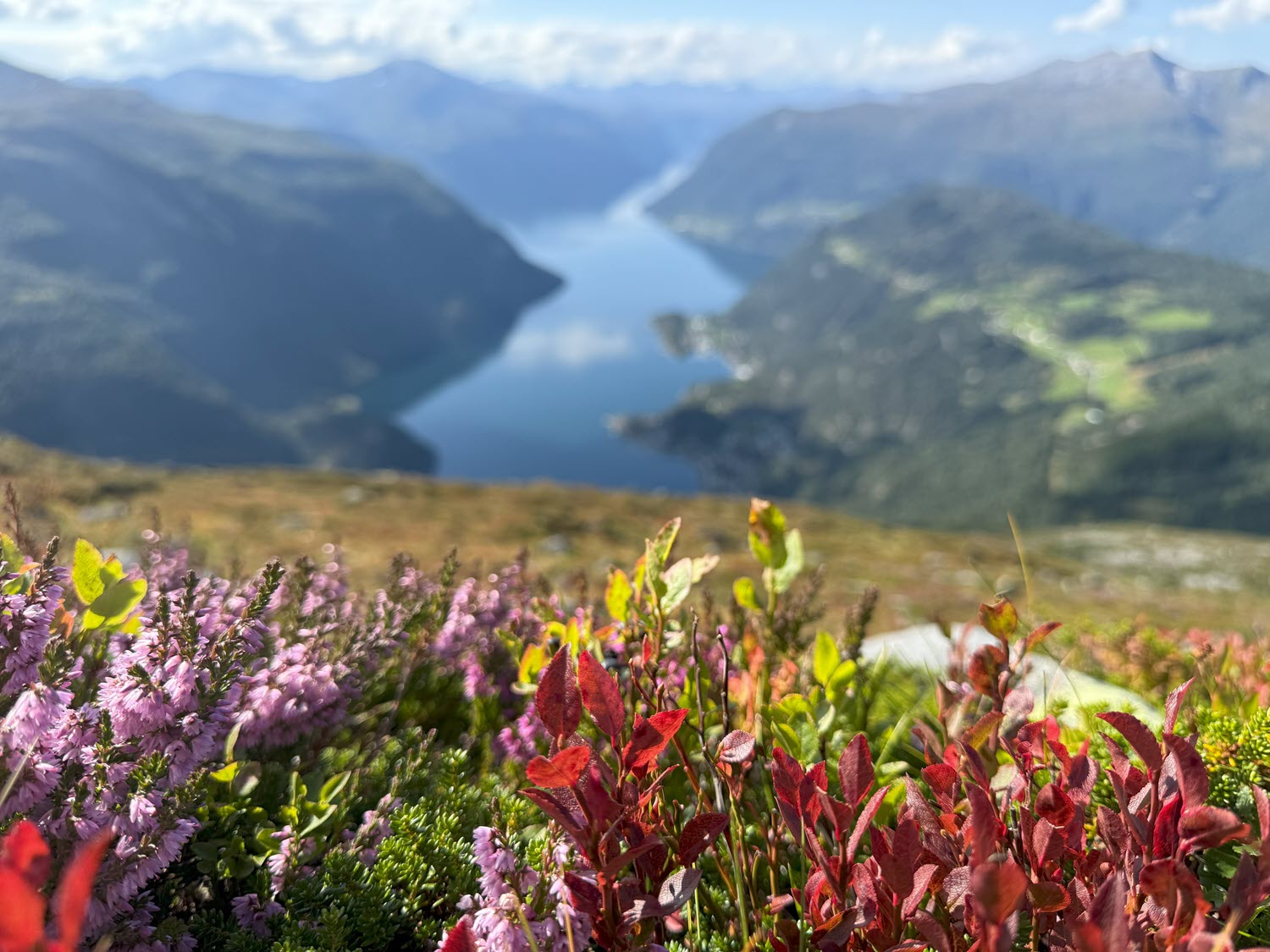
It was exactly the kind of place my childhood self dreamed about: gigantic mountains thick and green with pines, firs, and birches; waterfalls tracing the steep slopes like silver ribbons; glimmering fjords that reflected the bright blue sky and dark blue mountains; white-tailed eagles wheeling through the clouds; cottages and farmhouses clustered in emerald valleys; wandering sheep with bells around their necks; purple heather with leaves burned crimson with autumn. 

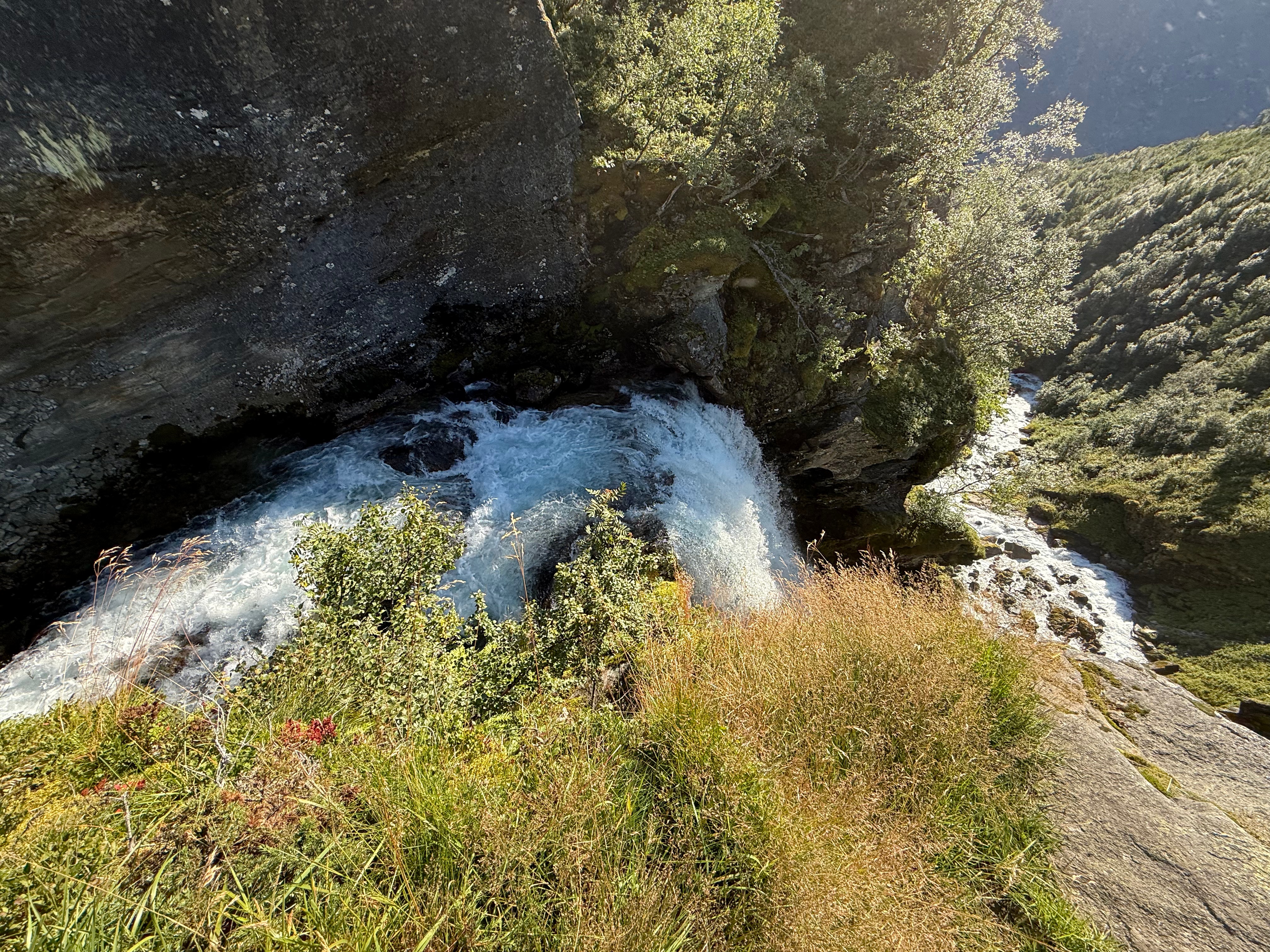
Norway embodied many of my old fantasies. There were cottages tucked high in the hills, lonely and quiet, that my introverted self would have loved to hide in. (My older, more practical self stops to consider things like steep, icy roads in winter, the difficulty of running errands, and the risk of loneliness). We hiked down a path that led behind a roaring waterfall — no treasure-caves hidden behind there, sadly, but it still felt magical.

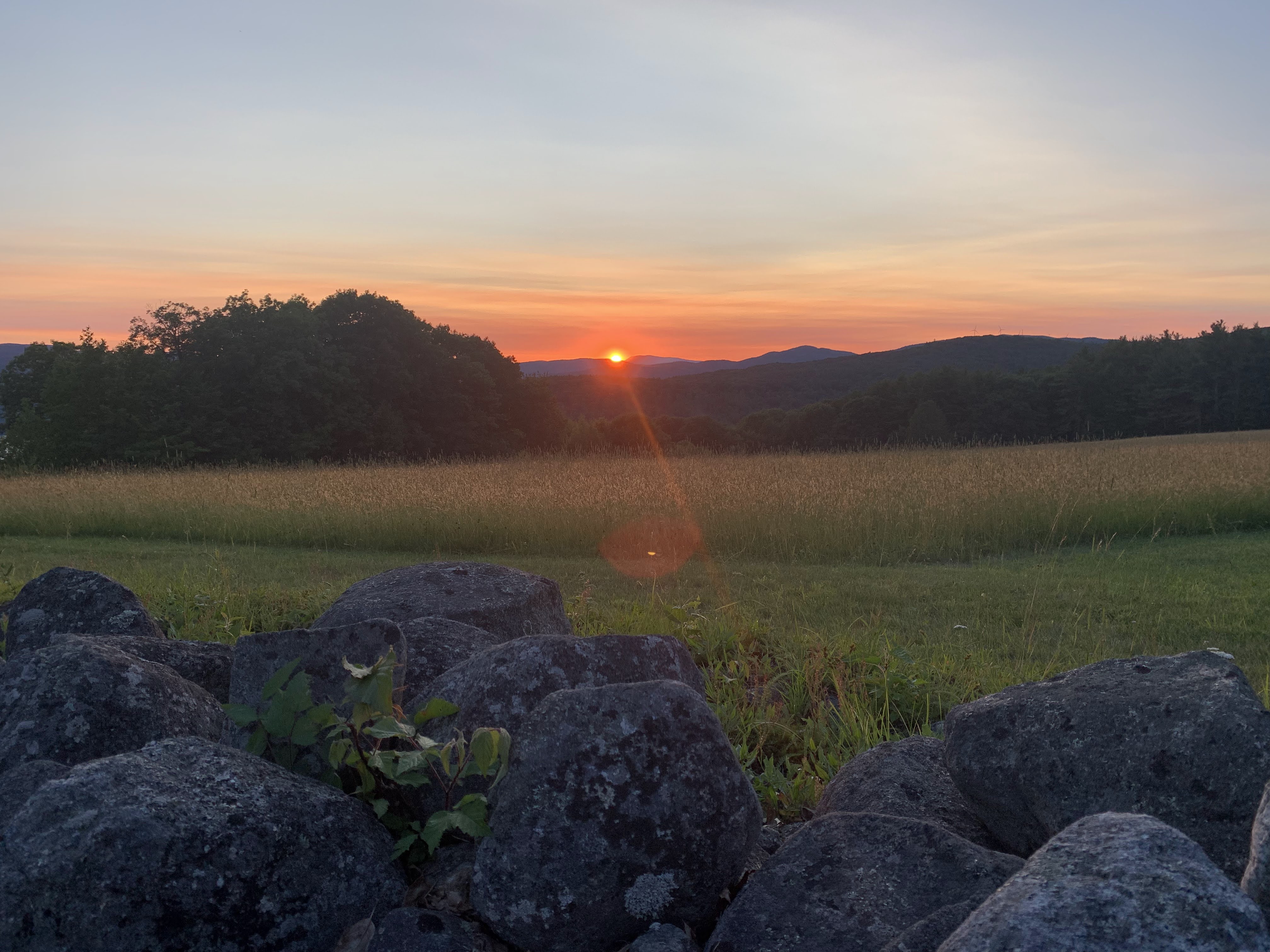
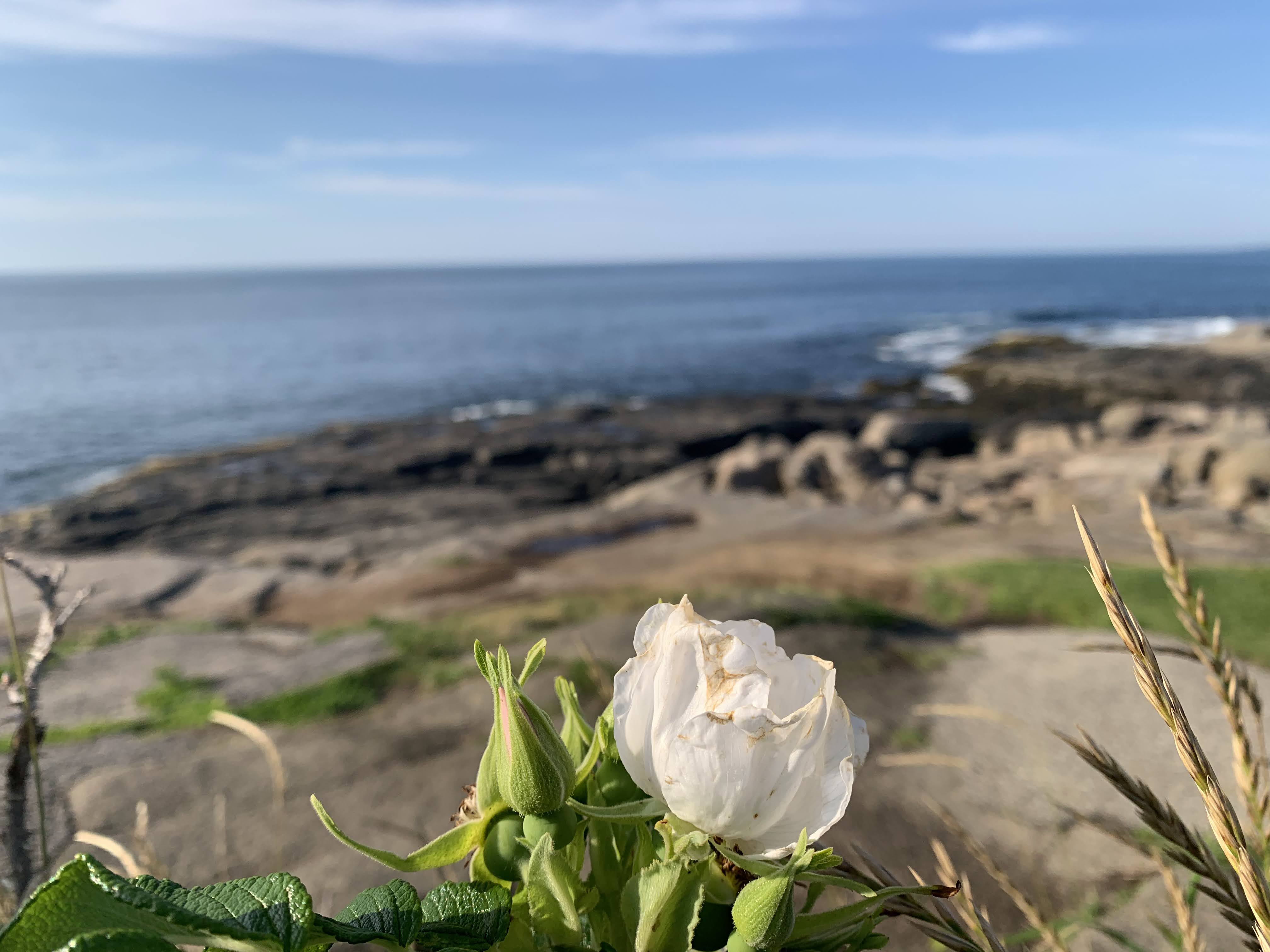
There were sailboats like a flock of white birds on the shimmering fjord at dusk; green islands connected by long bridges and long tunnels; a lighthouse stained blazing red-gold with sunset. The souvenir shops are designed for tourists who love adventure and at least the vague concept of Norse mythology: they all had Viking-themed magnets and mugs, Fair Isle sweaters, and stuffed reindeer, moose, and wolves. On sunny summer days, with the wildflowers in full bloom and winter a thousand miles away, it felt like the perfect place for adventures, quiet, and dreaming. 

But Norway is cozy as well as grand. The untranslatable word “koselig” captures the cozy, safe, familiar, warm, intimate, homey feeling of home gatherings during the long Arctic winters. From the sound of it, koselig means fleece blankets, crackling hearthfires, storytelling, hot drinks, and deep talks that go long past midnight on nights that last longer than days. 

World War II and the Torches in the Night

In Oslo, we visited Norway’s Resistance Museum, which chronicles the dark years of occupation by the Nazis in World War II. While much of the material was in Norwegian, italicized English told the stories of the desperate, doomed struggle in the spring of 1940 to stop the German invasion; the betrayal of Vidkun Quisling, the head of the Norwegian fascist political party who collaborated with the Nazis and received the lasting hatred of his own people; arrests, imprisonment, suppression of free speech, rations, fear, and the horrific seizure of Norway’s small Jewish population; the courage of many who smuggled people to Sweden, hid fugitives in their cellars, printed illegal newspapers to spread truth and hope, and planned dangerous acts of sabotage; and finally, the joy of deliverance. 

So many plans failed. A few succeeded, most famously the sabotage at the heavy water plant that delayed the Nazis’ development of the atomic bomb and changed the course of the war, but many brave, ordinary people were caught. Some were executed. 

The hope of Great Britain stood out like a flame in the night. After so many countries capitulated to fascism, were conquered by overwhelming force, or went neutral, Winston Churchill’s “we will never surrender!” held back the tide for a year and a half alone, until the U.S. joined the war after Pearl Harbor. It was a refuge and training ground for the resistance. Many Norwegians fled to the UK, received training, and returned to try to free their country. 

World War II still feels so close, though not too long from now, it will be a hundred years past. The candle flames that people held up against that great dark, and the mighty faith of people like Corrie ten Boom and Dietrich Bonhoeffer, are startling in their beauty. 

A Yearning for Adventure vs. Koselig

When I started writing on this blog, I named it “stories of yearning” because the word “yearning” best captured that wild, mysterious, wonderful feeling that good books gave me. It’s akin to the feeling that C.S. Lewis called sehnsucht or Joy in his book Surprised by Joy: “an inconsolable longing” that he eventually identified as a sign of our longing for heaven. It’s also similar to the experience that L.M. Montgomery called “the Flash” in her Emily of New Moon series: 

It had always seemed to Emily, ever since she could remember, that she was very, very near to a world of wonderful beauty. Between it and herself hung only a thin curtain; she could never draw the curtain aside—but sometimes, just for a moment, a wind fluttered it and then it was as if she caught a glimpse of the enchanting realm beyond—only a glimpse—and heard a note of unearthly music. — L.M. Montgomery, Emily of New Moon

My sense of yearning isn’t exactly sehnsucht. The sweetness stirred up in me by books like The Castle of Llyr and A Wind in the Door was less painful than what Lewis describes, more excitement than grief. I loved it. It fed my desire to travel and see the world: the castles and cottages of Scotland, the emerald hills of Ireland, and the rainbow of tulips in Amsterdam. 

In the past few years, my yearning for adventure has waned. The turmoil of the pandemic, a few moves, a lot of change, and the practical drudgeries of travel like red-eye flights threatened to swallow up that longing. I tried to summon it back, but as Lewis found when he tried to manufacture sehnsucht, you can’t recall feelings at will.

Now, I’m wondering if that sense of yearning has just become inverted. Part of me still longs for faraway, glamorous places, but now I dream even more about near, safe, cozy, and sheltered spaces: hearthfires, deep friendships, and the stability you only get when you live in a good place for a long time. Instead of adventures like those in Treasure Island or The Silver Chair that take me to wild moors or deserted islands, I’m yearning for koselig. 

Yearning can be an idol, if I let it; something that keeps me discontented and restless. At its best, it’s a hope for the joys beyond this world and the God who made all good things. 

The wondrous thing is that the fulfillment of all longings, to be with the Lord in heaven forever, completes both sides of yearning, the splendid and the snug: 

Psalm 36:5-9 (ESV)
Your steadfast love, O Lord, extends to the heavens,
your faithfulness to the clouds.
6  Your righteousness is like the mountains of God;
your judgments are like the great deep;
man and beast you save, O Lord.
7  How precious is your steadfast love, O God!
The children of mankind take refuge in the shadow of your wings.
8  They feast on the abundance of your house,
and you give them drink from the river of your delights.
9  For with you is the fountain of life;
in your light do we see light.

I love how this psalm captures it all: the vastness of God’s goodness, higher than mountains and deeper than the sea; the sweetness of His hospitality, inviting us into His home, becoming our true home; the closeness we can have with him, feasting from His abundance, drinking from the river of delights, and seeing light in His light. 

Adventure; quiet; glory; rest; faraway; home; mighty mountains; safe harbors; spectacular sunsets; fragile wildflowers; the Lord God, Father and Maker, fulfills all these desires more beautifully than we can imagine. 

New Books, Beowulf, Habakkuk, Narnia, and a Question: How Vulnerable Should You Be on the Internet?

Sunset through trees in winter


This winter was full of wonders: long, dark nights lit by Orion and the rest of the heavenly host around a silver moon; days of cold so bitter it felt like my finger bones were freezing; deep snow that froze into crunchy drifts; cancelled church services; drives in the snow; a vigil that ended in a beloved family member sailing to heaven. The days have rushed by like pine trees seen through the window of a moving train, a blur of living, changing detail.

I’ve wanted to update this blog for a while, but I promised myself when I started blog-writing in 2017 that I would only post if I had something worthwhile to offer to readers. Here’s an attempt at an offering: a look at some new books I’ve found, workshops and courses I’ve enjoyed, and a question that’s been burning in me for months.

New Books to Treasure

For the last 12 months, I’ve struggled to find good new books, but a few treasures stand out:

  • Christina Baehr’s Secrets of Ormdale series — A brand-new, five-book series set in late Victorian England — with an actually likable Christian heroine and dragons? I was so afraid to have hope for this series, but it was marvelous. Christian Bhaer knows her stuff: Scripture, lore, historical and cultural detail history, Anglo-Saxon poetry, literature, and the best slow-burn romance I’ve read in a while are shining threads in this series’s fantastic tapestry.
  • J.A. Myrhe’s Rwendigo Tales — Set in central Africa, these books tell the story of four physical and spiritual quests with beautiful prose, exciting drama, and deeply relatable characters. The thoughtful, image-rich, matter-of-fact style reminds me of Alan Patton’s Cry the Beloved Country; the mythical and spiritual elements remind me of C.S. Lewis’s Cosmic Trilogy.
  • Diana Glyer’s The Company They Keep — I’ve been meaning to read this one for ages. In beautiful language and lots of deep research, Glyer studies that group of rare imaginations that included C.S. Lewis and J.R.R. Tolkien. She argues that, contrary to what most scholars have argued over the decades, the Inklings did influence each other by resonating, opposing, editing, collaborating, and referring to each other in their creative works. Highly recommended for Inklings fans and artists who long for community.
  • James M. Hamilton Jr.’s Typology-Understanding the Bible’s Promise-Shaped Patterns: How Old Testament Expectations are Fulfilled in Christ — I picked this book up on Audible after searching for books on typology, a topic I’ve been curious about for a while. I loved it. It offers a clear and careful examination of the images and structures that Biblical authors use to point to Christ as the king, suffering servant, redeemer of captives, and divine bridegroom. It’s accessible for both scholars and laypeople; joyfully and reverently written; full of brilliant insights about the patterns of Scripture. My favorite takeaway is Hamilton’s argument that the types of Scripture are 1) definitely intended by each Biblical author (not an accident or readers’ construction); and 2) historically grounded (more than just artistic collaboration by the authors).

Beowulf, the Anglo-Saxons, and Learning to Love Something

I began this year with something appropriately wintry and mysterious: a “How to Read Beowulf” course from the House of Humane letters. I’m more of a fairy tale, roses-and-summer reader than a fan of the grim, otherworldy, silvery beauty of Anglo-Saxon literature, but I know C.S. Lewis and J.R.R. Tolkien loved those tales, so I wanted to see what they saw.

The course was profound and thought-provoking in ways I didn’t expect. Angelina Stanford dived into:

  • The ruinous, twilight atmosphere of the Anglo-Saxon period
  • The violence of a culture that knew only revenge-killings and ransoms as means of justice
  • The nature of the monsters depicted
  • The very meaning and value of words

While I’m not sure I agree with every point made, the course left me with much to ponder and an ache to know more. I found myself going back to the very foundations of what a story is, how to read, and how to interpret literature – digging up my Literary Criticism and Theory notes from college, listening to more lectures on the Anglo-Saxon period, and wishing I had Tolkien’s gift for language. I’m newly convinced how much words matter, how every word and name is a story, and how Christ is the sun of righteousness who ends our dark night.

Habakkuk: The Word from the Watchtower

In February, I had the honor of going to a Charles Simeon Trust women’s workshop in Cambridge, MA. The Charles Simeon Trust Society trains Bible preachers and teachers in deep, thoughtful exegesis, theological reflection, and application. This workshop for women was as academically rigorous as any graduate seminar I experienced while also warmly encouraging. This workshop focused on practicing teaching prophetic literature with the book of Habakkuk.

Habakkuk is hard. The Charles Simeon Trust method begins with establishing the context and structure of a particular passage, and Habakkuk’s flow of thought is initially confusing. But it’s beautiful. Habakkuk’s earnest cry to the Lord, and the Lord’s sovereign and gracious response, are deeply comforting. The hymn of praise at the end is one I chose as an anthem for the past years, a song for troubled times.

This workshop showed me how clear, simple, and clean good Bible teaching should be. In my few attempts at teaching, I’ve often tried to dump all my insights, observations, musings, meditations, questions, and research on my poor helpless audience. Instead, the workshop taught me to distill my work into a simple main point that people will remember. For example, my original main point for a practice session on Habakkuk 3:1-19 was Christ is coming to administer justice and rescue His people, no matter how barren circumstances become. After workshopping this part of my presentation with my small group, I managed to streamline it down to Rejoice in Christ’s coming rescue even in barren times — turning an overflowing sentence into a comforting exhortation.

“Writing with The Horse and His Boy”: Rediscovering Old Loves

Yes, my life is merely a progression from one online literary course to another. This one was particularly fun because it was run by Jonathan Rogers, my writing teacher and the proprietor of the Habit writing community, which has been a source of delight, fellowship, encouragement, thought-provoking discussion, and community.
My creative inspiration, which has been fairly dry since January 2023, started to run again in a few of the writing exercises we did together. I remembered how much I love The Horse and His Boy: the beautiful, crisp, clear settings, Shasta’s intensely relatable awkwardness, self-pity, and courage; Bree’s pompous dignity; Aravis’s pride and honor; and the hilarious addresses to the reader. I was newly encouraged to follow tried-and-true writing wisdom like:

  • Look through your characters’ eyes and develop them from the inside, by what they notice and how they react
  • Stick with concrete details
  • Remember that each conversation has layers of dialogue: informational, atmospheric, relational, and more

If you are a creative writer curious about the intersection of theology and writing, longing for some practical tips for craftsmanship, or looking for community, please look out for the next Habit course.

A Question of Authenticity: How Vulnerable Should You Be on the Internet?

This question has been brewing in me for years: how vulnerable should you be on the internet?

I think this question started when I began blog-writing after college. I was inspired by the beautifully-crafted blogs and creative fiction of writers from places like the Rabbit Room or podcasts by artists, entrepreneurs, and other content creators: storytellers who captured the music of their lives in relatable but profound prose. Following their example, I translated my own life into words. I wrote vivid descriptions of scenery and seasonal changes, books I read, conferences I went to, meditations from Scripture, weaving them all into a few themes that culminated at the end of each blog post. My year in Scotland yielded a lot of fruitful experiences I could glamorize: gorgeous hikes in the countryside, fascinating lectures and reading assignments, and plenty of academic research to give credibility and substance to my musings on life, literature, and faith.

The years since returning to America, however, have not been as easy to write about. I’ve gone through a lot of change, including a few moves. Many of the mini-seasons in this long season have not been easy to write about — not for particularly interesting reasons, but because they included plenty of isolation, boredom, and loneliness, which don’t make for great writing material.

For the past few months, reflecting on my original goals and life since graduate school, I’ve been wondering: how much is it healthy, good, or noble to be vulnerable on the internet? This question multiplies into more:

  • How do you know when to share a personal story and when to keep it for your inner circle?
  • How long should you wait to write about an experience?
  • How do you respect others’ privacy when you share stories in which they’ve participated?
  • How many details should you share about a painful or difficult experience?
  • Should you write about unresolved conflict or past hurts? If so, how?
  • How hard should you try to end your personal story, especially a difficult one, on a certain emotional note – especially if you’re not sure that chapter of your life is finished?

Recently, I began pondering the question of Internet/public vulnerability in general after attending a conference in which a successful author, blogger, and podcast guest gave the keynote talk. He shared some deeply personal stories as part of his message: horrifying family tragedies, personal doubt, career struggles, unexpected triumphs, and new directions he’s taken. I’ve heard enough speakers by now to recognize some of the techniques he used, such as careful repetition, including concrete detail, and framing the whole talk with a quest structure. I’ve sat in lectures and talks with speakers who moved the audience to murmurs of awe, even to tears. Unfortunately, this one did not. Something about the speaker’s attitude, the personal details he revealed and concealed, the vaguely spiritual but self-centered ethic he preached, and the crescendo of his talk left me feeling emotionally manipulated — and awkwardly sitting during the applause as many of those around me rose to a standing ovation. I felt that the speaker was using grief and pain from his past to paint himself as both a victim and a victor and tell me how to run my life.

While this speaker was talking to a live audience, not on the Internet, his talk pushed me to a preliminary conclusion. How vulnerable should you be? is a wisdom issue, not a yes/no or fill-in-the-blank question. I walked away convinced that yes, there are good reasons and good ways to do so as well as bad ones. But how do you discern the right reasons and the right ways to share your story?

It’s as difficult a question as the one that haunted me in the post-college years: how do you live a good life? How should an artist use the raw material of her life, especially intimate things like family memories and struggles, in her art? Or should she do so at all?

Vulnerability and Influencer culture

On the internet, on social media, vulnerability is powerful. Someone who can share intimate, specific details of their days, families, work, hobbies, emotions, struggles, trauma, and celebrations can draw a following. I know of influencers who I deeply respect and have taught me wonderful things, but I’m becoming uncomfortable with how vulnerability equals money in the transaction of paid platforms, book deals, and commission sales.

Of course, people who work hard to create beautiful and useful things should be paid for their work. But I am getting concerned about a particular pattern: someone shares intimate details about their life consistently enough that their followers feel like they are personal friends – and, also, students and disciples. An influencer can become a personality who coaches followers on any topic: faith, mental health, life goals, relationship difficulties. One influencer I used to follow on Instagram went from giving life-advice and career coaching to selling a product by commission. She introduced a major world problem and talked extensively about it, then encouraged her followers that that product was a solution.

I know a few influencers who do a great job of cultivating real relationships in the online communities they’ve set up, and encouraging those followers to build real relationships with each other. My concern is when the relationship remains one-sided, digital, and transactional: the influencer offers vulnerable life details, and the follower reciprocates with likes, shares, attention, promotion, and money. Vulnerability sells.

Vulnerability, authenticity, truth: entering other territories

That keynote speech at the conference was just one thing that triggered this question in my mind. Another catalyst was the brief glance I took of a book of publishing advice for nonfiction writers. The book advised writers to be wholly “vulnerable” with their stories: write in blunt detail about humiliations, failures, scars, traumatic experiences, and deepest secrets. The book is a bestseller, and the author is right. Readers love intimate details, especially when they can get them without sharing their own secrets. But that advice makes my introverted self want to head for the hills.

I’m a hypocrite in this area. I love it when other writers share their intimate stories so I can read them from the comfort of anonymity. I crave the juicy details of their romances, either breakups and happy endings; parenting anecdotes; college tales; childhood memories; vacation stories; secrets; and I love not having to share any of mine in return. But vulnerability creates the illusion of friendship and intimacy without the full reality, and I’m afraid it just feeds the loneliness of our culture.

How vulnerable should you be on the internet? After all this thought, I finally looked up the definition. According to Merriam Webster, to be “vulnerable” is to be “capable of being physically or emotionally wounded,” or “open to attack or damage : assailable.” Ouch. But it is true. Sharing childhood memories, family stories, thoughts, and dreams on the Internet does leave you open to attack: mockery, scorn, criticism, and getting cancelled.

So why share your story at all?

I think back to some of the personal essays that have touched me deeply:

  • E.B. White’s “Ring of Time” and “Once More to the Lake” from his essay collection — achingly beautiful reflections of memory, time, and immortality, grounded in rich detail
  • Lanier Ivester’s “Seeds of Love” — an exquisite mingling of personal loss and eternal hope
  • Jennifer Trafton’s “This is For All the Lonely Writers” — a very relatable, exquisitely crafted meditation on loneliness, creativity, and community
  • Lancia Smith’s “Yes, Virginia, I Still Believe in Jolly Old Santa Claus” — a thought-provoking, joyfully reverent study of how the Christmas icon figures the tender love of God

In A Discovery of Poetry, Frances Mayes begins by exploring the purpose and meaning of poetry. “All these images [from poems] form a quick glimpse of how those mysterious others behind the glass live their lives. Poems give you the lives of others and then circle in on your own inner world . . . Like play, poetry lets us enter other territories” (xiii-xv, emphasis mine).

Well-written creative nonfiction and personal storytelling does the same, as do fictional stories. They give us a glimpse of another’s life, let us enter their territory. Done well, it’s invitational, relational, encouraging, challenging, comforting, and thought-provoking.

How vulnerable should you be on the internet? How vulnerable should you be in any form of writing? I think now of David, Asaph, Moses, and others pouring out their hearts in the Psalms; Nehemiah penning his cry to the Lord when he heard Jerusalem was in ruins; Paul writing of his past sins and current persecutions to the beloved members of the early church. Yes, for the right reasons and in the right way, opening yourself up to be wounded is a gift to your audience. Not to build a following of people who feed on your life and your advice, but to welcome them into following the Lord, the One of all creation who has the right and the goodness to influence us ultimately.

Some tentative personal resolutions

Public vulnerability is a wisdom issue, something that requires individual reflection and discernment. Done well, it’s a beautiful gift to readers; done poorly, and you really have opened yourself up to be wounded or to wound your readers. As I ponder this, here are a couple of principles I’m forming for my own writing:

  • Let Scripture guide you into making God the center. Use my writing to recognize the work of the Lord – not by slapping a Bible verse or pious-sounding conclusion onto every piece, but trusting that if I pay attention to detail, take the time to ponder an experience, and pray over it, I will find its intersection with eternal truth. I’ve seen this modeled brilliantly by the writers at The Cultivating Project, who weave Biblical insights, hymns, and other art into personal stories. A good artist can turn the telos or purpose of a piece into hope-through-lament, courage-through-darkness, joy-through-sorrow, and faith-through suffering without minimizing how hard life is.
  • Tell family and friends first. This is an old rule I made for myself, and I think I’ve managed to follow it. If I have exciting news in particular, I try to let my closest circles know first, and they get the real scoop on the most interesting details.
  • If it’s a hard subject, pray and wait before sharing. I don’t think I need a waiting period to share a fun hiking story or list of good books I’ve read recently, but if I choose to share something painful or complicated, I want to make sure I have a good reason for doing so.
  • Err on the side of others’ privacy. I never want to burn a relationship by turning a painful or private subject into a piece of content. Any money I might get from a commissioned piece, any number of likes, follows, or shares, is not worth hurting someone I love.

What do you think about vulnerability on the Internet? Where have you seen it modeled well or poorly? And what are some of your favorite examples of personal stories told well?
Scarlet, Sleigh, and Gift: How the Story of Santa Claus Reflects the Gospel

Christmas lights in the snow

I love this time of year: twinkling lights and glittering stars against the early dark; crimson and gold entwined in the rich green of wreaths and trees; the world-silencing wonder of the first snow; frost-flowers on window panes; the merriment that feels age-old and ever-new. This time of year, the story of the Myth-Become-Fact of Jesus Christ, the child of prophecy, reimposes its majesty, mystery, and closeness to our waking lives.

As I said in my last blog post, I really miss putting together “Leaf by Lantern” podcast episodes. I still don’t have the time to record, edit, and publish the audio, but I’ll keep writing out prose episodes as long as I have fairy tales and folktales to talk about.

For this episode/essay, I looked through a few fairy tales that could fit into a Christmas theme until I realized that there is a fascinating folk tale right at my fingertips to explore: Santa Claus. It is deeply sad that many have tried to replace the wondrous Incarnation, in all its holiness and mercy, with the story of a jolly, plump man who delivers presents — like replacing the sun with a cheap flashlight. But as I think about the tradition of Santa Claus, specifically the American version of the story I grew up hearing, I realize that it’s one of the better-known folktales of our age. Though it does have aspects of legend (history + fiction) going back to St. Nicholas of Myrna, who was a historical figure, elements like the North Pole, the reindeer, and the toyshop with elf employees have been added in and retold dozens of times. The “folk,” the common people, have made it our own. And like all good folktales, it points to the gospel.

Literary and film retellings of the folktale range from mythic and enchanting, like The Legend of Holly Claus and The Polar Express, to goofy, like Elf, Klaus, and The Santa Clause, to sweet, like the Prancer movies and Rudolph the Red-Nosed Reindeer, to tongue-in-cheek, like Red One of this year. Storytellers draw out the threads they like and reweave and reinterpret them: giving Santa various elaborate backstories, explaining the origins of the reindeer and North Pole workshop with greater detail, and incorporating other characters that the audience can relate to. I wrote a Santa retelling myself a few years ago, one of my favorite of my own stories, “Flight of the Gift-Giver.”

So I’ll look at the legend/folktale of Santa Claus in the same way I’ve looked at various fairy tales and ask:

  • How do the images in this story reflect the gospel?
  • How would a Christian artist who crafts a retelling of the Santa folktale do so in the light of Scripture, using the Bible as the reference for truth and beauty?

I’ll look at the images of Santa himself, the sleigh, and the naught vs. nice list.

Santa: Man and Myth

Most of the Santa figures I’ve seen in retellings portray him as jolly and silly, a good-hearted buffoon. He’s grandfatherly and more regal in Miracle on Thirty-Fourth Street and something more of a warrior in Rise of the Guardians. Michael Ward’s book Planet Narnia, which traces medieval planetary symbolism in C.S. Lewis’s Chronicles of Narnia, helped me to understand the Father Christmas who appears to the four children as a jovial figure, embodying the kingliness, magnanimity, wisdom, benevolent sovereignty, and peaceful prosperity of the medieval idea of Jove.

I see several Biblical images to work with in any retelling’s version of Santa:

  • The color red as luxury — The tabernacle and temple were full of “fine twined linen and blue and purple and scarlet yarns” (see Exodus 26:1 and many other verses in Exodus) and the wife of noble character of Proverbs 31 is “not afraid of snow for her household, for all her household are clothed in scarlet.” Scarlet or purple is a royal color, luxurious and lovely. Whether your Santa is stately and majestic, a kindly grandfather, a holy fool, or a more complex character with secrets and struggles of his own, I would not be afraid to lean into that regal aspect. He’s kingly, with authority over some sphere.
  • The color red as a representation of sin — “Come now, let us reason together, says the LORD: though your sins are like scarlet, they shall be as white as snow; though they are red like crimson, they shall become like wool.” (Isaiah 1:18, ESV). Red is the color of blood; the blood of bulls and goats atoning for Israel’s sin over and over, never enough, and the blood of the Lord Jesus shed once and for all as the Lamb of God. The paradox of a color that represents sin and the deliverance from sin is fascinating. How might your Santa represent the paradox of sin and redemption? How could he reflect the Messiah who was made to “be sin who knew no sin, so that in him we might become the righteousness of God” (2 Corinthians 5:21)?
  • Santa’s entry through the chimney — I don’t want to overanalyze this image (it may partly be functional — just a way of explaining to children why Santa doesn’t need a housekey) but I find it intriguing that Santa enters from above through an avenue normally reserved for fire. It reminds me of the Lord sending down fire in judgement on Sodom and Gomorrah in Genesis 19; in proof of His sovereignty in 1 Kings 18; in an outpouring of the Spirit with wind and tongues of fire at Pentecost in Acts 2. The fact that Santa comes with gifts instead of judgment reminds me of Christ who came to offer sinners a hope undeserved. How might the chimney/fire from above/hearthfire factor into your Santa’s abilities and character?
  • Santa as undying — Santa is an old man but immortal. He represents an age-old hope that never dies. While his joviality is, well, Jovial (again, the medieval idea of Jove is of a kingly, generous, serene figure), I also see a possible link to Saturn or Father Time. He serves as a foil for Christ, who came as a child and will never age or die. How would ageless age affect the character of your Santa?

Whether you’re drawn to the goofy or the phantasmagorical in developing your Santa, I would argue one last thing: the imagery of the Santa tale is good. I don’t see a good case for making him a villain. I might also suggest exploring Santa’s role as a guide between the ordinary and magical, like Mary Poppins or Peter Pan: someone who knows the deep secrets of the world and helps others on their quests, their journeys towards happy endings.

The Sleigh and Divine Intervention

The image of Santa’s sleigh pulled by flying reindeer past a gigantic moon is iconic. The sleigh’s passage from sky to individual homes links it with many passages about heaven meeting earth, the divine intervening in human history, the Most High reaching down to our humble estate to rescue us. The image of the flying sleigh coming at night reflects the image of Christ coming to us as light in our darkness, life to our shadow-lives of spiritual death.

But Santa’s flying sleigh intersects beautifully with another of my favorite Biblical images: the “chariots of fire and horses of fire” that come for Elijah the prophet when he “went up by a whirlwind into heaven”at the end of his life (2 Kings 2:9-12). Since reading this story in nightly Bible story time when I was little, I have a fierce, aching jealousy of Elijah’s flight from earth.

Thus the Bible has two glorious images you could use to beautify a Santa Claus retelling:

  • Divine intervention — Light in darkness; a redeemer who “descended”; a healer who comes to a land of terrible sickness; the Gospel of John, Paul’s letters, and many other passages of Scripture give soul-stirring metaphors to teach us what Christ did by coming to us. The more you can emphasize the sleigh as representing heaven’s reaching down to earth — joy in the midst of despair, the healing of a sickness, the lifting of a curse, the fall of an evil dominion, delight that overcomes despair — the closer you can bring your retelling to the mystery of the gospel.
  • Wind and fire — If you really want to dress up Santa’s sleigh, the fiery chariot and whirlwind of 2 Kings 2 could set your story ablaze. The image of fire in the cold of winter (apologies to anyone in the southern hemisphere who celebrates a warm Christmas) is also a beautiful one. The image of Elijah’s fiery chariot also connects with Santa’s entrance through the chimney . . . it’s intriguing how much fire lies hidden in this story’s images.

The Naughty vs. Nice Lists: The Law and Grace

At first glance, the naughty vs. nice list of the Santa folktale is nothing but the old, cheap trick of scaring children into good behavior. At second glance, it’s even worse: pharisaical works-righteousness and legalism, the lie that you can save yourself by Following the Rules. Spiritually, we are all much worse than naughty and deserve much worse than lumps of coal; that’s why we need grace.

And yet . . . as I look at it, the naughty vs. nice list and threat of coal vs. gifts could actually match up to the gospel in a different way. I’m reminded of Paul’s words about the Old Testament law: the law was like a guardian for the people of Israel (see Galatians 3). It was good in that it taught them the difference between sin and righteousness, holiness and defilement. The problem was that they could not keep the law on their own. They failed again and again by worshipping idols, intermarrying with other nations, or even with disobedient hearts as they keep the outward tenets of the law (see the entire Old Testament, or for a good picture of the situation, Isaiah 1). So the naughty vs. nice list may actually have that truth in it, the difference between right and wrong. And apart from Christ, we are all in the wrong.

The threat of getting a lump of coal instead of a gift has some interesting implications as well. In Isaiah 6, the prophet Isaiah is dismayed to find that he, a sinful man, has seen the Lord in his temple, attended by seraphs. In response, one of the seraphs brings him a flaming coal and touches it to his lips. “And he touched my mouth and said: ‘Behold, this has touched your lips; your guilt is taken away, and your sin atoned for’” (Isaiah 6:7, ESV). In a Santa retelling, an artist could take the disappointing gift of coal and turn it into something ironically wonderful and mysterious: something that purifies, restores, and redeems.

What about good gifts that are alternatives to coal? I don’t feel that plastic toys and mindless entertainment make the best symbol for the awesome gift of eternal oneness with the Living God. But as I thought about it, the idea of a child’s toy as something meant simply for joy and wonder, not a tool for labor or education, reflects the gratuitous, abundant richness of God’s goodness. If coal could be something glorious, what would a more direct symbol of divine grace be? I had a couple of ideas:

  • A gold ring — Gold as a nod to the golden streets of heaven; a ring as a sign of the covenant between Christ and His Bride, the Church
  • A key — Something that would open doors to adventure and mystery in your story, and also reflect Christ’s possession of the key of David (Revelation 3:7)
  • A dove — A living creature who acts as a guide, counselor, comforter, or helper, as a nod to the Holy Spirit
  • A music box or musical instrument — Something of delicate workmanship that makes music, an outlet of praise and awe

Hope everyone has a Merry Christmas! May good stories, feasting, and fellowship renew our wonder in the love of the Mighty King who clothes us in righteousness, washes us white as snow, descended into our darkness, and gives us the gift of Himself.

Lazy Late Summer

Summer days were just a magazine, a magazine, a magazine . . . 
Cutting grass for gasoline
For gasoline, so I can see ya soon . . .
“Dandelion Wine” by Gregory Alan Isakov

Gregory Alan Isakov is one of the best living poets I know of. His metaphors are rich, sweet delights that summon moods and moments, dreams and memories like spells. In “Dandelion Wine,” he captures the lazy, wistful, sultry days of late summer in that lovely image of dandelion wine – the golden flower-weeds that dot the green grass, the sleepy pleasure of drinking in the sun and the quiet of long days. 

It’s getting towards late summer now. Air that was heavy with humidity is now soft with cool breezes; the oaks bear little clusters of acorns turning from green to brown; dainty Queen Anne’s lace and radiant goldenrod are flowering in the ditches; the whir of cicadas and cooing of mourning doves sounds dreamy and content. After a tumultuous year, I’ve found that returning to things I love like Isakov’s music, T.S. Eliot’s Four Quartets, Lewis’s Chronicles of Narnia, and the Nancy Drew books is deeply comforting. It has been harder lately to feel that “yearning” that I made the theme of this blog — that deep, sweet longing for the presence of God — but good old stories, songs, and poems stir up the memory of it. Best of all are Psalms like Psalm 34 in its tenderness and Psalm 36 in its joyful wonder; I find the thirsty roots of my soul stretching into those passages.

Psalm 36:7-9 — 
7  How precious is your steadfast love, O God!
The children of mankind take refuge in the shadow of your wings.
8  They feast on the abundance of your house,
and you give them drink from the river of your delights.
9  For with you is the fountain of life;
in your light do we see light.

After spending last summer pouring over fairy tales for the Leaf by Lantern podcast, I decided to mix things up this summer and try to write a historical fiction/mystery set in New England in the 1950s. It’s definitely challenged my research skills. I want to summon the music of the past in minute detail: the use of suntan lotion vs. sunscreen, for example, the swish of circle skirts, the necessity of starching and ironing everything, the shadow of the Korean War, and the use of telegrams/radio/letters for communicating and spreading news. Great historical fiction authors like Eloise Jarvis McGraw and Rosemary Sutcliff managed to capture the smells, tastes, sounds, and textures of long ago in gorgeous detail, and I want to imitate them, but it takes a lot of digging to get there.

Wanderings in Faerie

But I still want some fantasy in my life. I finished Junius Johnson’s “Summer of Fairies” course with a rereading of George MacDonald’s Phantastes – a weird, wonderful song of Romanticism and fairy tale beautified with a Scriptural vision of redemption. We’ve explored the nature and characteristics of Faerie, Fairy Land, Elfland, or whatever others call the fairy world and what makes it fascinating and dangerous. 

One thing that’s surprised me in this course is realizing that the land of Faerie is perilous for the reader as well as the character. In a world where normal rules don’t apply and new, terrifying ones spring up, like “don’t tell anyone your true name” or “don’t eat any of the food or you’ll get stuck here,” you want a loving, wise guide like Tolkien, MacDonald, or Lewis with you. Tolkien, MacDonald, Lewis, and storytellers like them witness to the Lord who is Good Shepherd. He sees every lonely wanderer, every lost soul who gets caught in a trap of their own making, and offers a safe haven of forgiveness. I read the ebook version of Tolkien’s short story “Smith of Wooten Major” with Pauline Baynes’s bewitching illustrations, and that sense of sovereign mercy even in a perilous realm is so beautiful:

But he [the main character, Smith] had business of its own kind in Faery, and he was welcome there; for the star shone bright on his brow, and he was as safe as a mortal can be in that perilous country. The Lesser Evils avoided the star, and from the Greater Evils he was guarded.

“Smith of Wooten Major” by J.R.R. Tolkien

Authors who don’t have that Scriptural view of reality and shepherdly love for their readers can lead you down some dark roads. Faerie is, by nature, inexplicable and unmappable, but heaven’s love and justice are just as sovereign there as everywhere else.  

Saturnine Stories in the Light of Scripture

I’ve thought more about stories that lead their audiences down dark roads from a recent conversation with my dad. He asked me if the newish Marvel show, “Secret Invasion,” featuring an older Nick Fury battling a new threat, was any good. I had tried it out a few months before and didn’t like it. 

“It’s kind of sad,” I explained. “Nick Fury is older and keeps making mistakes, and everyone keeps reminding him that he’s not as strong and smart as when he was young, and some really lovable characters die, and it just feels like all the good times are gone and there’s nothing left. I don’t like those kinds of stories.” 

My dad thought for a moment. “Was it saturnine?” he asked. 

I gaped at him. We’d both read Michael Ward’s Planet Narnia years before; my dad was referencing Ward’s argument that the seven books of Lewis’s series are written in the spirit of the seven medieval planets. Each Narnia book has the tone, atmosphere, and resonance of each planet. It’s too long a thesis to describe here, but Ward argues that The Last Battle is written in the spirit of the planet Saturn: a spirit of decay, loss, old age, and death, good times past. Google “saturnine” and you’ll find various definitions of a person or mood that is cold, gloomy, forbidding, bitter, and sardonic. Ward explains how Lewis’s Christian vision reveals good, redemptive aspects of Saturn (read the book to find out more about that) but a saturnine story without that Scriptural hope is unreasonably depressing. My dad was dead center: “Secret Invasion,” or at least, the first few episodes, is saturnine.1

Remembering Michael Ward’s book reminded me of how much hidden meaning lies in stories. Stories are visions of the world; every word and sound, character portrait, image and plot point has a spiritual dimension. Many of the classics I read in school like John Steinbeck’s Of Mice and Men, Kamala Markandaya’s Nectar in Sieve, Aldous Huxley’s Brave New World, or John Knowles’s A Separate Peace are exquisitely crafted, but they leave the reader with a tiny fragment of hope at the very most.2 As I reflect on that part of my education, I feel more and more how wrong it was to give students a picture of victimhood without justice and suffering without hope. It would be easy to go to the opposite extreme and celebrate happy stories that have no darkness at all — but that wouldn’t be true to reality, either. The best stories look forward through pain to the God who will right every wrong and “wipe every tear from our eyes” in the New Creation. 

This will be my struggle as a writer: crafting stories that reckon with darkness while witnessing the victory of light, that reflect the redemptive shape of the gospel without “skipping over” the sad parts (as I wish I could skip over the sad parts of life). Scripture will help me in that, reminding me that Jeremiah’s lament is just as real as Nehemiah’s rebuilding of Jerusalem; that David’s sorrow over Absalom was as much a part of his life as his victory over Goliath; that Good Friday was necessary for Easter Sunday; that the New Jerusalem promises healing. In this “magazine” of golden late summer days and earthly peace, I look forward to the peace of the final victory, of drinking from the river of God’s delights forever.


Notes
1  “Secret Invasion” is a Marvel show, and Marvel stories usually work out to a happy ending, so I’m guessing that there is a turning point where things get better. I just didn’t want to sit through all the sad parts.
2 These books are classics for a reason, and I know I’m oversimplifying them by talking about them so briefly. They are extremely well-written and testify to important truths about the world. But all four of these books culminate in a significant death, and I don’t think they echo the gospel’s forgiveness and promise of resurrection. To be fair, my high school also assigned us Ray Bradbury’s Fahrenheit 451, Mark Twain’s The Adventures of Huckleberry Finn, and even Shakespeare’s tragic “Romeo and Juliet,” which do have redemptive hope.

Snowbound and Rainsodden: Books and Winter Weather

It was so familiar: watching flakes fall from darkness to pale earth, spinning, a sight that will make you dizzy if you stare too long; the lightness of fresh, powdery snow underfoot; silver glitters in the new snowdrifts; paths trodden with iced-preserved footprints and pawprints; week-old snow frozen hard with subzero temperatures, too slick to walk on. I watched the snow highlight every branch and twig of the woods, like a white pencil outlining the sketch of dancers mid-motion, before the snow dropped off and left them gray and bare again. I felt the cold of negative temperatures, burning on the face and pulsing painfully in the fingertips, so fierce that returning to the 20s Fahrenheit felt balmy by comparison.

Nashville winters, someone told me, are usually “doom and gloom” – temperatures in the 30s and 40s with dark rainclouds. This past week, which shut down every major activity, would have been respectable in many northern states (except maybe Montana). I have dug deep snow tunnels in New Hampshire, driven on the ice rink of freezing rain in Maine, and watched ice turn trees into wonders of blown glass in Massachusetts, but I was not prepared for such weather here.

This part of winter is usually hard for me between the twinkling merriment of Christmas and the green of spring is so far away. Every year, I try to find ways to enjoy this season as cozy and romantic. It is, after all, a gift to be able to curl up in a soft blanket with a good book in hand and a candle burning, as the world sleeps outside.

Here are a few books I’m enjoying as warmer temperatures melt the snow:

All the Lost Places, by Amanda Dykes – I heard Amanda Dykes on several podcasts I follow and appreciated her thoughtful, gentle insights on writing and publishing. This book is a wonder. It has the eloquence and depth of the genre known as “literary fiction,” but instead of the despair I’ve encountered in other literary fiction books, it radiates hope and goodness. From the foggy streets of San Francisco to the glimmering canals and labyrinthine alleys of Venice, the book traces two lovable main characters whose stories are stitched together across time. Daniel of 1904 is bent under a load of guilt and shame; Sebastian of 1807 struggles to solve the riddle of his past and a stranger swept to his doorstep out of a storm. Discovering a new author who has published a stack of books is a rare delight, and I am excited to explore Amanda’s other stories.

A History of Tom Jones, A Foundling, by Henry Fielding – I read about this book in Karen Swallow Prior’s book, On Reading Well: Finding the Good Life Through Great Books, in which she examines how works of fiction can teach us to understand and and practice virtue. She uses Tom Jones as an example of understanding prudence. I loved tracing the main character’s path from foolishness to prudence, recklessness to wisdom, and exile to home in this book. It’s very long, bawdier than I expected (think the cruder aspects of Shakespeare, and then step up a level), full of mock-epic moments and exaggerated references to classical myth, and does feature some significant wrongdoings by the hero. I caught myself saying out loud, “Tom, no, you dummy!” at various intervals. There are, however, realistic consequences for bad behavior, and a tone of love and understanding that makes me glad to have finished it.

Summer Lightning, by P.G. Wodehouse – I picked up this book to follow along with the “Close Reads” podcast. Wodehouse is new to me, and the ridiculous, overly complicated, earnest, and chaotic exploits of his characters are an absolute joy. Watching various people at a country house try to outdo each other in stealing things, impersonating other people, falling in love, making and breaking engagements, and sometimes outright blackmail, where no one really gets hurt and all good desires are fulfilled in the end, feels very safe in this uncertain world. 

The Silver Chair, by C.S. Lewis – For a few years now, I have stayed away from some of my most beloved series – the Chronicles of Narnia, the Harry Potter series, and The Lord of the Rings – because I wanted to forget them enough to come back and find them fresh and new. I decided to reread this book, my favorite Narnia book, because it’s a text for two online courses I’m taking: a medieval cosmology course by Kelly Cumbee and a creative writing course by Jonathan Rogers. I’m very familiar with the excellent radio drama version by Focus on the Family, but this time, I listened to this audiobook version by Jeremy Northam, which was wonderful. Each book in the series has a different reader, including Kenneth Branagh for The Magician’s Nephew and Patrick Stewart for The Last Battle

I love The Silver Chair so much. I deeply identify with Jill’s struggle to obey Aslan; I love the perilous wanderings across the wild north; I burst out laughing multiple times at Puddleglum’s cheerfully dour sayings. Best of all, Jeremy Northam’s voice for the audiobook emphasized the kindly humor of C.S. Lewis’s prose asides in the text – those thoughtful, sympathetic comments about how you feel in certain situations, like sitting by the fire late at night, too tired to do the hard work of going to bed.


Now that Nashville’s dark rainclouds have returned and melted the snow, I can go on walks again, slipping in the mud and letting raindrops slip through my hair. I don’t think I’ll ever fully enjoy this time of year, but I can appreciate the grim, quiet, atmospheric beauty of wild winds, stormy skies, and steady rain.

A New Song: Winter Pages for the Holiday Season

Red ornament on a street at night


Sing to the LORD a new song,
his praise from the end of the earth,
you who go down to the sea, and all that fills it,
the coastlands and their inhabitants.
Isaiah 42:10 (ESV)

This past November, I tried the Poem-a-Day challenge for the first time. I participated in National Novel Writing Month (NaNoWriMo) last year, churning out 1600+ words a day with a purring cat in my lap and a woodsmoke-scented candle perfuming the room. The challenge was a forge for my imagination, refining but painful. I wasn’t sure I could do it again. But one poem a day? If I tossed meter and rhyme and extensive revisions out the window, I could do that. 

The Poetry Pub’s prompts were magical. I struggled with some of them, especially “syzygy,” but I rediscovered an old pleasure with the hardest ones. The mental wrestling required to make an image work, to tie the first and lines together back to the same idea, and to make the last line of a poem ring like struck crystal, gave me a thrill I had forgotten. I glimpsed connections between memories, ideas, and stories I had never seen before – relationships and geometry, conversations and pottery, cold wood stoves and loneliness, staircases and nostalgia. I remembered the joyful labor to sing a new song.

Most of my poems were too messy or too personal to share here, but this one is my favorite:

Theme: Currents

Fall Semester, 2016

The awful responsibility of Time, 
My Southern Lit professor intoned
With the resonance of a great brass bell.
The west wind rustled crimson leaves across campus.
Flocks of absentee ballots launched from the mailroom.

What if time is a pool and not a river? I wrote, 
Hazelnut coffee in hand, looking out the window,
Where afternoon gilded the red brick archway
Over the ebb and flow of class times and mealtimes.

Wolf Creek! Wolf Creek! The frequent chant: 
A parade of friends carrying the newly-engaged to the river
To throw them, laughing, into the current of days.

 “A poem is judged by its last line,” my British literature professor told us in my freshmen year. “A good poem has a good ending.” Messy as this poem is, I was proud of that last line. 

The current of days has carried November away, and we are in Advent again. This year, a writer-friend named Reagan Dregge and I are approaching winter with a new creative collaboration: a letter subscription with a matching website centered on the theme of rest, stillness, and abiding. It’s called Winter Pages, and the first few contributions have already given me the refreshment of delight.

November’s Poem-a-Day challenge was, unexpectedly, excellent preparation for Advent and the Winter Pages project. Pounding out a poem a day – raw, rough-edged, and unglazed – forced me to see fresh wonders, intricate complexities, and startling relationships. Similes served as intricate bridges between memories, dreams, ideas, and longings; metaphors were copper mirrors that recast the world in mesmerizing shades; alliteration chimed cheerfully; the few formal styles I tried, including a villanelle, were crucibles which forced me to bend my words into beautiful shapes. Poetry forced me to see and make things with new eyes. 

In the same way, the artists participating in the Winter Pages project are helping renew my sight, restoring and re-illuminating the colors and textures of the ancient story. Reagan Dregge’s introduction and musings on green and gold and shades of gray gave me the coziness of the winter prairie in Minnesota and reminded me of our eversummer hope. Tyler Rogness’s description of an ensnowed maple tree recaptures the waiting and Resurrection that Christmastide looks forward to. Jaclyn Hoselton’s meditation on Mary’s Magnificat emphasizes the breathless wonder of Gabriel’s message and Mary’s creative response. Joy Manning’s poem re-tuned me to the unutterable longing and endless beauty of starlight. Sara Bannerman and Margaret Bush’s playlists invite me into the ministry of music, which can weave celebration, lament, suffering, and hope into beauty. More contributions are coming – ponderings on joy, solace, and seeking.

The last Poem-a-Day prompt, November 30’s, was “You, Too?” The idea comes from C.S. Lewis’s Four Loves, where he says, “The typical expression of opening Friendship would be something like, ‘What? You too? I thought I was the only one.’” (Chapter on Friendship, pg. 83). Happy but exhausted from the feasting and travel of Thanksgiving, I was too tired to come up with a poem for that one. It has been a year of solitary drives, new faces and known ones, deep conversations, laughter, and long silences, but not many of those fresh “you, too?” moments. 

But then I realized: working with other artists to honor the “still point of this turning world” (to steal from T.S. Eliot), a refuge of quiet in this busy season, is a better expression of that magical “you, too?” than any poem I could have manufactured to fit that theme. I am only one of many who are trying to sing a new song.

Poetry, Places, and Inklings

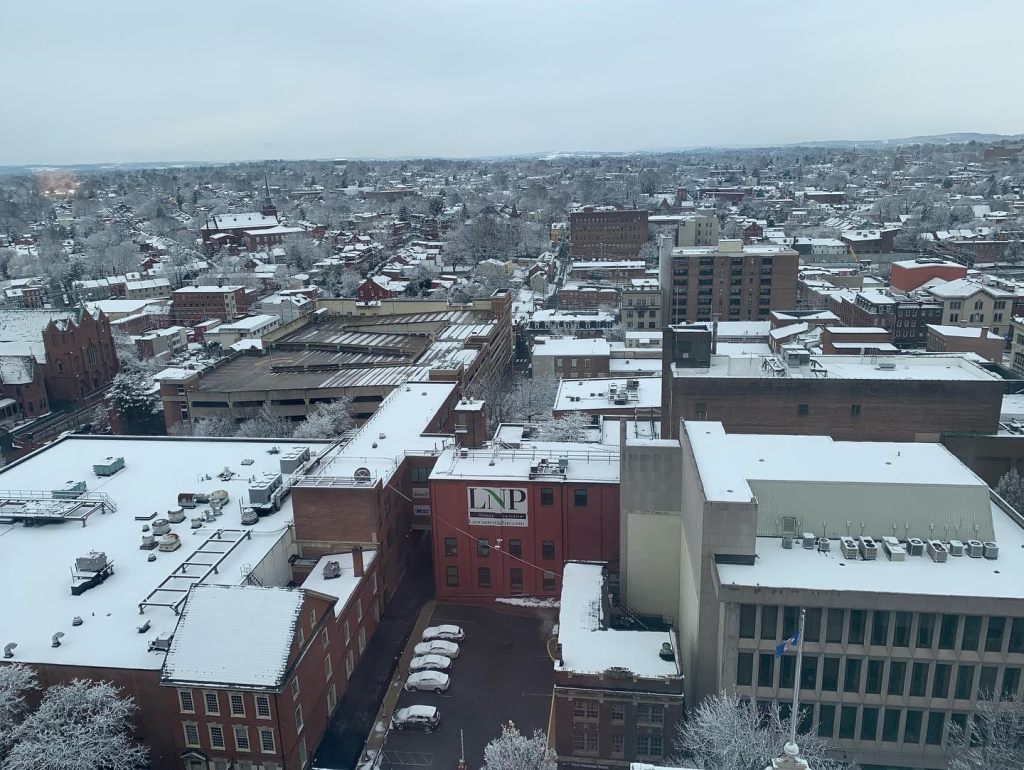
Lancaster, PA in the snow

He sees no stars who does not see them first
to flame like flowers beneath the ancient song,
whose very echo after-music long
has since pursued.
J.R.R. Tolkien, “Mythopoeia” 

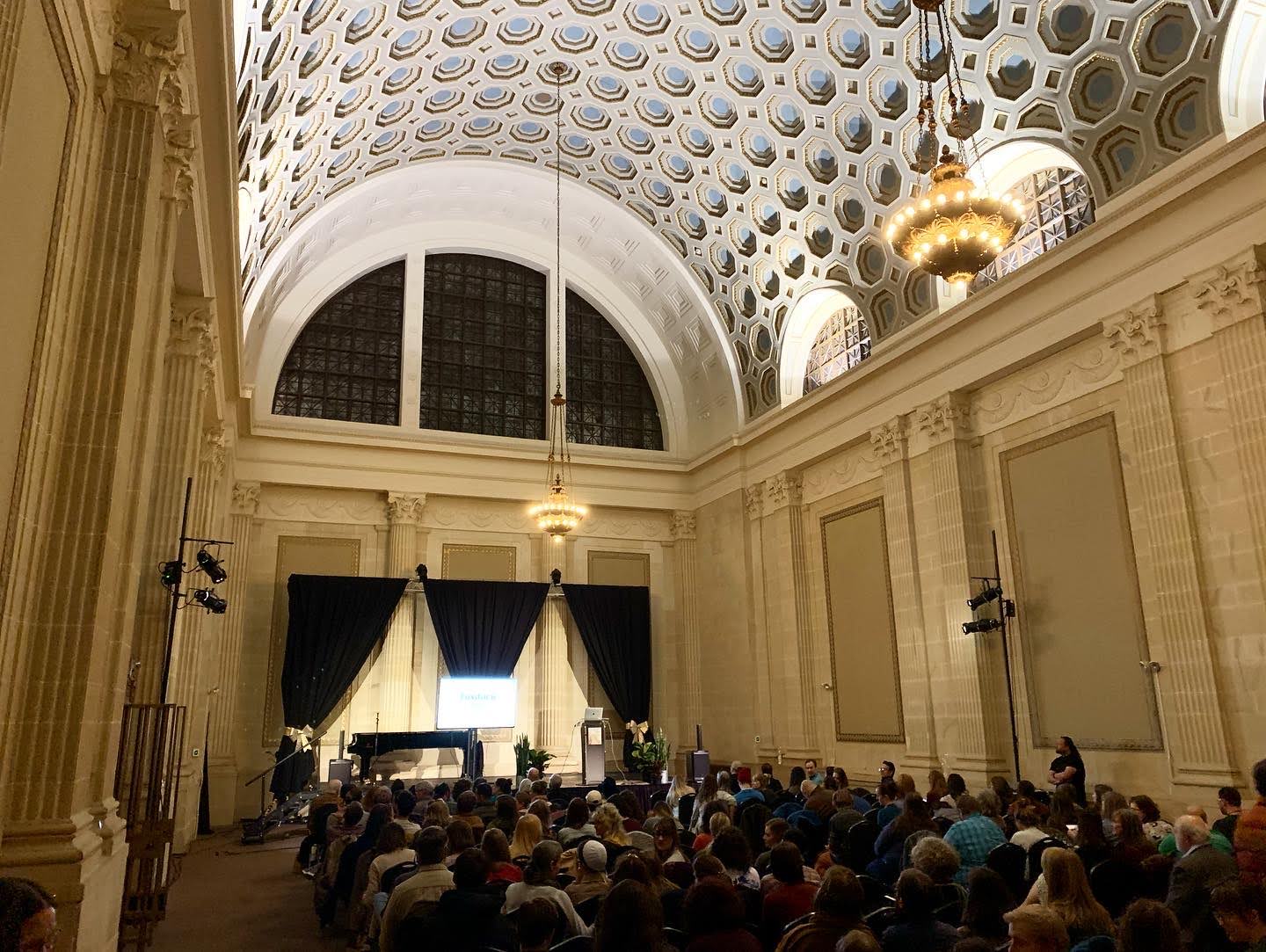
After a winter of long drives into the dusk, ice-puddles that sparkled in the sun, and bitter cold that cracked the skin on my hands, I sat in the Trust Performing Arts Center in Lancaster, PA, frantically typing notes. I was supposed to attend the Inklings Fellowship Conference, hosted by Square Halo Books, in April 2020, only to have it postponed due to COVID. As I made my travel plans for Lancaster, I kept thinking about how much has changed in me and in the world in these two years.

The conference was joyous. For the first time, I met writers and artists in the flesh who I had met in digital forums – online classes, creative collaborations, or Zoom office hours. I gave most of them big hugs. Somehow, talking about creativity, art, faith, and beauty over the Internet gave us a familiarity that made our in-person meetings comfortable and full of laughter.

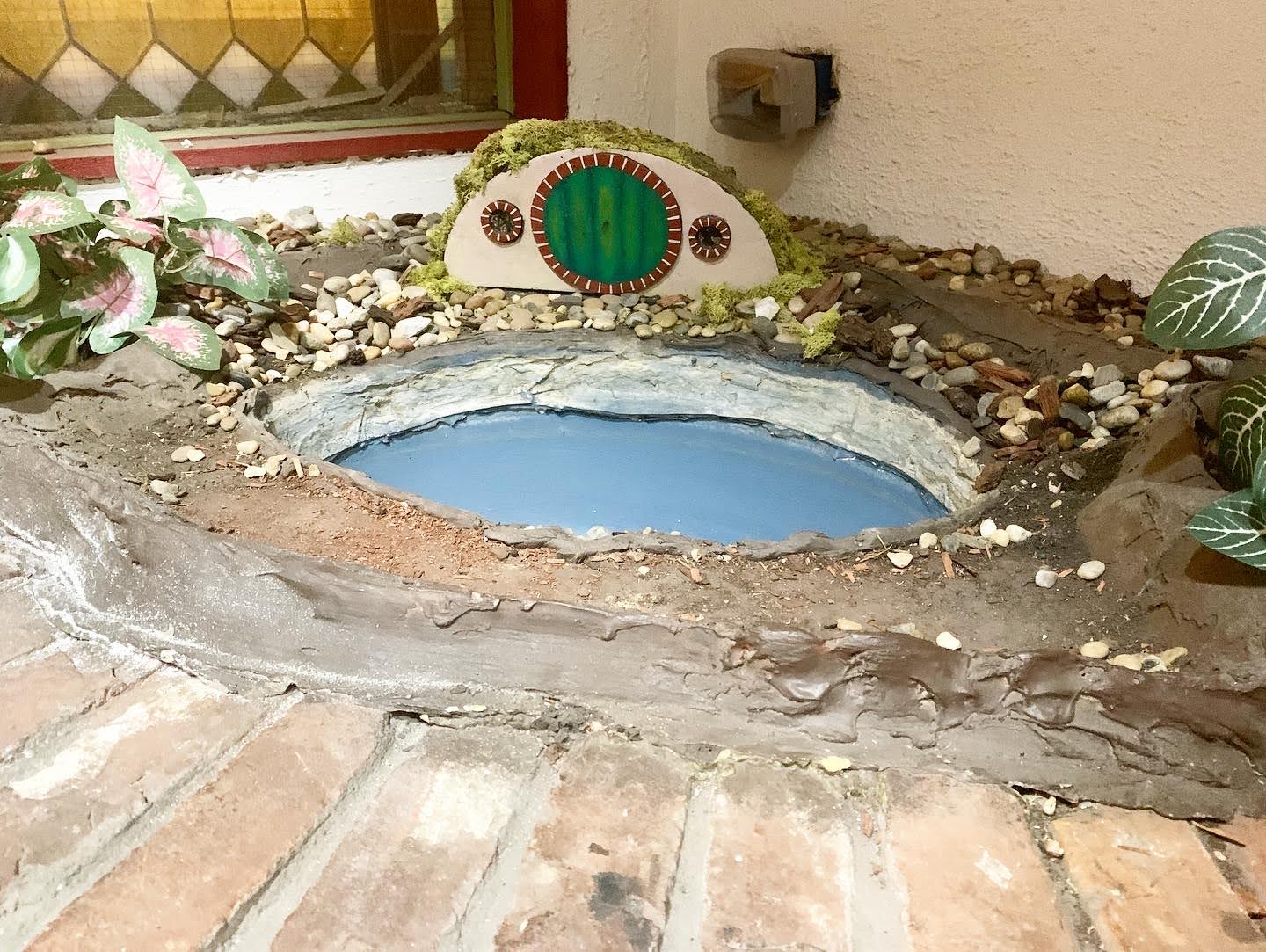
It was enthralling. Lectures by scholars, artists, and Inklings-lovers on the wordsmithing of Tolkien, the myth-blending of Lewis, and the collaboration between them fill my mind and heart with wonder. The “Rabbit and Dragonfly” pub next door, with its miniature Shire landscape, huge map of Middle Earth, painting of Lucy and Mr. Tumnus at Lantern Waste, and shelves of old books felt like a home I’d always wanted but didn’t know was real. I scoured the conference bookstore and spent far more money on books than I budgeted for.

It was exhausting. I love conferences, but the rapid pace, overflow of information, and consistency of social interaction left me completely drained, though very happy. 

The power of poetry and language, of words and names, was one of the keynotes for me. I’m still pondering the fantastic lecture by professor and poet Christine Perrin on “The Poetry of Tolkien,” in which she argued that Tolkien was an epic poet equal to Dante, Milton, or the author of Beowulf, and understanding his poetry is fundamental to understanding his work. She outlined Tolkien’s love for language (apparently he felt that a new Grammar Primer was like finding a hidden wine cellar) and his understanding that to name something is to know it and possess it. She also explained Tolkien and Owen Barfield’s idea that our language is splintered and fragmented from its original wholeness, a tragedy that has splintered and fragmented our consciousness and understanding of the world. For instance, words like the Greek pneuma have a holistic meaning of wind, breath, or spirit, united so that the one word has multiple layers of meaning, while English has separate words for each concept. This separation has disrupted our ability to understand the unity of the cosmos. 

The theological importance of naming reminded me of Madeleine L’Engle’s A Wind in the Door, one of my favorite books, in which Naming is linked with loving, understanding, communicating with, and rescuing others. It also made me think of my day-job as a technical writer, in which I try to teach, simplify, and convey complex ideas about software and cloud computing in clear, simple instructions. Language is one of the greatest challenges of my newest job. The terminology of cloud computing and networking was developed by engineers, scientists, military and government officials, and (I say this lovingly) computer geeks. I doubt any artists or poets were involved, and I wish they had been. As it is, software and computer engineering language is made of many displaced or complex, hard-to-remember, uninteresting words and phrases: 

  • Words transplanted from the physical, artistic, and even spiritual worlds into digital contexts: screen, page, icon, code, cloud, tunnel, gateway, walled garden, firewall, routes
  • Words that are abstracted and not linked with the physical world at all: data center, availability zone, encryption
  • Acronyms that are very hard to remember, at least at first: HTML, DNS, IPv4, ECMP, VPC

I don’t know if anything can be done now, as experts in these fields are familiar with this language, and to change it would be as difficult as changing a national currency or measurement system (but worse, since the Internet is international). But I wish a scientist/engineer/programmer with J.R.R. Tolkien’s love for words, C.S. Lewis’s clarity and skill with analogy, and Dorothy L. Sayers’s bluntness and common sense had been the one to choose the nouns, verbs, and adjectives we use for computing and networking. 

Christie Purifoy’s session on “Placemaking in Narnia” meant a lot to me after weeks of walking through concrete tunnels, gray parking garages, and tiny city parks with leafless trees and withered grass. But her talk was more than a reminder that beauty is important. She argued that even beautiful places can be place-less – lacking “aliveness” or a sense of “wholeness, spirit, or grace.” Frozen Narnia was beautiful, but it was disenchanted and lifeless under the reign of the witch. Place-making is the re-enchantment or reawakening of places.

I found this beautiful, hopeful idea of place-making inspiring and encouraging, though it brought back some frustrating memories. As a child, student, young professional, and just another human being in the world, I have not always had control over the environments in which I live, work, commute, and exercise. Location, the cost of living, spiritual calling, and bureaucratic requirements of different seasons of life (such as getting a driver’s license) have all shaped my options for places to dwell in. These shaping forces have put me in places with a tangible “aliveness” and places with a palpable “deadness” – beautiful and ugly, cozy and barren, spectacular and dingy. I’ve played in gardens full of rhododendrons and tulips; studied in school classrooms with blank white walls, and fluorescent lighting; worked in offices of gray cubicles and choking silence; read in libraries full of old books and stained glass windows. In “lifeless” places where I felt trapped, placemaking meant cultivating the little things I could control within the tiny spaces I owned (Spotify playlists, taped-up pictures from magazines, scented candles, fairy lights) and dreaming about the places I longed to make and inhabit.

I drove away from the conference into a snowy blue twilight. The wisdom I’d heard about language, beauty, and art came at a good time – late winter is my least favorite season, the doldrums of the year. As I’ve done in the past, I want to use art to fight the grumpiness I sink into amidst long, gray days of slushy snow and dirt-encrusted ice. In honor of the goodness of poetry and place-making, I’m doing a new creative collaboration for March with some fellow writers and artists, centered around the theme “Winter Eyrie” – the concept of a refuge, a haven, a fortress, a citadel, somewhere cozy and safe amidst chaos. More details to come. 🙂

Photo by eberhard grossgasteiger on Pexels.com

“I am a ghost”: Leaving St. Andrews

“I am caught by the morning and I am a ghost.” For weeks, that sentence from the end of C.S. Lewis’s Great Divorce haunted me, because I knew I would be leaving St. Andrews soon, and that I would disappear like a shade at dawn.

St. Andrews is centuries old. Whatever Viking raids, Reformation riots, horrific witch burnings it’s had, students are the real ghosts – especially international ones. We come each fall to clean out the charity shops, fill up pubs and coffee shops – and then leave each summer. I am one of hundreds of thousands who came and went. I left nothing behind but a mostly-clean dorm room, kitchen-full of dishes, pots, and pans, and memories with friends. The community’s memory of me has already faded.

Finishing

August felt ghostly: gray with haar (sea fog), cool, and often rainy. I piled up books on Dante’s Divine Comedy, the sins of sloth and anger, Lord of the Rings, and T.S. Eliot’s Four Quartets on my desk and culled them for quotation marks, filling out the framework of my dissertation. It was quiet. We met in cozy pubs to compare word counts and progress, but most of the days were monastic: silent, solitary work, broken up by freezing swims in the North Sea or walks along the coastal path. The Queen Anne’s lace faded at the end of July. A swallow nested in the entranceway of our flat’s stairwell. 

Somehow, our dissertations came together: bullet-pointed lists of quotations and sentence fragments grew into paragraphs, sprouted into chapters, and branched out into full arguments. I read and reread each section of mine, often out loud, trying to spot misplaced modifiers or errors in reasoning, participating in the wider scholarly conversation without sacrificing too much of my word count to quotes. I examined each text in the light of the sins of sloth and anger, exploring how characters in Perelandra, Lord of the Rings, and Four Quartets find the right virtues to combat them. I found that while Ransom and Gandalf choose the virtues of zeal or hope, the remedy for despair in Four Quartets – total surrender to the grace of God – remedies every sin. When we surrender, we step into the Great Dance of the cosmos, ordered by love, where even the distinctions between virtues no longer matter.

At the same time, the paper I’ve mentioned before, in which I examine revelation in L.M. Montgomery’s Anne of Green Gables and Emily of New Moon series, was in the throes of final copyediting. It felt wild to be working on both at the same time: adding em dashes and commas to the Montgomery paper, calling home to ask family members to double-check page numbers and wording in books I left in the States, while smoothing out transitions in my dissertation.

On August 17, after agonizing over my poetry footnotes (should I have added page numbers as well as line numbers for each poem?) I turned in my dissertation. At the same time, I announced the final publication of my Montgomery paper – the fruit of nearly five years of buying or borrowing scholarly texts, devoting morning coffee time, lunch hour, and evenings to work, and several rounds with literary journal editors. Both projects frustrated, exhausted, and refined me, revealing my weaknesses as a scholar: the impulse to oversimplify, reduce complexities and nuances, and my general ignorance of the wider body of scholarship. But now, both are done. 

Ironically and beautifully, the theses of both papers connected. I found that revelation and virtue are both relational, not equational. God does not give knowledge like a stack of library books, or hand out virtues like playing cards. He reveals Himself and cultivates goodness in us because He loves us, knows us, and wants us to know Him.

The rest of my time in St. Andrews was a frenzy of pub nights and last-minute goodbyes over coffee as well as moving. It was chaos: tossing bags and bags of goods into the charity shop donation bin by the library, filling up the kitchen trash can multiple times a day, trying to figure out what to ship home in boxes and suitcases and what I could carry around with me as I traveled the UK. Busyness and an unexpected injury meant that there was no more time to walk the coastal path or the Lade Braes – but still, the days were sweet, and full, and hilariously disorganized. When the time came, I rushed out on a gray morning to the bus, then the train to London, and out of Scotland. 

I don’t know when I’ll return there.

Wandering

Travelers, too, are ghosts, moving in and out of beauty spots and historical landmarks without (one hopes) leaving a trace. 

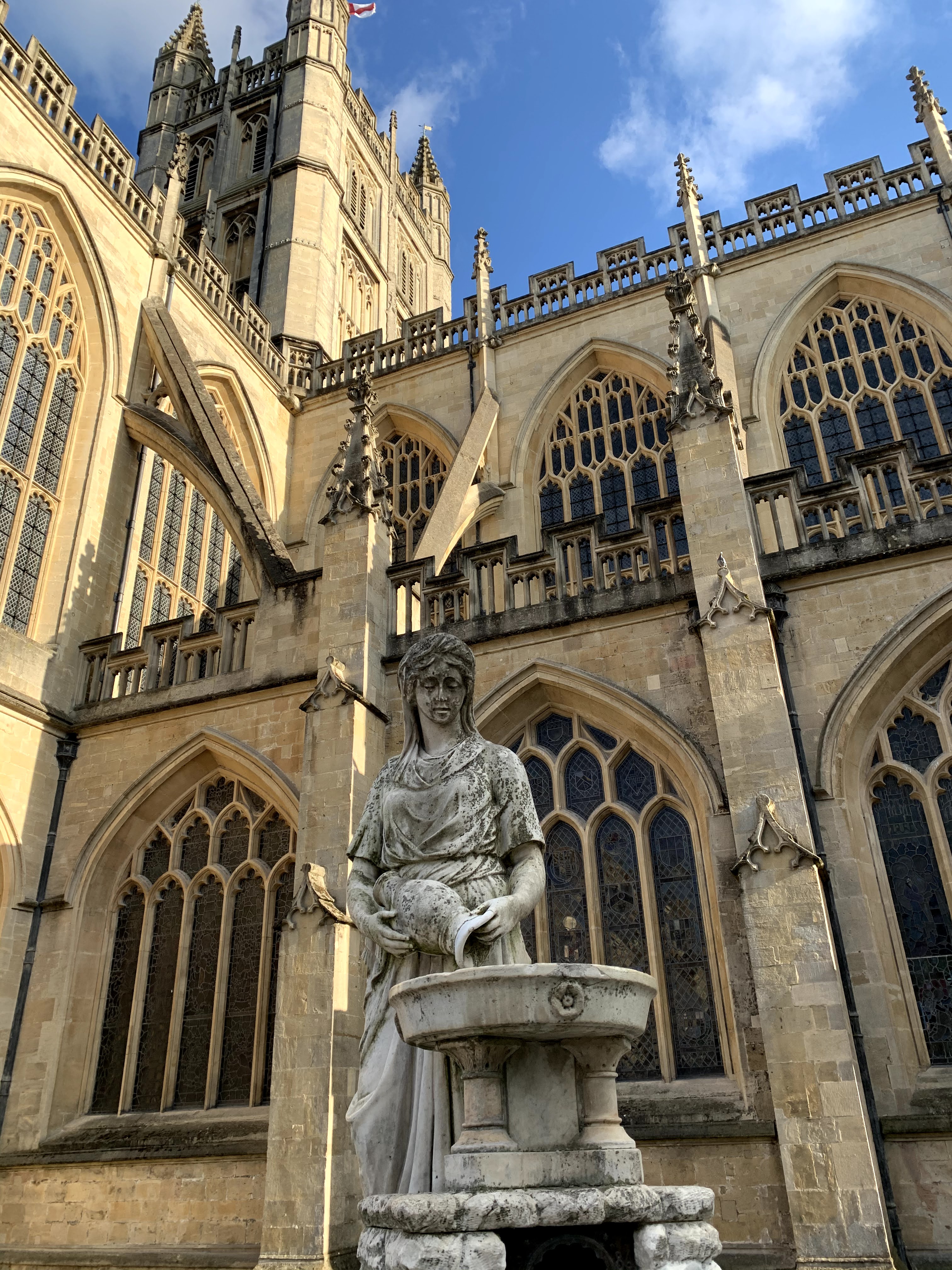
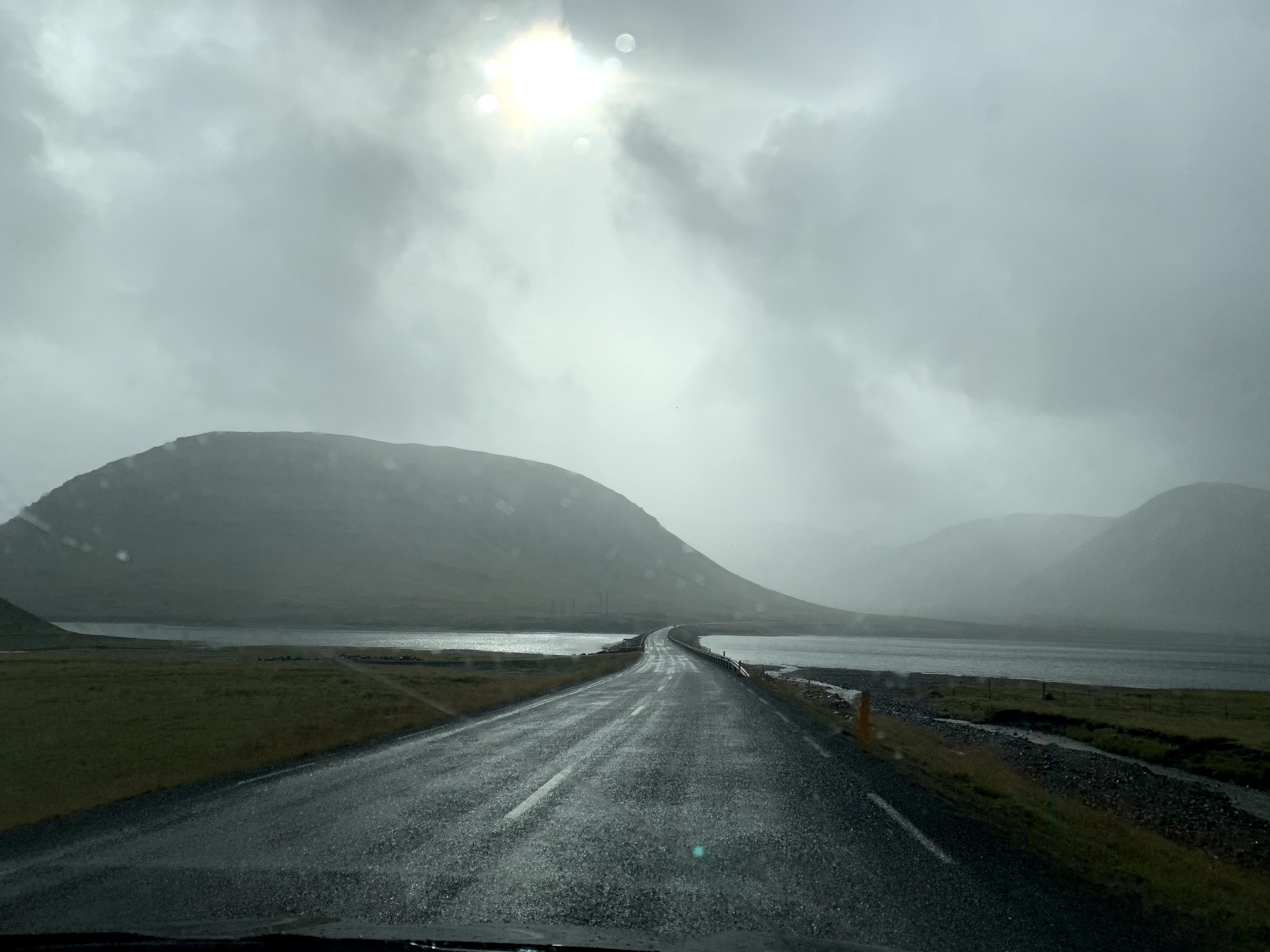
This is intended to be a creative writing/reflections blog, not really a travel one. I honestly don’t know how to summarize all of it. We moved so quickly: London, Bath, Wales, the Cotswolds, and then Iceland. Glorious golden weather followed us through the steep, cobbled streets of Bath, the green fields and woods of England, and the Welsh mountains with all their grazing sheep and horses. Iceland was all gray-green mystery, with mountains veiled in fog, silvery waterfalls, and pale glaciers. (I put lots of pictures and reflections on Instagram, if you want more details.)

We figured out how to operate at least five different brands of shower controls, driving on the left and right sides of the road, PCR vs. Antigen COVID tests before and after flights, train timetables, and the best kinds of souvenirs. We hiked until our legs ached, watched sheep graze on hillsides and foam churn in river gorges, laughed a lot, and made those special, highly-contextual, inside jokes that only work within one vacation and one group of people. I tried to understand what I’ve learned in this past year of grad school, life in another country, and lockdown, and who I’ve become in relation to loved ones I haven’t seen in a year.

I will write more about specific memories of these wanderings some other time. For now, I think I’ll just share the moments that were most precious to me:

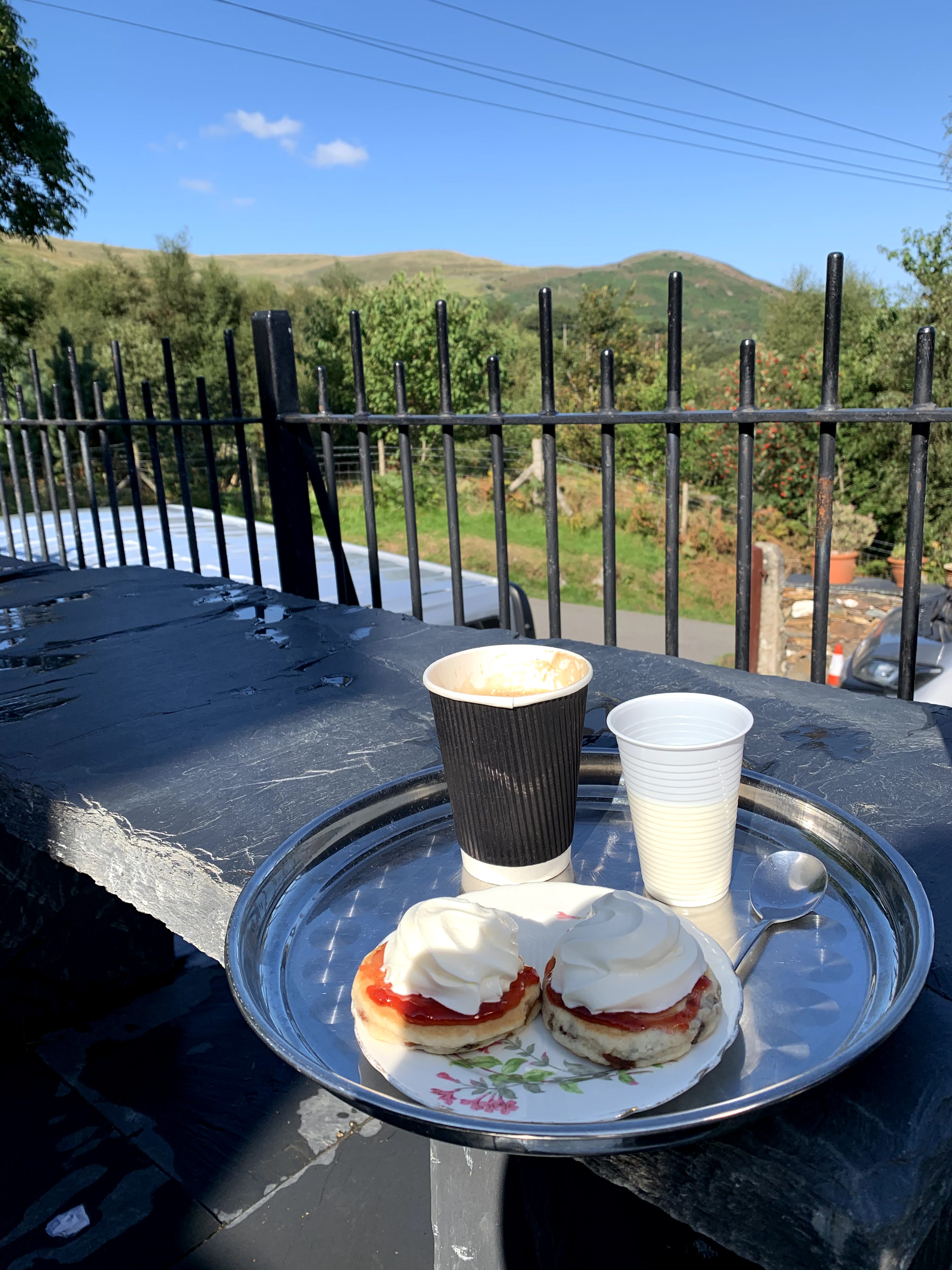
  • Sitting with a cappuccino and scone with cream and jam on the lower slopes of Mount Snowden, studying the sunlight on the rowan berries
  • Examining the Seljalandsfoss Waterfall from the cave behind it in Iceland, trying to describe how beautiful all that silver-white water is as it falls
  • Gazing down a rocky gorge at a snowy glacier, realizing that it looks like, and is, a frozen river waiting to burst forth, like Gandalf’s horses in Rivendell

The rest of September will involve more travel, with more time for beauty, for rest, and for creative writing again. In a few weeks, I will go home and end this year of study and travel, this time that I worked for, saved for, and dreamed about since undergrad. 

Then, I’ll step into a new unknown.

Springtime, the Sea, and the Good Life

I am learning to read the winds and sky: to check the temperature, wind speed, and cloud cover to see whether it is warm and still enough to walk the cliffs, or whether I should stick to the sheltered woods. I know now that any wind above 15ish mph is too chilly for studying in a grassy meadow if the temperature is below 40 degrees Fahrenheit; that rain here is light and usually doesn’t last more than a few minutes; that the sea turns shades of royal blue, marine green, and blue-gray depending on the tides and rain patterns.

Spring comes earlier in Scotland, thank God. The white snowdrops are fading now, giving way to daffodils of bright yellow or cream; green buds pop up on the prickly beach roses and hedges; flocks of honking geese make Vs in the sky. You can smell thawing earth now (one of my favorite smells). It is warm enough for adventures again: stargazing on the pier under a golden crescent moon surrounded by haze; study sessions on grassy clifftops thick with gorse; wanders through a green park beside a huge brick mansion with boarded-up windows and KEEP OUT signs.

These past few weeks have been like treading water amidst huge waves; I have managed to keep track of everything, I think, but spring break came just in time. Classes have continued to be fascinating, so good that I can only drink in the richness: the Incarnation and Passion of Christ, our suffering and triumphant Messiah; Resurrection, transhumanism, and artificial intelligence; ecclesiology (theology of the Church), religious syncretism, and graphic novels/comics as a medium of theological insight; Henry Ossawa Tanner’s mesmerizing painting of the Annunciation; love and theatricality in Shakespeare’s “A Winter’s Tale”; oaths and love and power in Wagner’s Ring Cycle. I am reading George MacDonald, James Hogg, C.S. Lewis, and others for various papers and presentations. I am inundated and enthralled, joyful and very tired.

The Transept artists’ group, which is connected with ITIA (my program, the Institute of Theology, Imagination and the Arts) is also hosting an online exhibition that just started on Friday. Putting it together has required much more emailing, scheduling, Google Drive manipulation, spreadsheets, and checklists than I realized, but we are starting to see the fruits of our labor. We chose “In/break” for the theme (thinking of God breaking into human history and the world breaking out of the COVID pandemic, among other things) and artists have taken it in such fascinating directions. Barbara Davey’s set of five poems, “Interruptions and Intrusions,” has some sections that haunted me:

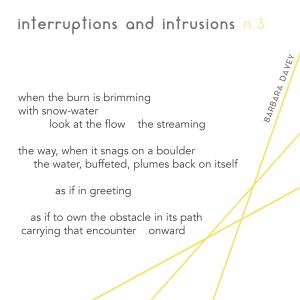
Barbara Davey, “Interruptions and Intrusions,” part 3

There are some real treasures coming over the next two weeks: a meditation on walking the Fife Pilgrim Trail, dramatic sketches of each of the four Gospels, a modern retelling of the birth of Samuel, and many more. The artworks will be posted on the Transpositions blog here.

On Saturday, I celebrated the freedom of spring break by hiking down the Fife Coastal Path to the Cambo Gardens, an estate with a walled garden full of blooming purple and white and green, glasshouses, woodlands full of daffodils and snowdrops, and a very large ginger pig named Lawrence. (Ginger in color, to be clear.) The coastal path is alive with tiny yellow flowers, dark green seaweed, rocks for scrambling, stone steps carved with crisscrosses to give walkers more traction. We broke our mileage record for one day: about 17 miles, give or take. We traded sore joints and tired muscles for glorious views of the royal blue sea, gray-blue mountains, and St. Andrews shining like a jewel in its cove.

How do you live a good life? I’m surprised that that question continues to haunt me over the years; it began just after finishing my undergrad. Sitting in traffic on my commute, counting up savings paycheck by paycheck, scheduling coffee dates, trying to fill up lonely Saturdays, I kept thinking: am I doing this right? How is everyone else choosing to live? How do I live for the kingdom of God in this time, this place, with this soul and these gifts? This adventure-year in Scotland was supposed to solve that question, somewhat. I saved, planned, strategized, dreamed, and prayed, and God gave me a way to incarnate hope into reality. But I still wonder now, as I read poetry and fantasy and plan hikes and picnics through lockdown, how to choose where to spend time, money, and energy in the light of Genesis and the Gospels, Ecclesiastes and Paul’s letters . . . and Revelation.

The wheel of the year turns again toward Easter. I have written before about how this holy feast feels different from Christmas because it has the grief of Good Friday, which is not the full story, but cannot be ignored. Waiting, feasting, lamenting, rejoicing, and hoping all belong in the divine narrative. I want to live well in the shadow of the cross and the sunrise of the empty tomb: in studies, adventures, art, work, and fellowship. In this silver-blue citadel, in the remaining months I have left, I hope I can continue to figure out how.

Candlemas in Lockdown

Winter sea

In St. Andrews, they call this semester “Candlemas” for the feast celebrating Christ’s presentation at the temple. Last semester was Martinmas. The names of Oxford terms are Michaelmas (“Micklemas”), Hilary, and Trinity. I don’t know much about the history of the names, but I love the sense of centuries-old tradition, the familiar turning of years. Being part of it, even in the ephemeral role of an international MLitt student, makes me feel part of a community analogous to the universal Church (on a smaller scale).

Between the strict, stricter, and even stricter lockdowns that have fallen into place since New Year’s, the howling winds, frigid rain, piercing sleet, and treacherous ice that have kept us indoors, and the heating-hour schedule which makes our flat freezing at midday and night, my morale has been low. Each new restriction feels tighter and more imprisoning, such that anything that goes wrong – a broken appliance or an interruption to work – threatens to snap my self-control. Small, comforting, physical things like baking fudge brownies, snickerdoodles, or Swedish almond cake to warm up the kitchen, keeping my space reasonably clean and tidy, wearing sea-scented perfume and makeup each day even if I can’t go out, and decorating my room with beautiful art prints helps.

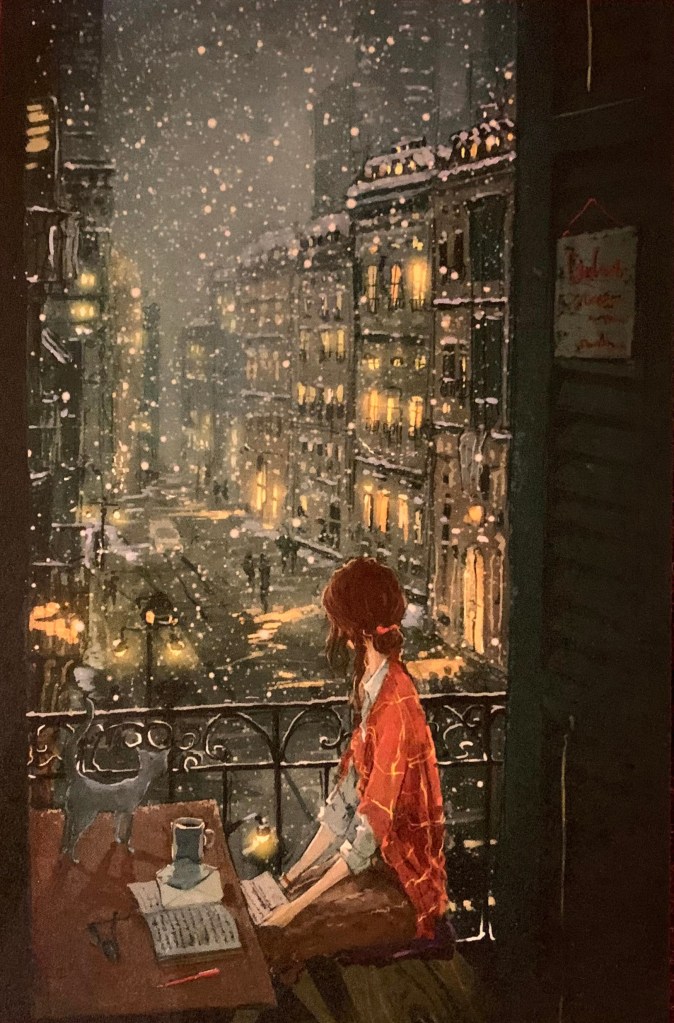
This print is my favorite of the ones I purchased. It’s titled “White Day.”

My classes this semester are also marvelous. We’ve studied the paradox of God as Father and Almighty through Job and Genesis; the iconic art of Michael O’Brien; the turbulent and mystical poetry of Rainer Maria Rilke. I’ve looked into riddle theory for a short story and Scottish lore for a potential, longer project. The fervent, wild poetry of Joy Davidman (the woman who married C.S. Lewis), a book of folk tales from around the world, and Dorothy Sayers’ hilarious, heart-deep Busman’s Honeymoon have also been cheering companions. Lockdown restrictions can take away so many things, but they can’t take away our studies or our books (yet) and I am thankful.

I turned 26 recently. Theoretically, it’s a transition from the bewildered post-college wandering of early 20s to the greater steadiness and maturity of late 20s. I feel a shift in how I look at the world and myself. I am not the fresh-out-of-college, cripplingly shy, confused girl that I was, though I’m not the confident, wise, gracious woman I want to be. The change is slow, like trickling sand.

After graduating college, I felt like I was living in the extended epilogue of a children’s book like Mrs. Piggle-Wiggle, Half Magic, or The Penderwicks, when the author gives you a glimpse of how the children grew up: ten years later… It was bittersweet. But in our story, an epilogue would have ended by now. Our extended family grows from grandparents-parents-kids to grandparents-parents-young adults-babies; I continue to seek adventures and career opportunites; I try to figure out the size and shape of the gift God has given me and where it fits in the Kingdom.

Candles (another forbidden item in this fire-safety-conscious country). Not as bright as sunlight or glamorous as moonlight, but cozy and mysterious on a stormy winter night or gray winter afternoon. Candle-mas: a feast of candles, historically significant in the Church, but also a comforting image in this late winter lockdown. 

This is a season for feasts and candles.