It has been so long since I actually read any Beatrix Potter that I barely remembered the stories at all. I have only a vague recollection of moles, hedgehogs, rabbits, mice, and sparrows wearing bonnets, aprons, and slippers; living in cottages, burrows, and villages; and having adventures. I remember watching the animated version of “Peter Rabbit” and feeling terrified when the farmer nearly shot him. When my dad recently started reading some Beatrix Potter stories to one of the youngest members of the family, I felt like the character General Woundwort in a climactic scene of Watership Down:
“For a moment some old, flickering, here-and-gone feeling stirred in the General’s memory — the smell of wet cabbage leaves in a cottage garden, the sense of some easy-going, kindly place, long forgotten and lost.” (Watership Down, pg. 452)
I love how that line captures the elusiveness and concreteness of memory.
One of the stories my dad read aloud was “Squirrel Nutkin.” Potter writes with a delightful particularity about the miniature, earthy world of little creatures: the “little rafts of twigs” that the squirrels use to cross a lake, with their tails serving as sails; the “little thread of blue smoke from a wood fire,” a present of “six fat beetles” which were “wrapped up carefully in a dock-leaf, fastened with a pine-needle pin,” and my favorite, Squirrel Nutkin playing ninepins with “a crab apple and green fir-cones.” The story is something between folktale, cautionary tale, and comedy: mischievous Squirrel Nutkin flirts with disaster by mocking, teasing, riddling, and pestering Old Mr. Brown, the owl, until the owl snaps.
On one level, it reads as a classic Victorian morality tale about the danger of disrespecting authority and the importance of hard work. On another level, I wonder if it echoes older stories of archetypes like the Trickster and the Miraculous Escape. The pattern of the story is rhythmic, like a fairy tale: there are seven days, seven gifts, disaster, and then deliverance.
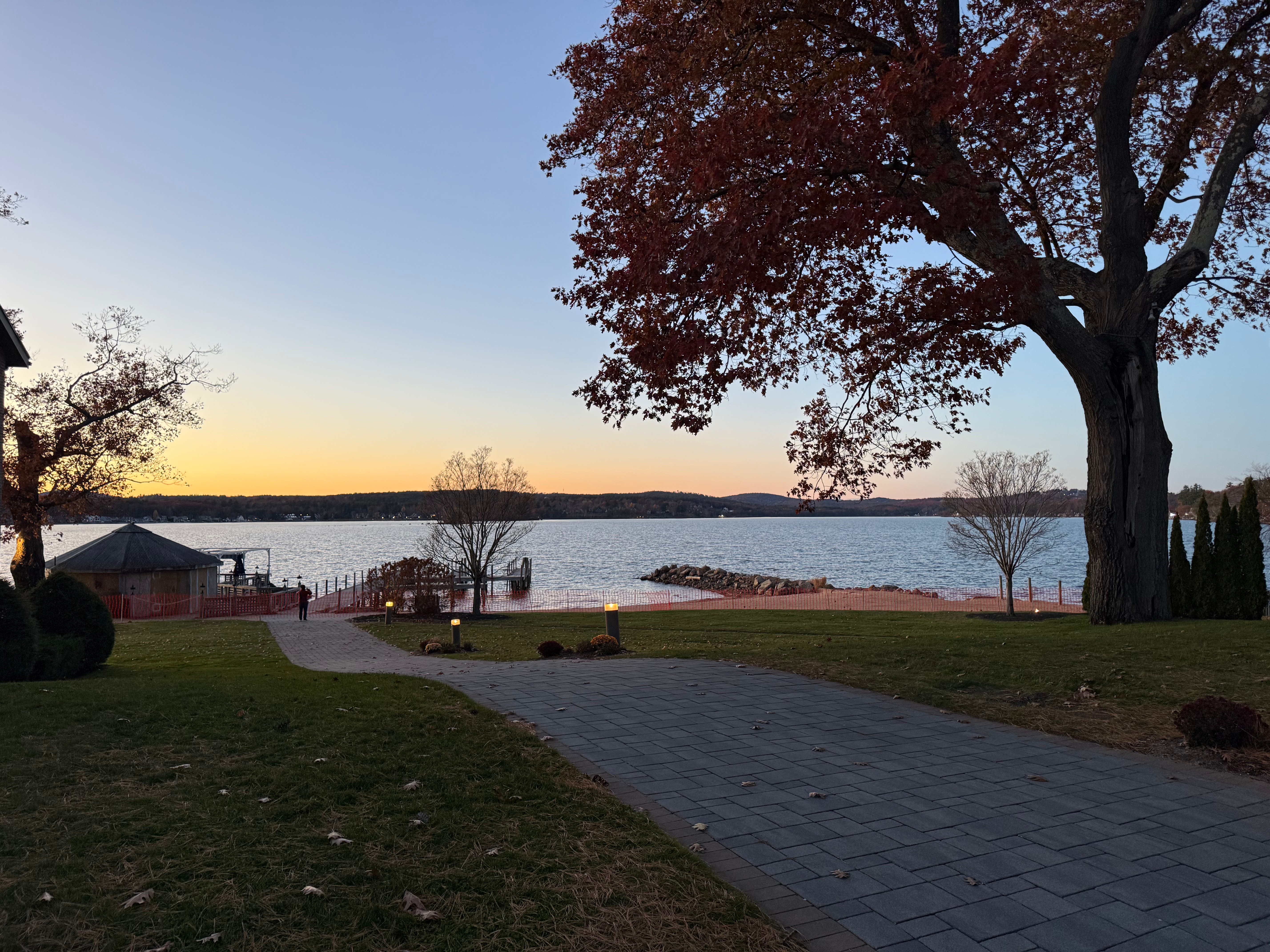
Beatrix Potter, Richard Adams, Kenneth Grahame, and A.A. Milne are directly responsible for my love for the English countryside. Creatures and landscape features like badgers and hedges, moles and stone cottages sometimes feel more real to me than the features of my own region. Their work makes me want to run out and do the same for New England’s landscape: capture details like the glorious reds of of autumn, the sapphire glow of lakes and rivers in the twilight, and the sweet, haunting smell of fallen leaves.
Beatrix Potter left her mark on C.S. Lewis and J.R.R Tolkien, too. I love Tolkien’s mention of “Peter Rabbit” in his essay, “On Fairy-Stories.” He points out that even in a simple children’s story is a hint of the Fall: Peter Rabbit breaks a prohibition by trespassing in a garden, is forced to leave his coat behind, and falls ill (symbolic echoes of Adam and Eve and the Garden of Eden).
C.S. Lewis had a fascinating response to Squirrel Nutkin. In his book Surprised by Joy, he describes it as the second glimpse of that feeling he calls Joy, “an unsatisfied desire which is itself more desirable than any other satisfaction”:
The second glimpse came through Squirrel Nutkin; through it only, though I loved all the Beatrix Potter books. But the rest of them were merely entertaining; it administered the shock, it was a trouble. It troubled me with what I can only describe as the Idea of Autumn. It sounds fantastic to say that one can be enamored of a season, but that is something like what happened; and, as before, the experience was one of intense desire. (Surprised by Joy, pg. 16-18).1
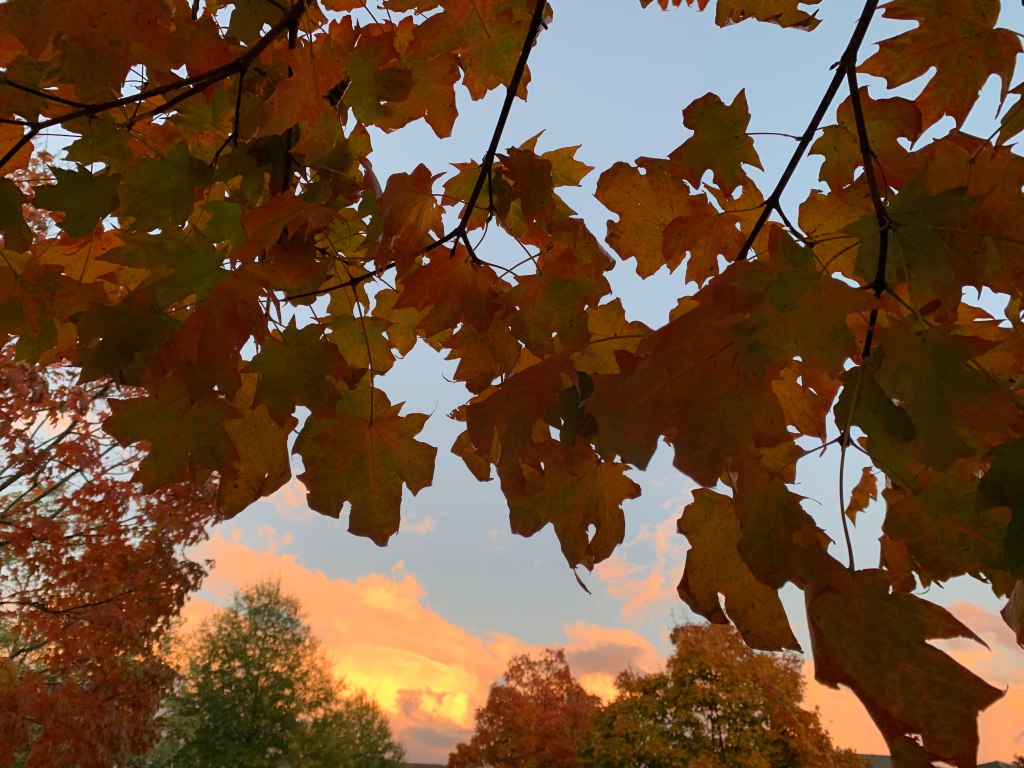
Lewis captures inexpressible feelings so beautifully. “The Idea of Autumn” is a simple, profound way of articulating that longing stirred up by copper, scarlet, and amber canopy; the blaze of early sunsets; and the chilly nights under the lantern-like Hunter’s Moon and Beaver Moon.
Daniel and Esther: The People of God in the Halls of Power
For the past few months, my church’s sermon series has focused on the book of Daniel, and our women’s Bible study is going through Esther. None of the church leaders planned this, so the way these books complement each other has been a wonderful surprise. Daniel and Esther are both exiles in Babylon; both end up in kings’ palaces and positions of power; both are threatened by forces that hate God’s people; both have to stand up before thrones and speak the truth. Both books showcase the incredible opulence, luxury, and decadence of the empires that swallowed up the rebellious remnant of Israel. Daniel sees King Nebuchadnezzar make a gold state 60 cubits high; the entire first chapter of Esther describes a magnificent banquet in detail, right down to the white cotton curtains, mother-of-pearl floors, and gold and silver vessels.
Against the backdrop of pagan power and pagan wealth, Daniel and Esther had to stand firm and make courageous choices. Daniel’s three friends were thrown into a fiery furnace for refusing to worship the gold statue. Esther had to go before the king unsummoned, risking her life, to eventually plead for her people. One thing that’s become clear in our study is the role of faith: “the assurance of things hoped for, the conviction of things not seen” (Hebrews 11:1b). Faith guided these two characters and others to act based on the invisible reality of God’s greater kingdom amid the drama of powerful earthly kingdoms.
Another grand theme of both books is remembrance. They are both very careful and detailed records in themselves, as well as records of record-keeping: edicts from kings that cannot be revoked, important letters sent to every province of a vast empire, and books of chronicles that are read aloud at key moments. Esther ends with repeated admonitions to remember the Jews’ deliverance from Haman’s edict with the festival of Purim. Rituals of remembrance like holidays, feasting, and gifts keep God’s goodness and His promises fresh in our minds, pointing us towards hope.
Rituals of Remembrance
October and early November are one of my favorite times of year, both because of their beauty — red berries, cinnamon-colored leaves, and swirling fog — and because they mean that we are on the threshold of the cozy festivities of Thanksgiving and Christmas. I love the family gatherings, the magic of the first snow, and the breathless wonder of children and children-at-heart that takes center stage at the end of each year.
Reading about Purim in Esther, the fourteen and fifteenth days of the month of Adar during which the Jews were to feast, celebrate, and give gifts, makes me realize that we do the same with our holidays. We are a forgetful people, but setting aside times to remember timeless truths refreshes our gratitude and praise. Stories and songs, too, imprint the goodness of God on our hearts: the concrete, particular, and specific ways He reveals His mercy, from miraculous deliverances to the splendors of autumn.
A few weeks ago, I looked up at the slender crescent of gold moon, exquisitely curved, and realized I could see the dark orb of the moon it outlined. These days of November have been a rush of warm, radiant days; leaves drifting slowly down to a crunchy, fragrant carpet; raindrops glittering on red crabapples; heart-shaped Japanese maple leaves on stone steps; thousands of acorns littering the grass; plump squirrels racing up and down trees, shaking the branches; dark evenings where the stars come out long before bedtime.
I love this time of year. The rush of busyness has felt somewhere between an overwhelming tsunami and a welcome high tide after the stillness of summer. Some of my favorite holidays are ahead; I get to wear cozy socks and sweaters, put up twinkle lights, sip ginger tea, and shiver happily in the chilliness that is not yet brutal cold.
In this cozy, glittering season, I miss preparing Leaf by Lantern podcast episodes. Researching, drafting, editing scripts, recording, editing audio, and producing for this podcast turned out to be too many hours of work for me with a full-time job and other commitments, but I loved studying fairy tales in the light of Scripture and dreaming about how Christian artists could approach retelling them.
I decided to indulge that literary/scholarly/artistic part of myself again and discuss one of the tales I had on my podcast episode to-do list, “The Seal-Catcher and the Merman,” in written form in this post.
“The Seal-Catcher and the Merman” is a Scottish folktale, very Scottish depending on what words you use in the telling. It’s a close kin of the “Selkie Wife” tale I talked about on the podcast.
“The Seal-Catcher and the Merman”: A Podcast in Written Form
The purpose of the Leaf by Lantern podcast was to explore “retelling fairy tales in the light of Scripture”: discussing how a Biblical perspective could guide an artist who is adapting a fairy tale into a novel, play, musical, short story, poem, or other written art form. See episode 1 for the full explanation of the project. I began each episode by reading aloud my own “iteration” of the fairy tale to a) familiarize everyone with the story, and b) avoid the copyright issues of reading aloud someone else’s version. Here’s my iteration of “The Seal-Catcher and the Merman” from here, here, and here. Then, I usually discuss 2-4 images in each tale, how they relate to Scriptural images, and how Scripture could inform a retelling that includes that image. For this folktale, I’ll talk about the images of the sea, the healing, and the gold.
Once upon a time, on the cold north coast of Scotland, there lived a fisherman who was especially famous for catching seals. Some in the village whispered that the larger seals he caught, called “Roane,” were not seals at all, but merfolk who felt and spoke as humans do, but he laughed at their tales.
“The bigger ones catch me a better profit!” he said.
One morning, the Seal-Catcher snuck up on a large seal sunning itself on a rock and stabbed it in the side with his knife. The seal fell into the sea with a cry of pain, taking the knife with it. The Seal-Catcher went home in bitter frustration, as he had lost his catch and his favorite knife as well.
At twilight, he answered a knock at his door. A handsome stranger with a black horse stood there. There was something strange about the stranger’s face and appearance the Seal-Catcher could not name, but he thought it must be his fine coat and air of wealth and authority.
“I need a number of seal skins right away,” said the stranger. “I’m told you are the best seal-catcher in the north.”
“That may be,” said the Seal-Catcher, “but I can only get you a few seal skins so soon.”
“I know a place where a number of seals gather,” said the stranger. “Come with me, and I’ll make you rich.”
Eager for such a catch, the Seal-Catcher mounted on the black horse behind the stranger and rode off with him. They rode far up the coast to a lonely spot along a rugged cliff.
“We’ve reached the place,” said the stranger, dismounting and telling the Seal-Catcher to do the same.
“I don’t see seals here,” said the Seal-Catcher, surprised and beginning to be afraid to be with a mysterious stranger in this lonely place.
“Then come and see!” said the stranger, and he seized the Seal-Catcher and dragged him off the cliff into the blue sea.
The Seal-Catcher was terrified, but he could not resist the stranger as they hurtled into the waves and down, down, down, far below the sunlight. He gave up all hope until he found that deep as they were, he could breathe.
They descended into a rocky cavern full of shells in shimmering rainbow colors. Dozens of seal swam about there, and to the Seal-Catcher’s astonishment, they seemed to be crying and lamenting. He received another shock when he realized that he had brown fur and flippers just like they did. He had taken the form of a seal.
The stranger, who had also taken a seal shape, turned to him. “My father, the king of the merfolk, was wounded this morning by a knife,” he said. “Do you recognize it?” and he produced in his flipper the Seal-Catcher’s own knife.
The Seal-Catcher fell to the ground, begging for his life, believing that he had been brought there to be killed. The seals in the cavern crowded around him, gently rubbing him with their noses and assuring him that no one would harm him.
“I didn’t bring you here for revenge,” said the stranger. “I brought you for healing. Come.”
He led the Seal-Catcher into a glimmering chamber in which the seal he had wounded lay, desperately sick, with a great wound in his side. “Lay your flippers on his wound, and he will heal,” said the Seal-Prince.
“I have no power to heal,” said the Seal-Catcher in fear and surprise, but he obeyed, laying his seal flippers on the king’s wound. Immediately, the wound closed up and the bleeding stopped.
The seals turned from lamenting to rejoicing, crowding around the king and the Seal-Catcher. “I will take you back to your wife and children now,” said the Seal-Prince, “on one condition: that you will never harm a seal again.”
The Seal-Catcher made this promise. The Seal-Prince carried him back to the surface, where they regained human shape, and rode him back to his house on the black horse.
When they arrived, the Seal-Prince let the Seal-Catcher down and took something out of his pocket. “Never let it be said that we took a man’s livelihood and gave him nothing in return,” he said, putting a bag into the Seal-Catcher’s hands. Then he rode away.
The Seal-Catcher opened the bag and found it full of shining gold. The seals had made him rich for the rest of his days.
The End
The Sea of Chaos
As I talked about in the podcast episodes on “Aspittle and the Stoorworm” and “The Selkie Wife,” the Biblical image of the sea is the realm of chaos. In the Lexham Bible Dictionary, D. Sarlo puts it this way:
In some Old Testament passages, the term “sea” (יָם, yam) is used to refer to the chaotic abyss that was the original state of the world prior to creation. This primordial sea was believed to have covered the whole earth (Gen 1:1–2:4a; Pss 18; 29; 89; Job 9:8; 26:12–13). . . . Walton notes that ancients imagined the primordial sea as encircling the earth like a serpent (Walton 2006: 166–167).
Sarlo, D. (2016). “Sea.” In J. D. Barry, D. Bomar, D. R. Brown, R. Klippenstein, D. Mangum, C. Sinclair Wolcott, L. Wentz, E. Ritzema, & W. Widder (Eds.), The Lexham Bible Dictionary. Lexham Press. Walton, John H. Ancient Near Eastern Thought and the Old Testament: Introducing the Conceptual World of the Hebrew Bible. Grand Rapids, Mich.: Baker Academic, 2006.
For more on the Biblical imagery of the sea, I recommend the Bible Project’ recent episode, “A Mountain Rising from Chaos Waters.” Andy Patton also has some beautiful articles on water/sea/river imagery in Scripture on his Substack, “Pattern Bible.”
Interestingly, the sea in this Celtic folktale is not exactly the same as the Biblical sea of chaos, but it’s not a complete counter-image, either. Like “The Selkie Wife,” “The Seal-Catcher and the Merman” portrays the sea as the home of seals, merpeople, or selkies: gentle folk who, in those particular stories, are the targets of human violence and greed. But Scottish fisherfolk who got their living from the cold Atlantic and knew the brutality of winter storms wouldn’t view the sea as the realm of happy and innocent fun, either.
But in one particular aspect, the folktale rings true with a Biblical image: the sea as a place of reckoning. Lost in the waters of chaos, the rebel realizes the weight of his sin and cries out for rescue.
The parallels between “The Seal-Catcher and the Merman” and the book of Jonah are unmistakable. Like Jonah, the Seal-Catcher is going determinedly his own way, when he is dragged into the sea by force (Jonah 1-2). It is after they’re dragged under the waves that each character realizes his wrongdoing and repents. In that repentance, they receive a new life. Jonah’s prayer in Jonah 2 is a stirring depiction of death and rebirth:
From Jonah 2:2 (ESV) . . . I called out to the Lord, out of my distress, and he answered me; out of the belly of Sheol I cried, and you heard my voice.
Death (in Sheol, the grave) and rebirth; purification and repentance. There’s also an echo of baptism (see 1 Peter 3:18-20) — with the important distinction that baptism is a willing declaration of belief, and being dragged into the sea is involuntary (fairy tales and folk tales are never exact allegories of Scripture).
For anyone retelling “The Seal-Catcher and the Merman,” I have a couple of suggestions when it comes to handling the image of the sea:
Take your audience there — Just as Jonah’s prayer captures the sea in vivid poetic images, give your readers as concrete and vivid an image of the ocean as you can. (“All your waves and billows passed over me”; “The roots of the mountains” — in his prayer, Jonah brings us down with him). This suggestion is something of an obvious one since concrete, detail-rich prose is an ingredient of all good writing, but I think it’s crucial here, where the physical experience of near-drowning is so closely tied to spiritual death.
Explore oceanic myths, legends, and tales — As rich as this folktale’s images here, if a writer wanted to expand it into a novel or a full musical, they would need to expand the plot. The world is full of fascinating and beautiful oceanic myths and legends: Poseidon and his trident, merfolk, krakens, the Land Under Waves, Tír na nÓg, Atlantis, the Fata Morgana, the lost paradise in the Arctic. I would try to keep hold of the rich images of this folktale, but broadening the character list and worldbuilding of a longer story could add new richness. The paradoxes of oceanic chaos and wonder, wealth and destruction, secrets and adventure resonate across all traditions.
The Laying on of Hands
The Seal-Catcher’s ability to heal the Seal-King’s wound is an inbreak of grace in the story; he is no healer, and putting your hand on a wound does not ordinarily heal it. In fact, there’s an old superstition that if a murderer touches the dead body of one of his victims, the body will bleed. The Seal-Catcher’s touch here does the opposite, healing what he harmed. What fascinates me is that it’s an act of grace, but not grace for the Seal-King; grace for the Seal-Catcher, who is given, undeservedly and unexpectedly, the power to restore what he marred.
In Scripture, the “laying on of hands” is a sacred act. In Matthew 19:13-15, the disciples rebuke people who bring children to the Lord Jesus “that he might lay his hands on them and pray.” The Lord Jesus then says one of His most remembered and beloved sayings: ““Let the little children come to me and do not hinder them, for to such belongs the kingdom of heaven” (ESV). Then He lays His hands on them and goes away. The Lord Jesus heals others by layings His hands on them, including a woman who was bent over with a disabling spirit for 18 years (Luke 13:10-13).
In Mark 16, the Lord Jesus gives the power of healing by the laying on of hands to believers: “And these signs will accompany those who believe: in my name they will cast out demons; they will speak in new tongues; they will pick up serpents with their hands; and if they drink any deadly poison, it will not hurt them; they will lay their hands on the sick, and they will recover.” (“Mark 16:17-18, ESV, my emphasis). This promise blossoms into glorious fruition in the book of Acts, when the apostles lay their hands on people and pray for them so they receive the Holy Spirit (Acts 8:14-19, Acts 19:6) or receive healing (Acts 9, including the day when Ananias laid his hands on blinded Saul the persecutor and prayed so that God restored Saul’s sight).
Physical healing, and receiving the Holy Spirit — two blessings that link heaven and earth, the material and the spiritual, the temporal and the eternal. In “The Seal-Catcher and the Merman,” the image of a Seal-Catcher laying his hands (well, flippers, since he’s in seal form) on the wounded side of a king and watched the wound seal itself and disappear beautifully illustrates divine grace, redemption, restoration, and the gift of Christ-followers becoming like Christ. The Seal-Catcher’s very identity changes here: he goes from killer to healer, ravager to repentant and forgiven sinner. It reminds me of C.S. Lewis’s The Lion, the Witch, and the Wardrobe, how Aslan, the King of the Wood, extends his royalty to the children by crowning them as kings and queens under him.
For any Christ-follower who creates a retelling of “The Seal-Catcher and the Merman,” I would recommend a couple of things when it comes to this part of the story:
Make the identity change clear — A storyteller has a whole treasure chest of resources when it comes to depicting an identity change. Names; clothing; occupation; house and home; relationships; habits; speech patterns; a significant change to any of these can signify an identity change. Because of the change in his spiritual identity, the Seal-Catcher at the beginning of any retelling should act, feel, and even look dramatically different than the main character at the end.
Honor the concrete details — Touch is powerful. A Biblical laying-on-of-hands articulates something beyond words. In any retelling, I would do my best to hallow this moment with a vivid description: long or short, metaphorical or literal, memory-laden or present-focused, this would be a moment where eternal realities make themselves known in our time.
The Grace of Gold
I love the ending of this folktale. The Seal-Catcher has gone through a total heart-change and identity-shift from careless laughter to repentance, killing to healing, and death to life. The Seal-Prince’s gift of gold encapsulates the inheritance that believers have through the Lord Jesus. We are not only delivered from sin and death, but gifted oneness with the Father, Son, and Holy Spirit (John 17) and eternal communion with God in the glorious New Jerusalem (Revelation 21). In the goodness of God, our cup overflows (Psalm 23:5).
It’s a delicate thing to try to portray the joy of forgiveness without risking melodrama or overemotionalism. Staying in the realm of sensory details, in a retelling of this folktale, I would think through how the physical world would look and feel to a man who has been forgiven and made rich, like this: the colors of the sky, the familiar things of home, and thoughts of the future. My writing teacher, Jonathan Rogers, has talked about how good prose helps you see out of a character’s eyes and not your own (see his online course on writing lessons from The Hobbit), so that you teach readers what this person is like by displaying what they notice, how they see. What would a redeemed Seal-Catcher feel and notice? How would a new man treat the world he knew?
How do we believers see and walk in this world of stars and seas, knowing how fully we’re forgiven, and how deeply we’re loved?
Crimson fern leaves and nodding goldenrod; long hours of screen time revived by long readings in the Gospel of John; car repairs and apartment deep-cleaning; Zoom discussions of Tolkien’s stories and scholarship; blinking stop lights and noisy waiting rooms; hours spent curled up with adventure, fantasy, and fairy tale books as the dusk deepens. Autumn is passing slowly and swiftly, like the lingering end of a folk song.
Junius Johnson’s dragon course this summer was just as refreshing and joyful as I had hoped. Rereading old friends like The Hobbit, The Hero and the Crown, and The Neverending Story and discovering new treasures felt like inviting my childhood self to walk beside me and remind me of forgotten dreams. As the summer heat shimmers away and the tree canopy blazes gold and saffron, I have done my best to keep feeding my soul with tales of mystery and wonder-stories that remind me of the great and wild things underneath chores like brake replacements and insurance paperwork, like gold glinting through dead leaves. Some favorites included:
Emma Fox’s The Carver and the Queen
K.B. Hoyle’s Son of the Deep
Mary Stewart’s Nine Coaches Waiting and This Rough Magic
Miriam Pittman’s Ancora: The Fog Banshee’s Curse
Much of my free time has gone into season 2 of the Leaf by Lantern podcast. Season 1 was a flurry of writing and rewriting, trying to temper perfectionism with common sense, reading and trying to give myself enough time to ponder before publishing any thoughts. I am trying to make Season 2 a series of richer, deeper episodes – a slow wander rather than a mad dash.
Apparently, I can’t keep away from Search for the Lost Husband stories (ATU 425 in the Aarne-Thompson-Uther folklore index)*. I remember picking up a folklore anthology that bore this title from our childhood library and staring at the title printed on a pale blue background.
“Dad, what does this mean?” I asked him, showing him the book.
“Hmm,” he said. I have a vague memory of him gently explaining that compass directions don’t apply to things in space like the sun and moon. I never forgot this fairy tale, and loved it all the more when I read Jessica Day George’s gorgeous retelling, Sun and Moon, Ice and Snow. George’s retelling explores more of the background of the villain and makes the whole thing into an almost-gothic mystery, with a slow trickle of clues and revelations. This episode gave me a chance to explore the mystical, lonely, wistful Northerness of this variant and how an artist could create a rich atmosphere in a retelling.
* Every single time I read or type “Aarne-Thompson-Uther”, my mind jumps to Uther Pendragon, the father of King Arthur. There’s no actual relation. The “Uther” named in the index is Hans-Jörg Uther, a German scholar who refined the already-published work of Aarne and Thompson in 2004. He might appreciate the confusion. Then again, I don’t think Uther Pendragon is a very noble character, so maybe not.
Every overview of the history of fairy tales and folklore I’ve read takes a big breath and pause at Hans Christian Andersen. His renown is stunning; “The Little Mermaid,” “The Snow Queen,” “The Nightingale,” and others are as well known as “Cinderella” (at least, in the Western world). I haven’t read much of his biography, but I’ve seen some scholars assign facts from his life to his stories, as if his personal history is the only way to understand his artwork. “He wrote [this tale] because [biographical fact]” – and nothing more. A person’s life certainly influences their fiction, but I don’t like the reductionism of a tidy “this = that” statement as an explanation for stories with such haunting images and structural intricacy.
My discussion with K.C. (Kimberlee) Ireton gave me hope for Andersen scholarship. Her joyful, thought-provoking theological reading of the tale helped me understand why it strikes such chords in my soul – especially as the ending of “The Little Mermaid” is not quite the happy ending you expect. I’ve been dreaming up merfolk stories ever since.
Fieldmoot Conference Presentation: “She is the Morning”
In between planning this podcast season in September, I wrote and recorded a video on another fairy tale for the online Fieldmoot conference, which is scheduled to go live starting Thursday, November 2 at 6:30 pm through Sunday, November 5. The conference’s theme is “Light and Darkness,” so I chose a fairy tale I thought had some interesting light/darkness images: “The Singing, Soaring Lark” from the Grimm collection. This tale is a variant of “Beauty and the Beast” that was new to me. It’s a lovely quest tale with a courageous, warmhearted heroine and beautiful images, including larks, lions, griffins, dragons, the sun and moon, and a mysterious nut-tree. I had a lot of fun investigating things like bird imagery in the Bible, the physics of green wood, and the theology of recognition, though I had to leave a lot of research paths untaken to keep within a reasonable time limit.
I didn’t have time to mention it in the recorded video, but if you like the fairy tale, there is a picture book adaptation called The Lady and the Lion by Jacqueline Ogburn and Laurel Long. The illustrations are some of the loveliest I’ve ever seen.
The Fieldmoot conference uses Discord to keep a live chat as the recorded videos play. It was a cheerful, thoughtful, kind, and delightfully mischievous group of people last year commenting on the sessions and recommending books to each other. I hope we have the same friendly atmosphere this year. We’ll also have live Q&As after the recorded video sessions, so I’m curious to see what questions and comments people have.
Sign up here if you plan to attend! The organizers have done an unbelievably great job of strategizing, scheduling, innovating, and covering the multitude of details an event like this requires, and signing up helps them plan.
2023 became the year of fairy tales and fairy tale retellings for me. I have dreams of pursuing other research interests, including detective stories, travel adventures, light sci-fi, and maybe historical fiction, but I hope that the world of fairy tale images will illuminate all these future creative pursuits. Studying quests and towers, glass hills and magic wells, rescues and resurrections have helped me love the Great Story of the gospel all the more – the news that gives all our pursuits, from the highest delights to the most miserable chores, a meaning and a happy ending.
The writing seminar’s theme was “Personal Narrative” – memoir, creative nonfiction, telling your own story. Jonathan Rogers, my writing teacher, held it just before the Hutchmoot Conference of 2022 – a faith and arts conference that I’ve dreamed about going to since 2018.
A memory I wanted to write about . . . fresh out of college in 2017, eager to finally begin my career as a creative writer, I listed memories and experiences in a spiral-bound notebook. Our magical trip to Hawaii when I was nine; summers backpacking in Yosemite; sunscreen-and-ice-cream days by the lake; the cross-country road trip west along I-40 after graduation. I had pillaged a lot of these for my writing already, and I don’t like to rewrite the same memories if I can help it – at least, not yet.
It’s not 2017 anymore. It’s 2022. Somehow, the “me” that applied frantically to every writing or editing job within a fifty-mile radius of home, read Robert Frost and G.K. Chesterton at lunch breaks, and devoured podcasts on faith, literature, and beauty on long commutes is gone. I’m not a new college grad trying to market herself to potential employers. I’m not the bewildered new car owner trying to figure out if $200 was an overcharge for an oil change.
This summer, I wrote a speech for a friend’s wedding. Writing that speech required me to delve into the memories of all that we had been at summer camp and college together, from kayaking at dawn to late-night hot chocolate. Remembering it all, and knowing that the years between then and now will only continue to grow, gave me that same feeling you get when you’re underwater and look up to see the shimmering circle of the sun.
“Anybody who has survived his childhood has enough information about life to last him the rest of his days,” said Flannery O’Connor in Mystery and Manners. That may be true, but it’s a lot easier to find things to write about now that I have worked in the adult world for a few years. For the seminar, I chose a memory from 2018: the morning when I woke up alone in a lakehouse in February. I had forgotten to pull the curtains closed, so my first sight was of whist mist hovering over the snow-muffled lake under a rosy sunrise.
Is it ok to change or rearrange details in my story? What is your earliest memory? Are we remembering, or reconstructing? What is episodic vs. semantic memory? How do you draw meaning out of sensory data and specific events? The writing seminar group met in a barn-turned-venue full of framed mirrors. Squirrels and chipmunks skittered over the tin roof as we talked. Tiny flames flickered in tea lights on the table. We shared memories, stories, techniques, questions, and mutual wonder, taking breaks to scribble thoughts for writing exercises.
That night, my first in-person Hutchmoot conference began.
Rooms named for C.S. Lewis, J.R.R. Tolkien, Dorothy L. Sayers, Frederick Buechner, and Walter Wangerin; a pottery wheel and freshly-fired pieces in one corner; books on poetry, philosophy, aesthetics, and story everywhere; a gallery of paintings, sketches, linocuts, and engravings; jam and coffee and biscuits; secret puzzles stashed in random places. Concerts and writing workshops; sessions on sacred symbolism, the art of adaptation, and the making of chai; conversations with people who loved books, had traveled to or from Libya, Japan, Mali, and other faraway, and many people who had suffered deeply.
It was a feast, a carnival, a holiday, and a whirlwind in one. I found that two years of limited large-group interactions had left me ill-prepared for so much richness all at once – by the end of some sessions or discussions I was exhausted beyond coherent thought or speech. I met many sweet friends for the first time, or the first time in a long time, who have shared their hearts and imaginations with me through their writing. Our conversations were the best part; their wisdom and encouragement was a walled garden in itself, lovely and safe.
I couldn’t help thinking about how my 2017 and 2018-selves would have reacted to all of it. I was hopeful; lonely; ambitious; a yearner, a day-dreamer, and an anxious worker. Younger-me may have handled the exhaustion better than my 2022-self, being more used to in-person interaction. She would have been breathless with excitement, eager to join in this fellowship of beauty and adventure. Her own life would have appeared dull, boring, and limited compared with the beautiful worlds of art-making, travel, and friendships that each speaker and conversant wove with their words.
At 2022, I don’t think I’m wiser, but I do know one thing: the world I ached to join, the realm in which people do walking-tours and have house concerts and read the most wonderful books, is not something far away and unattainable. It’s real, but it’s something I can make for myself, in my own way. A good life is made as well as given.
Between my younger and current self, I feel a little lost – partly in attending this conference, partly because my move to Tennessee is still so recent. In speaking of age and childlikeness, Madeline L’Engle said something that has encouraged me: “I am not an isolated, chronological numerical statistic. I am sixty-one, and I am also four, and twelve, and fifteen, and twenty-three, and thirty-one, and forty-five, and . . . and . . . and . . . / If we lose any part of ourselves, we are thereby diminished. If I cannot be thirteen and sixty-one simultaneously, part of me has been taken away.” (Taken from Walking on Water.)
I am all the ages I have ever been. I’m still the new college grad, the child, the entry-level employee, and the graduate student. I’m also all the selves of all the places I’ve been, including New England, Maui, Yosemite, Glacier, Iceland, Scotland, and Tennessee. Thinking of myself as many overlapping selves is somehow comforting. It turns aging into addition and expansion instead of loss. It turns my heart into a forest growing taller and wilder and thicker with golden leaves.
It takes a long time to come back. The exciting folds into the mundane: the plane wheels hitting the tarmac, the unpacking of socks and sweaters and UK adaptors, the first hug with each family member, the wagging tail of the golden retriever, the scheduling of dentist appointments and renewing of driver’s license and car insurance. Going to Scotland was a grand adventure that broke down into a thousand difficult details (visas and bank accounts and SIM cards); coming back is the equal opposite. On this side, though, I have memories instead of dreams.
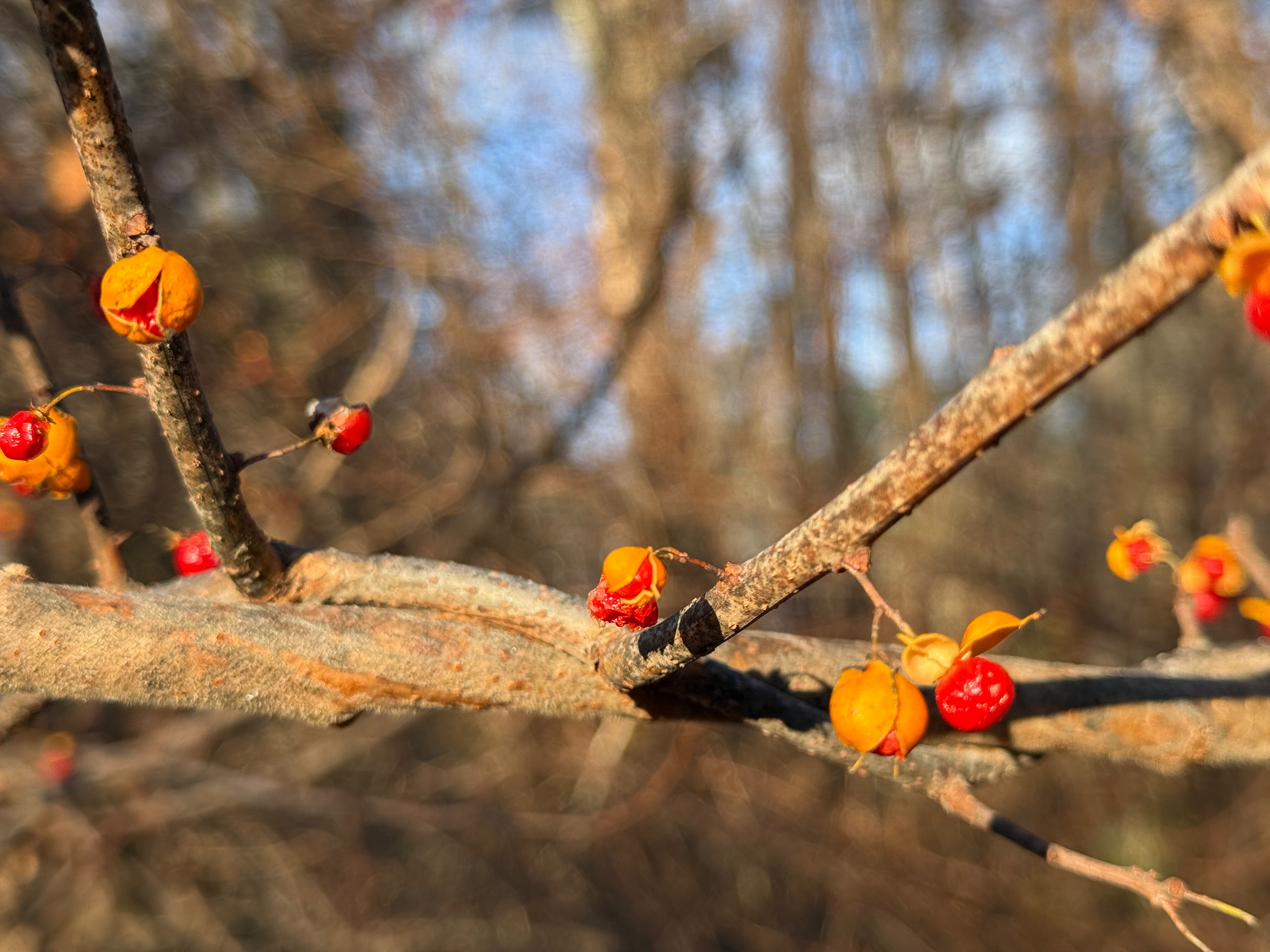
Scotland’s autumn was all golden leaves, red berries, and mist on the North Sea. I loved it there, but I missed the intensity of New England crimsons, carmines, and scarlets. I forgot how much I missed the earthy smell of fallen leaves here, the rosy apples hanging in the orchards, the chill in the mornings, the silvery frost in the grass, and the round on their doorsteps.
The second morning I logged into work, still blurry from jet lag, I stared at my computer screen as a grim realization sank through me: I had nothing to dream about. I have always been a daydreamer, from elementary school math class to my first office job: while my attention is fixed on the task at hand, the rest of my mind is whirring with thoughts of the books I’m reading, stories I’m telling, visions of the past and future. Last summer’s daydreams were full of ruined castles, seminars on the Inklings and the imagination, hills covered in purple heather, and cliffs overlooking the foaming sea. Now, after I’ve fulfilled that five-year dream, my vision of the future is more like a void.
Like everyone, I’ve had long periods of uncertainty and transition before: graduating from college and moving out of my childhood home in one frigid winter, watching to see how a chaotic corporate merger would affect my job, and checking infection and recovery rates every day in the first weeks of COVID. God gave me good things in each season, like that maple clearing full of golden sunlight I saw on my morning drives. I’ve also learned to cope: I hid my taskbar during boring afternoons in an office to prevent myself from checking the time every 0.5 seconds; I lined up podcasts on literature and hope and theology to fill my long commutes. I’m not patient, but every season of uncertainty has intensified beauty and good times within it.
It’s over. It didn’t feel real to me as I was consumed with moving out of my flat and traveling around through the green hills, silver waterfalls, quiet glens, and sheep pastures of England, Wales, Iceland, and northern Ireland, but it’s true – I finished my degree. It gave me a glimpse of the ivory tower (a much more isolated ivory tower in this year, but still): the brilliant people who congregate in places like St. Andrews, the life of a graduate student, and the rhythm of life in Britain. I have a general, table-of-contents knowledge of the field of theology and the arts; a gateway glimpse of research areas like ethics & literature or imagination as a way of knowing; a greater certainty that I do not want to pursue academia any further for now. I have crammed enough class readings and dissertation research to justify the devouring of fun books, like Alan Garner’s Flavia de Luce series and Brandon Sanderson’s Skyward.
I am dreaming, though my dreams are murky and indistinct: it’s easier to envision one year of grad school than the full, long life I hope for, full of ministry, good friends, a beautiful home full of books written by others – and some books written by me. But for the first time in my life, I feel that this unknown is not the unknown of helplessness – it’s an unknown of possibility.
The unknown is gray, but change is red: vibrant, terrifying, chaotic, and exhilarating.
I think this autumn will become a film reel of memories for me: gray-green hills surrounded by swirling mist and howling winds, red hawthorn berries and dewy cobwebs in hedges, gold weather vanes on top of church steeples, pastures of grazing brown-and-white cows, warm home lights twinkling against darkened landscapes at dusk. It turns out that going to grad school in Scotland is a great thing to do during a pandemic: a class schedule is more flexible than a work schedule, you get to enjoy fascinating lectures and fellowship with other students, and you can travel the wild even if you can’t tour palaces or go to ceilidhs. God is good.
This next contribution to the Thresholds project also ponders travel, home, and wonder: Shera Moyer‘s description of her life in Tanzania and Indiana makes me yearn to visit both…but also to explore and enjoy the ordinary, familiar wonders of my own place. Shera partnered with Hannah Abrahamson, who gave her the following artifacts (creative stimuli) to work from:
The moon rising over leafless trees
The smell of pumpkin and cinnamon
A soft and warm fall coat
Enjoy!
Vapor in Time
by Shera Moyer
At the end of a sleepy siesta last month I found myself in that dreamy state where I was unsure if I was asleep or just thinking about dreaming as I woke up. For those few moments I relished the feeling of not knowing quite where I was, yet realizing it didn’t matter. I would find out soon enough. A while later, as I sat staring at the swirling steam rising from my tea, I was transported from an Indiana autumn afternoon to memories of October mornings back home in Tanzania.
Mesmerized by the same steam swirls in slanted sun rays, I sipped my morning tea to the background vocals of a rasping red-necked spurfowl. As he scratched around a nearby granite rock kopje, belting out his morning “kwa-lee’s”, a goshawk flew high overhead twittering while performing his routine territorial display. A hint of burnt grass smell hung in the chilly morning air, lingering from fires the night before – fires started to clear fields, but run wild with the wind, setting whole mountainsides aglow at night.
October skies are hazy. Dust, smoke, and ash particles suspend in the atmosphere, and in the evening, when fires are lit again, the skies blaze above as refracted sunlight ignites towering cumulus and bright streaks of feathery cirrus clouds.
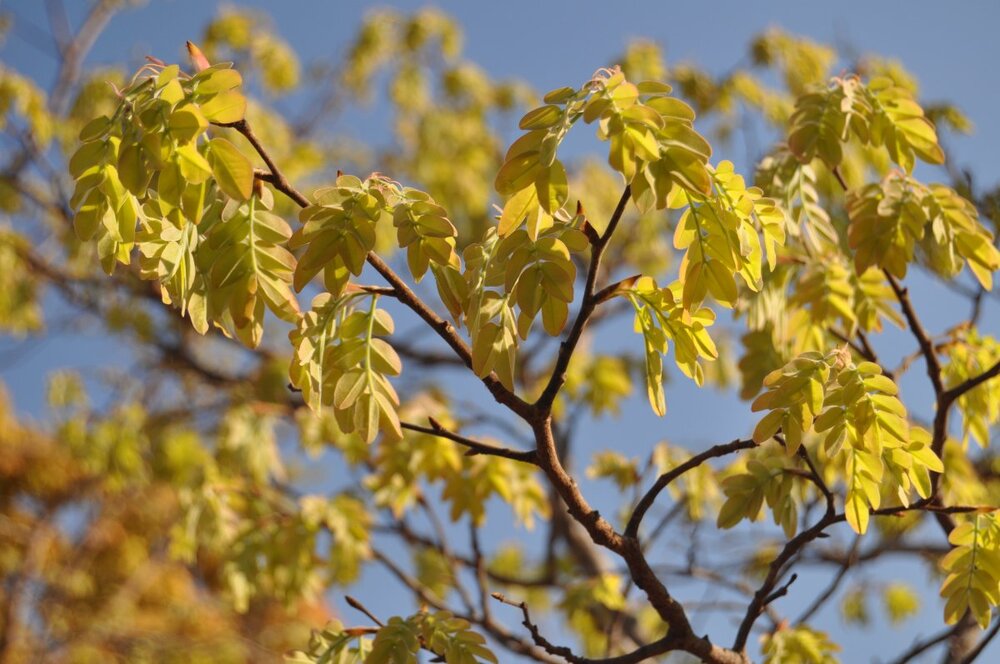
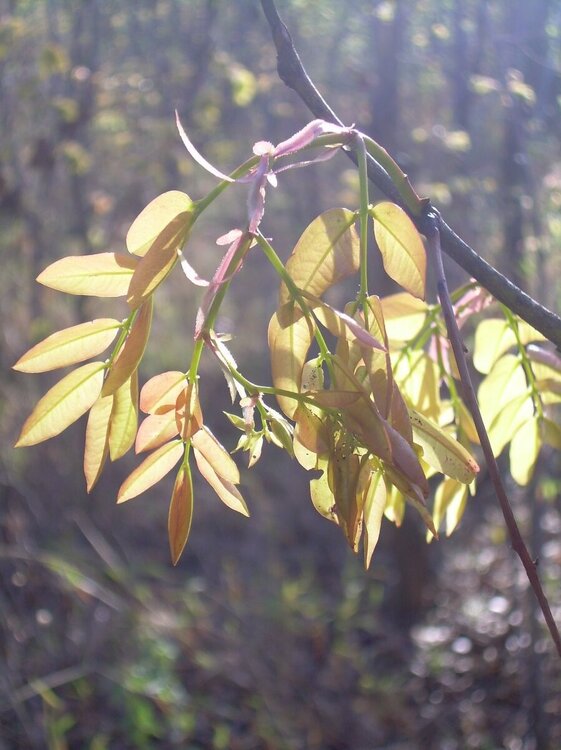
With the rains still a month or two away, the weather grows continually warmer. It’s in the midst of this hot and dry that the miombo woodlands burst into leaf. While most vegetation is leafless after months of dry-season, Brachystegia trees release energy stored in their roots to adorn bare branches with new foliage. Initially, only a faint tinge of color starts to show on the brown hillsides, but in a matter of days the trees are covered with gold, red, and fresh green. A walk through miombo woodlands on a late October afternoon conjures up feelings I imagine stained glass artists hope to inspire in grand cathedrals. As I stand there on sandy, rust-coloured soil and can’t ever seem to stop gazing at translucent, tender new leaves absorbing sunlight.
Perhaps trees just like showing off this time of year. Back on the north side of the equator red maple and golden beech leaves contrast with dark green conifers and earthy oaks blending into a rich seasonal colour palette. Walking through a stand of beech trees in yellow leaf gives the impression they’ve been storing up sunlight all year just to share on a cloudy autumn day. When I wander through an autumn wood I don’t know where to let my eyes rest for all the colors. Again, I often find myself just standing, breathing in the crisp air, eyes drawn to jaggedy-edged palmate maple leaves and smooth-lobed sassafras, then up to follow the crunching sound of a bounding deer waving its white tail-flag as it leaps and lands.
Here the colors herald an ending. By November most of the trees look like they’ve been inverted, doing head-stands and waving their scraggly roots skyward. The woods are quiet now, aside from the occasional squealing chipmunk as it darts away. Sweet, musty smells of decomposing vegetation fill the air, and the leaves underfoot make damp swishes. My legs are frozen numb through my jeans, I can’t actually feel my ears, and I can see my own breath. It must be time to add more warm layers.
Back inside, thawing out, I peer into another cup of hot black tea and blow the steam to make it dance. I wonder how I know when I’ve fully arrived somewhere? The process seems more gradual than the thunk of an official stamp in a passport on June 26th, 2019. Perhaps it’s finally having a driver’s license that matches my place of current residence? Indiana, “The crossroads of America”, the state tagline reads. Its regular train whistles, honking Canada geese overhead, and criss-crossed interstate highways easily lead me to nostalgia and thoughts of people far away.
But, my feet have also walked the ground here for over a year now. The paved sidewalks and roads have worn my soles smooth, and off-track meandering has often sent me home with damp socks. Lately, I’ve also begun exploring narrow country roads, the kind that run past old brick churches and mossy cemeteries, or through family farms and along rickety wooden fences covered in thick vines. I choose the turns that beckon or intrigue and eventually I drive back home with no map. Small adventures, sure, but it’s satisfying not to know exactly where I am, but still have my bearings well enough to find my way back to a specific address.
While there are still plenty of things I’d like to do out there in the world – learn new bird calls, climb boulders to watch the sunrise, swim from deserted rocky lake shores, identify new species of flowers, and discover hidden waterfalls in deep ravines – for now I’ll boil a kettle in the kitchen. Then I’ll pick a sprig of fresh mint, drop it into the hot water, and nestle into a large beige armchair with a fluffy blanket. Cradling my mint tea, I’ll breathe deeply of its sharp aroma as I stare out the window to the stubbled field beyond.
Shera Moyer
Shera enjoys playing with words, good conversations, and spending time outside getting to know the surrounding world. One day she might start a blog for fun, but until then she has piles of notebooks full of happy scribbles, and for now that’s quite all right.
In this small haven on the North Sea, green leaves are turning yellow; waves rise and fall with a thundering murmur; hot drinks like chai lattes and caramel mochas warm you up after walks through the cold winds. October is slipping away in later dawns and earlier dusks. Next week is Independent Learning Week, when classes are suspended to let students study, work on papers, and (in ordinary times) travel.
Now that I’ve had a month to settle in, I want to keep exploring the roles of maker, cultivator, and collaborator in my artistic work. After having so much fun with the Summer of Faerie project last summer, I longed to do another creative collaboration this autumn. I reached out to some artist-friends from The Habit and St. Andrews and invited them to join me.
Here is the full description and prompt for the project:
Project Title: Thresholds
Prompt: In her Rabbit Room article “Weathering the Books,” Rebecca D. Martin talks about reading books seasonally, and names The Fellowship of the Ring (especially the chapters up to Bree) as perfect for autumn. In honor of that beautiful thought, I invited some other artists to do a collaborative project.
The theme is thresholds: physical or metaphorical, small or great, looming ahead, just underfoot, or behind you. I took this definition of “threshold” from the Cambridge Dictionary:
1) The floor or entrance to a building or room 2) The level or point at which you start to experience something, or at which something starts to happen 3) The point at which something starts
Threshold synonyms: brink, verge, dawn, door, doorstep, doorway, edge, entrance, gate, inception, origin, outset, point, still, start, vestibule, point of departure, starting point
The collaborative part: Once some people expressed interest, I arranged partnerships. Each individual came up with three “artifacts” or stimuli for their partner: concrete, physical objects such as “the color red, an iron key, and the smell of earth,” or “the taste of cinnamon, sound of a cello, and fog.” These “artifacts” didn’t have to appear in the final result, but they gave everyone a place to start.
Several artists took the challenge, and now that we’ve exchanged “artifacts” and had some time to work, I’ll start publishing the results here. This first contribution is three poems by Aaron Stephens. Aaron’s partner was Kori Morgan, who gave him these artifacts:
A tree with a trunk that grew up at an angle
An orange ball cap dropped on a hiking path
A windmill statue in a vegetable garden
He responded by capturing the beauty of a woodland with profound clarity and brevity that gives many phrases the emotional resonance of whole poems in themselves.
Enjoy!
Photo credit: Richard Loader
Autonomy
On our own Lost in a Maze of trees On paths blazed by Neighbors as blind As we
Trust
Change came When I saw you Step on a baseball cap On the park trail. An old orange hat And I thought, ‘The hat was on the path Now the path is on the hat.’
A new aroma Finds my senses. A patch of lavender Hiding, waiting for me. You found me. So I prayed, ‘God, make me Walk more carefully.’
Breeze
White Birch trees Straight and ordered Sentinels of Law
Wild Beech trees Angled trunks Revelers of Gospel
Wind Blows Through the leaves Of the Beeches
We Begin Down The Path At last
Aaron Stephens
Aaron Stephens is growing more tenderhearted toward his wife and three children. Favorite color: blue. Have you had a dream that started before you were asleep? Have you had one so funny you laughed yourself awake? Aaron’s life has been like that. Just when he had settled into fearful religiosity, Jesus showed up like a belly-laugh for his soul. Find him at: aaron-erin.com.
Even on the most beautiful days in the whole year – the days when summer is changing into fall – the crickets spread the rumor of sadness and change. E.B. White, Charlotte’s Web, chapter XV, “The Crickets”
I hope I never lose my awe at the change of seasons, the year’s wheel turning from red to white to green to gold. This year, the whispers of autumn in the cool breezes and silver-dipped backs of leaves hurts me as much as it excites me. This summer was a dream, from the beauty of blue horizons and pink beach-roses to the amazing contributions to the Summer of Faerie project.
I’m ready to go to Scotland; ready for the long flight, the two-week quarantine, the world of books and music and art I will enter with the other students in my MLitt program. It will be good and hard and beautiful and strange. I have never lived in a foreign country; I have been dreaming of going to grad school for five years; I’m longing to dig deep into the richness of study; I’m nervous about the many things I don’t know, like what grocery store brands to buy or whether I can keep track of the dollar/pound conversion in my head.
I wrote this poem to capture some of the beauty of this summer and a little of the scattered research I’ve done of Faerie.
Faerie Country
The lake
Dipping paddles into darkness, stirring Pollen gold dust over pondering deep, We tune our ears by cicadas’ whirring, Hearing loons cry ah-oo, spell of noon’s sleep.
Dragons dream below us. We glide like ghosts Over their ancient rest, tree-covered spines Watching like guards of a distant outpost Hungry, listening, waiting for mythic signs.
Staghorn sumac raises scarlet pledges, Toasting endless sky, hailing dark green peaks. Silver birches gleam at twilight’s edges. We pause, haunted, as night’s veil speaks.
The dream
Golden moment: scent of pine in a glade Swirling rich and sweet. Steep hills overgrown, Tangled with roots. Heat shimmers; phantoms fade. Did I dream it, or remember? Unknown.
The river
Eelgrass rustles; breezes finger willows. Fireflies blink and twirl in shadowed trees. Green-Guards conduct the peepers’ twilight show, Their song of sleeping kings and emerald seas.
Orange seaweed drifts up from the sea caves Remnants of the Sea Folk’s midnight fun. Splashes: kids jump off the bridge into waves. Tide-Keepers giggle, scales glinting with sun.
Mourning doves cry oo-ah while the Dawn-Beasts Breathe on windows of a morning, fogging glass. Packing quickly, I watch the kindling east Turning green to gold. The zenith has passed.
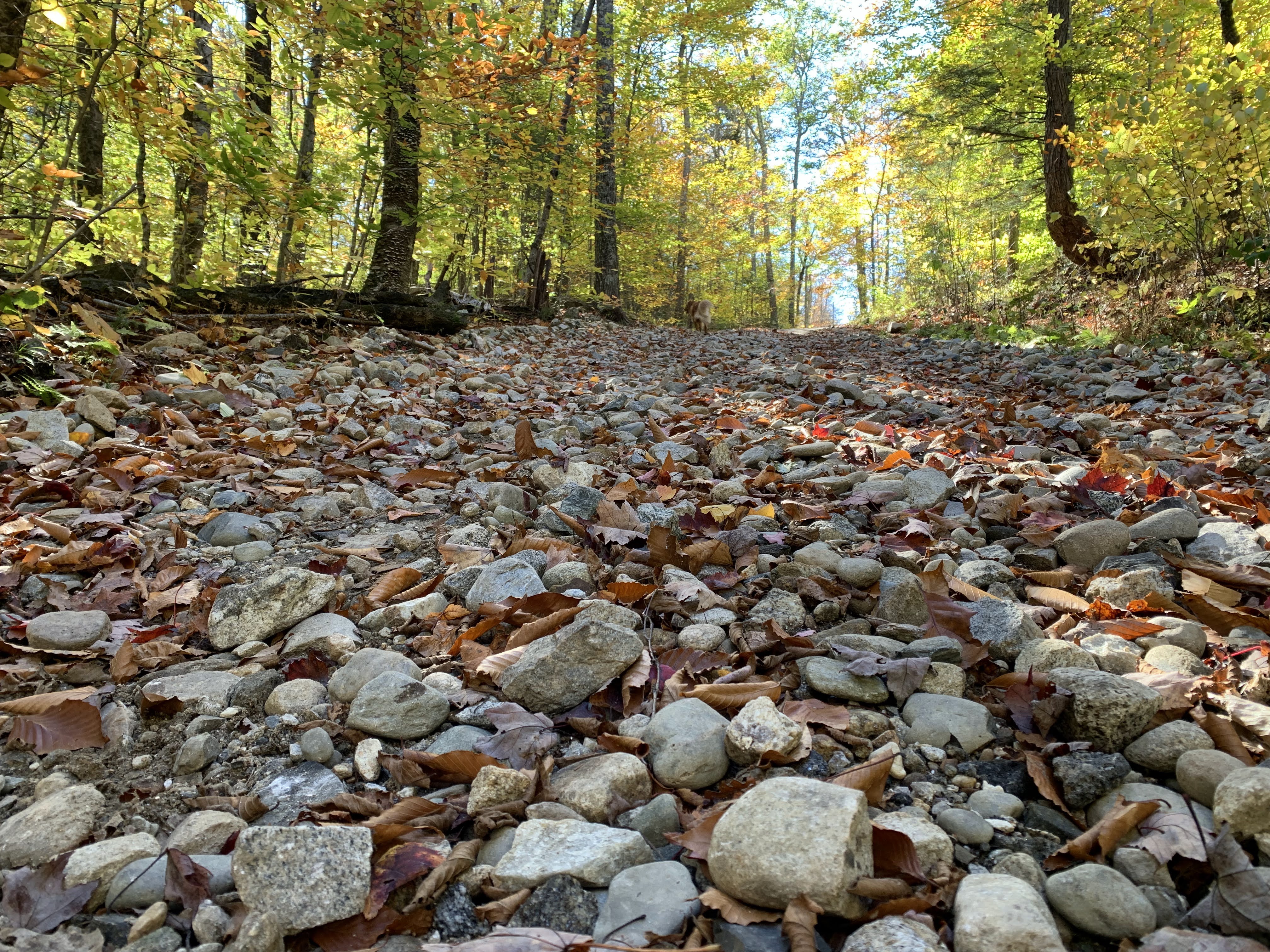
There seems to be an unwritten rule that artists should never explain the meaning of their work: they can either remain mysteriously silent or drop cryptic hints. I’m going to break that a little now to explain the middle section of the poem, “The dream” because there’s a mystery there. Since spring, I’ve had a recurring daydream of a golden wood, a pine hollow baked dry and amber by the sun, full of hills that roots break through. It’s warm, silent, peaceful, safe, beautiful, sad. There might be a castle nearby; I think it has a wishing well. It may be from a book or movie (Ever After, Bridge to Terebithia, The Book of Three, Prince Caspian) or somewhere I have traveled (New Hampshire, Cape Cod, Pennsylvania, Yosemite). I thought it might be in Acadia National Park, but I didn’t find it there in June.
As I included that dream in my poem, I read Rebecca D. Martin’s beautiful article, on the Rabbit Room, “The Stories of Others.” I liked it so much that I went back and reread her Rabbit Room article from February, “Significant Lights.” The fourth paragraph brought me to a full stop: she describes a childhood dream
… infused with a beauty so rich I can still sense it. In the dream, I walked through a golden wood, as haunting as autumn, as living as spring. There were elements other than the forest, too: a castle, the sense of mystery, a deep feeling of belonging and hope, and even sorrow—a pervasive sadness that I couldn’t keep staying here in this most perfect place. . . . sometimes I still lay on the edge of sleep longing for a glimpse of that forest again.
Is my golden wood a subconscious memory of Rebecca’s article? (Probably.) Or did we both dream of the same place, miles and years apart? I have no idea, but the second idea reminds me of something I read in Madeleine L’Engle’s book Walking on Water: L’Engle noticed that a certain image she used in her book A Swiftly Tilting Planet, a bonfire of roses, also appeared in Dante’s Divine Comedy, George MacDonald The Princess and Curdie, and T.S. Eliot Little Gidding.
Where did the fire of roses originate? I suspect that it goes back beyond human memory. Madeleine L’Engle, Walking on Water, chapter 10, “The Journey Homeward”
Is the golden wood a whisper of Deep Magic? I want to believe that.
I think the golden wood will haunt me in the darkness of winter in Scotland (six hours of light per day). I think it will come back to me when I slop through slush in the streets or feel cold, wet winds slicing through my jacket. I hope that instead of making me grumpy and discontent (as I can be), that fragrant silence, delicious heat, and golden radiance warm me from the inside out.












 Stories of Yearning