Beatrix Potter, “The Idea of Autumn,” and Rituals of Remembrance


It has been so long since I actually read any Beatrix Potter that I barely remembered the stories at all. I have only a vague recollection of moles, hedgehogs, rabbits, mice, and sparrows wearing bonnets, aprons, and slippers; living in cottages, burrows, and villages; and having adventures. I remember watching the animated version of “Peter Rabbit” and feeling terrified when the farmer nearly shot him. When my dad recently started reading some Beatrix Potter stories to one of the youngest members of the family, I felt like the character General Woundwort in a climactic scene of Watership Down

“For a moment some old, flickering, here-and-gone feeling stirred in the General’s memory — the smell of wet cabbage leaves in a cottage garden, the sense of some easy-going, kindly place, long forgotten and lost.” (Watership Down, pg. 452)

I love how that line captures the elusiveness and concreteness of memory.  

One of the stories my dad read aloud was “Squirrel Nutkin.” Potter writes with a delightful particularity about the miniature, earthy world of little creatures: the “little rafts of twigs” that the squirrels use to cross a lake, with their tails serving as sails; the “little thread of blue smoke from a wood fire,” a present of “six fat beetles” which were “wrapped up carefully in a dock-leaf, fastened with a pine-needle pin,” and my favorite, Squirrel Nutkin playing ninepins with “a crab apple and green fir-cones.” The story is something between folktale, cautionary tale, and comedy: mischievous Squirrel Nutkin flirts with disaster by mocking, teasing, riddling, and pestering Old Mr. Brown, the owl, until the owl snaps. 

On one level, it reads as a classic Victorian morality tale about the danger of disrespecting authority and the importance of hard work. On another level, I wonder if it echoes older stories of archetypes like the Trickster and the Miraculous Escape. The pattern of the story is rhythmic, like a fairy tale: there are seven days, seven gifts, disaster, and then deliverance. 

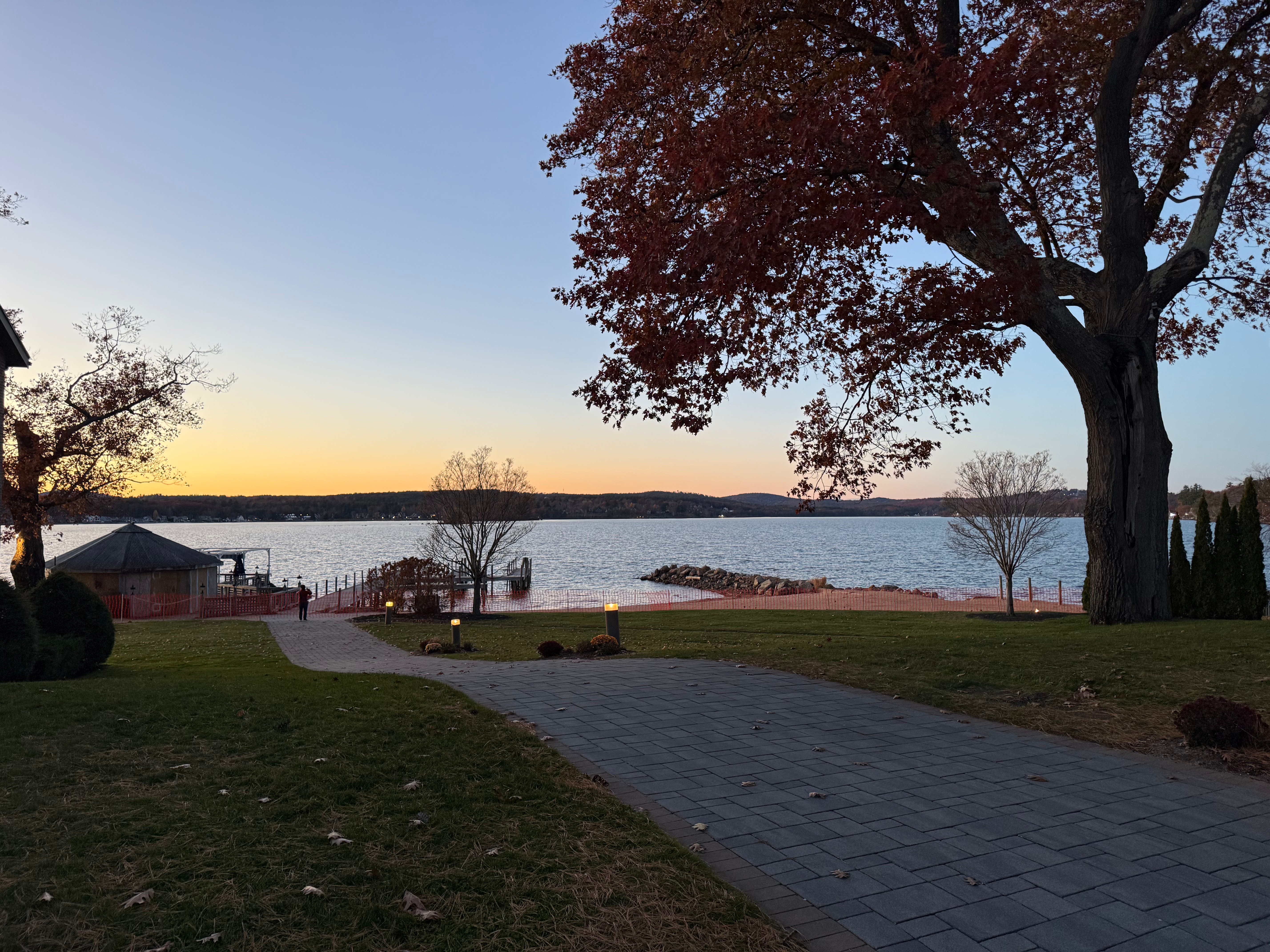
Beatrix Potter, Richard Adams, Kenneth Grahame, and A.A. Milne are directly responsible for my love for the English countryside. Creatures and landscape features like badgers and hedges, moles and stone cottages sometimes feel more real to me than the features of my own region. Their work makes me want to run out and do the same for New England’s landscape: capture details like the glorious reds of of autumn, the sapphire glow of lakes and rivers in the twilight, and the sweet, haunting smell of fallen leaves. 

Beatrix Potter left her mark on C.S. Lewis and J.R.R Tolkien, too. I love Tolkien’s mention of “Peter Rabbit” in his essay, “On Fairy-Stories.” He points out that even in a simple children’s story is a hint of the Fall: Peter Rabbit breaks a prohibition by trespassing in a garden, is forced to leave his coat behind, and falls ill (symbolic echoes of Adam and Eve and the Garden of Eden). 

C.S. Lewis had a fascinating response to Squirrel Nutkin. In his book Surprised by Joy, he describes it as the second glimpse of that feeling he calls Joy, “an unsatisfied desire which is itself more desirable than any other satisfaction”:

The second glimpse came through Squirrel Nutkin; through it only, though I loved all the Beatrix Potter books. But the rest of them were merely entertaining; it administered the shock, it was a trouble. It troubled me with what I can only describe as the Idea of Autumn. It sounds fantastic to say that one can be enamored of a season, but that is something like what happened; and, as before, the experience was one of intense desire.  (Surprised by Joy, pg. 16-18).1 

Lewis captures inexpressible feelings so beautifully. “The Idea of Autumn” is a simple, profound way of articulating that longing stirred up by copper, scarlet, and amber canopy; the blaze of early sunsets; and the chilly nights under the lantern-like Hunter’s Moon and Beaver Moon. 

Daniel and Esther: The People of God in the Halls of Power

For the past few months, my church’s sermon series has focused on the book of Daniel, and our women’s Bible study is going through Esther. None of the church leaders planned this, so the way these books complement each other has been a wonderful surprise. Daniel and Esther are both exiles in Babylon; both end up in kings’ palaces and positions of power; both are threatened by forces that hate God’s people; both have to stand up before thrones and speak the truth. Both books showcase the incredible opulence, luxury, and decadence of the empires that swallowed up the rebellious remnant of Israel. Daniel sees King Nebuchadnezzar make a gold state 60 cubits high; the entire first chapter of Esther describes a magnificent banquet in detail, right down to the white cotton curtains, mother-of-pearl floors, and gold and silver vessels. 

Against the backdrop of pagan power and pagan wealth, Daniel and Esther had to stand firm and make courageous choices. Daniel’s three friends were thrown into a fiery furnace for refusing to worship the gold statue. Esther had to go before the king unsummoned, risking her life, to eventually plead for her people. One thing that’s become clear in our study is the role of faith: “the assurance of things hoped for, the conviction of things not seen” (Hebrews 11:1b). Faith guided these two characters and others to act based on the invisible reality of God’s greater kingdom amid the drama of powerful earthly kingdoms. 

Another grand theme of both books is remembrance. They are both very careful and detailed records in themselves, as well as records of record-keeping: edicts from kings that cannot be revoked, important letters sent to every province of a vast empire, and books of chronicles that are read aloud at key moments. Esther ends with repeated admonitions to remember the Jews’ deliverance from Haman’s edict with the festival of Purim. Rituals of remembrance like holidays, feasting, and gifts keep God’s goodness and His promises fresh in our minds, pointing us towards hope. 

Rituals of Remembrance

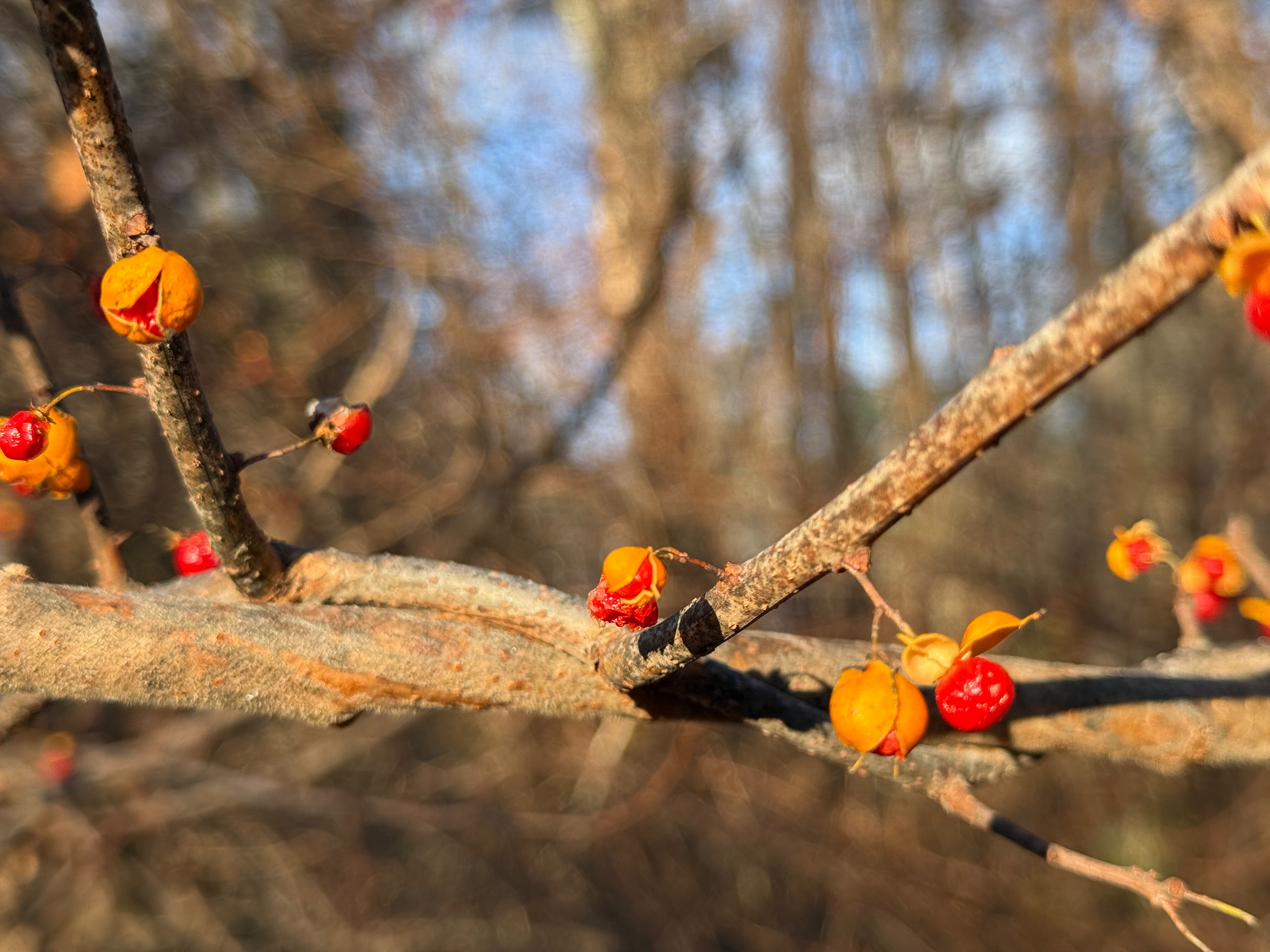
October and early November are one of my favorite times of year, both because of their beauty — red berries, cinnamon-colored leaves, and swirling fog — and because they mean that we are on the threshold of the cozy festivities of Thanksgiving and Christmas. I love the family gatherings, the magic of the first snow, and the breathless wonder of children and children-at-heart that takes center stage at the end of each year. 

Reading about Purim in Esther, the fourteen and fifteenth days of the month of Adar during which the Jews were to feast, celebrate, and give gifts, makes me realize that we do the same with our holidays. We are a forgetful people, but setting aside times to remember timeless truths refreshes our gratitude and praise. Stories and songs, too, imprint the goodness of God on our hearts: the concrete, particular, and specific ways He reveals His mercy, from miraculous deliverances to the splendors of autumn. 
Poetry, Places, and Inklings

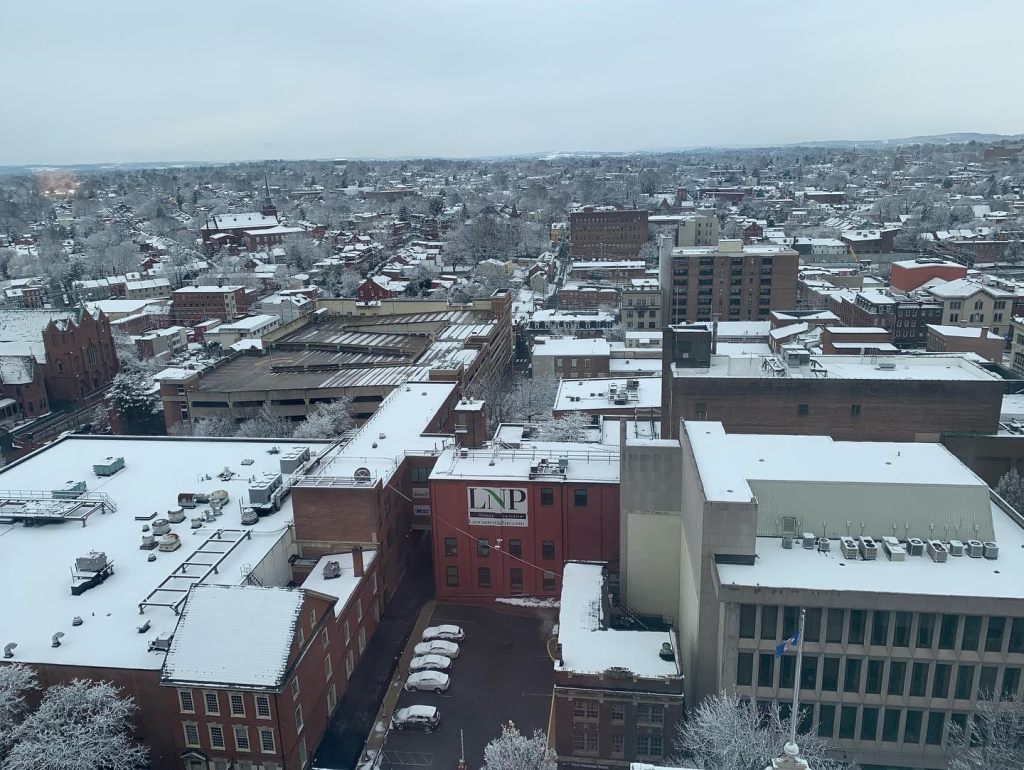
Lancaster, PA in the snow

He sees no stars who does not see them first
to flame like flowers beneath the ancient song,
whose very echo after-music long
has since pursued.
J.R.R. Tolkien, “Mythopoeia” 

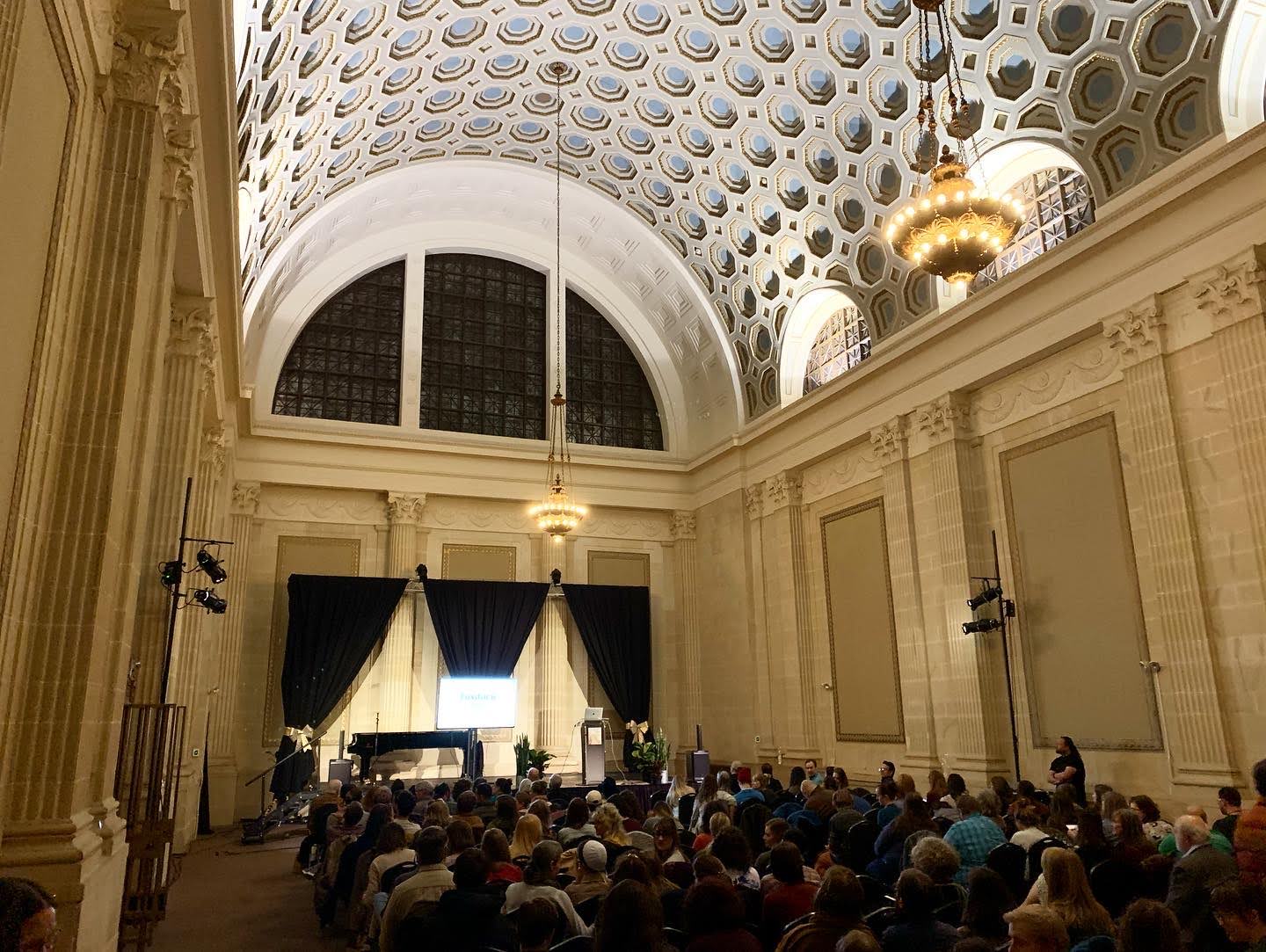
After a winter of long drives into the dusk, ice-puddles that sparkled in the sun, and bitter cold that cracked the skin on my hands, I sat in the Trust Performing Arts Center in Lancaster, PA, frantically typing notes. I was supposed to attend the Inklings Fellowship Conference, hosted by Square Halo Books, in April 2020, only to have it postponed due to COVID. As I made my travel plans for Lancaster, I kept thinking about how much has changed in me and in the world in these two years.

The conference was joyous. For the first time, I met writers and artists in the flesh who I had met in digital forums – online classes, creative collaborations, or Zoom office hours. I gave most of them big hugs. Somehow, talking about creativity, art, faith, and beauty over the Internet gave us a familiarity that made our in-person meetings comfortable and full of laughter.

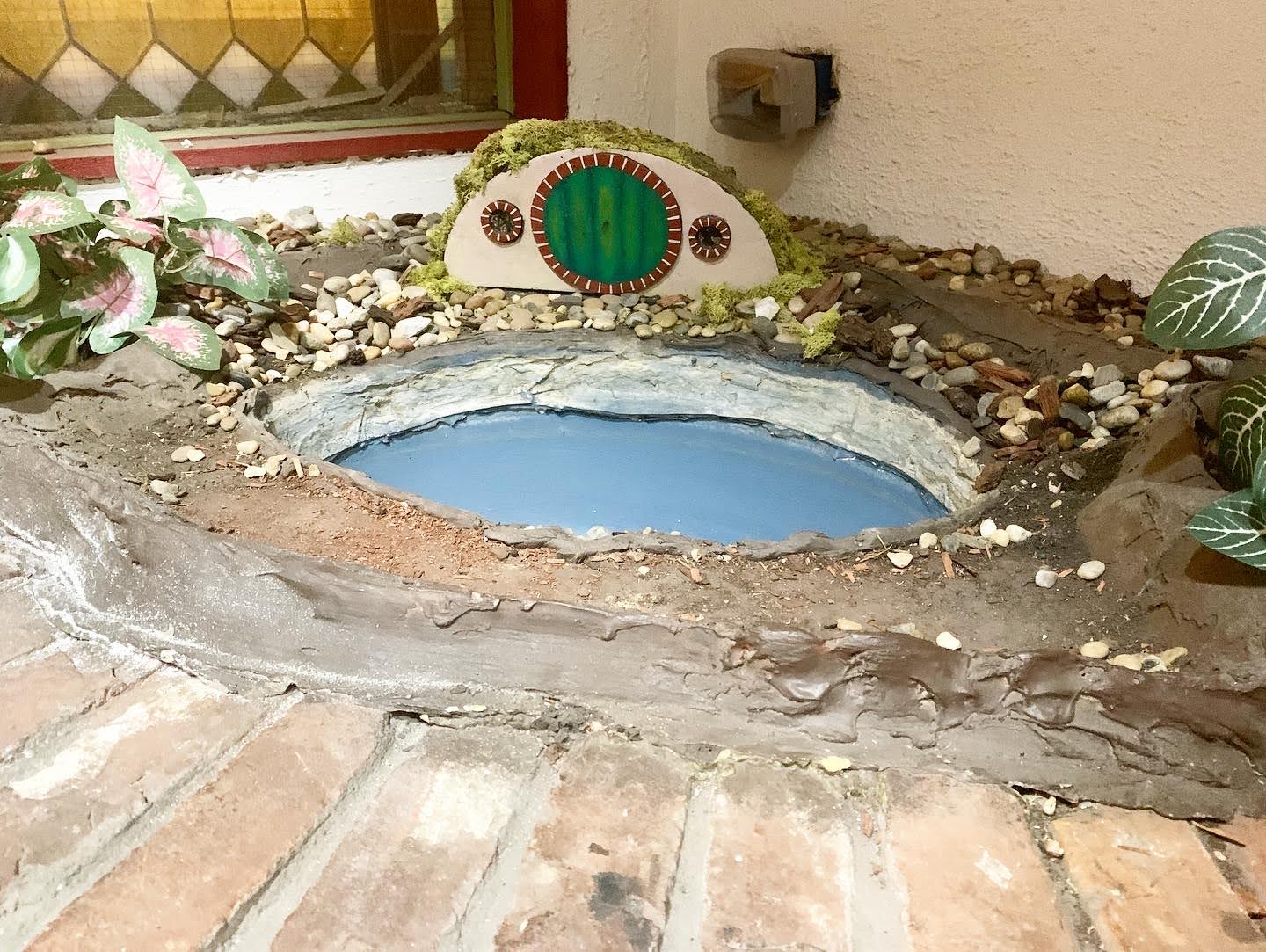
It was enthralling. Lectures by scholars, artists, and Inklings-lovers on the wordsmithing of Tolkien, the myth-blending of Lewis, and the collaboration between them fill my mind and heart with wonder. The “Rabbit and Dragonfly” pub next door, with its miniature Shire landscape, huge map of Middle Earth, painting of Lucy and Mr. Tumnus at Lantern Waste, and shelves of old books felt like a home I’d always wanted but didn’t know was real. I scoured the conference bookstore and spent far more money on books than I budgeted for.

It was exhausting. I love conferences, but the rapid pace, overflow of information, and consistency of social interaction left me completely drained, though very happy. 

The power of poetry and language, of words and names, was one of the keynotes for me. I’m still pondering the fantastic lecture by professor and poet Christine Perrin on “The Poetry of Tolkien,” in which she argued that Tolkien was an epic poet equal to Dante, Milton, or the author of Beowulf, and understanding his poetry is fundamental to understanding his work. She outlined Tolkien’s love for language (apparently he felt that a new Grammar Primer was like finding a hidden wine cellar) and his understanding that to name something is to know it and possess it. She also explained Tolkien and Owen Barfield’s idea that our language is splintered and fragmented from its original wholeness, a tragedy that has splintered and fragmented our consciousness and understanding of the world. For instance, words like the Greek pneuma have a holistic meaning of wind, breath, or spirit, united so that the one word has multiple layers of meaning, while English has separate words for each concept. This separation has disrupted our ability to understand the unity of the cosmos. 

The theological importance of naming reminded me of Madeleine L’Engle’s A Wind in the Door, one of my favorite books, in which Naming is linked with loving, understanding, communicating with, and rescuing others. It also made me think of my day-job as a technical writer, in which I try to teach, simplify, and convey complex ideas about software and cloud computing in clear, simple instructions. Language is one of the greatest challenges of my newest job. The terminology of cloud computing and networking was developed by engineers, scientists, military and government officials, and (I say this lovingly) computer geeks. I doubt any artists or poets were involved, and I wish they had been. As it is, software and computer engineering language is made of many displaced or complex, hard-to-remember, uninteresting words and phrases: 

  • Words transplanted from the physical, artistic, and even spiritual worlds into digital contexts: screen, page, icon, code, cloud, tunnel, gateway, walled garden, firewall, routes
  • Words that are abstracted and not linked with the physical world at all: data center, availability zone, encryption
  • Acronyms that are very hard to remember, at least at first: HTML, DNS, IPv4, ECMP, VPC

I don’t know if anything can be done now, as experts in these fields are familiar with this language, and to change it would be as difficult as changing a national currency or measurement system (but worse, since the Internet is international). But I wish a scientist/engineer/programmer with J.R.R. Tolkien’s love for words, C.S. Lewis’s clarity and skill with analogy, and Dorothy L. Sayers’s bluntness and common sense had been the one to choose the nouns, verbs, and adjectives we use for computing and networking. 

Christie Purifoy’s session on “Placemaking in Narnia” meant a lot to me after weeks of walking through concrete tunnels, gray parking garages, and tiny city parks with leafless trees and withered grass. But her talk was more than a reminder that beauty is important. She argued that even beautiful places can be place-less – lacking “aliveness” or a sense of “wholeness, spirit, or grace.” Frozen Narnia was beautiful, but it was disenchanted and lifeless under the reign of the witch. Place-making is the re-enchantment or reawakening of places.

I found this beautiful, hopeful idea of place-making inspiring and encouraging, though it brought back some frustrating memories. As a child, student, young professional, and just another human being in the world, I have not always had control over the environments in which I live, work, commute, and exercise. Location, the cost of living, spiritual calling, and bureaucratic requirements of different seasons of life (such as getting a driver’s license) have all shaped my options for places to dwell in. These shaping forces have put me in places with a tangible “aliveness” and places with a palpable “deadness” – beautiful and ugly, cozy and barren, spectacular and dingy. I’ve played in gardens full of rhododendrons and tulips; studied in school classrooms with blank white walls, and fluorescent lighting; worked in offices of gray cubicles and choking silence; read in libraries full of old books and stained glass windows. In “lifeless” places where I felt trapped, placemaking meant cultivating the little things I could control within the tiny spaces I owned (Spotify playlists, taped-up pictures from magazines, scented candles, fairy lights) and dreaming about the places I longed to make and inhabit.

I drove away from the conference into a snowy blue twilight. The wisdom I’d heard about language, beauty, and art came at a good time – late winter is my least favorite season, the doldrums of the year. As I’ve done in the past, I want to use art to fight the grumpiness I sink into amidst long, gray days of slushy snow and dirt-encrusted ice. In honor of the goodness of poetry and place-making, I’m doing a new creative collaboration for March with some fellow writers and artists, centered around the theme “Winter Eyrie” – the concept of a refuge, a haven, a fortress, a citadel, somewhere cozy and safe amidst chaos. More details to come. 🙂

Photo by eberhard grossgasteiger on Pexels.com

“I am a ghost”: Leaving St. Andrews

“I am caught by the morning and I am a ghost.” For weeks, that sentence from the end of C.S. Lewis’s Great Divorce haunted me, because I knew I would be leaving St. Andrews soon, and that I would disappear like a shade at dawn.

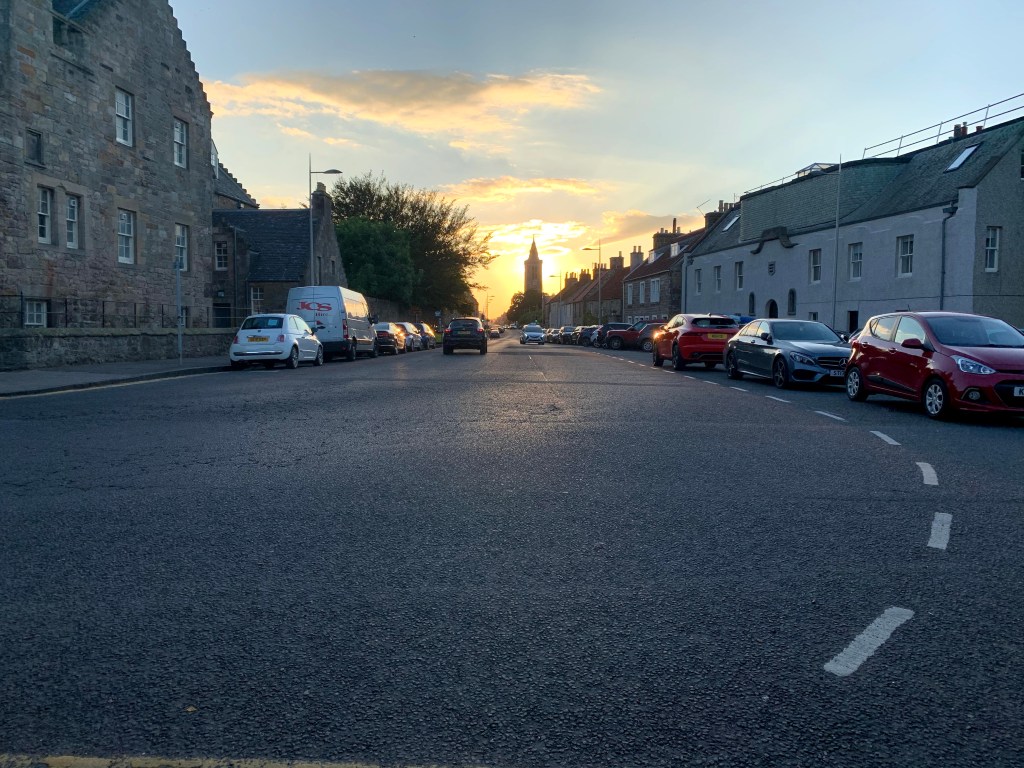
St. Andrews is centuries old. Whatever Viking raids, Reformation riots, horrific witch burnings it’s had, students are the real ghosts – especially international ones. We come each fall to clean out the charity shops, fill up pubs and coffee shops – and then leave each summer. I am one of hundreds of thousands who came and went. I left nothing behind but a mostly-clean dorm room, kitchen-full of dishes, pots, and pans, and memories with friends. The community’s memory of me has already faded.

Finishing

August felt ghostly: gray with haar (sea fog), cool, and often rainy. I piled up books on Dante’s Divine Comedy, the sins of sloth and anger, Lord of the Rings, and T.S. Eliot’s Four Quartets on my desk and culled them for quotation marks, filling out the framework of my dissertation. It was quiet. We met in cozy pubs to compare word counts and progress, but most of the days were monastic: silent, solitary work, broken up by freezing swims in the North Sea or walks along the coastal path. The Queen Anne’s lace faded at the end of July. A swallow nested in the entranceway of our flat’s stairwell. 

Somehow, our dissertations came together: bullet-pointed lists of quotations and sentence fragments grew into paragraphs, sprouted into chapters, and branched out into full arguments. I read and reread each section of mine, often out loud, trying to spot misplaced modifiers or errors in reasoning, participating in the wider scholarly conversation without sacrificing too much of my word count to quotes. I examined each text in the light of the sins of sloth and anger, exploring how characters in Perelandra, Lord of the Rings, and Four Quartets find the right virtues to combat them. I found that while Ransom and Gandalf choose the virtues of zeal or hope, the remedy for despair in Four Quartets – total surrender to the grace of God – remedies every sin. When we surrender, we step into the Great Dance of the cosmos, ordered by love, where even the distinctions between virtues no longer matter.

At the same time, the paper I’ve mentioned before, in which I examine revelation in L.M. Montgomery’s Anne of Green Gables and Emily of New Moon series, was in the throes of final copyediting. It felt wild to be working on both at the same time: adding em dashes and commas to the Montgomery paper, calling home to ask family members to double-check page numbers and wording in books I left in the States, while smoothing out transitions in my dissertation.

On August 17, after agonizing over my poetry footnotes (should I have added page numbers as well as line numbers for each poem?) I turned in my dissertation. At the same time, I announced the final publication of my Montgomery paper – the fruit of nearly five years of buying or borrowing scholarly texts, devoting morning coffee time, lunch hour, and evenings to work, and several rounds with literary journal editors. Both projects frustrated, exhausted, and refined me, revealing my weaknesses as a scholar: the impulse to oversimplify, reduce complexities and nuances, and my general ignorance of the wider body of scholarship. But now, both are done. 

Ironically and beautifully, the theses of both papers connected. I found that revelation and virtue are both relational, not equational. God does not give knowledge like a stack of library books, or hand out virtues like playing cards. He reveals Himself and cultivates goodness in us because He loves us, knows us, and wants us to know Him.

The rest of my time in St. Andrews was a frenzy of pub nights and last-minute goodbyes over coffee as well as moving. It was chaos: tossing bags and bags of goods into the charity shop donation bin by the library, filling up the kitchen trash can multiple times a day, trying to figure out what to ship home in boxes and suitcases and what I could carry around with me as I traveled the UK. Busyness and an unexpected injury meant that there was no more time to walk the coastal path or the Lade Braes – but still, the days were sweet, and full, and hilariously disorganized. When the time came, I rushed out on a gray morning to the bus, then the train to London, and out of Scotland. 

I don’t know when I’ll return there.

Wandering

Travelers, too, are ghosts, moving in and out of beauty spots and historical landmarks without (one hopes) leaving a trace. 

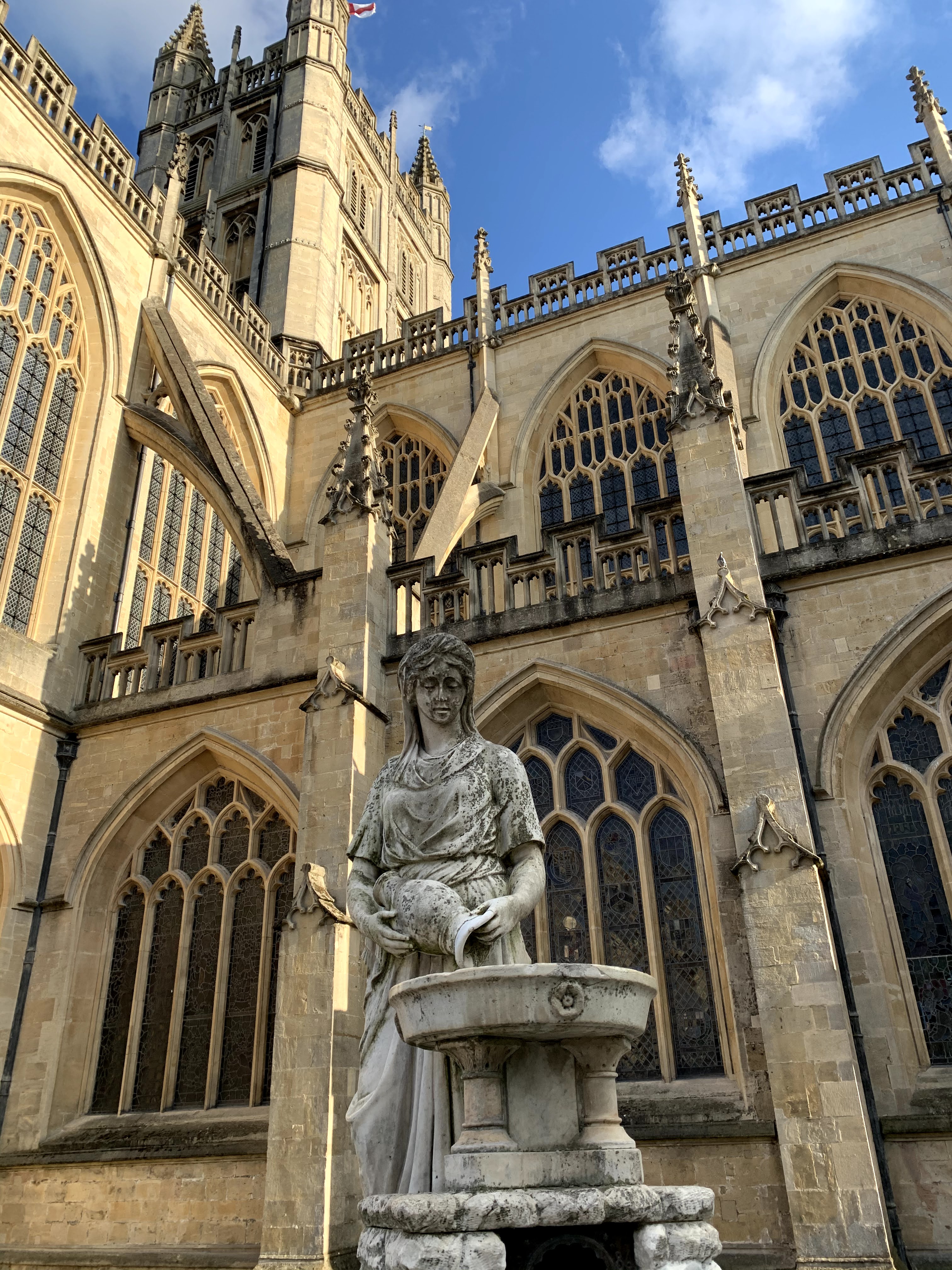
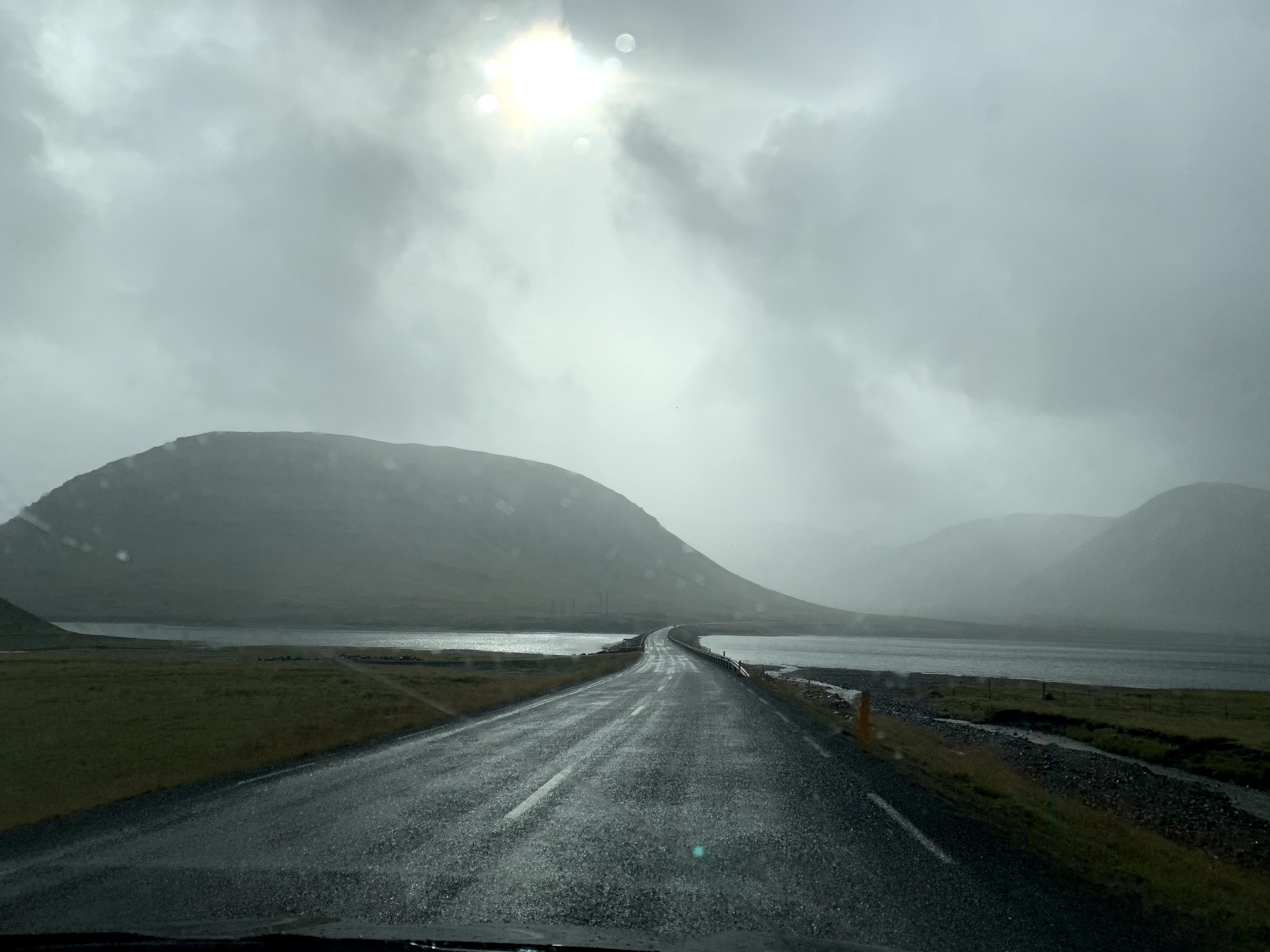
This is intended to be a creative writing/reflections blog, not really a travel one. I honestly don’t know how to summarize all of it. We moved so quickly: London, Bath, Wales, the Cotswolds, and then Iceland. Glorious golden weather followed us through the steep, cobbled streets of Bath, the green fields and woods of England, and the Welsh mountains with all their grazing sheep and horses. Iceland was all gray-green mystery, with mountains veiled in fog, silvery waterfalls, and pale glaciers. (I put lots of pictures and reflections on Instagram, if you want more details.)

We figured out how to operate at least five different brands of shower controls, driving on the left and right sides of the road, PCR vs. Antigen COVID tests before and after flights, train timetables, and the best kinds of souvenirs. We hiked until our legs ached, watched sheep graze on hillsides and foam churn in river gorges, laughed a lot, and made those special, highly-contextual, inside jokes that only work within one vacation and one group of people. I tried to understand what I’ve learned in this past year of grad school, life in another country, and lockdown, and who I’ve become in relation to loved ones I haven’t seen in a year.

I will write more about specific memories of these wanderings some other time. For now, I think I’ll just share the moments that were most precious to me:

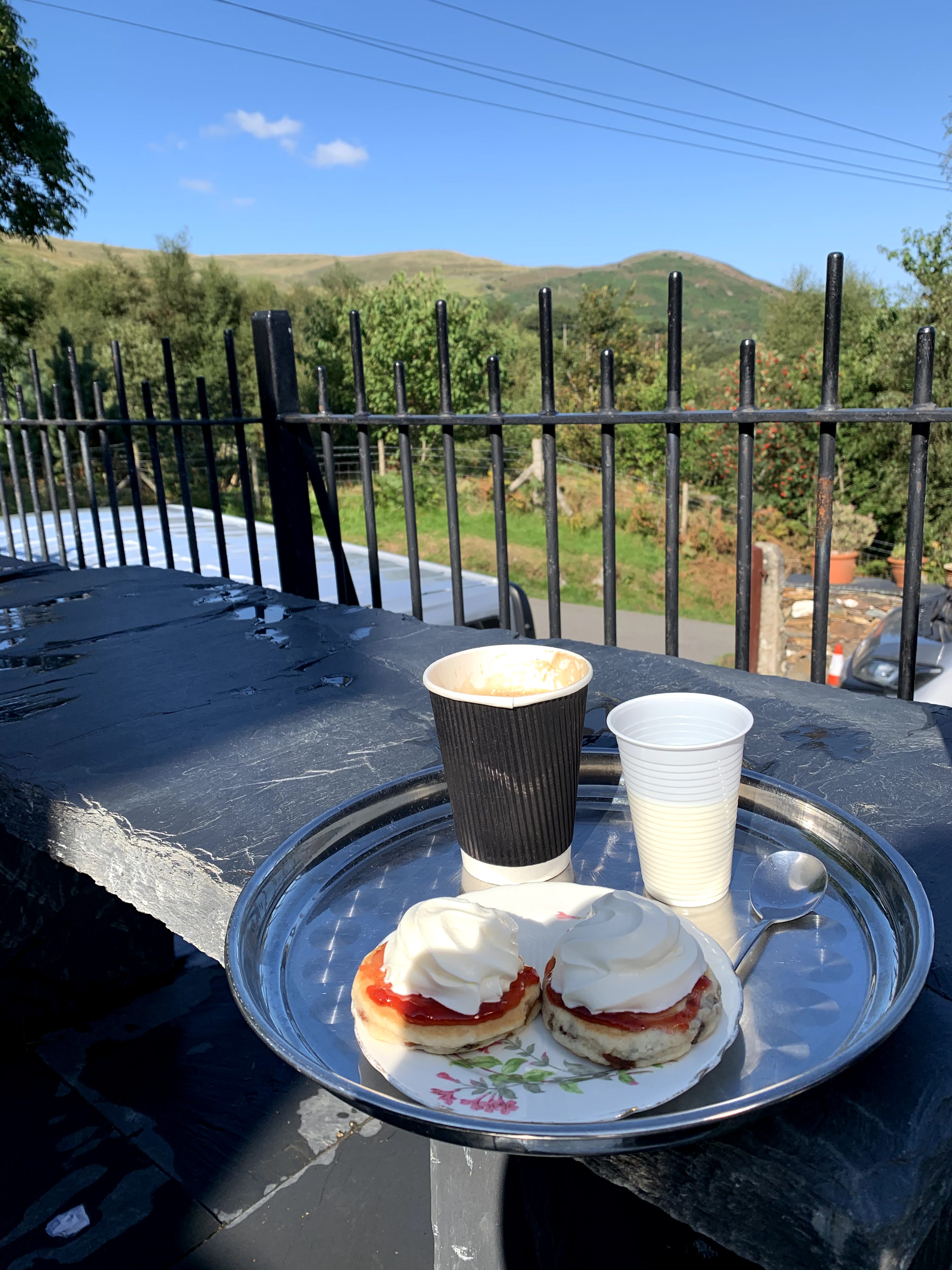
  • Sitting with a cappuccino and scone with cream and jam on the lower slopes of Mount Snowden, studying the sunlight on the rowan berries
  • Examining the Seljalandsfoss Waterfall from the cave behind it in Iceland, trying to describe how beautiful all that silver-white water is as it falls
  • Gazing down a rocky gorge at a snowy glacier, realizing that it looks like, and is, a frozen river waiting to burst forth, like Gandalf’s horses in Rivendell

The rest of September will involve more travel, with more time for beauty, for rest, and for creative writing again. In a few weeks, I will go home and end this year of study and travel, this time that I worked for, saved for, and dreamed about since undergrad. 

Then, I’ll step into a new unknown.