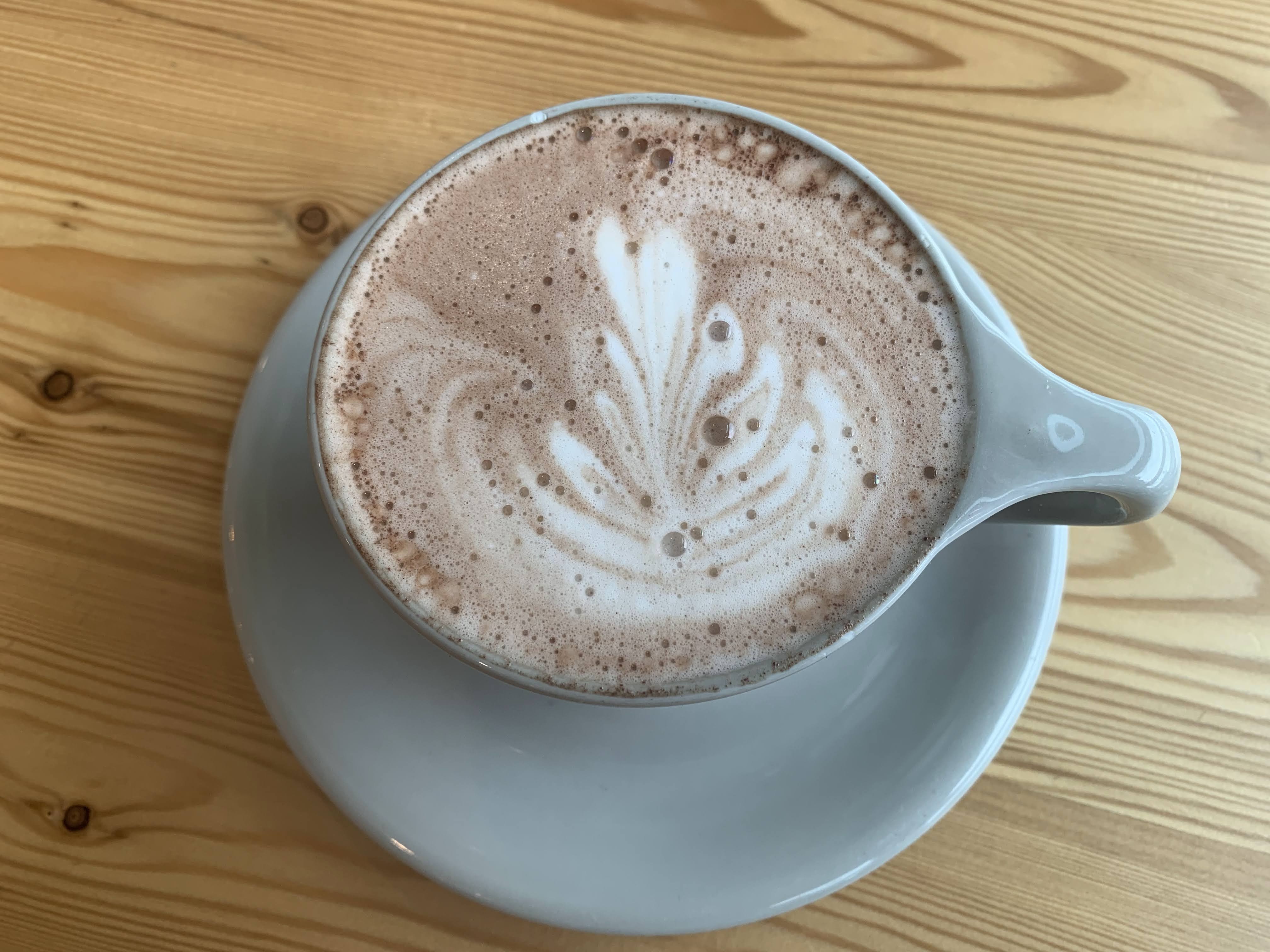
The Long Song of Autumn


Crimson fern leaves and nodding goldenrod; long hours of screen time revived by long readings in the Gospel of John; car repairs and apartment deep-cleaning; Zoom discussions of Tolkien’s stories and scholarship; blinking stop lights and noisy waiting rooms; hours spent curled up with adventure, fantasy, and fairy tale books as the dusk deepens. Autumn is passing slowly and swiftly, like the lingering end of a folk song.

Junius Johnson’s dragon course this summer was just as refreshing and joyful as I had hoped. Rereading old friends like The Hobbit, The Hero and the Crown, and The Neverending Story and discovering new treasures felt like inviting my childhood self to walk beside me and remind me of forgotten dreams. As the summer heat shimmers away and the tree canopy blazes gold and saffron, I have done my best to keep feeding my soul with tales of mystery and wonder-stories that remind me of the great and wild things underneath chores like brake replacements and insurance paperwork, like gold glinting through dead leaves. Some favorites included:

  • Emma Fox’s The Carver and the Queen
  • K.B. Hoyle’s Son of the Deep
  • Mary Stewart’s Nine Coaches Waiting and This Rough Magic
  • Miriam Pittman’s Ancora: The Fog Banshee’s Curse

Much of my free time has gone into season 2 of the Leaf by Lantern podcast. Season 1 was a flurry of writing and rewriting, trying to temper perfectionism with common sense, reading and trying to give myself enough time to ponder before publishing any thoughts. I am trying to make Season 2 a series of richer, deeper episodes – a slow wander rather than a mad dash.

Here are some notes on recent episodes:

East of the Sun, West of the Moon

Apparently, I can’t keep away from Search for the Lost Husband stories (ATU 425 in the Aarne-Thompson-Uther folklore index)*. I remember picking up a folklore anthology that bore this title from our childhood library and staring at the title printed on a pale blue background.

“Dad, what does this mean?” I asked him, showing him the book.

“Hmm,” he said. I have a vague memory of him gently explaining that compass directions don’t apply to things in space like the sun and moon. I never forgot this fairy tale, and loved it all the more when I read Jessica Day George’s gorgeous retelling, Sun and Moon, Ice and Snow. George’s retelling explores more of the background of the villain and makes the whole thing into an almost-gothic mystery, with a slow trickle of clues and revelations. This episode gave me a chance to explore the mystical, lonely, wistful Northerness of this variant and how an artist could create a rich atmosphere in a retelling.

* Every single time I read or type “Aarne-Thompson-Uther”, my mind jumps to Uther Pendragon, the father of King Arthur. There’s no actual relation. The “Uther” named in the index is Hans-Jörg Uther, a German scholar who refined the already-published work of Aarne and Thompson in 2004. He might appreciate the confusion. Then again, I don’t think Uther Pendragon is a very noble character, so maybe not.

The Little Mermaid with K.C. Ireton

Every overview of the history of fairy tales and folklore I’ve read takes a big breath and pause at Hans Christian Andersen. His renown is stunning; “The Little Mermaid,” “The Snow Queen,” “The Nightingale,” and others are as well known as “Cinderella” (at least, in the Western world). I haven’t read much of his biography, but I’ve seen some scholars assign facts from his life to his stories, as if his personal history is the only way to understand his artwork. “He wrote [this tale] because [biographical fact]” – and nothing more. A person’s life certainly influences their fiction, but I don’t like the reductionism of a tidy “this = that” statement as an explanation for stories with such haunting images and structural intricacy.

My discussion with K.C. (Kimberlee) Ireton gave me hope for Andersen scholarship. Her joyful, thought-provoking theological reading of the tale helped me understand why it strikes such chords in my soul – especially as the ending of “The Little Mermaid” is not quite the happy ending you expect. I’ve been dreaming up merfolk stories ever since.

Fieldmoot Conference Presentation: “She is the Morning”

In between planning this podcast season in September, I wrote and recorded a video on another fairy tale for the online Fieldmoot conference, which is scheduled to go live starting Thursday, November 2 at 6:30 pm through Sunday, November 5. The conference’s theme is “Light and Darkness,” so I chose a fairy tale I thought had some interesting light/darkness images: “The Singing, Soaring Lark” from the Grimm collection. This tale is a variant of “Beauty and the Beast” that was new to me. It’s a lovely quest tale with a courageous, warmhearted heroine and beautiful images, including larks, lions, griffins, dragons, the sun and moon, and a mysterious nut-tree. I had a lot of fun investigating things like bird imagery in the Bible, the physics of green wood, and the theology of recognition, though I had to leave a lot of research paths untaken to keep within a reasonable time limit.

I didn’t have time to mention it in the recorded video, but if you like the fairy tale, there is a picture book adaptation called The Lady and the Lion by Jacqueline Ogburn and Laurel Long. The illustrations are some of the loveliest I’ve ever seen.

The Fieldmoot conference uses Discord to keep a live chat as the recorded videos play. It was a cheerful, thoughtful, kind, and delightfully mischievous group of people last year commenting on the sessions and recommending books to each other. I hope we have the same friendly atmosphere this year. We’ll also have live Q&As after the recorded video sessions, so I’m curious to see what questions and comments people have.

Sign up here if you plan to attend! The organizers have done an unbelievably great job of strategizing, scheduling, innovating, and covering the multitude of details an event like this requires, and signing up helps them plan.

2023 became the year of fairy tales and fairy tale retellings for me. I have dreams of pursuing other research interests, including detective stories, travel adventures, light sci-fi, and maybe historical fiction, but I hope that the world of fairy tale images will illuminate all these future creative pursuits. Studying quests and towers, glass hills and magic wells, rescues and resurrections have helped me love the Great Story of the gospel all the more – the news that gives all our pursuits, from the highest delights to the most miserable chores, a meaning and a happy ending.
The Second Summer

My second summer in Tennessee really has felt like paradise: golden hour tickling the dark green, feathery leaves of the honey locust trees; a writer’s retreat centered on the theme of music; dewdrops twinkling in the grass; triumphal teaching on the book of Acts; fireflies gleaming in the sweet, cool air after a thunderstorm; an online course on dragons that is filling my mind with insights and my heart with wonder. 

It is also sweet to be fulfilling the dream of several years, starting a podcast. It is harder than I thought it would be to record my voice and send it out into the world. Hearing my own attempts to balance vocal projection, enthusiasm, calm, and proper enunciation feels like studying my face in a mirror for an uncomfortably long time. It is fun, though, to present my own writing in a new medium, a form that is more embodied and more vulnerable than text on a page. 

The brand-new project is still flittering its frail wings and trying to comprehend gravity, but just launching it has taught me a few things: to not try to edit to perfection (it’s a good way to drive yourself mad); to do things the messy way at first, like Googling “how to put your podcast on Spotify” and cushioning my microphone with pillows; to enjoy the way that a podcast opens fascinating discussions with close family and friends.

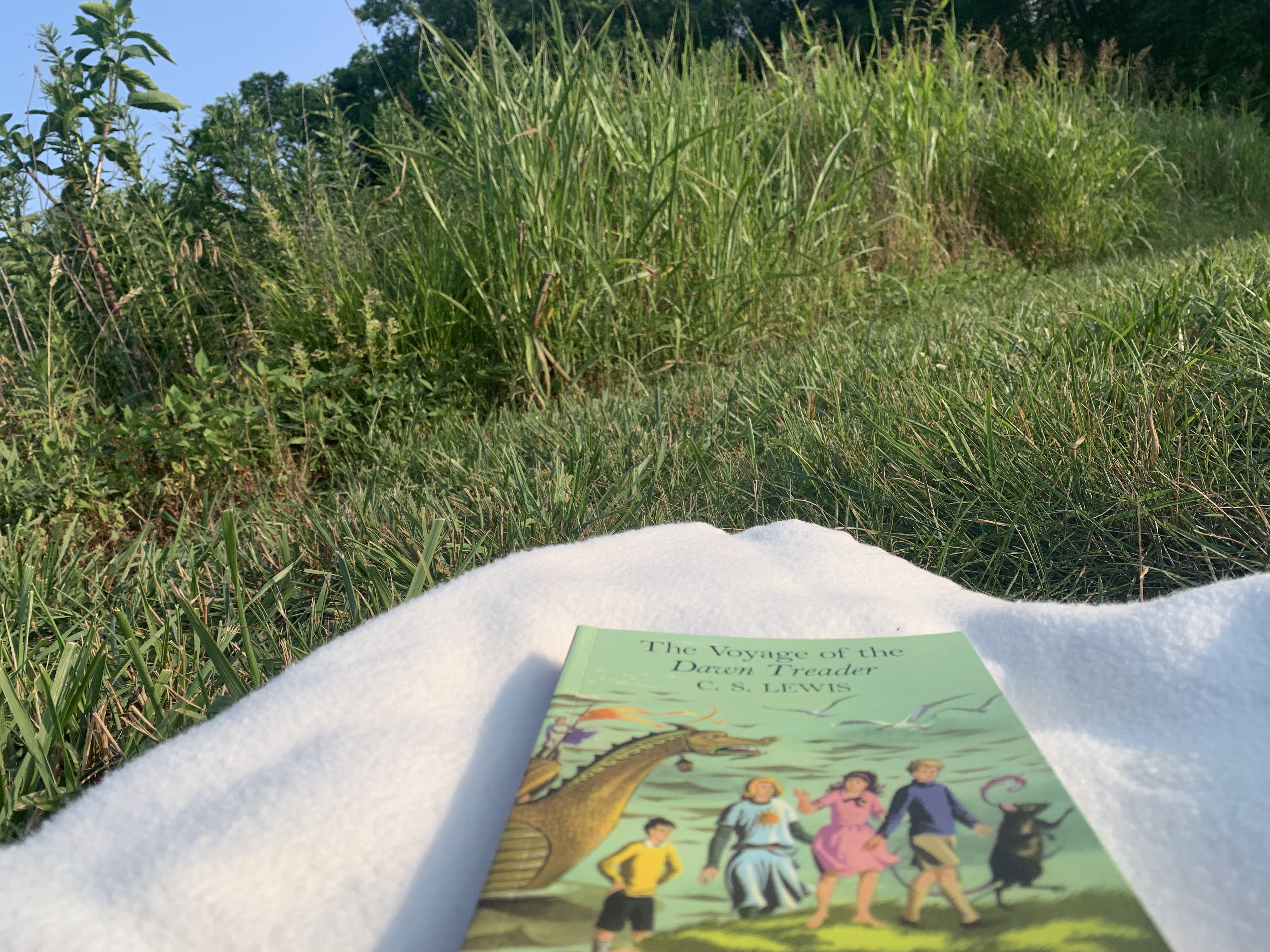
In between Scriptural word-studies on darkness and frost, puzzling over texts like Vladimir Propp’s venerable Morphology of the Folktale, rereading The Voyage of the Dawn Treader and The Hobbit, giggling over a P.G. Wodehouse audiobook as I water my plants, and basking in the sun to erase my flip-flop tan, I have been trying to write stories again. After a year of settling in a new place and trying to build a life, somehow, writing is harder rather than easier. It is a perilous, vulnerable, precious thing to try to call a world to life with words; shape believable, complex characters; set a rhythm of exposition, action, and dialogue that summons readers into the waking dream of narrative. 

A sweet and wise writer at the recent writer’s retreat told me that she is trying to write primarily for herself, for joy, first, before worrying about pleasing an audience. I am trying to have the courage to imitate her in that – to refresh my spirit with good, profound, beautiful things, and then use them to sing a new song. 

Leaf by Lantern – Latest Podcast Episodes

Episode 3: The Black Bull of Norroway

I had a lot of fun putting this episode together. The episode examines how a Christian artist could interpret or use the images of the unexpected call, the black bull, the wandering in the wilderness, and the glass hill from this fairy tale. 

Things I forgot or didn’t have room to mention in the episode (these will make more sense if you’ve already listened to it): 

  • I think the image of the black bull, a figure who is mysterious and scary at first but turns out to be good and kind, has some symbolic links to the idea of “holy darkness” that C.S. Lewis explores in his own fairy tale retelling, Till We Have Faces. I may do a podcast episode on that book later.
  • There are so many fascinating images in this tale I didn’t cover: the apple, pear, and plum given to the heroine that contain fabulous jewelry; the strange part of the tale when the sky turns red if the battle goes ill and blue if it goes well; the washing of the blood-stained shirt. I could have gone into themes of communion, provision, prophecy, sanctification, and recognition here – but to avoid making the episode too long or oversaturated with content, I had to focus on my favorite images.
  • In my own version of the tale, the one I read aloud at the beginning, I chose to have the prince say “At last!” when he sees the main character, his true bride. This phrase is an echo of Adam’s exclamation when he first sees Eve.

Episode 4: Maid Maleen with Loren G. Warnemuende

My friend Loren and I talk about her retelling of “Maid Maleen” – a trilogy called “Daughter of Arden.” We talked about the first book, “Exile,” and how Loren chose to interpret the father figure, the princess, the tower, and the garden. I also threw in a question about fancy dresses, since I have come to believe those are a crucial aspect of fairy tale retellings. 

  • You can order a copy of Exile here and Wandering here.
  • See Loren’s website for information more about her and her work.

Summer of Faerie: “King Midas Chased Me This Morning” and “Summer of Invisible Dragons” by Rachel Donahue

My research methods for this Summer of Faerie project have been quick, messy plunges instead of the careful, methodical, deep dives of a professional scholar. However, I am finding treasures. J.R.R. Tolkien, George MacDonald, Ursula K. Le Guin, Alan Jacobs, Madeleine L’Engle, and many others have explored the mysteries of Faerie, including memory, imagination, wonder, and beauty. My latest pleasure was finally reading George MacDonald’s The Golden Key, which I had heard about but not read – a sparkling, mesmerizing tale with echoes of dreams, death, and eternity.

The other writers who have joined me in this quest of celebrating and adding to the Faerie canon continue to delight. Rachel Donahue returns with another poem that “strips the veil of familiarity from the world” to expose “its sleeping beauty” (stole that from Shelley). Rachel also contributed a story that reminded me of a hearthfire on a cool, misty day – atmospherically, somewhere between the Shire and the Misty Mountains. Enjoy!

King Midas Chased Me This Morning

King Midas chased me this morning.

I saw him coming in the rear view glass,
his broad reach spreading o’er field
and tree and man alike,
gilding everything in sight
until he reached my pane,
besmirched with dust,
and I could see no more
through the aurous wash.

As I fled, I turned to spy
him rising there behind a tree,
and when I least expected him,
his fingers reached
deliberately
and touched my eyes
till all I saw
was gold.

Summer of Invisible Dragons

by Rachel Donahue

3.5.42

Plowed the back pasture today. Tom Shepherd came down the lane with his flock and brought word that dragons have descended from the top of Mt. Summit. Strange news. He’s not one to believe in fairy tales. I’m afraid he may have the dropsy mind.

7.5.42

Successful day at market. Folks love Mae Ella’s rhubarb jam. Stopped by the inn for a brew and heard a traveler saying that Dunn Castle is under siege by invisible dragons. The other patrons laughed at his strange tale, but his story gave me a bad feeling. I told Mae Ella about it and what old Tom said the other day.

9.5.42

Helped Mae Ella prep her flower beds. Sowed the back pasture.

11.5.42

Cut hay in the meadow.

12.5.42

Figured out where the story of invisible dragons came from. They aren’t invisible at all—you just can’t see them. A messenger from Allendale said the eternal cloud at the top of Mt. Summit has descended upon Dunn Castle where it sits at the foot of the mountain. The castle is completely hidden from view. Said he could see flashes of fire inside the cloud all the way from Allendale.

13.5.42

Baled hay. Mae Ella helped.

14.5.42

Went to a meeting in the square this afternoon at Mae Ella’s urging. Rumor reached us this morning that the dragons have spread from Dunn Castle to Allendale. Some believe the dragons can smell crowds, so they refuse to go outside. That explains why the market was so slow. Wish I could’ve stayed home myself. There’s talk of canceling the lantern festival next week, though I don’t see the reason for such fuss. We’re a long way from Allendale.

15.5.42

Smithy says there’s an inventor coming to Redfield to teach all the smiths from surrounding villages how to make his contraption—a kind of metal parasol. Says it’ll protect from dragon fire. Smithy’s already asking folks to give up their swords and shields and any other scrap metal they can afford. Says once the dragons get here we won’t have much use for them anyway. Not sure that I’m ready to give up my weapons on a hunch. But I did check the roof over and patch a couple places.

16.5.42

Mended the fence in the south meadow.

17.5.42

Word came that the dragons seem to have a taste for elders and are sparing the children. Maybe they’re attracted to the smell of menthol and camphor, I don’t know. But there’s a cloud over Sweetdale now, so they’re one step closer. There’s another meeting in the square tomorrow morning—only one representative from each family. Guess it’s up to me to go.

18.5.42

We canceled the lantern festival. Who could have imagined. We’ve celebrated this festival on the same day for hundreds of years. But we can’t risk attracting the dragons with large crowds. Our elders are too valuable.

19.5.42

Planted the garden. Feels strange to be sowing with the threat of dragons. Wondering if we’ll even be here to harvest.

20.5.42

I took my shield and extra swords to Smithy today. Never thought I’d be protecting my family by surrendering my weapons. Nothing makes sense any more now that there are dragons. They’ve moved on to Birchwood, so it’s just a matter of time before they get here. People are celebrating the lantern festival by placing their lanterns in windows. It’s not the same, but it’s a mighty nice view from our end of town to see so many little lights aglow.

21.5.42

A traveling merchant in the market today was selling what he called “dragon repellent”—a stink cream guaranteed to keep them away. He made some sales, but I didn’t buy it. Mae Ella asked around and found it was something she could make herself. Now the kitchen stinks to high heaven. I sure hope she don’t expect me to smear that stuff on when I go out.

22.5.42

Yep, she did. I smell so bad I can hardly stand myself. But I sure do love that woman. She makes so few demands of me, if she feels better with me stinking, I reckon I’ll do it. Good thing is, I’m not the only one. There’s enough of us wearing the stink that you can’t tell who it is that smells so bad. It might or might not keep the dragons away, but it’ll sure work on everything else. Even Bo and Bess won’t come near me. Glad the planting’s all done.

24.5.42

Well I never. I’m so cross I can’t see straight. Heard that our neighbors over in Greenfield are pushing their elders out of town, sending them out as a kind of offering to the dragons. Said they won’t be caught stinking or using funny parasols—they have the right to go about their lives like normal. Said if the dragons want the elders they can have ‘em, that way they’ll leave the rest of the village alone. Folks tried to tell ‘em it don’t work that way, but they won’t listen. We here in Redfield been taking those elders in for safekeeping. It may put us at higher risk, but with the stink cream and the parasols and everyone staying indoors, we suspect to be OK.

27.5.42

Got a nasty splinter while making stakes for the tomatoes. Mae Ella got most of it, but couldn’t get the last sliver. Elder Roy made up a paste to draw it out. I wonder what other useful things he’s got stored up in that head of his.

28.5.42

No market this week. Working the land with my parasol contraption close by. It’s a bit unnerving, having to watch and listen so close while I work, but I got to keep the farm going.

30.5.42

Folks is growing restless, what with being cooped up with the stink and all. The inn’s closed, and the taverns, too, and no one’s meeting in the square. I only leave to tend to my animals, and poor Mae Ella hardly leaves at all. It’s hard to see that sweet blossom withering on the vine, but she’s determined to take good care of the three elders we got staying with us. To pass the time we all tell stories of an evening. I’ve been amazed to hear what they’ve seen in their day, but it’s nothing like the dragons. They’ve never lived anything like this.

2.6.42

The dragons are at Greenfield. Maker have mercy. Some from town went to see if they could help, to carry them some cream and a few extra parasols, but it was too late. The cloud had already covered the village. We could see flashes of fire out west in the early morning hours before the sun was up. It’s eerily quiet here—no birds or chitterin, no wagons or talking. Everyone’s locked up tight now, just waiting.

4.6.42

The dragons passed us by. I’ve never been so scared in my life. We been spread out in the house, not more than two together, and all of us under parasols as much as possible. Only sound I heard for two days was a baby crying down the street and the animals restless in the barn. No one knows when they’ll be back or exactly why they kept going, but we’re all breathing careful tonight.

5.6.42

Still no sign of dragons here, but no one goes outside unless they need to. Taking every precaution. Got word from Greenfield today—the whole village is in mourning, hardly a family untouched. Some dead, some suffering burns, a couple houses charred to a crisp. Someone sent word thanking us for saving their elders from such a fate. The elders are mourning, though. They’ve lost more than most.

8.6.42

Been at Greenfield for two days, helping to clean up the remains. Mae Ella sent me off with baskets of food and all the extra stink cream she could spare. Only seven of us made the trip from Redfield, but we didn’t walk together for fear of drawing the dragons back. It was a lonely journey. I’ve worked so hard the last two days I ache in places I’d forgotten about, but I was determined to get home to my sweet Mae Ella soon as I could.

11.6.42

The elders have decided to return home. Greenfielders are staying indoors now and using all the stink cream and parasols they can get, and they’re in sore need of their elders. I’m mighty proud of the folks from our village who are stepping up to help and donating what they can. A few old misers in town are more interested in being right and teaching them a lesson, but I say that that poor village has suffered their folly enough without anybody else heaping coal on the fire. The ones of us who went to help the other day saw that plain enough.

12.6.42

Weeded the garden. Caught a glimpse of the firstfruits.

15.6.42

There’s a new normal around here. We live every day with the threat of dragons (word still comes of villages hit near and far) but we’ve been fortunate. Hard not to let our guard down when the skies are so clear. But we all care about each other too much to be careless. Even the ones that was skeptical are taking up parasols now that it’s hit so close to home. Some of the ladies done gone to painting theirs, making it a new kind of fashionable thing. I got to say I don’t mind it so much. Those little spots of color—like the zinnias that popped up in Mae Ella’s flower bed—just brighten up the place and help it not to feel so dark and dreary. Eventually the dragons will come—I can feel it in my bones—but that don’t mean we can’t take care of what’s here right now. If Mae Ella’s taught me anything in all my years with her, it’s that. We got work to do.

Rachel Donahue

Rachel Donahue

Rachel S. Donahue holds a B.A. in English and Bible from Welch College in Nashville, TN, and has more than eleven years’ experience changing diapers. She and her husband, Mick, previously lived and worked in Spain serving people groups at risk of marginalization. They now live near Charlotte, North Carolina, where they’re both involved in the family greenhouse business while raising three sprightly boys and a sweet-as-pie little girl. Visit her website/blog at www.thedonahuedaily.com.

Her book, 
Real Poems for Real Moms: from a Mother in the Trenches to Another, can also be found on Amazon or bookshop.org.