

The sweetest thing in all my life has been the longing — to reach the Mountain, to find the place where all the beauty came from —
C.S. Lewis, Till We Have Faces
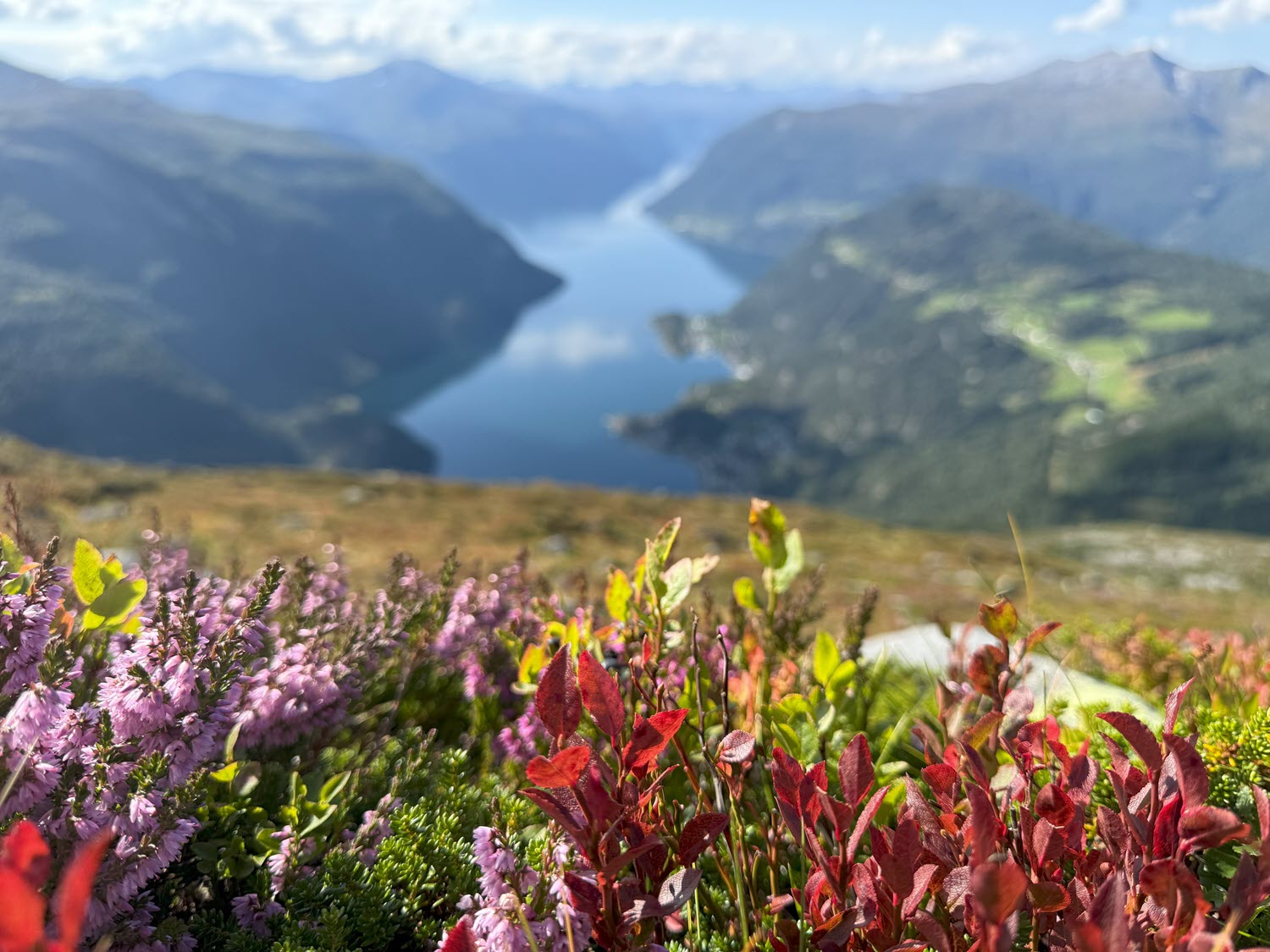
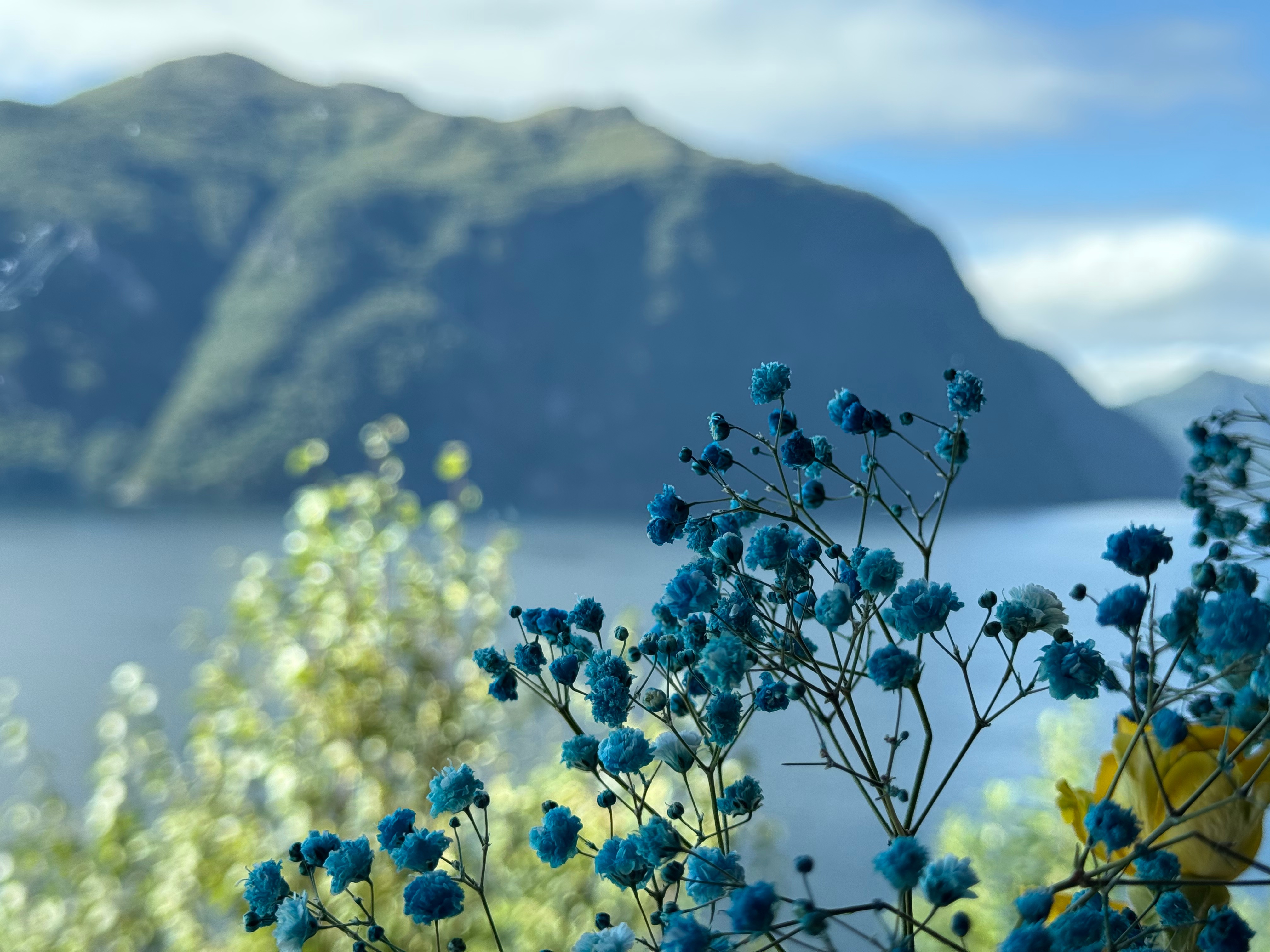
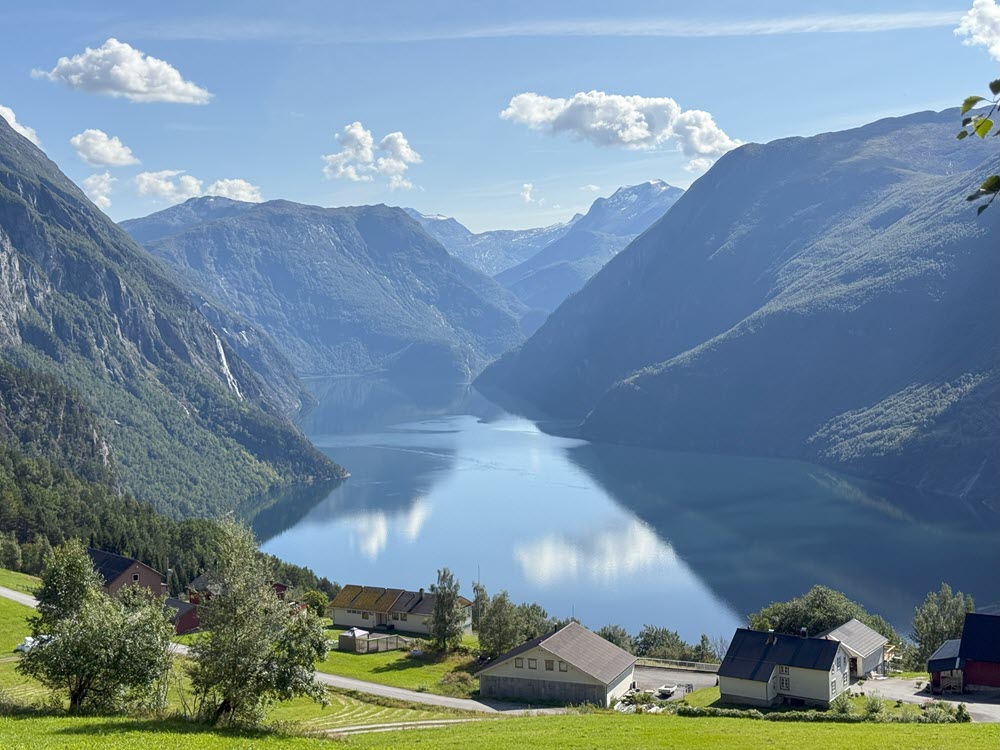
It was exactly the kind of place my childhood self dreamed about: gigantic mountains thick and green with pines, firs, and birches; waterfalls tracing the steep slopes like silver ribbons; glimmering fjords that reflected the bright blue sky and dark blue mountains; white-tailed eagles wheeling through the clouds; cottages and farmhouses clustered in emerald valleys; wandering sheep with bells around their necks; purple heather with leaves burned crimson with autumn.
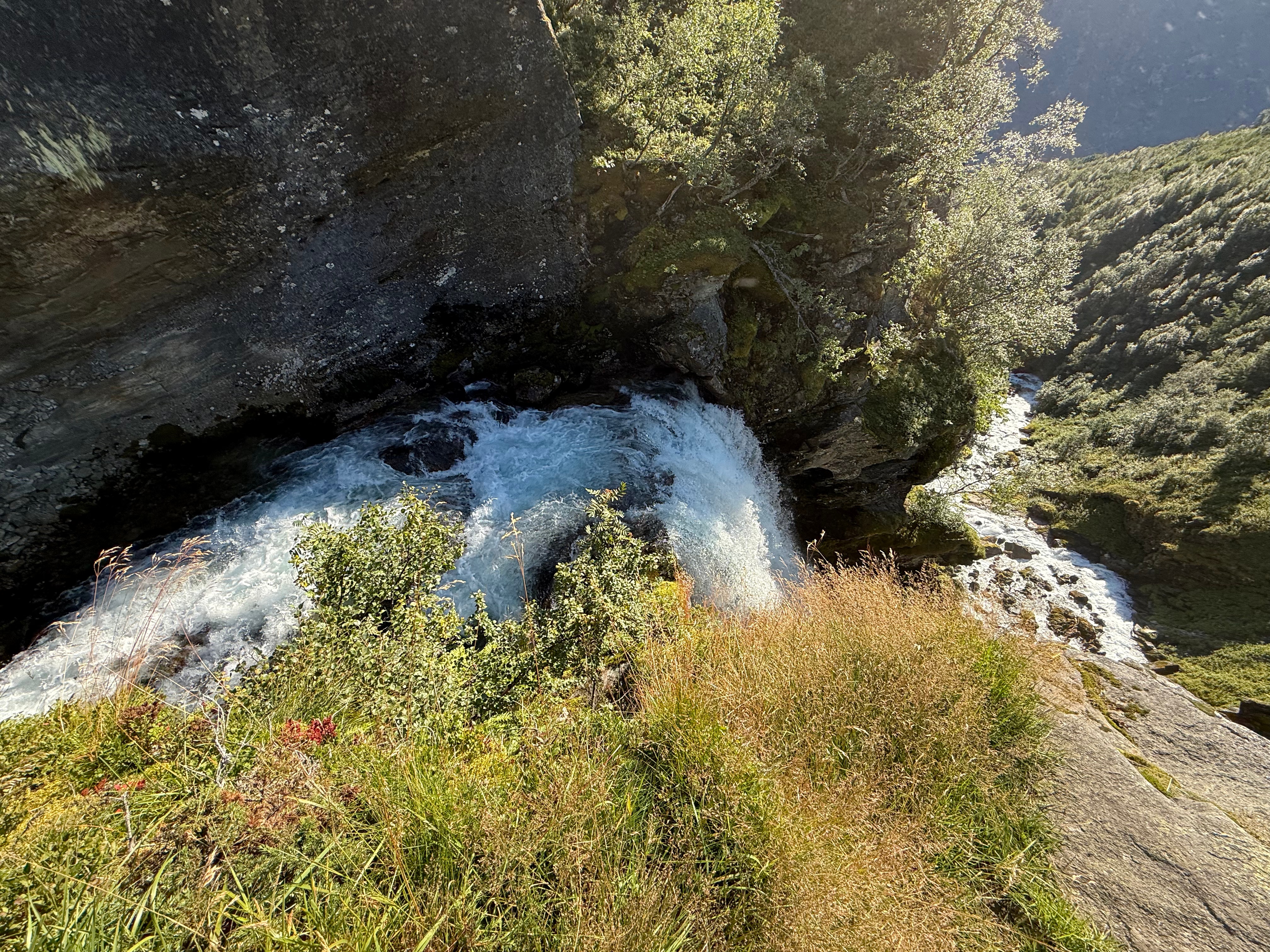
Norway embodied many of my old fantasies. There were cottages tucked high in the hills, lonely and quiet, that my introverted self would have loved to hide in. (My older, more practical self stops to consider things like steep, icy roads in winter, the difficulty of running errands, and the risk of loneliness). We hiked down a path that led behind a roaring waterfall — no treasure-caves hidden behind there, sadly, but it still felt magical.
There were sailboats like a flock of white birds on the shimmering fjord at dusk; green islands connected by long bridges and long tunnels; a lighthouse stained blazing red-gold with sunset. The souvenir shops are designed for tourists who love adventure and at least the vague concept of Norse mythology: they all had Viking-themed magnets and mugs, Fair Isle sweaters, and stuffed reindeer, moose, and wolves. On sunny summer days, with the wildflowers in full bloom and winter a thousand miles away, it felt like the perfect place for adventures, quiet, and dreaming.
But Norway is cozy as well as grand. The untranslatable word “koselig” captures the cozy, safe, familiar, warm, intimate, homey feeling of home gatherings during the long Arctic winters. From the sound of it, koselig means fleece blankets, crackling hearthfires, storytelling, hot drinks, and deep talks that go long past midnight on nights that last longer than days.
World War II and the Torches in the Night
In Oslo, we visited Norway’s Resistance Museum, which chronicles the dark years of occupation by the Nazis in World War II. While much of the material was in Norwegian, italicized English told the stories of the desperate, doomed struggle in the spring of 1940 to stop the German invasion; the betrayal of Vidkun Quisling, the head of the Norwegian fascist political party who collaborated with the Nazis and received the lasting hatred of his own people; arrests, imprisonment, suppression of free speech, rations, fear, and the horrific seizure of Norway’s small Jewish population; the courage of many who smuggled people to Sweden, hid fugitives in their cellars, printed illegal newspapers to spread truth and hope, and planned dangerous acts of sabotage; and finally, the joy of deliverance.
So many plans failed. A few succeeded, most famously the sabotage at the heavy water plant that delayed the Nazis’ development of the atomic bomb and changed the course of the war, but many brave, ordinary people were caught. Some were executed.
The hope of Great Britain stood out like a flame in the night. After so many countries capitulated to fascism, were conquered by overwhelming force, or went neutral, Winston Churchill’s “we will never surrender!” held back the tide for a year and a half alone, until the U.S. joined the war after Pearl Harbor. It was a refuge and training ground for the resistance. Many Norwegians fled to the UK, received training, and returned to try to free their country.
World War II still feels so close, though not too long from now, it will be a hundred years past. The candle flames that people held up against that great dark, and the mighty faith of people like Corrie ten Boom and Dietrich Bonhoeffer, are startling in their beauty.
A Yearning for Adventure vs. Koselig
When I started writing on this blog, I named it “stories of yearning” because the word “yearning” best captured that wild, mysterious, wonderful feeling that good books gave me. It’s akin to the feeling that C.S. Lewis called sehnsucht or Joy in his book Surprised by Joy: “an inconsolable longing” that he eventually identified as a sign of our longing for heaven. It’s also similar to the experience that L.M. Montgomery called “the Flash” in her Emily of New Moon series:
It had always seemed to Emily, ever since she could remember, that she was very, very near to a world of wonderful beauty. Between it and herself hung only a thin curtain; she could never draw the curtain aside—but sometimes, just for a moment, a wind fluttered it and then it was as if she caught a glimpse of the enchanting realm beyond—only a glimpse—and heard a note of unearthly music. — L.M. Montgomery, Emily of New Moon
My sense of yearning isn’t exactly sehnsucht. The sweetness stirred up in me by books like The Castle of Llyr and A Wind in the Door was less painful than what Lewis describes, more excitement than grief. I loved it. It fed my desire to travel and see the world: the castles and cottages of Scotland, the emerald hills of Ireland, and the rainbow of tulips in Amsterdam.
In the past few years, my yearning for adventure has waned. The turmoil of the pandemic, a few moves, a lot of change, and the practical drudgeries of travel like red-eye flights threatened to swallow up that longing. I tried to summon it back, but as Lewis found when he tried to manufacture sehnsucht, you can’t recall feelings at will.
Now, I’m wondering if that sense of yearning has just become inverted. Part of me still longs for faraway, glamorous places, but now I dream even more about near, safe, cozy, and sheltered spaces: hearthfires, deep friendships, and the stability you only get when you live in a good place for a long time. Instead of adventures like those in Treasure Island or The Silver Chair that take me to wild moors or deserted islands, I’m yearning for koselig.
Yearning can be an idol, if I let it; something that keeps me discontented and restless. At its best, it’s a hope for the joys beyond this world and the God who made all good things.
The wondrous thing is that the fulfillment of all longings, to be with the Lord in heaven forever, completes both sides of yearning, the splendid and the snug:
Psalm 36:5-9 (ESV)
Your steadfast love, O Lord, extends to the heavens,
your faithfulness to the clouds.
6 Your righteousness is like the mountains of God;
your judgments are like the great deep;
man and beast you save, O Lord.
7 How precious is your steadfast love, O God!
The children of mankind take refuge in the shadow of your wings.
8 They feast on the abundance of your house,
and you give them drink from the river of your delights.
9 For with you is the fountain of life;
in your light do we see light.
I love how this psalm captures it all: the vastness of God’s goodness, higher than mountains and deeper than the sea; the sweetness of His hospitality, inviting us into His home, becoming our true home; the closeness we can have with him, feasting from His abundance, drinking from the river of delights, and seeing light in His light.
Adventure; quiet; glory; rest; faraway; home; mighty mountains; safe harbors; spectacular sunsets; fragile wildflowers; the Lord God, Father and Maker, fulfills all these desires more beautifully than we can imagine.




 Stories of Yearning