Easter 2019 and 2020: Willow Trees and the Water of Life

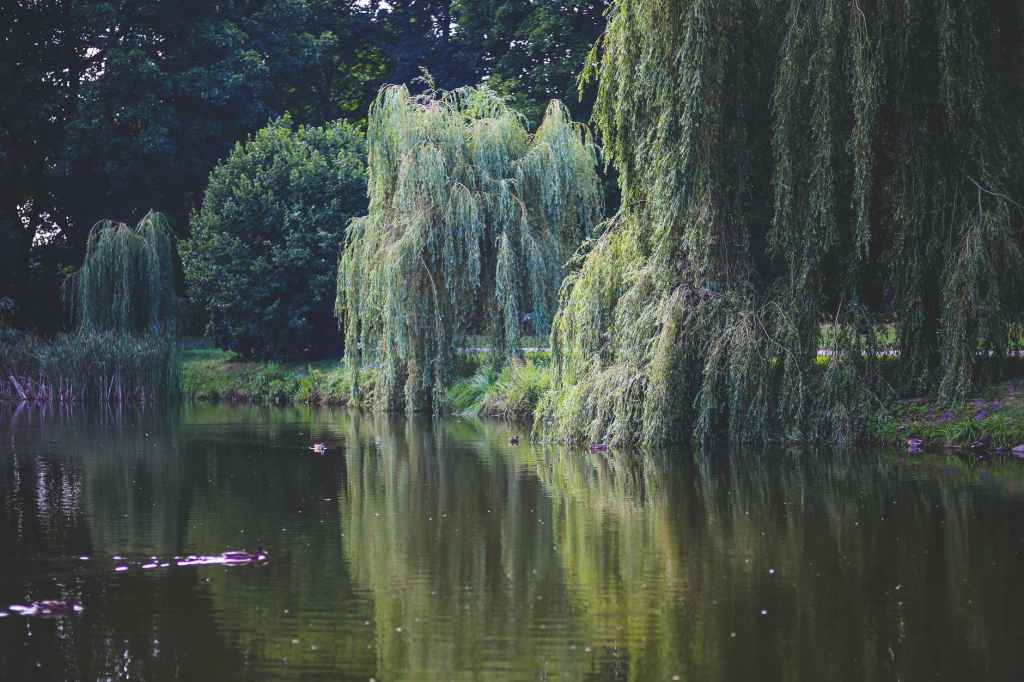
Photo by Kaboompics .com on Pexels.com

I wrote this post last year, but didn’t finish it in time to post it by Easter 2019. I post it this Easter with a few edits and an extra section.

Easter 2019

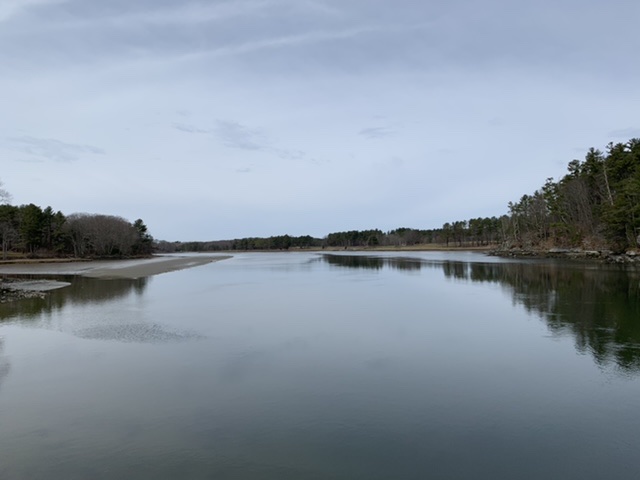
On Friday night [last April], as a [now former] coworker and I walked to the parking lot, she pointed out a willow tree whose leaves were beginning to come out. They were a bright yellow-green, hanging with a long, curtain-like elegance. “You can always tell where water is, when you see a willow,” she said. “You would not believe how much they need.”

A few years ago, I attended a women’s retreat in which one speaker walked through Jeremiah 17:7-8 (ESV):

Blessed is the man who trusts in the LORD,
whose trust is the LORD.
He is like a tree planted by water,
that sends out its roots by the stream,
and does not fear when heat comes,
for its leaves remain green,
and is not anxious in the year of drought,
for it does not cease to bear fruit
.

The speaker emphasized how the tree spread out its roots to the water before the season of drought, so that when suffering came, it was ready.

When I studied the book of John in a women’s Bible study [two years ago], Jesus’s words in John 7:37 had a sweet ring to them: 

On the last day of the feast, the great day, Jesus stood up and cried out, ‘If anyone thirsts, let him come to me and drink. Whoever believes in me, as the Scripture has said, ‘Out of his heart will flow rivers of living water.’

It’s Easter Sunday: the natural companion of Christmas Day, but with a special grief and joy Christmas only promised. Christmas is a blaze of joy in the dark of winter, Christ entering the world as a child; something to be wildly excited over, as children usually are. Easter is the beautiful, terrible time when Christ entered suffering and death as an adult, something to grieve about (that He suffered) but glory in all the more. Easter is Christmas grown up.

I’m more and more assured of one thing: the only way to live a good life (good – but no life is perfect) is to love God, trust Him, and obey Him. If I can be deeply rooted in His goodness, drawing on the wellspring of living water, then I can survive anything.

Easter 2020

Where there is a willow, there is water. I am a year older than when I drafted the words above, sitting here in awe of all God has given me in 12 months. Now, I think the water metaphor I used above was somewhat simplistic, underdeveloped, but I’ll continue it: God has led me beside still waters, this year, shepherding me to a greener valley than I imagined.

Now, I can give you more context for last year’s post. Last Easter was an uncertain time:  I was considering either moving up to Portland, Maine, changing jobs, or applying to grad school. I was tired of my long commute, tired of being lonely and isolated, longing for community and meaningful work and direction.

One morning, light rain fell as I started driving up 95 North to Portland. At one point, I changed lanes and felt my car slide a little: the light rain was slowly turning to ice as I drove north. Eventually, I reached a row of red tail lights slowly shifting into the right lane: we finally crawled past a semi truck lying on its side, blocking the two left lanes, the guard rails between the sides of the highway smashed into curves beside it. A few minutes later, I passed a white minivan lying on its roof on the right side of the road.

I was an hour late to work and had a stress-headache. Over the next few hours, big, wet snowflakes fell on the city square outside, muffling the gray pavement and statue in the center. I typed the day away, prayed, and waited.

Three months later, at the end of July, I drove down a highway lined with golden black-eyed susans with a new job, new apartment, new roommate, and a new life.

I don’t write this story because it proves that God always wants to make us happy. This is Resurrection Sunday, when we remember the Messiah making peace by the blood of His cross. Our ultimate purpose is His glory – but He glorifies Himself in acts of grace to us in our present lives (like new jobs) as well as in eternity.

Where a willow is, there is water. In Scripture, water does two things: it represents life (eternal life) and cleansing. The Resurrection is Christ giving Himself for us so that we can be cleansed and have eternal life.

Living water…Good Shepherd…Savior. These eternal truths reveal themselves in my small, brief, mortal days as blessing and guidance; I am sustained by the wellspring of the author of Life, who died, was buried, and rose again. 

As believers, we are willows. Glory!

Genesis: Dreams, Schemes, and Sovereignty

I have been slowly reading my way through Genesis since January. The slowness is my own fault: I want to do the book justice, to ask difficult questions and ponder concepts as I never did in the flannelgraph teachings of Sunday School, bedroom-lamp discussions of nightly Bible story time, or even the whiteboard lectures of my college Bible classes. 

Genesis is rich and heavy, like gold; terrible and mesmerizing, like ancient temple mosaics seen through torchlight; sweet and beautiful, like a spring morning over an estuary; funny, like a family anecdote retold at every holiday; sad and horrifying in a faraway sense, like newspaper headlines of atrocities across the world. This story of the world’s beginning is full of wonders and mysteries, but the way humans behave is as relatable and familiar as gossip.

This reading has opened my eyes to human behavior in Genesis, particularly human scheming. From the very beginning, we have planned and strategized how to fulfill our desires outside of the will of God: Adam and Eve’s disobediance, Cain’s murder, Sarah’s reproductive substitution; Rebekah and Jacob’s tricks…we exercise our cunning and effort to gain what God forbade us to have, or promised to give us Himself in His own time.

Through all this scheming, the LORD is patient – and still fulfills His purposes. 

God is just. Adam and Eve suffered their curse. Cain is exiled. Jacob is tricked in turn by his uncle and his sons. 

God is merciful. He clothes Adam and Eve and gives them a promise of redemption. He protects Cain from harm. He blesses Jacob. He gives Leah, the unloved wife, children, including Judah (through whom Jesus Christ traces His lineage). 

God is sovereign. He uses our scheming to accomplish His will. Eve and a thousand other women’s pain in childbirth leads to the birth of His Messiah. Sarah did bear Isaac. Jacob’s sons became the clans of Israel.

God is loving. He forms intimate, loving relationships with individuals: Enoch, Noah, Abraham, Hagar, Isaac, Jacob, and others. He is gentle where man is harsh, good where man is evil, gracious and just where man is depraved. 

I had my own schemes for this spring, this year. The remainder of March was booked solid with fellowship or intellectual events; April and May were set aside for conferences I looked forward to. Thank God, I have experienced no real harm, danger, or loss through this crisis, as others have.

I have had schemes in past years. When I first graduated from college, I dreamed of working as an editor as a small book publisher somewhere in the green, quiet Northeast, of buying a little yellow house next to a river and surrounded by weeping willow trees. Later, I dreamed of moving to an apartment in Portland, Maine where I could get cinnamon mochas at artisan coffee shops on Saturday mornings and visit the islands on summer weekends. I am glad I had those dreams, and gladder that God has given me a sweeter, wilder adventure than my own schemes.

In the midst of human scheming and chaos and disobedience, certain people bowed their wills to God’s: Noah, who immediately built the ark when called to do so; Abraham, who moved his whole family to the Promised Land when God called him; Hagar, who returned to Sarai after running away and called God “El Roi,” or “The God who sees me.” 

I am a schemer and dreamer and complainer, but in this moment, as Holy Week begins, I choose to bow my will to God’s, surrender my reshuffled plans, and pray: 

LORD God, please rescue this broken world. Please let there be no more deaths; heal the sick; comfort the grieving; provide for those who have lost livelihoods or loved ones. 

And because you are sovereign, all-knowing, and love us unconditionally, I can say with confidence: Your will be done.

The Magic of Late Winter, Part VII: Guest Post by Elizabeth Giger

When the wheel of the year turned towards March, I expected storms, sleet, slush, and long gray days that seemed to last centuries. Instead, I received warm, golden days, cool rain and bright snow, and a global storm that made the month spin by like a pinwheel. When Elizabeth Giger first presented this beautiful contribution to my Magic of Late Winter series in late February, neither of us knew how perfectly it would fit these strange, turbulent times.

Elizabeth Giger is another writer-friend from The Habit community whose writing style has the sweet, profound clarity of a church bell ringing. Her work reminds me that in Christ, joy, hope, and truth are all one reality. Enjoy!

The Reality of Spring

Text and pictures by Elizabeth Giger

Reality.

All of creation conspires to teach us what is real. When God created, He carefully crafted the laws of nature to point toward reality.

Every growing seed points to the reality that we must die in order to bear fruit. Every autumn leaf points to the reality that in dying to ourselves, our true colors burst forth. Every new birth points to the reality that new life comes only after great labor pains.

All of creation shouts out God’s beautiful reality.

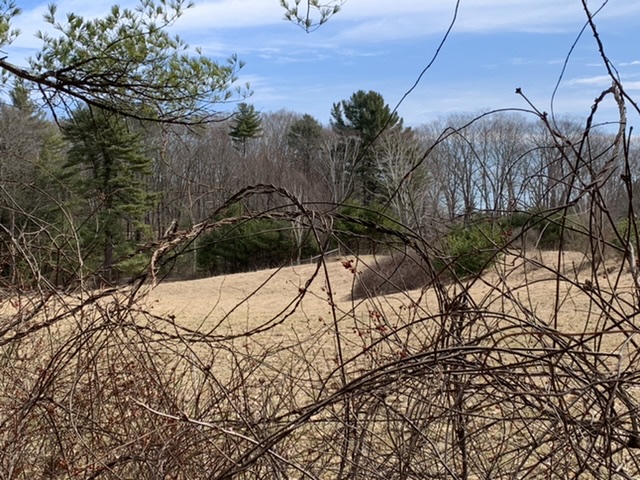
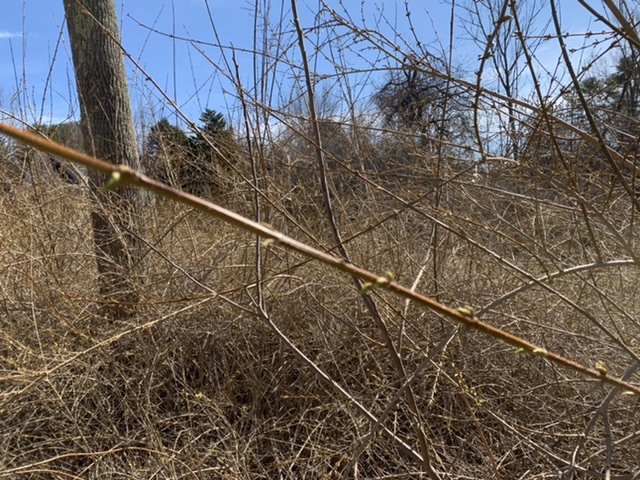
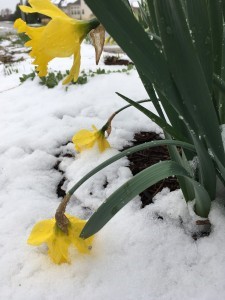
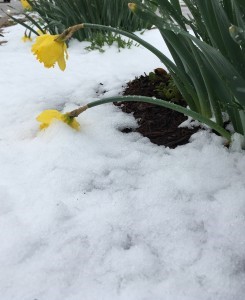
Today, as I look out the window on a day at the end of March and see this:

I am considering the reality that when the calendar says it is spring, when the crocus first peeps up from the ground, it is truly spring, even when it still feels like winter.

It still feels like winter in my own little world. The snows still hush the sounds outside my window. The skies still hold that steely winter-gray. There is even a certain smell that comes with the cold and the stilling of growth.

It still feels like winter in our larger world. As refugees stream out of war-torn countries, as friends fight deadly diseases, as families continue to grieve beloved ones who have died, it still feels like winter to me.

And yet.

I sit here on a Monday in March, contemplating the Holy Week that is coming soon:

The road into Jerusalem which led to the giving of bread and wine, a desperate prayer in a garden, the cross. The ghastliness of Holy Saturday and the knowledge that God was dead.

And then.

A weighty boulder moved easy like a feather. An angel wondering at anyone presuming to find Jesus in a tomb. A familiar voice: Mary.

Jesus.

Alive.

Resurrection.

And suddenly I understand what I am truly seeing out of my window on this day at the end of March, when the crocuses have peeped out their heads and yet snow lays heavy on the ground.

Spring is here.

It requires that I open my eyes to see what is really there. It requires stooping low to the earth. It requires being still.

It is the same reality that we see all around us in our larger world when we open our eyes, stoop low, and be still. The reality that the tide has turned, that despite the battle raging all around, the war has ended and God’s Spirit is little by little warming the air and thawing our hearts.

How can we be sure that God’s kingdom truly has come? How can we be sure that God has won the war and decisively defeated sin and death when we still see sin and death raging all around us?

The resurrection is our confirmation.

Yes, it may still feel like winter all around,

but the resurrection is our crocus.

Spring is really here.

Picture of Elizabeth Giger

Elizabeth Giger

Elizabeth is a writer and musician, writing weekly at MadeSacred.com. She holds a Certificate of Spiritual Formation from Lincoln Christian University. She also loves photography and art and enjoys weaving together words with visual art on her blog to create something new. She is a wife to her logical, programmer husband, a mother to four intense, warrior girls, a homeschooler, and a midwest girl who loves the sight of golden fields stretching to the horizon. She neglects housework in favor of reading as many books as she can get her hands on and loves to travel the world. 
The Magic of Late Winter, Part VI: Guest Post by Hope Henchey

Pictures by Hope Henchey

Friends, the natural world is changing from gray to green, chilly to warm, frozen to refreshed, but it feels like the human world has gone mad. This pandemic has reshuffled the cards of our lives. I pray for those who are sick, grieving, afraid, jobless, homebound, or lonely.

In the midst of grief and fear, I remember an ancient truth: the God who sits above the circle of the earth and inhabits eternity is our refuge – in pandemics or prosperity, peace or war.

The LORD God is our stronghold. I hope to honor Him by seeking joy in dark places and pursuing beauty through these gray days. Therefore, I am going ahead with the next installment of my Magic of Late Winter series, a guest post by Hope Henchey about late winter in Florida.

Hope’s meditation on the beauty and transience of this season in Florida stirred me like a dream of summer in the midst of winter. I love how she captures this season’s precious, fierce, fragile joy. Enjoy!

March in Florida: The Last Days of the Shire

Text and pictures by Hope Henchey

I’m a season snob, I’ll admit it.

If you ask my opinion of living in Florida for 22 years, the answer you get will vary widely depending on what month it is. You should ask in a month like March.

Those who live in colder climates might look to March with hopefulness of sunny days and fresh air. As a Floridian, however, I’ve already been enjoying sunny days and fresh air for the past few months, so I cling to March tightly as I watch the last specks of sand drizzle through the hourglass, signaling the season when my Shire will transform into Mordor.

March is so, so lovely. It’s the tail-end of strawberry season, which means those delicious berries are cheap, plenteous, and ruby-red ripe. Since we live only five minutes from strawberry fields, we actually eat strawberries at every meal. To continue with Lord of the Rings imagery, I devour strawberries in the same way the steward of Gondor murderously eats tomatoes. The juice drips from my chin like blood, but I don’t even care. It’s glorious.

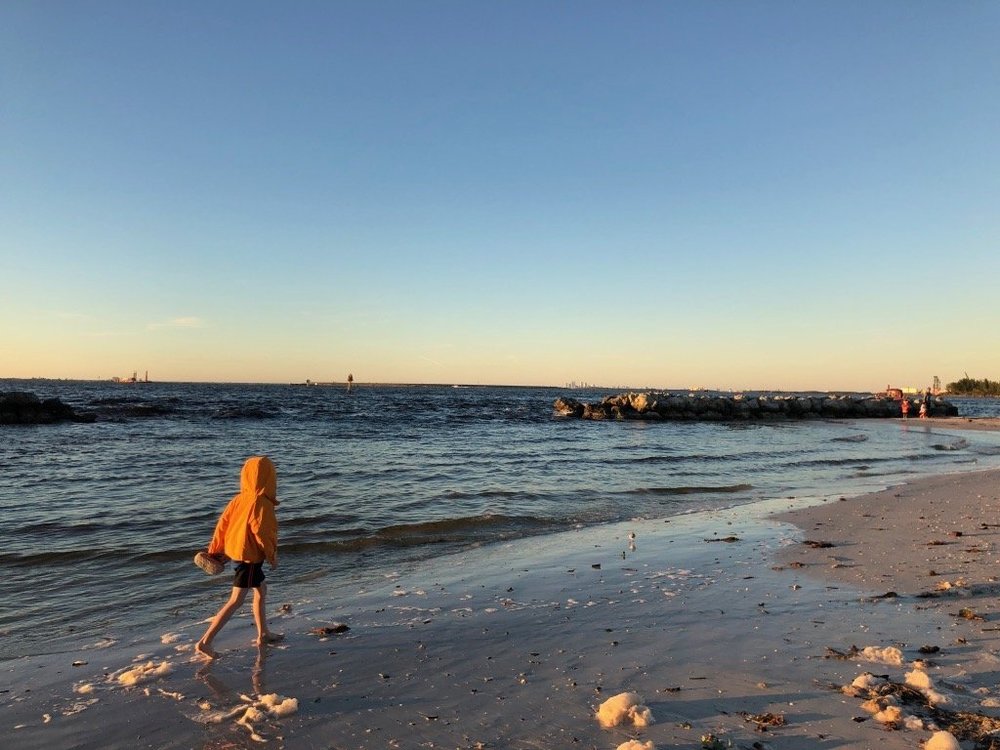
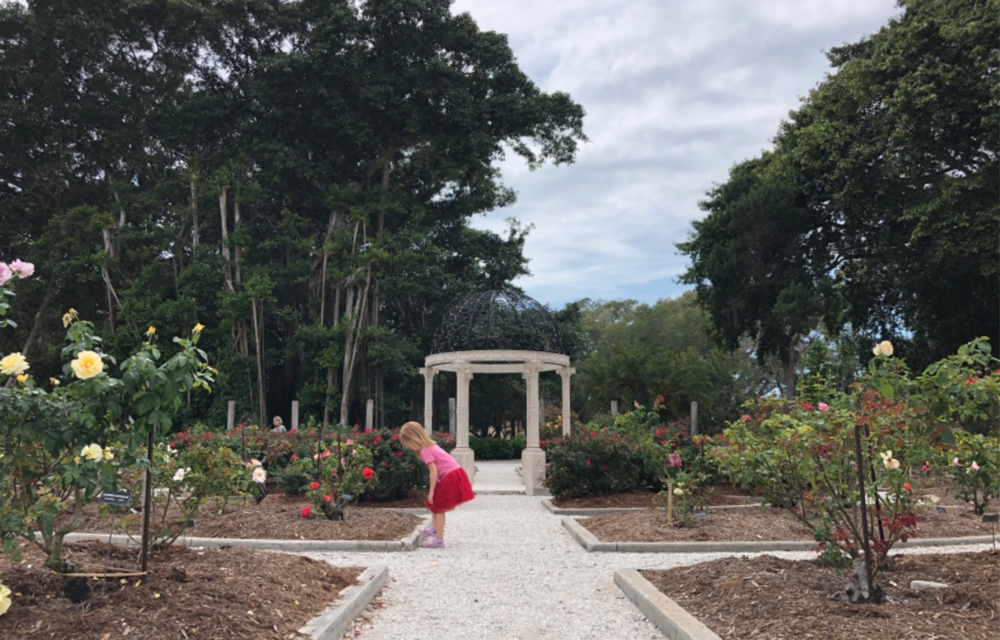
March is a month when mosquitoes (“our state bird”, as we say) are still mostly gone, and the air is cool enough to enjoy all the local rivers, trees, and beaches. My favorite beach is Siesta Key, where the sand truly looks and feels like powdered sugar. Nearby is the gorgeous John and Mable Ringling Museum and Estate (yes, the circus guy) where my daughters enjoy savoring aromas in Florida’s oldest rose garden. On the way home, we like to stop by a delightful orange grove that sells soft-serve frozen orange juice. March days are full of such adventures.

Though we still might get sunburned if we’re outside more than ten minutes, the big ol’ Star seems more like friend than foe in months like these.

There is, of course, an uneasiness that pulls at my sleeve in March. I know that the hot half of the year is hurtling toward us, with its bugs and crowds and threats of heatstroke. Especially since I’m entering my fifth pregnant summer in nine years, I know that I have months of difficult breathing ahead since my organs get all squished up, yet the fourth-most humid city in America doesn’t seem to care. Even walking to my car feels like I’m underwater in a 100-degree pool. I dread that feeling so much.

But that’s the thing with seasons, isn’t it? We don’t get to control them. Unless we have the flexibility to chase around good weather, we don’t get to pick what season we’re in. I wish strawberries were always cheap and ripe, but the plants must die and be replanted and grow from seeds again. I wish the air could always feel fresh and delightful, but heat and humidity must come.

If I could customize seasons of life by sheer will, I would cut out a lot of the things going on in my life right now, issues that are heavier than hot weather or lack of berries. But the world is broken, and God has given me limits. I can receive each season as the blessing it is, given by God for His glory and my good.

There’s beauty in every season. Even summer holds things I love such as mighty yet calming lightning storms, Vacation Bible School, and lower prices on grapes. But while it’s still March, I’ll enjoy every last moment of blowing bubbles in our yard and gator-watching at Lettuce Lake Park and meandering downtown Tampa’s Riverwalk.

I thank Him for this season and trust Him for the next.

Bio picture of Hope Henchey

Hope Henchey

Hope Henchey lives in the suburbs of Tampa, Florida with her husband and four kids (fifth on the way!) She writes on her blog and microblogs on Instagram about homeschooling, RV living, theology, childbirth, and more @called.beloved.kept and @lightingfireshomeschool. She has written for Christianity Today and Daughter of Delight.

The Magic of Late Winter, Part V: Mist Maker

Mist on a pond
Photo by Gabriela Palai on Pexels.com

After a few weeks of delightful guest posts by Kimberly Margaret Miller, Loren Warnemuende, Reagan Dregge and Kristen Kopp, and Bethany J. Melton, here is my late winter story. I wrote it for the weather I dread the most – cold rain falling on melting snow, leafless trees, gray skies, and slushy streets – not knowing how golden and warm this March would be.

I rewrote the story to match this year’s milder weather. I post this in the middle of a pandemic that is shuttering gatherings and separating communities, scaring parents and (I hope) thrilling at least a few kids who suddenly have two free weeks to hunt purple crocuses and golden daffodils in the woods.

I post this now knowing that in fear or gloominess, boredom or grief, gray winter days or slushy spring mornings, the same God who spoke light out of darkness can speak joy and courage into us.

Mist Maker

On the quiet street, cold rain speckled the pale lawns and ran down the gutters of the shingled houses. Mist hung between the bare gray branches of oaks and thick robes of evergreens.

Inside a white house with black shutters in the middle of the street, Mae sat in the family room downstairs, leaning over her laptop. She wore a dark blue sorority sweatshirt. Her curly blond hair was tied up in a messy bun, and she wore a gold necklace hung with small pink beads.

On her laptop screen, Mae clicked on the field next to YEARS OF RELATED WORK EXPERIENCE and entered a “0.”

Her email inbox lit up. She opened the email from a company she’d applied to three weeks ago: 

Dear Ms. Newman,

Thank you for your interest in the Project Manager position. We have decided to pursue a candidate whose qualifications are more suited to our requirements.

Sincerely,

Hiring Manager
New England Design Co.

Mae stared at the email for a moment, and then opened an Excel spreadsheet labeled “Jobs” and colored row #19 in gray.

Upstairs, a baby wailed. A door opened, and Mae heard her sister’s low, soothing tones. A moment later, a light set of footsteps pattered down the stairs, and her niece, Rachel, came in. She wore a red sweater with a picture of a brown bear, and her ash-blond hair was half-braided.

“Sammy’s crying,” she announced. “Mommy said to come ask you to watch me.” 

Mae put down her laptop. “Poor little guy,” she said. She looked down at her laptop, and then outside. “Wanna come on a walk with me?” 

Rachel looked out the window and wrinkled her nose. “It’s gross out,” she said.

“Nah, this is one of the best times of the year,” said Mae, getting up and setting her laptop on the coffee table. “I’ll show you.” 

After bundling up, they left the garage and squelched through the backyard, through the back gate and into the woods.

Mae let her big hood slip off so the rain fell freely on her hair and face. “Your mom and I used to pretend we were mermaids when we got our hair wet,” she told Rachel, who giggled. 

The woods had barely changed since Mae left for college: the ashes of autumnal bonfires in center of the clearing, the stump full of woodpecker holes, and the leaning fir they called Old Giant. Sticks and golden-brown pine needles littered the ground. 

Mae took Rachel on the old path through the thicket of leafless thorn and blueberry bushes, green and gray, spreading like waves across the peaks and gullies of the forest floor. She pointed out memory-haunts: “We used to hunt for letter boxes with the Flame-wings under those logs. We built a fort around that tree. Here’s where we played bows and arrows with the Green Singers…”

Rachel asked a few questions, but mostly chattered as they neared the pond. They turned right into the opening in the trees and braced their feet against tree roots to get safely down the hill.

The spruces and oak trees were shades of brown, light green, and gray around the still surface of the pond. The water was dark, half-covered with a thin layer of ice melted into slush. 

“Come see,” Mae said, gesturing to Rachel. She led her niece to the pond’s edge, where tree roots stuck out from the eroded earth and disappeared into the water. 

From this angle, they could see a misty shape above the ice: a castle with spiked towers like the tops of pine trees.

“Oh,” said Rachel. 

“It’s a reverse reflection,” said Mae. “The real castle is underneath. The Lily Queen let us swim down there sometimes to see it.” 

“Can we…?” Rachel asked, looking from Mae to the pond.

“No, sweetheart, it’s too cold to swim,” said Mae. “But if we’re quiet, the Mist Maker will put on a show for us.” 

Rachel took in a low, excited breath and held it. Mae squeezed her hand as new shapes formed above the pond: two girls chasing creatures like winged foxes, a fir tree transforming into a tower, a boy riding a sea serpent.

They watched things remembered or longed for rising from the warming air, the melting ice, the thawing soil, the waking earth.

The Magic of Late Winter, Part IV: Guest Post by Bethany J. Melton

Photo by Rene Asmussen on Pexels.com

Late winter here in New England has been much milder than past years – dry and golden, with some warm days that bring hints of spring. Until the vernal equinox, however (I love the sound of those words together!) I don’t want to let myself celebrate yet. I want to soak in the beauty of chilly nights and bare trees while it lasts.

This post is by Bethany J. Melton, a writer from the Midwest whose words have the quiet, meditative beauty of morning mist on a lake. Bethany reminds me to cherish the time we have now, as the tiniest leaf-buds begin to swell on the trees and the last snow-mountains dwindle.

Thank You, Winter Woods

by Bethany J. Melton

I walked fast enough that the March rain didn’t seep deep into my skin; slow enough that I didn’t miss the beads on every winter limb. I’d said, “Only up the hill and back,” but the neighborhood was asleep in the mist this afternoon and I smiled into its silence.

I took Edgewood to its end—the circle turn-around encircled by forest. The woods breathed in the rain and I breathed in the woods. Wet leaves and sweet bark. I stopped when a bubble slipped from a limb and ran down my finger. I rubbed the water into my palm—a bit of March to carry home.

It’s me and the trees at Edgewood’s end and they lean in, their limbs entangled overhead. They’re naked and they know it. Like a rude onlooker, I’m gawking. I can see every knot, every crook, every vine. Some limbs are black and blunt against the white sky. Others are spindly.

All are motionless, waiting for me to pass.

I do, finally, and leave them their privacy—the privacy of the wood and a dripping creek and staring squirrels. It’s a privacy I sometimes crave, too.

Thank you, March trees.

We can tell every tree in winter without reference to foliage by its mode of growth. So study them, in some spare moments… They will repay—they are in the right place as beautiful as rocks. They have a nobility of growth which is usually entirely overlooked.
– Beatrix Potter

Bethany J. Melton

To read more of Bethany’s writing, visit her blog, Bethany J’s Journal.

The Magic of Late Winter, Part III: Guest Post by Reagan Dregge and Kristen Kopp

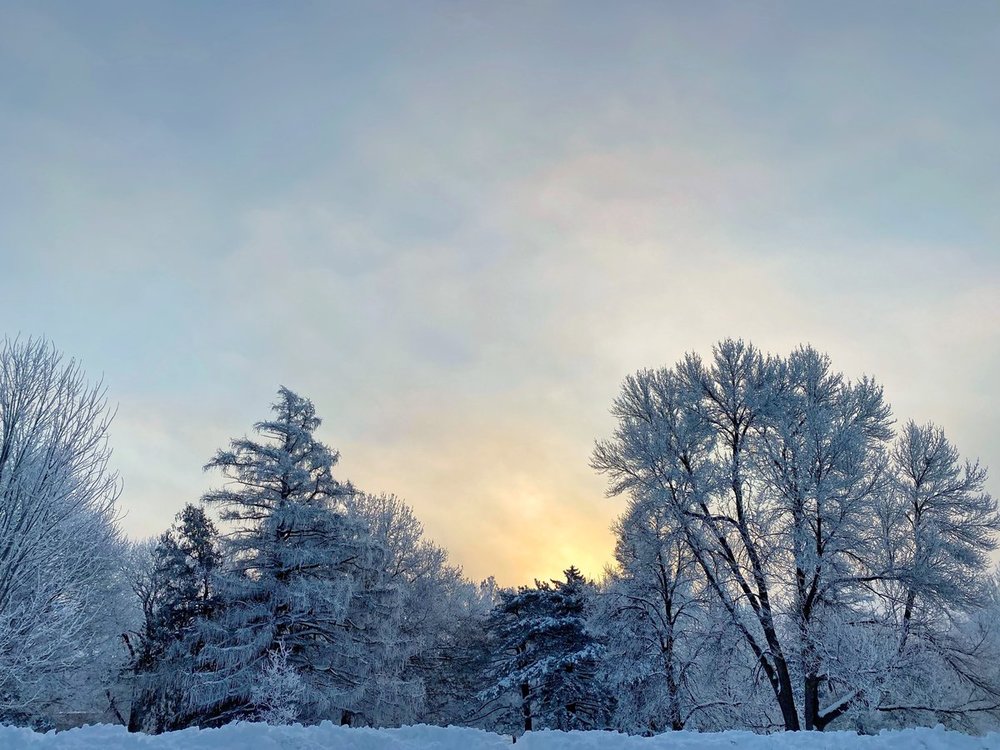
Sunset over snow-covered trees
Photo by Kristen Kopp

This blog series on the magic of late winter has been a cross-country exploration of regional beauty – Kimberly Margaret Miller gave me a glimpse of winter sunlight in the deep South, and Loren Warnemuende showed me the snow and flowering dogwoods of southeast Michigan. This week’s post is written by Reagan Dregge, with pictures by Kristen Kopp. These writers are from Minnesota, the prairie, where Laura Ingalls Wilder spent a year On the Banks of Plum Creek and temperatures can drop to -30 degrees Fahrenheit in winter (wind chill can drop to -68 degrees).

Reagan Dregge‘s breathtaking imagery reminds me that we live in a world of wonders, a place just as wild and magical as Faerie. Kristen Kopp‘s images remind me to open my eyes to the beauty of the ordinary, the precious gift of snow and sunlight, leaf and sky. Enjoy!

Winter Magic

by Reagan Dregge
pictures by Kristen Kopp

You were made and set here to give voice to this, your own astonishment.
Annie Dillard

By late winter the air is scorched ice. The snowscape is sucked dry, colorless. Lungs burn. Skin stings. The ground is a slick slab of sheer adamant. Frost laces windowpanes like fractures into faerie. The frozen world is transparent. I can see through every stilled molecule, through trees that crack the sky, through the thin atmosphere all the way to the Milky Way wrapped like a scarf around our galaxy. The frigid stars blaze bright and sharp. I imagine standing on the surface of the moon. The constellations spin above in dazzling clarity.

Have you beheld a sundog-flanked dawn? The sun, shattered into shards? Three fire pillars pierce the cobalt firmament, diamond guardians of earth’s rim, or an archangel with two swords barring reentry into paradise? On winter evenings, neons melt on the horizon. Charged particles scatter solar flame. Unnamed, unnumbered hues are born in the bent beams, next to which rainbows are a faded polaroid.

Bitter winds writhe and moan across the plains. Windows rattle, porch bells ring. The shrill surgeon slashes and severs, casting withered sticks and shriveled limbs across the brittle bier beneath attending silver maples. Huddled hedges offer brief respite from the biting chill. Fog’s froth condenses and crystallizes, coating every stem, twig, and chain link with rime ice armor. Glass-sheathed grass sheaves gather at the edge of ditches. Lake waves freeze into a gleaming fleet of fairy sails. The cold cuts words short, and they drop to the ground like bubbles blown in subzero temps or evaporate instantaneously like a pot of boiling water thrown into the air. Weather fluctuations can be detected in the length of icicles dangling from every lip and gable, dripping into their own trenches or dropping like grenades in the night.

Spread out under an open sky the snow sparkles like champagne, and in the crisp gold light a toast is raised. Blizzards blow across the plains, covering forest and field with mountainous shifting drifts. The polar vortex unfurls its coffers and foams forth layer after layer over the bounding breadth. Clusters of vapor flurry and fall, spun and splintered and studded. No two alike, each flake a delicate intricacy. They melt the moment they touch tongue or alight eyelash, existing brief as a breath, fleeting as a flower. From wet heft to pellet sleet, snow’s forms are as bottomless as Mary Poppins’ carpet bag. The sounds of my walk down our quarter-mile driveway change with every day: creak, crunch, slurp, slush, swish, sweep, whisper-soft absorption.

Deep within the frozen earth, amphibians sleep in soundless stasis. Bird and butterfly have long since flown south, but woodpeckers and white-tailed deer remain, subsisting on bark and acorns. Rabbits and mice trace patterns in the morning dusting. I once saw a hawk’s wingprint stamped in a snowbank. Wisdom and miracle abound in this stark and solitary season.

To those who find winter blank and monotonous: you must write your psalm and I must write mine. There is glory hidden in the gray—look for it when the cold burns and the light dims. Look, and you will find winter crowning the year, robed in alabaster, strewn with rubies, fragrant as juniper, fresh as citrus, warm as cinnamon.

Reagan Dregge and her family

Reagan Dregge
Reagan loves names and words and stories. She once studied creative writing and theatre arts, but today she homeschools, writes handwritten letters, and salvages her own little house on the prairie with a husband, daughter, and multiplying menagerie (one cat, two dogs, a dwarf netherland rabbit, and a small flock of chickens). Her favorite seasons are winter, spring, summer, and fall. Follow her blog, The Grace Book, to read more of her work.

Kristen Kopp

Kristen Kopp
Kristen lives in a cottage on the prairies of Southern Minnesota. She works in her local Community Development Department by day and spends the rest of her time wandering in the woods, writing letters, and gathering with friends and family to share meals and play board games. Follow her on Instagram at @kristenannakopp.

The Magic of Late Winter, Part II: Guest Post by Loren Warnemuende

Pink blossoms
Photos by Loren Warnemuende

Last week, I posted the first in a series on the magic of late winter, or the special beauty of this season between midwinter mystery and spring awakening. This week, I have the privilege of posting an achingly beautiful piece by Loren Warnemuende, another writer-friend from The Habit writing community. Loren’s encouragement and wisdom have been a blessing to me in my writing, and her work has the warmth and richness of the first golden day of spring.

Snow and Flower

by Loren Warnemuende

I remember a day in late January, 2009, when the snow fell thick and heavy. It fell unhurriedly; it had plenty of time, and plenty to dump. Southeast Michigan in January tends more to gray days and ice, but on that day, the skies cried soft snow.

I drove, my mind churning, my tires cutting through ruts of previous vehicles. One of those vehicles carried my daughter Keren—an ambulance that sped far ahead, out of sight. I didn’t know if Keren still lived.

The snow paused. A shaft of light cut through the clouds and caressed a white field. It was as if God reached down to remind me, “I am here. I am holding all of you.” The cold and snow lingered, the heart monitor flatlined, but the sunlight touched the field.

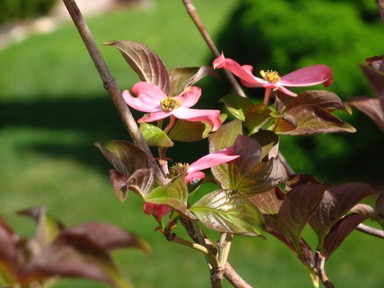
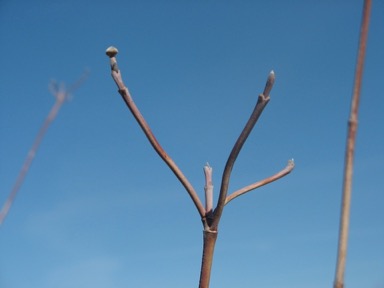
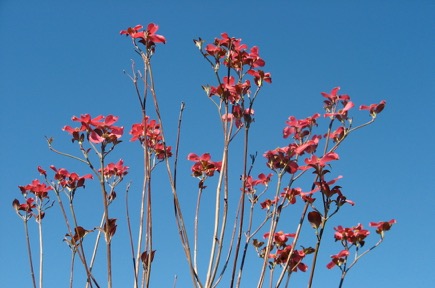
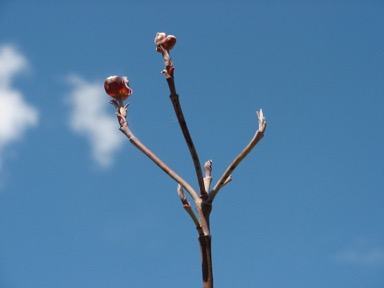
Six months later we cleared lava rock and weeping mulberries from our yard, replacing those horrors with grass and a dogwood tree. Though Michigan dogwoods can’t compare to their southern relatives who shake out white and pink blooms each spring like antebellum debutantes at a ball, the Michigan dogwood defies winter. We trusted its pretense of fragility and delicacy when we planted our memorial for Keren. We watched our dogwood through the months. Around Keren’s seventh birthday, the leaves fell, mourning the end of summer. On the first cold January anniversary, the tree’s branches stuck out straight and brown, bare of the red berries they bore at Christmas. April arrived trumpeting resurrection. I watched the tree. Each day I checked it. Each day it stood unchanged. Then one day I noticed woody knobs tipping some branches. On others, brown points cut through the ends of boughs. A month passed from knob to bloom. There were days I bit my lip to resist shrieking with impatience. I wanted to see the flowers! Other days I inspected each knob and point, marveling at the process of glory superseding lifelessness. The sharp-tipped branches forced out pairs of leaves, raised upward like hands in praise. The knobs expanded until they broke, quartered, and unfurled crosswise, not into petals, but four leaf-like bracts. At first these bracts twisted brokenly about the center. Yet life flowed and the bracts spread, flushed, and dimpled. They imitated petals, each set of four surrounding a crown of tiny yellow flowers. The tree held her wine-red blossoms to the clear blue spring sky.
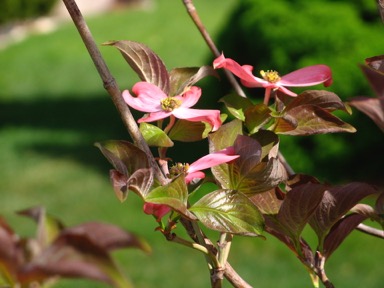
I don’t know how many years it will be till I see Keren again. Life has charged on, bringing new challenges and changes. Our family has lived in a different country, and we now hail from East Texas where great dogwoods bloom in March, and the magnolia in front of our dining room blossoms in January, dropping pink petals as softly and slowly as the snow fell that day eleven years ago. Sometimes I long for our reunion with Keren—I want to see her flower! Other times I feel like God is forcing sharp points through bare branches in my life. Yet then there are days I am enthralled by the blossoms God is slowly unfurling in those of us who wait. Often they seem warped and broken, but someday our blooms and leaves will be complete.

Photo of Loren Warnemuende

Loren Warnemuende

When she was in fourth grade, Loren won a story-writing contest and decided that she’d grow up to be a writer. Since then God has led her into many roles, including six-and-a-half marvelous, stretching years as mom to Keren, who was born with Trisomy 18. Loren is wife to her Renaissance man, Kraig, and mom and teacher to their three kids (who stretch her differently than Keren did!). Loren also teaches Worldview and Bible to high schoolers in a homeschool coop, and adults at church. Through all these roles writing has been a source of hope, healing, and stress-relief. Loren lived most of her life in Michigan, but lived in Guadalajara, Mexico, for two years and now calls East Texas home. You can find more of her sporadic writing on her blog: Willing, Wanting, Waiting….

The Magic of Late Winter, Part I: Guest Post by Kimberly Margaret Miller

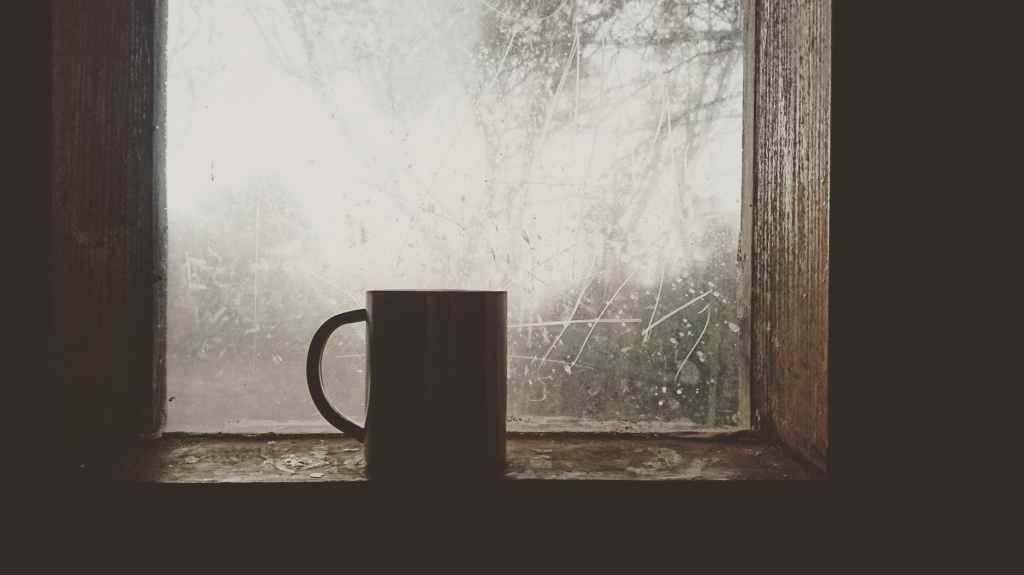
Mug in a bright window.
Photo by Pixabay on Pexels.com

As I posted about last year, late February through March are usually the hardest time of year for me: the glitter of the holidays is long gone, the snow turns to slush, and New England is a mess of gray fog and ice storms. Crocuses and warm winds take a long time to arrive.

This year, however, my own writing and engagement on The Habit (an online writing community) have reminded that me that I live in a world of wonders created by an almighty God, and my art gives me the power to perceive and create beauty in the grayest places.

Some of my favorite writers have already done the work of re-enchanting this season, transforming it from depressing to mysteriously beautiful: Emily Bronte in Wuthering Heights, James Hogg in Confessions of a Justified Sinner, Seamus Heaney in “Glanmore Sonnets,” and others.

So I want to approach this late winter season with a spirit of joy and wonder. This blog series will explore the magic of late winter and very early spring: pearl-gray skies, silver-white ice on the dark surface of ponds, rain-speckled snow, damp winds that spread the smell of wet soil, rain-speckled snow, birdsong on misty mornings.

For this project, I’m partnering with some wonderful writer-friends from The Habit, as I did last Thanksgiving. First, Kimberly Margaret Miller graciously let me repost this exquisite poem from her blog, a meditation on winter sunlight. Kim lives in the deep South, which doesn’t usually receive heavy snows, but can be gloomy with “short days, barren trees, and overcast skies.” 

This poem originally appeared on Kimberly’s blog.

Winter Sun

Your beams stretch,
            Arms beckoning,
a final embrace as you bid adieu.
Reaching, leaning, tilting
                        You scatter color
across the bleak horizon.
Then you are gone.
            Longing fills.
                        Cold darkness envelopes.
                                    I forget.

My alarm pulses.
            Shuffling through routine with half open eyes,
                        Morning tea in hand,
I pull back the curtain.
I wasn’t looking for you,
                        But there you are.
                                    Waiting for me to behold.
                                                Your quiet grandeur
whispered in hues of pink and purple.
                        I stand and listen with rapt attention.                                   
And suddenly, I awake.

Leash in hand, I walk Curiosity—
            The chase is on.
                        Weaving through bare trees
you pursue,
                                    Streaming brilliance.
        Stopping in my tracks,
I think of night.
                                  And already I miss you.

Your arms stretch,
            Across beams,
no final embrace as you bid adieu.
Reaching, leaning, tilting
            You scatter crimson
across bleakness within.
Then night comes.
            Longing fills.
                        Cold darkness envelopes.
                                    I forget.

My hunger craves.
            I shuffle through my days with half-open eyes.
You pull back the curtain.
I am not looking for you,
                                    But there you are,
                                                Waiting for me to behold.
                                                            Your quiet grandeur
whispers in hues of love and peace.
                I stand and listen with rapt attention.
                              And suddenly, I awaken.

The Day is at hand, I walk forward.
            The chase is on.
                        Weaving through barren places
you pursue,
                                                Streaming brilliance.
            Stopping in my tracks,
I think of night.
                                    And already I know
You will never leave.

Picture of Kimberly Margaret Miller

Kimberly M. Miller is a writer, wife of 28 years, mother to four children, and granna to one amazing little boy. She graduated cum laude with a Bachelor of Arts degree in Journalism in 1991 from Mississippi University for Women where she served as editor of The Spectator for two years. Kim’s writing has ranged from advertising copy and press releases to short stories and essays. Since retiring from 24 years as a homeschool mom, she’s devoted her time to honing the craft of fiction writing. Her current work-in-progress is a historical novel set in Mississippi in 1834.

Nora LeFurgey Campbell: A Friend Like Fire

Candles in the dark.

Photo by Mike Labrum on Unsplash

Friendship, like natural beauty and books, was one of the joys of L.M. Montgomery’s life. Fictional friendships like Anne and Diana’s, Pat and Bess’s, Emily and Ilse’s grew out of real-life friendships with her cousin Penzie, childhood friends Nate Lockhart, Will and Laura Pritchard, and later, her cousin Frede Campbell. In the winter of 1903, as she tried to navigate her aging grandmother’s stormy moods, family troubles, loneliness, and uncertainty, one friendship warmed the icy days. She had Nora.

Montgomery wrote about that winter in April 1903: “dark moods,” frustrations with her grandmother’s rigid rules, and anger over the injustice of her Uncle John and his sons (who had inherited the house they lived in and wanted her grandmother to move out so her cousin Prescott could have it) (Selected Journals I 286-87). But Nora LeFurgey, who was teaching school in Cavendish that year, became her roommate and companion in January. 

Nora was “a positive God-send” when Montgomery met her in the fall of 1902 (Selected Journals I 283). Her intelligence, love for literature, and sense of humor suited Montgomery “exactly” (283). As Mary Henley Rubio puts it, “Nora possessed a strong and irrepressibly positive life force, and she energized those around her – just what Maud needed” (Gift of Wings 111).

In the pages of her journal, where she recorded her tears and dreams, Montgomery slipped a different diary, one that she and Nora wrote together, one “of the burlesque order” (Selected Journals I 287). She said “we set out to make it just as laughable as possible. I think we have succeeded.” This diary is full of laughter, teasing accusations (“I didn’t take your yellow garter!”), details of their social lives and the souvenirs they “scrounged” from them, and mocking each other about young men. Jennifer H. Litster has an entire chapter on this co-diary in The Intimate Life of L.M. Montgomery.

Nora was a candle in that long, dark winter – part of what I think was a winter period in Montgomery’s life, 13 years in which she was single and lived with her grandmother. A few years later, Nora married Edmund Ernest Campbell in 1911, left the Island, and didn’t see Montgomery for 24 years.

And then they met again, in September 1928.

They had both suffered. Montgomery was anguished by the destruction of World War I, the death of her best friend, Frede, and a madness that convinced her husband he was “damned to hell.” Nora lost one son at birth and a daughter to polio. In 1929, she lost a third son to a canoeing accident and had only one, Ebbie, left. But the Nora we meet in the pages of Montgomery’s journal reacted to her hardships differently than Montgomery. Rubio calls her “unfailingly upbeat” and “as vital a life-force as ever” (382). Montgomery said that the “relief” of having a friend like Nora was “tremendous . . . I feel as if I had been smothered and were now drinking in great gulps of clear gay mountain air” (Selected Journals III 378).

Mary Beth Cavert researched “voices” or people described in Montgomery’s diaries, including Nora’s. Through interviews with Nora’s family, she found that Nora never complained about her sufferings, but “most often assumed the position of adviser and was a tower of strength in times of trouble” (114).

After her sufferings, Nora still had a spirit of hearthfire joy, the ability to laugh and listen to her friend’s troubles. She never showed envy or intimidation at L.M. Montgomery’s successful writing career (she had been world famous since 1908) even though Nora herself wrote a novel she was never able to publish (Cavert 107).

In middle age, they had times of fun and laughter as sweet as when they were single young adults together. In 1933, when Nora came for a visit, Montgomery wrote to her literary correspondent G.B. MacMillian: “Every night we went on a voyage to some magic shore beyond the world’s rim.” After supper, they walked miles under a “harvest moon” as “every particle of our middle aged care and worry seemed to be wiped out of our minds and souls as if by magic.” They walked in silence or talked, discussing “every subject on earth…When we had exhausted earth we adventured the heavens, to the remotest secrets of ‘island universes.’” They had adventures that left them “drunken with laughter.” (My Dear Mr. M 164-66)

Radiance of joy…when I read about Nora in Rubio’s The Gift of Wings, she became one of my heroes. She isn’t famous for a public legacy of writing books or political success. But she weathered pain and loss and disappointment without letting them drown her.

I have had friends like Nora. In high school, a girl in my class and I and shared fantasy books and laughter at field hockey practices. At summer camp, a girl with sunshine in her soul helped me remain cheerful even when we hauled heavy cots up the steep hills on hot days. In college, one of my friends and I didn’t like dancing, so we would dress up for the galas, attend just long enough to collect plates of brownies, chocolate chip cookies, and cheesecake bites, and then smuggle them back to our dorm to watch TV.

A friend who has that kind of joyful strength, an inextinguishable light, is rare. I hope I can tell stories that people enjoy as much as they enjoy Montgomery’s. But as an individual and a friend, I want a spirit like Nora’s, a fire that never dies out.

Works Cited

Cavert, Mary Beth. “Nora, Maud, and Isobel: Summon Voices in Diaries and Memories.” The Intimate Life of L.M. Montgomery, edited by Irene Gammel, University of Toronto Press, 2005, pp. 88-105.

Litster, Jennifer H. “The ‘Secret’ Diary of Maud Montgomery, Aged 28 1/4.” The Intimate Life of L.M. Montgomery, edited by Irene Gammel, University of Toronto Press, 2005, pp. 106-126.

Montgomery, L.M. My Dear Mr. M: Letters to G.B. MacMillan from L.M. Montgomery. Edited by Francis W.P. Bolger and Elizabeth Epperly, Oxford UP, 1992.

—. The Selected Journals of L.M. Montgomery: Volume I: 1910-1921. Edited by Mary Rubio and Elizabeth Waterston, Oxford UP, 1985.

—. The Selected Journals of L.M. Montgomery: Volume II: 1910-1921. Edited by Mary Rubio and Elizabeth Waterston, Oxford UP, 1987.

Rubio, Mary Henley. Lucy Maud Montgomery: The Gift of Wings. Anchor Canada, 2010.